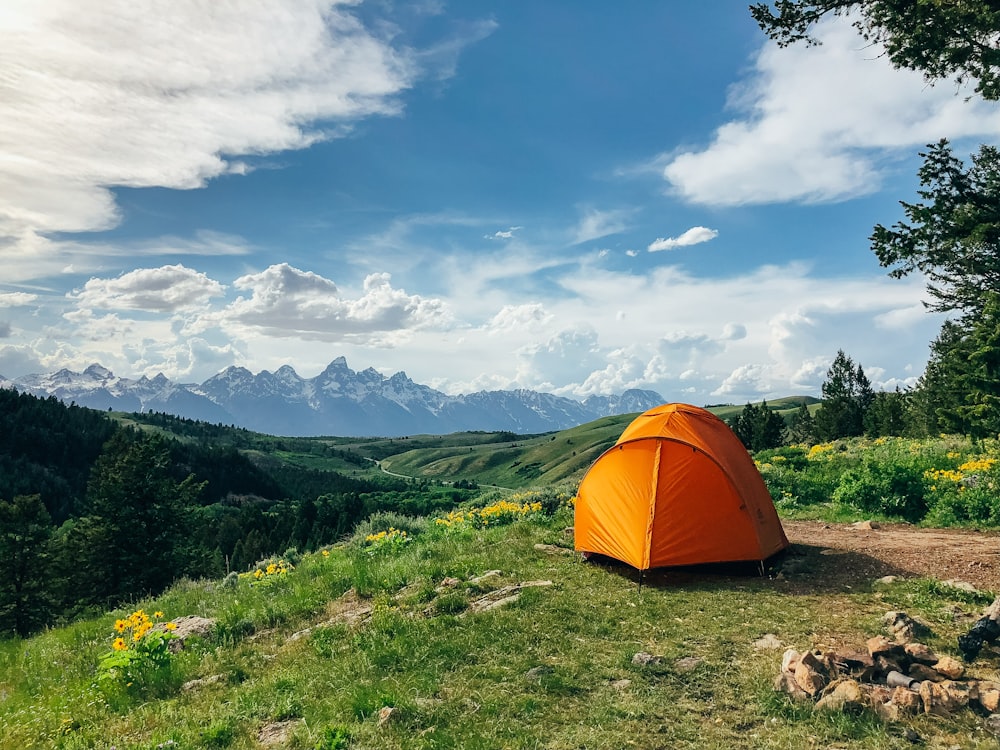
I had a realization recently: I don’t think I’ve gone camping in the last thirteen years. That might not seem like much, but when I reflect on my childhood, it was full of camping. I was in Beavers, Cubs, Scouts, Army Cadets, and the Duke of Edinburgh program. My mom also used to take my sister and I camping during the summers. If I entered Beavers at 5, and my last outdoor adventure was my trip to Kenya in 2007, then I had an almost uninterrupted period of camping that spanned 16 years. At 33 now, I have only recently crossed the threshold for more years of my life not camping than all the years I spent in youth programs.
Camping was easy when I was in youth programs – so long as you participated, it was almost a default activity. But once I left for post-secondary schooling, it fell by the wayside. Camping didn’t seem very accessible to me – I didn’t have money to spend on equipment or transportation, and I chose to spend my leisure time occupied with other things. Soon, a year became two, then five, and now more than a decade has passed.
It’s not that I haven’t thought about this. A few years back, I decided to become a paying member of the Bruce Trail with the aim to avail myself of the various sections of trail nearby (admittedly, I haven’t done it yet…) My hike along the Path of the Gods route in Italy back in October was my most recent attempt to embrace activity in nature. It was a hard route for me and finishing it left me with an amazing sense of accomplishment.
Since then, I’ve been mulling it over in the back of my mind. The pandemic has both prevented me from attempting camping this year and gave me additional time to think about being more intentional with reconnecting with the outdoors.
One of the problems, I realized, is that my idea of camping is a little skewed. Since camping in my childhood was bound up in intensive adventures, hiking and camping has been intertwined in my mind with multiple days away in the woods – several night-stays while travelling a few dozen kilometres a day, sometimes while hiking in mountainous terrain far from civilization. In this way, camping requires planning, specialized equipment, and lots of experience or paid guides. In other words, camping and hiking requires a lot of time and money.
But recently, I’ve been rethinking of camping in a new light. Thanks to the magic of YouTube’s algorithm, I stumbled across Steve Wallis’s channel through his video Highway Rest Area Stealth Camping. I’ve since gone down a deep rabbit hole of his content. In short, he’s a guy out of Alberta who likes to stealth camp (short term, low impact camping, sometimes in areas where you aren’t allowed to camp). He will go out for a night, set up a hammock somewhere, and vlog the experience. He buys cost-effective gear from Canadian Tire and insists that camping shouldn’t be complicated or about expensive gear. I realized in watching his vlogs that he’s right: camping and hiking isn’t about long, expensive trips, and it doesn’t have to be an onerous undertaking.
I’ve since started looking at what kinds of opportunities I can avail myself nearby. I’ve dug out my old camping gear to see what I’ve got in storage. I ordered an inexpensive hammock online (since I don’t own a tent) and plan to try camping in my backyard for the fun of it. I’ve also started looking at the trails nearby and got out this weekend with the dog. It was a quick jaunt near a river that took an hour and was a short drive from my house. It was a lot of fun, and I felt great afterwards.
All of this has taught me three things: first, if I want to find the time to have adventures, I have to make the time. Second, camping and hiking aren’t the purview of the elite outdoors people, but should be enjoyed by anyone who wants it. Third, I should have the courage to try things out solo. It was easy when I was young and under the guidance of adults. Now that I’m an adult myself, I can’t wait around for someone to take my hand. I have to learn to rely on myself, and trust that I can do it.
Stay Awesome,
Ryan
Post-script – I wanted to title this post The Accessible Outdoors, but I didn’t want to confuse the topic. I’m not talking about accessibility in the sense of barriers to people’s ability to physically enjoy the outdoors. Sadly, as I write this, I remember reading a piece online about efforts of people to make camping and hiking more accessible to persons with disabilities and persons of colour, but I can’t find the article at this time.
 A Paramedic's Notebook