Originally published on LinkedIn.
During my period of unemployment, I reflected on my career and identified a few areas I could develop now that I had some spare time on my hands. One of those development areas is seeking an ASQ certification as a Six Sigma Green Belt (h/t to Andrea for the suggestion!). At first, I delayed starting because I was looking for a low-cost near-free course to guide my study, such as something on Coursera I could audit, learning paths on LinkedIn Learning, or a discounted Udemy class I’d already purchased. But as I started watching the video modules, I quickly realized I wasn’t truly engaging. I was watching lecture content without retaining much. While yes, watching at 2x speed is largely to blame for it, I couldn’t escape the fact that I was engaging in passive consumption.
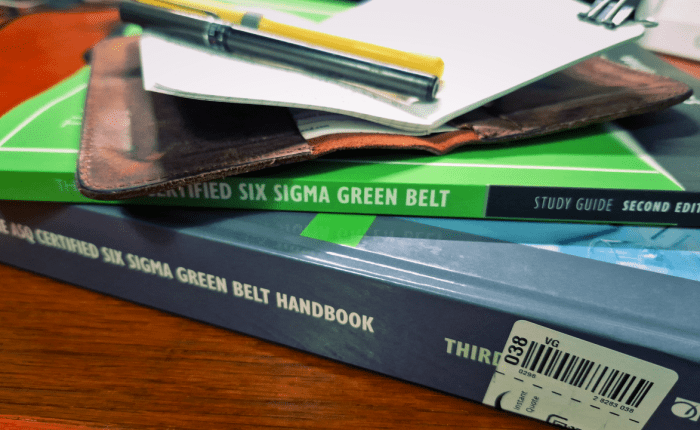
While I waited to figure out how to learn the material, I looked up the ASQ requirements and purchased used copies of the Six Sigma green belt handbook and a test prep study guide with practice questions.
Knowing that getting started is better than waiting around for a perfect plan, I started reading the handbook and planned to sort out my study strategy as I went. Almost immediately, I began connecting concepts to my past work and imagining how I could apply them now in my current role.
That’s when I realized: I’d done this before.
Paramedicine (2015–2016)
In 2015, I hit the transition point between early and mid-career phases and started questioning if I was on the right path (I found office work not very fulfilling). I thought it was a good opportunity to seek a career change and embark into paramedicine – I had a passion for first aid, I was a first responder on a few occasions in university (shoutout to University of Waterloo Campus Response Team!), dealt with emergencies while working as a bouncer, and I had written my masters thesis on the ethics of first aid. It aligned with my values of helping people and provided a fast-paced technical job that would give me fulfilment.
The first step was meeting the admissions requirements, which included needing a high school biology credit. I enrolled in a self-paced college prep biology course.
There was no active instructor; just a course outline, a textbook, weekly tests, and two major summative exams. Here’s how I approached it:
- Used the course outline and test schedule as a learning roadmap – Matched unit outcomes in the course outline to textbook chapters covered on tests – Prioritized readings based on the self-paced testing schedule
- Created active study tools – Flashcards for definitions and concepts – Hand-drawing diagrams (cells, organs, systems) labeled front-and-back for drill practice
- Focused on comprehension-level mastery – Enough to explain, label, and connect systems without unnecessary complexity – The test was multiple choice, true/false, and labelling diagrams, so sticking to the first two levels in Bloom’s taxonomy was sufficient.
This gave me a clear plan and a feedback loop through frequent testing. I passed the course with an above 90% final grade.

The Present
For my Green Belt prep, I have:
- A roadmap: The Body of Knowledge in the handbook’s appendix, which outlines each section, topics, and the number of exam questions per section.
- Content: The handbook itself for deep reading and marginalia.
- Practice: A test prep guide with exam-style questions.
By combining these, I can map my study plan to the exam structure. I also asked AI to use my weekly time constraints to suggest a manageable plan to break up the work and prepare to take the test by mid-Fall. Then, I can prioritize topics by weighting and test my knowledge incrementally as I go.
The Lesson
I realized I don’t always need a formal course, especially for a certification with a defined body of knowledge and predictable exam format. By having a clear syllabus, a learning map, a primary content source to learn from, and a way to test and reinforce learning, I can direct my learning effectively.
Courses have advantages: expert guidance, tailored examples, real-time feedback, and adaptive teaching. However, courses are not the only route for learning and self-development. By having a well-defined body of knowledge to study from, and using active learning methods like taking notes, journaling on my learning, short feedback cycles, and finding ways to apply the content to my work and experience, I have all that I need to be successful. All it will cost is some used textbooks, a registration fee, and remembering a lesson I learned a decade ago.
 A Paramedic's Notebook