History vs The Past

While listening to a BBC podcast about Heroditus, the panelists described how Heroditus set about his project with the purpose of recording events with some accuracy before the details were lost from memory. Unlike some historians from Greek antiquity, Heroditus was writing about events that were within his lifetime. This created a new kind of writing that set itself apart from others in his genre because it aimed at corroborating stories rather than recording myth.

This is an interesting distinction worth keeping in mind. There is a difference between “history” and “the past.” It can be helpful to think of history as a subset of the past. History is the collection of stories we tell, and as a consequence it is necessarily selective in what gets included and what is left out. This makes sense from a practical standpoint – it is nearly impossible to capture every detail, nor does every fact in the past bear a tangible, causal relationship to the story being told (even if arguably from a systems perspective, many things create ripples of unknown influence that overlap with other events).

The challenge of history is accuracy – capturing events that happened with fidelity and charity. As new facts are discovered, and as new facits of importance enter the discourse, history is revised to (hopefully) move closer to our aim of truth. (For the moment, let’s ignore questions about power and who tells these stories and for what aim).

However, we must not confuse history (the stories we tell) with the past (events that happened prior to the now). Ignoring this distinction places us in danger of imbuing our myths with an illusion of objectivity. The stories we tell ouselves matter, of course, but they also carry power. Who tells the stories, and whose stories get left out, can carry harmful consequences.

We try to learn the lessons from history, but we cannot be so arrogant to think that history is complete.

Stay Awesome,

Ryan
History Snippets – Demagoguery

demagogue-2193093_1920
Image by John Hain from Pixabay 

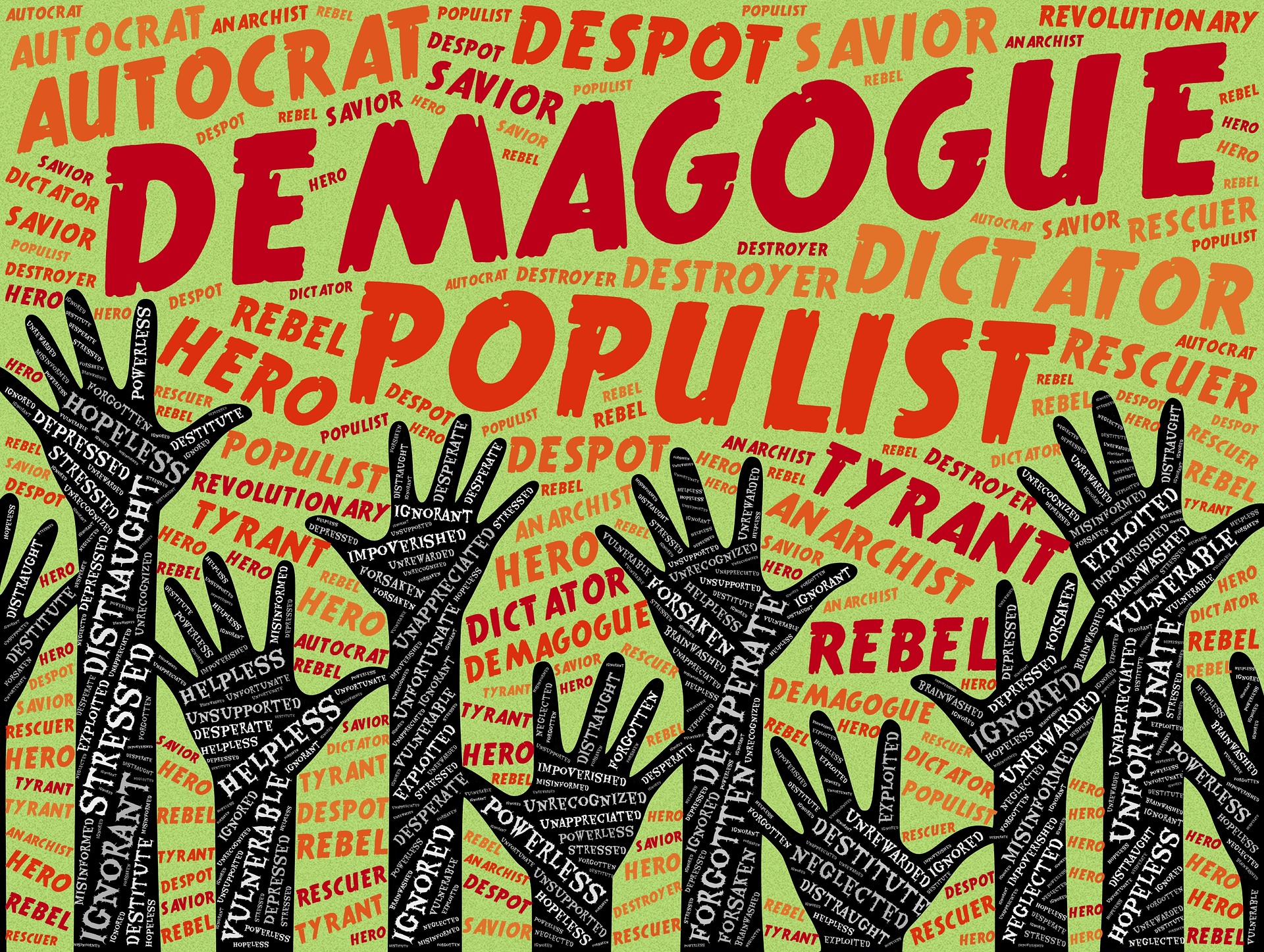
It is sometimes amazing how cyclical social and political problems can be.  While I am not pessimistic in our ability to move forward in something that can be recognized as “progress,” I do have some cynical attitudes towards our collective habit to backslide.  I realized some time ago that while we espouse enlightened positions, such as “never again,” people as a whole tend to by historically myopic and prone to letting fear get the best of them – or to quote Agent Kay “A person is smart. People are dumb, panicky dangerous animals and you know it.”

As of writing, I’m working my way through Ron Chernow’s biography of Alexander Hamilton.  Around ten-hours into the audiobook, Chernow is discussing the political maneuvering between Hamilton and New York Governor George Clinton over trying to get the newly-drafted Constitution ratified in 10 States in order to bring it into force.  The two sat on opposite sides of the federal government question, with Hamilton believing a strong central federal government was the key to sustaining the American experiment, while Clinton was distrustful of a central government superseding the power of the States.  Hamilton had a poor opinion of Clinton, believing Clinton to be only concerned with consolidating his own wealth and power, and only pandering to the populace when elections rolled around.

Chernow gives a striking description of what Hamilton feared, and in a single line spells out a looming threat we are seeing anew in our own modern political discourse.  Hamilton worried that “American democracy would be spoiled by demagogues who would mouth populace shibboleths to conceal their despotism.”

Chernow penned those words some fifteen years ago.  Whether it’s 1788, 2004, or the dawning of the neo-20’s, the fears expressed in those words caution us that we must remain vigilant against those who seek to exploit our fears to manifest their vision in reality.

Stay Awesome,

Ryan