Short Term Content Bias

I admit that the kinds of videos I watch on YouTube and the kinds of books I read tend to gravitate towards a certain kind of self-help genre, where some productivity or business person is giving me a set of systems and protocols to follow to help me “hack” my way to a more fulfilling work and life.  These kinds of content are usually well-made but suffer from a shallowness of insight.  It’s not that the authors are deliberately trying to dupe me (at least I hope not!) but the unfortunate reality is that the incentive structures that lead to engagement online and sale of products means that in order to publish, you need to publish fast and loose.

Books that get published are usually a small essay that gets padded out with animated bibliography research or a year-long experiment where the author tests out the ideas in the short-term and reports back on what they experienced and learned about themselves.  There might be small kernels of originality and insight in there, but the rest of the book is a repackaging and restatement of the research and writing of others.  It is without irony that I wager that the same 20% of landmark examples appear at least once in 80% of the books out there.

YouTube videos run into some similar issues.  Often, I find that the videos are short think pieces and experiments that people run as a blog series or retrospective.  The editing is fast and smooth, and the experiments are reported on based on impressions from the first week, month, and sometimes quarter.

In both of these mediums, we see a presentation of the short-term result with little follow-up on the long term impacts.  On small occasions, a writer might follow-up on some of the ideas in a second book that is a direct result of the first, but by and large we don’t have insight into the impact the changes had over the long-term.

This bias towards short term content make sense.  Authors and content developers need to create products quickly in order to ensure a viable revenue stream, and once you write about your niche and experience, life moves too slowly for you to be able to keep up with that pace.  As a result, they would start to publish on things that are more nebulous and propped up by the work of others (hence, animated bibliography).

The best books with the deepest wisdom are often, as Taleb notes, ones that have been around for more than 50 years.  I’d add to that that books published as the culmination of one’s life work also fall into that category.

This is not to say that content coming out of the short-term process is worthless.  In my opinion, my life and satisfaction has improved in quality over the last 3 years of intentionally reading these books.  The problem is that after a while, very little surprises you and you start to see the same examples getting recycled.

Stay Awesome,

Ryan
Thinking and Research Habits

You can tell who has recently released a book based on who is making their way through the podcast circuit.  It’s never a coincidence if you see an author’s name pop up on the latest episodes of several shows your have saved in your playlist.  I enjoy listening to these episodes to get book recommendations, and for the most part find that the shows don’t go into too much depth with the author.

This was pointed out by a friend of mine (thanks, Wil, for smashing my illusions!) when he commented that a show I happen to listen to lacks the depth he looks for in a good podcast.  After he pointed that out, I saw it everywhere: the host of the show brings the author on, and by whatever means the talking-points get established, the show typically has the host ask 5-10 key questions that are ripped directly from the book.  It reminds me of students who skip the reading because the whole thing is covered in class.  You get a good sense of what the main points of the book are, but that’s about it.  If you’ve read the book already, you might as well skip the podcast episode.

However, there are gems in some shows, and I spotted two a few weeks back.  On two different shows, authors who had recently released books were chatting about the ideas in the book and the topic drifted to the idea-generation process.  They were short asides, but I found them fascinating to hear how these authors come up with their ideas and structure the construction of their books.

You can give the shows a listen yourself, but I’ve summarized the main points below.

David Epstein
(promoting his book Range)
The Longform Podcast, episode 348 (starts at 21:08)
https://www.stitcher.com/s?eid=62028020

How do you set up the bounds of research?  How do you delineate what you put in the book?  What should I include in the book?

  • There will be a few topics you generally know should be in, but after that you don’t know.
  • Epstein starts with a broad search down rabbit holes.  He used to think this was a bad thing and a waste of time, but now it’s thought of as a competitive advantage.  Sometimes, though, you end up with a bunch of nonsense.
  • He creates a master thought list – citation and key ideas or sentences.
  • As these coalesce into a topic, he moves like-ideas together.  When a topic emerges, he tags it with a title and creates keywords that he would use if he’s searching for it.  Then he moves similar tags together and a movie storyboard emerges where one topic flows into the next.
  • The goal is to avoid it being a bunch of journal articles stitched together.
  • It’s a road map of his brain’s exploration of the topic.
  • Unlike academics who just read journals and don’t go in-depth, he uses his journalism training to talk to the people – more will always come out in conversation than what’s included in the text.  Scientists will include interesting tidbits offhand that are related, but don’t expand on it, so it creates a thread to pull on.  It’s also a good fact-checking exercise and makes the story richer.


Cal Newport
(promoting his book Digital Minimalism)
Love Your Work, episode 183 (starts at 49:30)
https://www.stitcher.com/s?eid=62048017

How do you find ideas that are well-timed/timely with discourse on careers, technology, etc.?

  • He thinks, writes, and publishes all the time (especially blog posts and articles).  He’s constantly reading and testing out ideas.  He’s talking to people, having conversations, and seeing what topics emerges.  It’s a work ethic to him to constantly be reading and writing.
  • He tests out what he’s interested in and see if others are interested.  It might be foundational to something he works on over time, or it might wither because it doesn’t gain traction or doesn’t bear fruit.
  • To validate ideas:  1. He asks, “Are people talking about it, or leaving interesting comments on my blog posts?” 2. With ideas comes a sense of “mental confidence.”  He asks “Is this working for me?  Does it click as a structure to provide a workable framework for seeing the world?”
  • Over time, something will emerge and persist.  It generates advice that’s useful, more evidence comes up, and it is applicable across situations.
  • The search is opportunistic, but once something emerges, he does a deep dive. (Kadavy evokes the fox-porcupine reference from Isaiah Berlin, popularized by Jim Collins).

Stay Awesome,

Ryan

Books on Vocational Reflection

I finished reading Complications by Atul Gawande last week and really enjoyed it.  It was his first book and covered stories from his apprenticeship phase of becoming a surgeon.  I thought back to the first book I read from him, The Checklist Manifesto, and realized that while I enjoyed the topic Manifesto covered, I found it lacking a certain charm that Complications had.

Manifesto felt like a good idea that was stretched a bit too thin to fit the book format, and was heavily supplemented with references to studies done by other researchers.  This isn’t meant as a criticism – it was a good book!  But what I felt Complications (and his other book Better) had is the first hand reflection on one’s professional development.  It’s not just a memoir of one’s life, nor is it a tell-all, but instead it’s a focused meditation on the training, learning, failures, achievement, and lessons one gains from devoting themselves to their vocation.

Over the last three and a half years of reading, I’ve found I really enjoyed these kinds of  books.  I looked over my reading list and pulled a bunch of examples randomly below.  Some of them are about medicine, others are of actors, and a few books from the business world.  The common thread is that it’s less about the personal biography of the person and more about the development of the professional (for this reason, I didn’t include Elon Musk’s and Enrico Fermi’s biographies, or career retrospectives like the books from James Comey and Hillary Rodham Clinton).

It describes a world bigger than the person telling the story, and their attempt to grapple with the epistemological, ethical, and professional obligations that comes from entering a profession, and where their limits lie.  These are not stories about heroes – the stories are about human error and fallibility, and learning to deal with that revelation.  It also keeps its eye towards what it means to serve others, and where the profession should go in the future.

Ultimately, these books differ from the animated bibliography in one crucial area.  The animated bibliography is often a book that results from a person researching and stitching together the ideas of others.  In some cases, these books will require the author to attempt to put the ideas into practice, but in my opinion this is in service of selling the credibility of the book.  However, the books I’m discussing here and listing below are different because they are an account of people who are learning by doing.  They are applying what they previously learned during formal education, and reflecting on the outcomes to see what lessons can be derived.  In some sense, the books are an autopsy that try to tease out causes, or at least serve as a cautionary tales for those who come later.


A Thousand Naked Strangers – Kevin Hazzard


Doctored – Sandeep Juhar


I’d Like to Apologize to Every Teacher I Ever Had – Tony Danza


Total Recall – Arnold Schwarzenegger

*Note – I include this mostly because of his telling of his time as a body-builder and actor.


A Life in Parts – Bryan Cranston


The Art of Learning – Josh Waitzkin


Shoe Dog – Phil Knight


Creativity, Inc. – Ed Catmull


The Checklist Manifesto – Atul Gawande


Better – Atul Gawande


Complications – Atul Gawande

Stay Awesome,

Ryan

The Runaway Blog Post

Short meta-post on blogging.

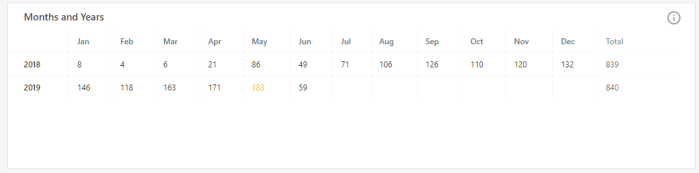
I’ve marveled a few times already that my Zombies, Run! training app review is my most popular post to date.  The screenshot below was taken June 12th, 2019.  Within six month of starting the new year, the post had more traffic than all of last year.

Zombies post stats

I’m curious if it will doubled again and I’ll be writing another post marveling how the post received the same number of hits within three months of the new year.  I doubt it, but the internet can be funny that way.

(Also, I’m fully aware that by constantly talking about it in blog posts, I’m increasing my traffic to it.  The observer effect is in full bloom and I’m sorry to muddy my data).

Stay Awesome,

Ryan