The Last Person to Know Everything

On a recent CBC podcast episode about Leibniz and Voltaire’s thoughts about evil and God, one of the interviewees referred to Leibniz as “the last man to know everything.” I find this notion utterly fascinating. Upon hearing that title, I jumped online to search for the “best biography on Leibniz” and found a highly acclaimed book detailing an intellectual biography of the 17th-century thinker. Once I clear some books on my current reading list, I’ll dive into this hefty book.
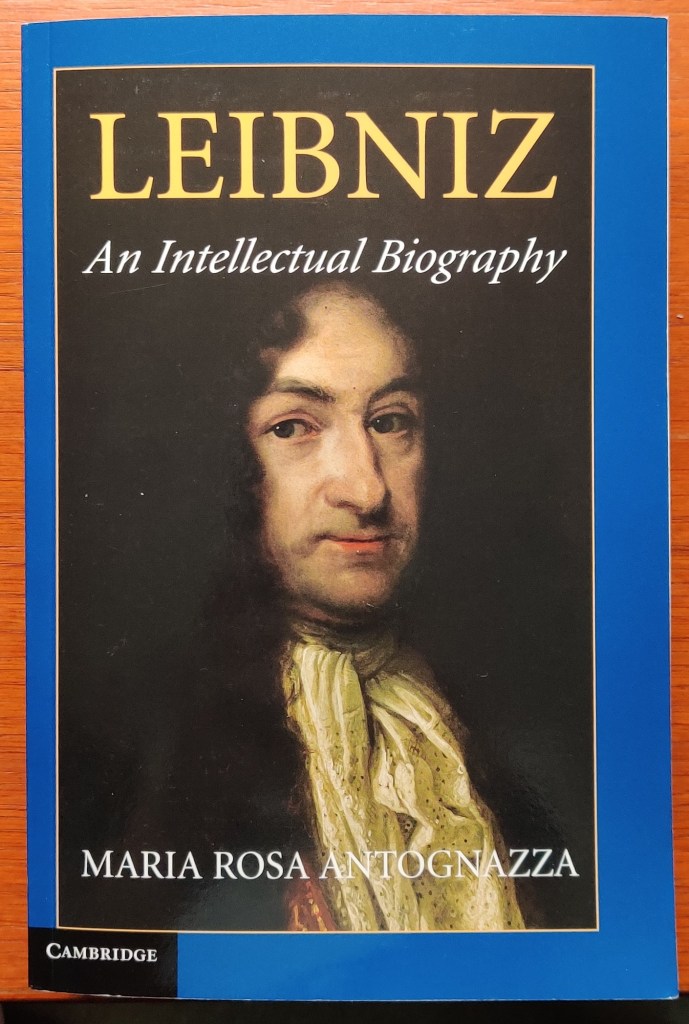
“Leibniz: An Intellectual Biography” by Maria Rosa Antognazz

This isn’t the first time I’ve encountered the moniker of “the last person who knew everything.” In fact, that was the title of a biography I read back in late 2018 on Enrico Fermi.

I’ve been drawn to this idea for a long time, probably originating with the first time I saw the 1994 film Renaissance Man starring Danny DeVito. That was where I first learned of the term renaissance man, or more commonly known as a polymath – a person with considerable knowledge and expertise across a wide variety of domains. While I wouldn’t quite call it a goal, this is an aspiration of mine since I was a child.

I suppose as the sciences progress, it becomes increasingly difficult to lay claim to being “the last person who knew everything.” Each field grows increasingly complex as we push the boundaries of the known world, which raises the threshold higher of what counts as expertise.

It would seem we need to seriously consider the observation recently made by Professor Adam Grant on the differences between experience and expertise:

Instead of seeking to always have depth of knowledge, perhaps we should give equal consideration to wisdom and how we can apply our experiences and expertise to solve interesting problems. While more nebulous as a goal, I think it steers us in the right direction. At the very least, it’s a good vision to aspire towards.

Stay Awesome,

Ryan

PS – an unexhaustive list of the traits that distinguishes a “last person who knew everything:”

  • Intellectual curiosity
  • Intellectual humility
  • Interests spanning a variety of domains, both sciences and arts
  • A grasp of the methods and tools of science
  • Generating novel insights
  • The ability to see problems in terms of first principles
  • Engaging in idea arbitrage
  • Focus and flow in work – liking what you do

Friday Round-Up – June 19, 2020

After a poor performance last week left me with no Friday post, and even though today’s post is much later than I intended, here I am to make good on my promise to do better.

Here is my round-up list for the week ending on June 19th:

πŸ“–Article – Jon Stewart Is Back to Weigh In | The New York Times

Sorry if you hit a paywall on this article (I managed to read it fine from Pocket). I’ve lamented elsewhere that I genuinely miss Jon Stewart, not just from his tenure on the Daily Show, but also from other initiatives he’s thrown his weight behind (remember his masterclass in oration?). While this interview is part of Stewart’s media blitz for his upcoming movie release, it is also chocked-full of wonderful insights and observations about the world we find ourselves in. He’s ever poignant in his wit, but also speaks from a cautious place. The interview is so good, I quickly reached the limit of my free highlights in Pocket.

πŸ’­ Reflection Mega-Thread – How We Process Information

I want to turn this into a more formal blog post in the near future, but for now I’d like to lay out a few strands that have come together over the last two weeks about how we process, curate, and digest information.

🎧 Listen – You Must Avoid This Weakness | The Daily Stoic Podcast

First, a short listen from the Daily Stoic reflecting on how our minds are not reliable when it comes to processing truth. Instead, we are bound up in our own biases that we seek to confirm. If we want to be functioning, contributing members of society, we must actively exercise our critical faculties, including seeking out when we are wrong. Or as the closing lines state: “It’s the snowflakes who fly into a rage when someone challenges their views. It’s the snowflakes who can never admit they’re wrong or address deserved criticism or feedback.”

🎧 Listen – 479: Post-truth Expertise | CBC Spark Podcast

Next, a thought-provoking podcast episode from the CBC that tackles expertise in a seeming post-truth world. There is a lot of good information floating around in the ether, waiting for us to latch on to its wisdom. And yet, despite good information there for us to seize, we see many people in our peer groups turn away and distrust the experts. Shunning the norms of knowledge communities, they instead embrace their own norms of knowledge and assertion.

πŸ“£ Twitter – Carl T. Bergstrom (@CT_Bergstrom)

Speaking of experts, one of the voices I’ve turned to on Twitter to help me filter the signal from the noise is Mr. Bergstrom. He has provided both some levity :

As well as valuable information to help stop me from embracing each news article that flies out with clickbait titles:

I have a blog post percolating in my mind about curating news feeds, but I’ll leave that breadcrumb here for now.

πŸ³β€πŸŒˆπŸŽ§ Listen – I Don’t Want To Get Over You (Season 3 Mission 9) | Zombies, Run!πŸ³β€πŸŒˆ

Finally, I want to give a huge shout-out to the writers and folks behind Zombies, Run! for this episode I listened to last week. The episode really stuck out for me. A large portion of the dialogue involves two lesbian characters discussing a mutual love interest (the love interest is the current partner of one of the characters, and a former lover of the other character in the conversation). The conversation between the characters touches on topics like “gold stars” and the fears that bisexual partners may have, even in committed relationships. I’ve heard my own queer friends discuss these topics, and while it felt noteworthy that the development team included “voices” from a wide range of folks, it was awesome to hear conversations that weren’t centered on the heterosexual experience that’s often given as the default in media. It gives the game a sense of realness and depth, despite it being about living in a post-apocalyptic zombie wasteland. It’s also important, as we reflect on this Pride month, to think about the kinds of voices we engage with that represents life, and whether we are seeking out sources that look to bring more diversity to the table. I’m happy to be supporting the app and the team.

Stay Awesome,

Ryan