I’ve been thinking about the limits of my world, specifically as it relates to my ability to understand it. Much of the time, I operate as if I have access to capital-T Truth, that I have some connection with facts about the world. It’s easy to fall into this kind of thinking – when I can predict and explain events, it gives me feedback that I know things about the world in a meaningful sense.
But I also know that this confidence in my knowledge is not as strong as I assume it to be. I have to remind myself to adjudicate the claims I encounter, or to remind myself of the difference between history and the past. It’s also good to listen to others who have learned about issues from multiple vantage points (see this amazing conversation on the Tim Ferriss podcast with Noah Feldman, and his experiences with constitution building in the Middle East).
Generally speaking, all of our experience in life has presented us with a mostly successful set of interactions with the world, but those interactions are subjective and limited. Taking the long view of world events, learning new languages, and empathy provide the Archimedean point beyond ourselves to attempt to stand on some point of objectivity (if this is even possible).
As Wittgenstein says, “the limits of my language are the limits of my world.” This shouldn’t be literally taken to mean language (though I’m assuming that’s what Wittgenstein meant), but we should apply this to our understanding vis a vis experience. The limits of my world are constrained by the limits of my experience and the mental framework I use to make sense of it. If I want to seek to expand my worldview, it’s important to both prune out the dead branches of knowledge while cultivating new seeds of wisdom.
We recently celebrated our son’s first birthday, so naturally I’ve been reflecting on the last year of being a first-time parent. If I were to summarize the most important lesson (beyond any of the technical skills you need to keep your kid alive), it’s that parenting is the largely an illusion of control. Your child is a chaos engine that you will try to wrangle, understand, and predict, but from moment to moment, day to day, week to week, things change wildly without discernable reason. Things that worked suddenly stop working.
The tighter you try to hold onto control, the more frustrated you’ll be.
As a corollorary, in accepting that your child is pure id, you must also come to terms that your child (at least for the first year) carries little intentionality behind what they do, and so you must not attribute your frustration to them. Instead, recognize that your frustration is a product of your own unrealistic expectations. If you align your expectations to this reality, I find it’s much easier to weather the physically and mentally taxing moments.
This isn’t to say that you won’t feel anger or frustrations directed toward your child. I’ve accepted that I will feel these feelings and there isn’t anything wrong with them so long as you don’t act on those impulses (physically or verbally). As the adult, you are expected to have learned to understand your physiological signals and adjust accordingly. As your child grows, and as they experience new feelings in themselves – feelings that they won’t have the context to understand – it’s your job to guide them through the experience so that they can learn as well.
In sum:
You are not in control of anything.
The frustration you feel is usually a product of having misaligned expectations for how you think your child ought to act.
Your child doesn’t understand the signals their body is giving them. You, having learned to understand your body, will be key to guiding your child through this period of discovery.
I recently finished Adam Savage’s maker’s memoir, Every Tool’s a Hammer. I always enjoyed watching MythBusters back in the day, though I wouldn’t say I was a diehard fan – I caught episodes as they aired, but didn’t follow the show. As an adult, I wish I had followed more closely, because I’m finding that I’m drifting towards the maker ethos, and it would have been good to have been mentored in real-time to the show’s airing. I guess that’s why we have reruns and syndication.
Anyway, the book has many great insights, one of which is concerned with giving praise and making sure the recipient of the praise is acknowledged.
Adam reflects that all of his growth came from feedback from his mentors. In the role of a boss, he questions why would he shy away from feedback if he wasn’t happy with something (e.g. someone’s performance or the product of their build). This moment of empathy is a valuable insight to me, because as a leader I often hedge my feedback, wanting to avoid hurt feelings or awkward interactions. But there is a difference between providing feedback for growth, and being cruel. I’ve had many great bosses that helped me grow through their feedback, even if that feedback made me feel less than great. But their feedback was never cruel or meant to belittle me – it held me accountable and showed me what to do for next time.
He also mentions praise – people want to be acknowledged and recognized by the ones signing the cheque. Even if it sounds corny, he says, it goes a long way towards building up your team both in terms of morale and skills.
Star Trek: The Next Generation – Season 3 Episode 7 “The Enemy”
As with many other people right now, I have chosen to go back and re-watch favourite television shows. I decided that with Star Trek: Picard’s recent release, it would be a great time to go back to the beginning (of the modern era, anyway) and revisit Star Trek: The Next Generation. I had probably watched every episode in my teen years, but I had always watched it in syndication, so this is my first time going through the show in order.
Approaching the series in my 30’s has been a real treat. I have more life and cultural experience to draw upon as I watch these incredibly written episodes play out. I knew the show was amazing, but I never appreciated how well it engages with moral issues.
I want to highlight one excellent episode from the third season – episode 7, “The Enemy.” The characters provide us with a moral issue about autonomy, and a good lesson in leadership.
The story centres on the conflict that arises when the protagonists rescue an enemy officer from an out of bounds planet. The officer, from a race of people called Romulans, is gravely wounded and requires a blood transfusion. There is only one member of the crew whose blood could be usable, but that crew member, Worf, has a history with the enemy’s peoples – Worf’s parents had been killed during a Romulan attack when he was a child. Worf, still carrying his anger for their death all these years, refuses to give his blood.
Meanwhile, a Romulan ship is en route to recover the officer. There is a tenuous peace treaty that prevents an all out war, but the Romulans have a history of subterfuge and deceit. It is believed they will cross the border and assume an antagonistic stance to provoke a war. Worf’s Captain, Jean Luc Picard, is seeking any means that would avoid an armed encounter, and decides to plead with Worf to reconsider his decision.
In this moment, it would be expedient to Picard and his crew to order Worf to donate his blood. He is about to contend with an adversary whom has no issue with breaking a peace treaty by provoking an attack (whether or not his side is initially in the wrong). Picard is seeking to recover a still-stranded crew member on the planet below, keep his ship safe, maintain the territorial sovereignty of the Federation, and maintain tenuous diplomatic relations with a rival group. This is all threatened because the one solution to his problem, keeping the enemy officer alive, is being blocked by a crew member whose personal history and honour motivate him to not help the enemy.
There is a beautiful scene where Picard appeals to Worf for him to reconsider:
Picard: So, there is no question that the Romulan officer is more valuable to us alive than dead. Worf: I understand. Picard: Lieutenant, sometimes the moral obligations of command are less than clear. I have to weigh the good of the many against the needs of the individual and try to balance them as realistically as possible. God knows, I don’t always succeed. Worf: I have not had cause to complain, Captain. Picard: Oh, Lieutenant, you wouldn’t complain even if you had cause. Worf: If you order me to agree to the transfusion, I will obey of course. Picard: I don’t want to order you. But I ask you, I beg you, to volunteer. Worf: I cannot.
In silence, Picard slowly walks back around his desk and sits in his chair.
Picard: Lieutenant. Worf: Sir? Picard: That will be all.
We then learn from the ship’s Chief Medical Officer that the Romulan has died. Picard has lost the only bargaining chip he had to keep things peaceful with the approaching enemy ship.
Picard could have chosen to order Worf to allow the blood transfusion. Instead, he chooses to respect his crew member’s personal wish, and as a leader deal with the hand he’s given. He also knows that making an order against the personal rights of a crew member under his command sets a dangerous precedence – that anyone is disposable if the captain judges it. Instead, he accepts that this closes off options. He knows that this places him not just on the back-foot, but also with his arms tied behind his back as he prepares for the possibility that his ship will be destroyed. However, the burden of command requires him to take these realities as they come and make the best decisions that he can. Events are being shaped around him that are beyond his control, but he strives to make the best decision that he can. He’s not perfect, but he becomes a role model in striving to do the right thing.
Even if the right thing might mean the death of he and his crew.
It’s a wonder piece of science fiction that I’m glad to be discovering anew.
In the waning days of 2018, I gave a preview of the books I read for the year by listing my top five books. I doubt my current list of books will grow before the new year chimes in tomorrow night, but I will save the 2019 list for next week, and instead present you with my top books I read this year.
My overall volume of reading this year was less than half of what I read last year. Since 2016, I’ve intentionally set about to increase my reading and I was able to keep the pace for three years. However, for some reason my reading slowed down a bit. I’ll reflect on this over the coming week and share some thoughts with my 2019 reading list post. Given the relatively short list this year, I will instead highlight all of my favourite books since it seems that these were the books that stuck with me.
In chronological order of when I finished them, here are my top books I read in 2019.
The Graveyard Book – Neil Gaiman
A delightful fictional story about a boy who grows up in a graveyard among ghosts and other creatures of the night. Rather than a horror story as you might expect from the premise, instead this is a charming and whimsical coming of age story that gripped me from start to finish. Like all good stories, I was sad when the book was over and missed the characters dearly.
The story of the rise and fall of Elizabeth Holmes and the Theranos company. Not only is this book a journalistic account of the deceptive “science” and events surrounding the failed tech venture, but it also explores the toxic achievement culture at the company’s top and the lengths the journalists and ex-employees had to go to in order to bring the company down. It’s a riveting story to experience, and I was happy to hear of the Ethics in Entrepreneurship initiative founded by two of the whistle blowers.
This memoir took me to the highest highs and the lowest lows. While Straczynski is known for his ability to craft human stories in the most magical and alien of settings, none of his work of fiction can come close to matching his own personal story of growing up in an abusive home and how that shadow followed him throughout his life. Running in parallel with his own story, he also tells a mystery story about his family’s origins that spans three generations. I mostly started this book to learn about his craft and the origins of some of my favourite projects he’s worked on, but in the end I witnessed a masterclass in writing and reflection.
With the end of the show this year, I felt like it was time for me to crack into the books that kicked-off the phenomenon. I am grateful that I watched the series first as it really helped me keep track of all of the characters in this massive tale. Also, reading a large fictional story was a welcomed relief. Over the last three years, my primary genre to read is at the intersections of business, productivity, and personal development. I think one thing that has lead to me reading less is feeling burnt out of that kind of content, so it was great to read something for pleasure. I am still proud of going through 500-pages while up at the cottage; there is nothing quite like reading by the lake.
Thanks to the Libby app and the library, I was able to check out books I otherwise wouldn’t have encountered if I had to purchase them. I wasn’t sure what to expect, but this memoir was fascinating. I’m drawn to books where people look over their life and career to draw lessons when connecting their experiences. Whatever the political climate we find ourselves in, I find it somewhat reassuring to know there are people in the deep state who work to put the mission above party, though as more evidence comes to light, that faith is beginning to crumble.
Despite the subject matter, there is no other word I can think of to describe this book than “awesome.” And I mean “awesome” in both senses of the word. The book inspires “awe” at the sheer scope of things, but also a riveting tale of Snowden’s life to date, full of creativity, ingenuity, and technological espionage. I marveled at the fact that he is only a few years older than me, but what he has gone through is likely to dwarf any contributions I’ll ever make. I hope he can come home one day, but for the present I hope he remains safe while the effects of his actions continue to simmer in the current political climate.
In looking over my top books for the year, we see three genres stand out – fantasy, current events journalism, and memoirs. I would have also included biography in this list, however one book is missing that I unfortunately couldn’t finish before it was checked back in to the library: Hamilton by Ron Chernow. It’ll get added to my 2020 list when the library finally releases it back to me.
As I said above, I think I’m starting to burn out of the business and productivity genres of books. When I reviewed the list for the year, I had almost no recollection of the content for nearly all of the books. It would seem I’ve hit a bit of a block, where I’ve consumed so much content in a short amount of time that I’m failing to hold on to it (or, as a corollary, the content is so superficial that it doesn’t stick…).
I still have a number of books on the go that I hope to finish early next year (such as the first Witcher book that the game and Netflix series was based on, Robert Greene’s Laws of Human Nature, and Working by Robert A. Caro, to name a few). Once I clear some of the current backlog, I plan to start selecting my reading a bit more intentionally so that I can reflect on the lessons the books have to offer. Overall, the main themes that stick out in the books that speak to me personally are good moral stories, cautionary tales, and the reflections of/about people over a long period of time to draw connections and lessons from their life and work.
I’ve been thinking about endurance recently, specifically in two areas of my life. First, I’ve been experimenting with intermittent fasting since January of this year and I’ll be sharing some reflections on it soon. By fasting each day, it requires a certain amount of endurance to push through on cognitively and physically demanding tasks while your body deals with the exertion in a fasted state.
Second, as the winter weather hits us, I have to endure colder temperatures while working at the bar. I’ve managed to push myself over the last two years and use a sufficient number of clothing layers to eschew wearing a coat while on the door position. I have the coat on hand, but I like the challenge of working without it and standing outdoors for long stretches of time exposed to the elements.
It might seem silly or pointless to put myself in these positions when I don’t have to – I make enough money so that I never need to worry about food scarcity or not owning enough proper clothing to protect myself. On some level, it’s stupid machismo to willfully deprive myself in this way. Yet, I like the challenge and the sense of satisfaction that I can achieve some level of control or mastery over myself and my situation.
While recently listening to Oprah’s book The Path Made Clear, I came across a really interesting way of framing this tendency I have. The specific section runs from 4:53-5:52 of the clip below, where Oprah is chatting with Alanis Morissette about the yearning to seek out a time in the future where all your present problems are solved and you are finally happy. They discuss that this forward-orientated hope for the future never manifests itself as peace; that money and fame doesn’t bring you happiness or contentment. Instead, you are always chasing that future where you are free from whatever pain you feel in the present.
“One of the big lessons I’ve learned over the last little while has been that if I can be comfortable with pain, which is different than suffering, if I can be comfortable with pain, as just an indication, and it’s potentially a daily thing (in my case it often is) then there won’t be my living in the future all the time; that one day if and when I will be happy.
“And even if I’m not comfortable doing that, I’m very uncomfortable in pain – I hate it – we run from it with all kinds of addictive, fun things (temporarily fun things). But at least knowing it’s a portal, and that on the other side is this great sense of peace that goes beyond this ego development.”
~Alanis Morissette (lightly edited for readability)
This sentiment spoke to me. I have an affinity towards stoicism and the idea that one should re-frame their relationship with the external. To me, I like knowing that I can endure, even when I don’t have to. It becomes practice for those moments when I need to dig in deep to perform, because life isn’t always easy. Through this practice, I can also appreciate my comforts all the more. And, it also doesn’t need to run in opposition of my goal to remove discomfort from my life so long as I remember that I’m not entitled to a life of comfort and ease and instead have to intentionally earn it.
I acknowledge that I’m fortunate not to live with serious pain or suffering. I have a comfortable life and I wouldn’t exchange it for machismo points. I don’t think the point of life is to suffer, but instead my goal is to learn to suffer well when life brings me pain.
It is sometimes amazing how cyclical social and political problems can be. While I am not pessimistic in our ability to move forward in something that can be recognized as “progress,” I do have some cynical attitudes towards our collective habit to backslide. I realized some time ago that while we espouse enlightened positions, such as “never again,” people as a whole tend to by historically myopic and prone to letting fear get the best of them – or to quote Agent Kay “A person is smart. People are dumb, panicky dangerous animals and you know it.”
As of writing, I’m working my way through Ron Chernow’s biography of Alexander Hamilton. Around ten-hours into the audiobook, Chernow is discussing the political maneuvering between Hamilton and New York Governor George Clinton over trying to get the newly-drafted Constitution ratified in 10 States in order to bring it into force. The two sat on opposite sides of the federal government question, with Hamilton believing a strong central federal government was the key to sustaining the American experiment, while Clinton was distrustful of a central government superseding the power of the States. Hamilton had a poor opinion of Clinton, believing Clinton to be only concerned with consolidating his own wealth and power, and only pandering to the populace when elections rolled around.
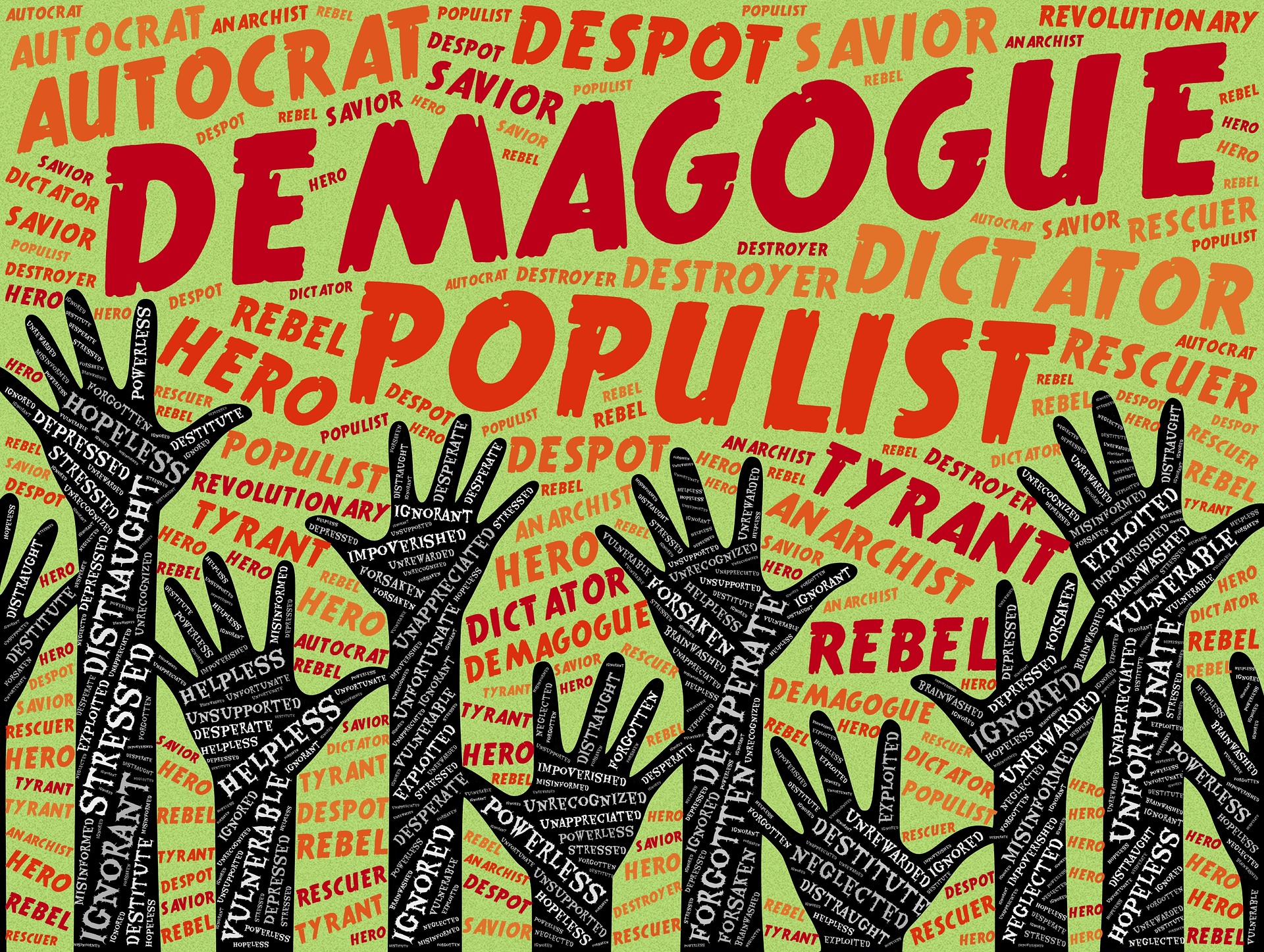
Chernow gives a striking description of what Hamilton feared, and in a single line spells out a looming threat we are seeing anew in our own modern political discourse. Hamilton worried that “American democracy would be spoiled by demagogues who would mouth populace shibboleths to conceal their despotism.”
Chernow penned those words some fifteen years ago. Whether it’s 1788, 2004, or the dawning of the neo-20’s, the fears expressed in those words caution us that we must remain vigilant against those who seek to exploit our fears to manifest their vision in reality.


 A Paramedic's Notebook