I’d like to break my streak talking about the pandemic and instead share something that lifted my spirits a bit this weekend.
One of the lessons I try to impart on my students is that there is often no harm in asking or making requests from others. I’d much rather my students take accountability ahead of time to ask for things like extensions, rather than to come to me after the deadline has passed and ask for accommodation. This is not to say I never grant extensions after a deadline because I know that we all can be absent-minded from time to time.
Case in point – this weekend, I allowed a coupon promotion to lapse from Audible. I had received a coupon code from Audible based on some purchases I had made back in February. The deadline to use the coupon was April 4th, and I kept intending to sign-on from my computer to browse options (I find the app’s interface hard for surfing titles). And yet, at around 1am on April 5th, I realized I had missed out.
The coupon’s value was $5-off any regular purchase, so I wouldn’t be out much if the coupon didn’t work. Nevertheless, I took a leaf from my own book and emailed customer service to ask if I could have an extension on the offer. At best, they would abide by their deadline and tell me “no,” which wasn’t a huge loss to me since I had already “lost” the value of the coupon after the deadline. But, there was no downside to asking and it was entirely upside.
Thankfully, customer service extended the deadline on my coupon, no questions asked. I was pleasantly surprised by the outcome and was glad to follow my own advice.
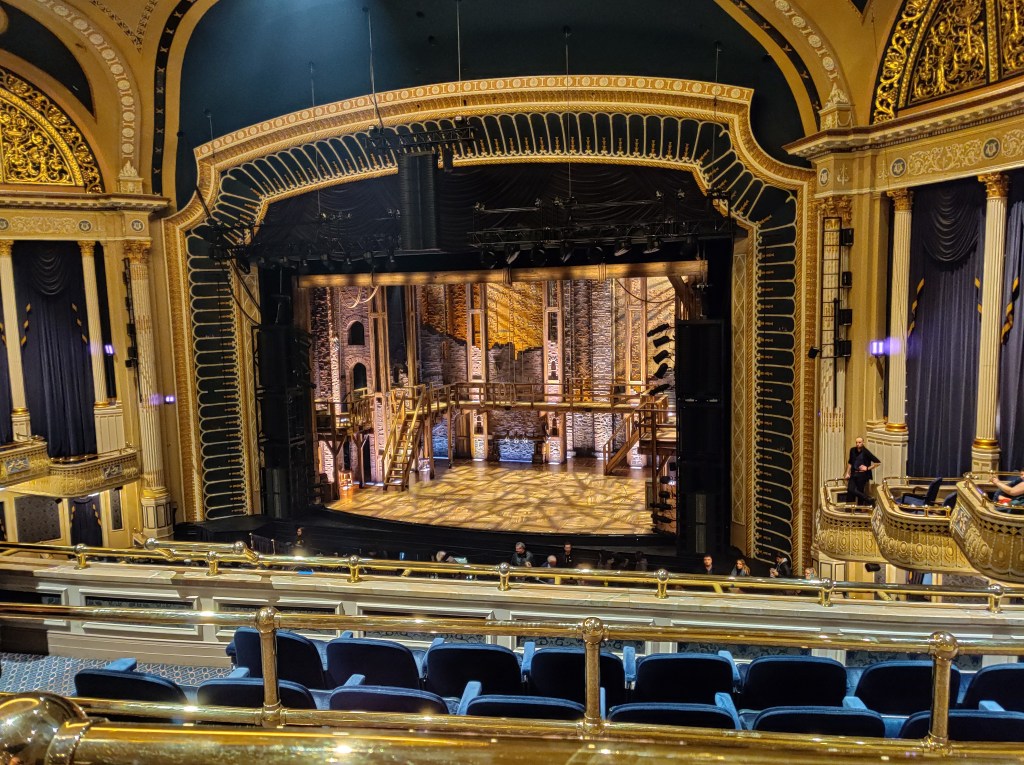
This past weekend, I had the privilege of seeing Hamilton the musical on stage. As I noted in my Instagram post, I was blown away by the experience, and was moved to tears by the performance. My emotional reaction was due, in part, to my having completed the audiobook a few weeks back. Had I not already been familiar with the story of Alexander Hamilton, I think I would have struggled a bit with the fast paced delivery of the lyrics.
In my mind, the musical is perfect – it is a shining example of why art exists and what it is capable of. Hamilton the musical takes a 35-hour book, of which spans the nearly 50-year life of Hamilton, and distills it down into a powerful 2-hour performance.
There are so many fantastic elements of the play. I don’t want to spoil the experience, but I can’t not list some of my favourite parts.
For instance, in the second song, a throughline is set-up that spans Hamilton’s life where he ambitiously declares that he won’t throw his shot (waste an opportunity to advance himself). But, at the end of his life, when he is dueling Aaron Burr over a matter of honour, he chooses to “throw his shot” (raise one’s weapon in the air to waste your shot, signalling that you are not participating in the duel) as he becomes morally opposed to dueling. It was haunting to hear this theme get set up so early.
I loved the use of space on stage. The floor was set up with two circular discs that could rotate in different directions, which meant that the actors could allow the stage to carry them around the space to give the illusion of traversing great distances.
Speaking of those discs, there were a few moments in the play where things could freeze in time or rewind. The actors could halt in tableau, but the discs would rotate them around, giving the appearance that they were reversing in time. This was so cool to see – we were able to watch a scene play out twice: once from Hamilton’s perspective, and one from the narration of a side character who was singing her motivations while guiding the scene along.
I’m not normally a great fan of dancing, but even the bodily movements of the performers had me transfixed. The ways they moved around to evoke things like battlefield war, or Hamilton feeling at the centre of a hurricane made me forget I was watching a play on stage.
So many other elements came together in amazing ways – how they used space on the stage to signal travelling over vast distances, how costumes took on symbolic meanings, the politics of ceding from England through the Kings’ songs, and the incredible attention to detail of every word spoken, rapped, and sung by the cast. The last straw was Eliza getting the final word. So. Good!
The experience was so wonderful and memorable, I can’t put into words what it meant for me to see it. I simply don’t have the vocabulary developed to articulate how smart and charming the musical was. It was a pure masterclass of how to put together a modern piece of art to tell the story of one of the United State’s founding fathers – a man whose impact lasts through to today, but whose legacy is unknown to most everyday persons.
I’ll end with one final note. In the premiere week of the show in Toronto, the CBC news company ran a short piece about the show. Within the segment, they showed a clip of an interview with the musical’s writer and original-run star, Lin Manuel Miranda, where he gives advice to up and coming playwrites. Now, granted, his words are meant to speak to marginalized voices who fall outside of what is deemed normal or popular art. However, his words, more generally applied, can speak to the creative urge in all of us.
“Well, I’ll tell you the only advice I can give is: write what’s missing. Write what you don’t see on stage. I started writing in the Heights because I really wanted a life in musical theatre and so I wanted to write the kind of show I wasn’t seeing. So, don’t write the next Hamilton. Write what isn’t Hamilton. Write the story that only you can write.”
Last week, I gave a highlight of the best books I read in 2019. Below, I present what I read in 2019. By comparison to 2016, 2017, and 2018, last year was a paltry year in reading for me.
Title
Author
Date Completed
Pages
1
Harry Potter and the Deathly Hallows
J.K. Rowling
6-Jan
640
2
The Bullet Journal Method
Ryder Carroll
31-Jan
320
3
Daring Greatly
Brene Brown
4-Feb
320
4
Trumpocracy – The Corruption of the American Republic
David Frum
25-Feb
320
5
Drive
Daniel H. Pink
4-Mar
288
6
Twilight
Stephenie Meyer
10-Mar
544
7
The Gift of Failure
Jessica Lahey
12-Mar
304
8
Better – A Surgeon’s Notes on Performance
Atul Gawande
27-Mar
288
9
The Graveyard Book
Neil Gaiman
11-Apr
368
10
Bad Blood
John Carreyrou
9-May
352
11
Atomic Habits
James Clear
23-May
320
12
Built to Last
Jim Collins
25-May
368
13
Digital Minimalism
Cal Newport
30-May
304
14
Right Here Right Now
Stephen J. Harper
14-Jun
240
15
Mastery
Robert Greene
20-Jun
352
16
Complications – A Surgeon’s Notes on an Imperfect Science
Atul Gawande
25-Jun
288
17
Vagabonding
Rolf Potts
29-Jul
240
18
Becoming Superman
J. Michael Straczynski
4-Aug
480
19
A Game of Thrones
George R.R. Martin
11-Aug
864
20
Ultralearning
Scott H. Young
31-Aug
304
21
Reader Come Home
Maryanne Wolf
11-Sep
272
22
The Threat
Andrew G. McCabe
14-Sep
288
23
Indistractable
Nir Eyal
19-Sep
300
24
Permanent Record
Edward Snowden
22-Sep
352
25
The Path Made Clear
Oprah Winfrey
19-Nov
208
Total:
8924
I have a few thoughts as to why my reading rate dropped off significantly last year and what I can do about it in the year to come.
Life Pressures
Last year had a few significant pressures on my life that might have affected my desire to read. We started basement renovations early in the year, only to discover our basement’s foundation was cracked, requiring us to source quotes and opinions for repairs. This delayed our basement renovation, which didn’t finish until the summer. The protracted project weighed heavily on our minds throughout the year as we questioned whether we were making the right decisions for our home repairs, or whether we would need to make additional fixes later down the line.
Another big change for me was a change of my job at work. While I wouldn’t say it affected me as strongly as the basement renos, it disrupted my routine enough to impact my desire to focus on reading when I came home from work. Couple that with another full year as Board Chair for the non-profit I head up, and it left me with less cognitive bandwidth for self-improvement.
Podcasts and Music
If 2016 was my year of purchasing books, 2017 saw me start to utilize Libby to access the library, and 2018 was an all-out race for me to go through as many audiobooks as my brain could absorb, I felt a greater push away from books in 2019. Instead of working my way through 8-15 hours of content for one piece of work, I found the shorter format of podcasts more satisfying on my commutes. I enjoyed the variety in topics, shows, and voices.
However I also found I was drawn back to listening to music instead of information. With the sheer volume of books I’ve consumed in the last three years, it was nice to go long stretches without a goal of getting through books (or trying to learn new things) and instead allow the melodies, riffs, percussion, and lyrics sweep me away.
Book Burnout?
Overall, my rate for the year was a bit varied. I started slow in January and February, then picked back up in March. April only saw one book completed, then I found my footing again through May onward. However, October is when my wife and I traveled abroad for our honeymoon, and I never recovered my reading habit for the rest of the year.
Given that I spent most of the last three years focusing on business, personal development, and productivity books, I didn’t feel a strong desire to read those books in 2019. Even among the books I did read from that area, I found looking back that I don’t remember anything of note from those books. Neither the book’s theses nor the examples they offered have stuck with me as I enter the new year.
I’ve mentioned a few time the concept of the animated bibliography on this blog, and I think I’ve hit peak saturation for the genre. I’ve read the canon, and find that reading new books in the genre is resulting in diminishing returns; that is, I’m not really seeing a lot of new insights being offered that leaves me wanting more.
In my list last week, I commented that the books that I’m drawn to now is starting to shift away from business and productivity and more towards moral lessons found in fiction, biography/memoir, and journalistic explorations of current events. That’s not to say I won’t continue to be tempted to pick up the latest book that promises to fix my life, but it does mean that I’m intending to be more selective in what I choose to prioritize.
Assuming I continue to live a somewhat healthy life that is free from accidents, I figure that I have around 45-50 more years of life left. If I read around 3 books consistently per month, I will get another 1,650 books in my lifetime (4 per month is 2,208 books, and 5 books per month is 2,760 more books before I die). While that sounds like a lot, it’s a drop in the bucket compared to the number of books that come out each year and the books that have already been written. There is more to life and learning than being more productive or seeking more meaning in one’s life. I’ve grown to appreciate the value of storytelling this past year, and there are a lot of stories out there to sink into. If I only get access to a few thousand more stories, I should make sure they count.
In the waning days of 2018, I gave a preview of the books I read for the year by listing my top five books. I doubt my current list of books will grow before the new year chimes in tomorrow night, but I will save the 2019 list for next week, and instead present you with my top books I read this year.
My overall volume of reading this year was less than half of what I read last year. Since 2016, I’ve intentionally set about to increase my reading and I was able to keep the pace for three years. However, for some reason my reading slowed down a bit. I’ll reflect on this over the coming week and share some thoughts with my 2019 reading list post. Given the relatively short list this year, I will instead highlight all of my favourite books since it seems that these were the books that stuck with me.
In chronological order of when I finished them, here are my top books I read in 2019.
The Graveyard Book – Neil Gaiman
A delightful fictional story about a boy who grows up in a graveyard among ghosts and other creatures of the night. Rather than a horror story as you might expect from the premise, instead this is a charming and whimsical coming of age story that gripped me from start to finish. Like all good stories, I was sad when the book was over and missed the characters dearly.
The story of the rise and fall of Elizabeth Holmes and the Theranos company. Not only is this book a journalistic account of the deceptive “science” and events surrounding the failed tech venture, but it also explores the toxic achievement culture at the company’s top and the lengths the journalists and ex-employees had to go to in order to bring the company down. It’s a riveting story to experience, and I was happy to hear of the Ethics in Entrepreneurship initiative founded by two of the whistle blowers.
This memoir took me to the highest highs and the lowest lows. While Straczynski is known for his ability to craft human stories in the most magical and alien of settings, none of his work of fiction can come close to matching his own personal story of growing up in an abusive home and how that shadow followed him throughout his life. Running in parallel with his own story, he also tells a mystery story about his family’s origins that spans three generations. I mostly started this book to learn about his craft and the origins of some of my favourite projects he’s worked on, but in the end I witnessed a masterclass in writing and reflection.
With the end of the show this year, I felt like it was time for me to crack into the books that kicked-off the phenomenon. I am grateful that I watched the series first as it really helped me keep track of all of the characters in this massive tale. Also, reading a large fictional story was a welcomed relief. Over the last three years, my primary genre to read is at the intersections of business, productivity, and personal development. I think one thing that has lead to me reading less is feeling burnt out of that kind of content, so it was great to read something for pleasure. I am still proud of going through 500-pages while up at the cottage; there is nothing quite like reading by the lake.
Thanks to the Libby app and the library, I was able to check out books I otherwise wouldn’t have encountered if I had to purchase them. I wasn’t sure what to expect, but this memoir was fascinating. I’m drawn to books where people look over their life and career to draw lessons when connecting their experiences. Whatever the political climate we find ourselves in, I find it somewhat reassuring to know there are people in the deep state who work to put the mission above party, though as more evidence comes to light, that faith is beginning to crumble.
Despite the subject matter, there is no other word I can think of to describe this book than “awesome.” And I mean “awesome” in both senses of the word. The book inspires “awe” at the sheer scope of things, but also a riveting tale of Snowden’s life to date, full of creativity, ingenuity, and technological espionage. I marveled at the fact that he is only a few years older than me, but what he has gone through is likely to dwarf any contributions I’ll ever make. I hope he can come home one day, but for the present I hope he remains safe while the effects of his actions continue to simmer in the current political climate.
In looking over my top books for the year, we see three genres stand out – fantasy, current events journalism, and memoirs. I would have also included biography in this list, however one book is missing that I unfortunately couldn’t finish before it was checked back in to the library: Hamilton by Ron Chernow. It’ll get added to my 2020 list when the library finally releases it back to me.
As I said above, I think I’m starting to burn out of the business and productivity genres of books. When I reviewed the list for the year, I had almost no recollection of the content for nearly all of the books. It would seem I’ve hit a bit of a block, where I’ve consumed so much content in a short amount of time that I’m failing to hold on to it (or, as a corollary, the content is so superficial that it doesn’t stick…).
I still have a number of books on the go that I hope to finish early next year (such as the first Witcher book that the game and Netflix series was based on, Robert Greene’s Laws of Human Nature, and Working by Robert A. Caro, to name a few). Once I clear some of the current backlog, I plan to start selecting my reading a bit more intentionally so that I can reflect on the lessons the books have to offer. Overall, the main themes that stick out in the books that speak to me personally are good moral stories, cautionary tales, and the reflections of/about people over a long period of time to draw connections and lessons from their life and work.
It is sometimes amazing how cyclical social and political problems can be. While I am not pessimistic in our ability to move forward in something that can be recognized as “progress,” I do have some cynical attitudes towards our collective habit to backslide. I realized some time ago that while we espouse enlightened positions, such as “never again,” people as a whole tend to by historically myopic and prone to letting fear get the best of them – or to quote Agent Kay “A person is smart. People are dumb, panicky dangerous animals and you know it.”
As of writing, I’m working my way through Ron Chernow’s biography of Alexander Hamilton. Around ten-hours into the audiobook, Chernow is discussing the political maneuvering between Hamilton and New York Governor George Clinton over trying to get the newly-drafted Constitution ratified in 10 States in order to bring it into force. The two sat on opposite sides of the federal government question, with Hamilton believing a strong central federal government was the key to sustaining the American experiment, while Clinton was distrustful of a central government superseding the power of the States. Hamilton had a poor opinion of Clinton, believing Clinton to be only concerned with consolidating his own wealth and power, and only pandering to the populace when elections rolled around.
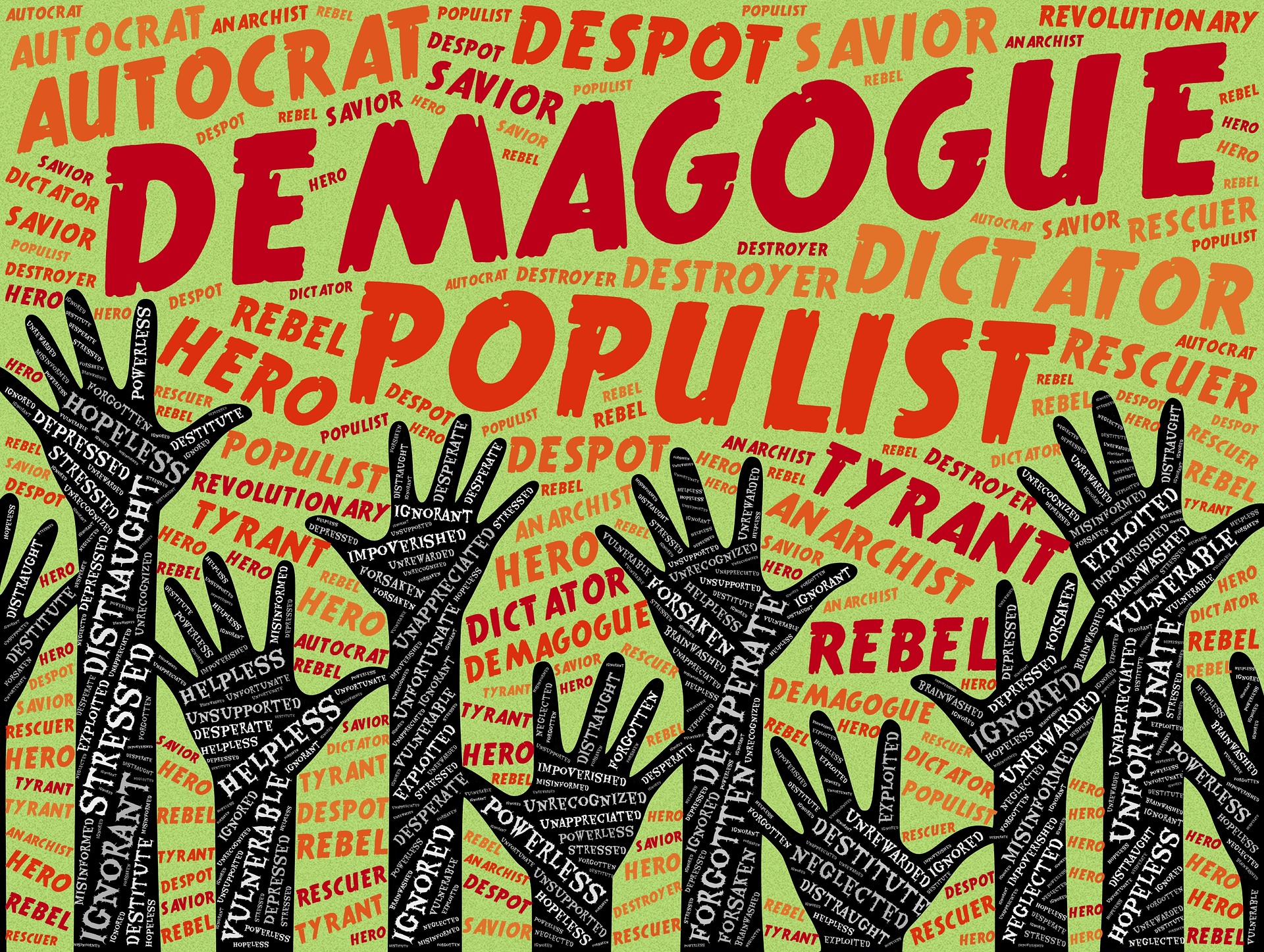
Chernow gives a striking description of what Hamilton feared, and in a single line spells out a looming threat we are seeing anew in our own modern political discourse. Hamilton worried that “American democracy would be spoiled by demagogues who would mouth populace shibboleths to conceal their despotism.”
Chernow penned those words some fifteen years ago. Whether it’s 1788, 2004, or the dawning of the neo-20’s, the fears expressed in those words caution us that we must remain vigilant against those who seek to exploit our fears to manifest their vision in reality.
Despite my rant a few weeks back on the podcast-book marketing relationship, there are a few authors I will check out when they appear on podcasts I’m subscribed to. For instance, Ryan Holiday just released his new book and is out promoting it to various podcast audiences.
He appeared on Rolf Pott’s podcast, Deviate, and had a conversation about what it’s like to write a big idea book. Towards the end of the episode, he makes an off-hand remark on getting ideas from recently published books, and how he chooses not to do this because it tends to result in recycling the same academic studies. Given how much I rant about animated bibliographies and short term content bias, I was happy to see some convergence in our ideas – that my amateur attempt on commenting on culture is shared by people I admire and hold in regard.
I’ve transcribed his remarks below, but you can go here to listen to the episode yourself. Holiday’s comments begin at the 50:37 mark:
Potts: And that’s why you should feel blessed not to be an academic, right, because that’s such a useful model from which to write a book. The academic world has these different hoops to jump through that often aren’t as useful. And I would think that, sometimes, there’s types of research, like, do you do much Google or Wikipedia research, or is it mostly books?
Holiday: Yeah, I mean, you have to be careful, obviously, relying on Wikipedia, but yeah you do wanna go get facts here and there, and you gotta check stuff out. I like to use obituaries. Let’s say I’m writing about a modern person and they’ve died. New York Times obituaries, Washington Post obituaries often have lots of really interesting stuff. Then you can be really confident that dates and places and names are all correct because they’ve been properly fact-checked. So I like to do stuff like that. I watch documentaries from time to time. In this book, there wasn’t really a great book about Marina Abramović, but there was some really great New York Times reporting about her Artist is Present exhibit, and there’s also a documentary with the same name. So I’m willing to get stuff from anywhere provided I believe it’s verified or accurate, but you can’t be choosy about where your stuff comes from. And in fact, if you’re only drawing from the best selling books of the last couple of years, just as an aside, an example, I find when I read a lot of big idea business books, it feels like they’re all relying on the same fifteen academic studies. It’s “the will power” experiment, and “the paradox of choice” experiment, and the “Stanford Prison” experiment! They think it’s new because it’s new to them, but if they’d read a little bit more widely in their own space, they’d realize that they’d be better off going a bit deeper or treading on some newer ground.
*****
(Note: I’ve lightly edited the transcript to remove filler words and some idiolects).
I’ve been reading Scott Young’s recently released book, Ultralearning, and I think it’s a pretty good summary of how one can take on an intense learning project for personal and professional development. It functions like an autodidact’s road map with plenty of good tips, insights, and stories to round things out. Elements of the animated bibliography are present, but I don’t find it contrived in its execution. The stories help frame the chapter and serve as an introduction to the core material.
It’s funny how last week I was talking about mnemonic devices, because after drafting that post I ended up reading about the concept in Chapter 10 of the book as it dealt with ways of supporting retention of material you learn.
In chapter 9 of the book, Young talks about ways of providing feedback in the learning process, whether the feedback is provided from others or feedback you can use in your own learning process. He parses out three kinds of feedback that I found interesting, not only for my own personal use in learning, but also as something I should keep in mind as a teacher.
The three kinds of feedback he outlines are outcome feedback, informational feedback, and corrective feedback. Each type of feedback serves a specific purpose, and you should be mindful of the context the feedback is given, as the wrong type of feedback can set you back in your learning.
Outcome feedback – provides information on whether you are getting answers right or if you are meeting a pre-identified set of learning objectives. It tells you that you are right but doesn’t give any indication of why (or why you are wrong).
Informational feedback – provides further information to explain the underlying reason why something is right or wrong. It can be informative to re-affirm what you have learned, and can identify key areas of strength or weakness, however it does not create a concrete process forward.
Corrective feedback – provides, as the name indicates, a path forward for the learner in terms of how to overcome deficiencies. It details not only how one is right/wrong, why they are right/wrong, but how to address or avoid being wrong. This type of feedback not only requires a level of comprehension of the material, but requires sufficient understanding to teach the underlying processes to the learner through explanation, demonstration, suggestion, etc.
As a teacher, it’s important to know what kind of feedback is warranted and under what circumstances. Most of us tend to focus just on outcomes, but students often don’t learn from pure outcome assessment. Rather, you need to take the further steps to go beyond an evaluation and ensure you are addressing the underlying deficiency present in the student’s performance. Outcome assessment is awesome because it’s quick and definitive, but it’s also lazy if your goal is to improve your students. On the other hand, corrective feedback is desirable but it’s labour-intensive and must be done carefully so as not to remove critical thinking from your student – you don’t want them to merely follow your instructions but instead you want to promote their thinking and reasoning through problems without your guidance.
I admit that the kinds of videos I watch on YouTube and the kinds of books I read tend to gravitate towards a certain kind of self-help genre, where some productivity or business person is giving me a set of systems and protocols to follow to help me “hack” my way to a more fulfilling work and life. These kinds of content are usually well-made but suffer from a shallowness of insight. It’s not that the authors are deliberately trying to dupe me (at least I hope not!) but the unfortunate reality is that the incentive structures that lead to engagement online and sale of products means that in order to publish, you need to publish fast and loose.
Books that get published are usually a small essay that gets padded out with animated bibliography research or a year-long experiment where the author tests out the ideas in the short-term and reports back on what they experienced and learned about themselves. There might be small kernels of originality and insight in there, but the rest of the book is a repackaging and restatement of the research and writing of others. It is without irony that I wager that the same 20% of landmark examples appear at least once in 80% of the books out there.
YouTube videos run into some similar issues. Often, I find that the videos are short think pieces and experiments that people run as a blog series or retrospective. The editing is fast and smooth, and the experiments are reported on based on impressions from the first week, month, and sometimes quarter.
In both of these mediums, we see a presentation of the short-term result with little follow-up on the long term impacts. On small occasions, a writer might follow-up on some of the ideas in a second book that is a direct result of the first, but by and large we don’t have insight into the impact the changes had over the long-term.
This bias towards short term content make sense. Authors and content developers need to create products quickly in order to ensure a viable revenue stream, and once you write about your niche and experience, life moves too slowly for you to be able to keep up with that pace. As a result, they would start to publish on things that are more nebulous and propped up by the work of others (hence, animated bibliography).
The best books with the deepest wisdom are often, as Taleb notes, ones that have been around for more than 50 years. I’d add to that that books published as the culmination of one’s life work also fall into that category.
This is not to say that content coming out of the short-term process is worthless. In my opinion, my life and satisfaction has improved in quality over the last 3 years of intentionally reading these books. The problem is that after a while, very little surprises you and you start to see the same examples getting recycled.
You can tell who has recently released a book based on who is making their way through the podcast circuit. It’s never a coincidence if you see an author’s name pop up on the latest episodes of several shows your have saved in your playlist. I enjoy listening to these episodes to get book recommendations, and for the most part find that the shows don’t go into too much depth with the author.
This was pointed out by a friend of mine (thanks, Wil, for smashing my illusions!) when he commented that a show I happen to listen to lacks the depth he looks for in a good podcast. After he pointed that out, I saw it everywhere: the host of the show brings the author on, and by whatever means the talking-points get established, the show typically has the host ask 5-10 key questions that are ripped directly from the book. It reminds me of students who skip the reading because the whole thing is covered in class. You get a good sense of what the main points of the book are, but that’s about it. If you’ve read the book already, you might as well skip the podcast episode.
However, there are gems in some shows, and I spotted two a few weeks back. On two different shows, authors who had recently released books were chatting about the ideas in the book and the topic drifted to the idea-generation process. They were short asides, but I found them fascinating to hear how these authors come up with their ideas and structure the construction of their books.
You can give the shows a listen yourself, but I’ve summarized the main points below.
How do you set up the bounds of research? How do you delineate what you put in the book? What should I include in the book?
There will be a few topics you generally know should be in, but after that you don’t know.
Epstein starts with a broad search down rabbit holes. He used to think this was a bad thing and a waste of time, but now it’s thought of as a competitive advantage. Sometimes, though, you end up with a bunch of nonsense.
He creates a master thought list – citation and key ideas or sentences.
As these coalesce into a topic, he moves like-ideas together. When a topic emerges, he tags it with a title and creates keywords that he would use if he’s searching for it. Then he moves similar tags together and a movie storyboard emerges where one topic flows into the next.
The goal is to avoid it being a bunch of journal articles stitched together.
It’s a road map of his brain’s exploration of the topic.
Unlike academics who just read journals and don’t go in-depth, he uses his journalism training to talk to the people – more will always come out in conversation than what’s included in the text. Scientists will include interesting tidbits offhand that are related, but don’t expand on it, so it creates a thread to pull on. It’s also a good fact-checking exercise and makes the story richer.
How do you find ideas that are well-timed/timely with discourse on careers, technology, etc.?
He thinks, writes, and publishes all the time (especially blog posts and articles). He’s constantly reading and testing out ideas. He’s talking to people, having conversations, and seeing what topics emerges. It’s a work ethic to him to constantly be reading and writing.
He tests out what he’s interested in and see if others are interested. It might be foundational to something he works on over time, or it might wither because it doesn’t gain traction or doesn’t bear fruit.
To validate ideas: 1. He asks, “Are people talking about it, or leaving interesting comments on my blog posts?” 2. With ideas comes a sense of “mental confidence.” He asks “Is this working for me? Does it click as a structure to provide a workable framework for seeing the world?”
Over time, something will emerge and persist. It generates advice that’s useful, more evidence comes up, and it is applicable across situations.
The search is opportunistic, but once something emerges, he does a deep dive. (Kadavy evokes the fox-porcupine reference from Isaiah Berlin, popularized by Jim Collins).
 A Paramedic's Notebook