Citing Your Sources

writing-828911_1920
Image by Free-Photos from Pixabay 

While reading a post from A Learning A Day, I thought I’d keep the irony train rolling by linking to Rohan’s linked post from Derek Sivers about the perceived need to quote an idea’s source.  Specifically, I wanted to respond to this point:

2. School teaches us to reference. But we’re not trying to impress a teacher anymore. And every unnecessary fact dilutes our point.

I often reflect on the learning objectives I expect to achieve in a course lesson while teaching.  I try to parse out the meaningful things I want students to learn from rote procedural tasks that don’t serve a purpose.  The last thing I want to do is to reinforce the wrong lesson or derive the wrong conclusion from a student’s performance (e.g. did a student do well on a test because they understood the material, or because they are good at taking tests?).

Derek’s point above about references is well-taken and got me thinking: why do I want students to cite their sources?  I brainstormed a few reasons and listed them below with comments.

Reason

Thoughts

I want a student to be mindful of their research process (procedure). Having gone through writing my master’s thesis, it’s easy to lose track of references and citations if you don’t stay on top of it.  This isn’t super relevant to most assignment learning objectives, but it’s a good practice to have before launching into a bigger endeavor or capstone project.
2. I want a student to critically examine their own knowledge (what do they believe to be true facts, where did that fact come from, and why do they think it’s true). I’m not sure if making students cite their sources achieves this aim on its own, but I suppose I could use citation requirements to help guide them through this process.
3. I want a student to be mindful of idea ownership and give credit to people who have done work.


I’ve used this mostly in plagiarism cases where students copied work and submitted it as their own.  I try to distinguish between sloppy citing and outright theft, and I remind students that they shouldn’t get marks for work they didn’t do.  I’m still undecided if this is a rule of the academy or a legitimate thing to prevent fraudulently passing work off as your own in the future.  This point, though, is mostly relevant in academic contexts as opposed to Derek’s notes about doing this during conversations.
4. I want an easy way to see if the student did the work. This is a trick I’ve developed to see whether a student giving me their opinion is right by chance, or if they have informed their opinion by doing the course reading.  The same result could be gained if students inserted relevant information without citations, but the citations help to highlight this when I’m reading through their submission.  In other words, it makes my job easier.
5. I want to reinforce good academic writing habits. Using references is part of what it means to write academically, and is used as part of the integrity process.  This is only a good reason if my objective is to teach/reinforce academic writing for students.
6. This is the way it has always been done.


More cynically, requiring citations is part of the tradition, and who am I to question it?  It’s not a good reason to require it, but it is what it is.  I won’t included in the list to the left, but a more sadistic version of this is “I had to do it, so you have to (go through this rite of passage) too!”
7. I want to remain consistent with departmental policies and culture. Whether written or unstated, most departments adhere to some level of standards.  This was less the case for me in undergrad and it depended largely on the preferences of the prof.  By the time of my thesis, I ended up developing a hybrid referencing system that did not strictly follow any of the major citation methods.  I received no comments from anyone who reviewed my thesis on my citation practices.
8. It’s important to trace an idea’s lineage as much as possible to spot fabrication. If you are going to insert facts or conclusions into your work, it’s important to point to where you found them.  Without a citation or an adequate way of accounting for how you know what you purport to know, it’s possible that the information is made up.  Being able to trace these things helps, albeit this is more useful from a scholarship point of view, as I suspect a lay-reader isn’t concerned with checking a text for factual accuracy and instead takes it on authorial authority.

9.

Related – to see if a student is able to either properly reference work, or at the very least charitably restate ideas without dropping important content from the idea. This perhaps falls under sloppy citation practices, but on occasion students will misunderstand a piece of text and paraphrase or summarize information incorrectly.  Knowing where the student is drawing their source from can have pedagogical merit if you take the time to compare the student’s work with the source and discuss the divergence.

10.

Related – when an author cites their sources, a reader can use the bibliography of sources for further reading.


This is perhaps more for book nerds, but I love having references to be able to learn more for things that pique my interest.  This is, however, not the context Derek is referencing when he discusses giving citations during a normal conversation.  If Derek’s conversation partner was interested and want to know more, I’m sure they would ask Derek for more information.

11.

More abstractly, knowledge and academics is a web of mutually reinforcing facts, so academic writing is an extension of that reality. This one is a bit of a stretch as to why a student who is not adding to a body of knowledge is required to rigorously cite their sources in a pedagogical exercise, but I include this more epistemological point to try and be exhaustive.

12.

It’s a symbolic representation that the student (in most contexts) is not generating new or novel work/insights that creates new knowledge, but instead is remixing ideas from other sources. I think this is a good reminder of what the goal of the assignment should be (students are often far too ambitious in what they think they can reasonably achieve in x-number of pages), but I wouldn’t consider this to be an adequate reason to insist on proper citations.

13.

Like other skills, the act of referencing needs to be practiced. I’m sympathetic to this, but as Derek is implying, you should be practicing skills that transfer into other domains or that you will need.  In most instances, outside of school you don’t need to cite sources.

14.

Citing references is part of the argumentation process.  In order to build a successful argument, you must clearly express and state your premises, which includes any premises taken from the work of others (either their premises or their conclusions). I’m also sympathetic to this as I think everyone should keep in mind that arguments need to be made to help convey ideas.  It shows the logical chain from premise to conclusion and seeks to make the implicit explicit, and the unstated stated.

Other than a subset of the reasons above, a strict requirement for citations is often unnecessarily enforced in the classroom, and is almost never required outside of the academic setting.  I think there are some good pedagogical reasons to have students go through the effort  to cite their sources, but you should be intentional when teaching as to when those cases apply.  For instance, I am less strict about my students citing sources and instead I look for them to directly apply material from the course in their assignments (instead of giving me their opinions).

I enjoyed Derek’s point about how citing sources is a common trope in pop non-fiction, which sounds like a convergence on my ideas concerning animated bibliographies, or Ryan Holiday’s “15 academic studies” comment from a few weeks back.  Maybe Derek’s right – we should have more courage to integrate knowledge into our existing schema and be prepared to state things as facts instead of citing our sources.  I’m not sure I’m prepared to abandon the practice wholesale, but it has given me something to chew on.

Stay Awesome,

Ryan
Multi-Lifetime-Spanning Projects

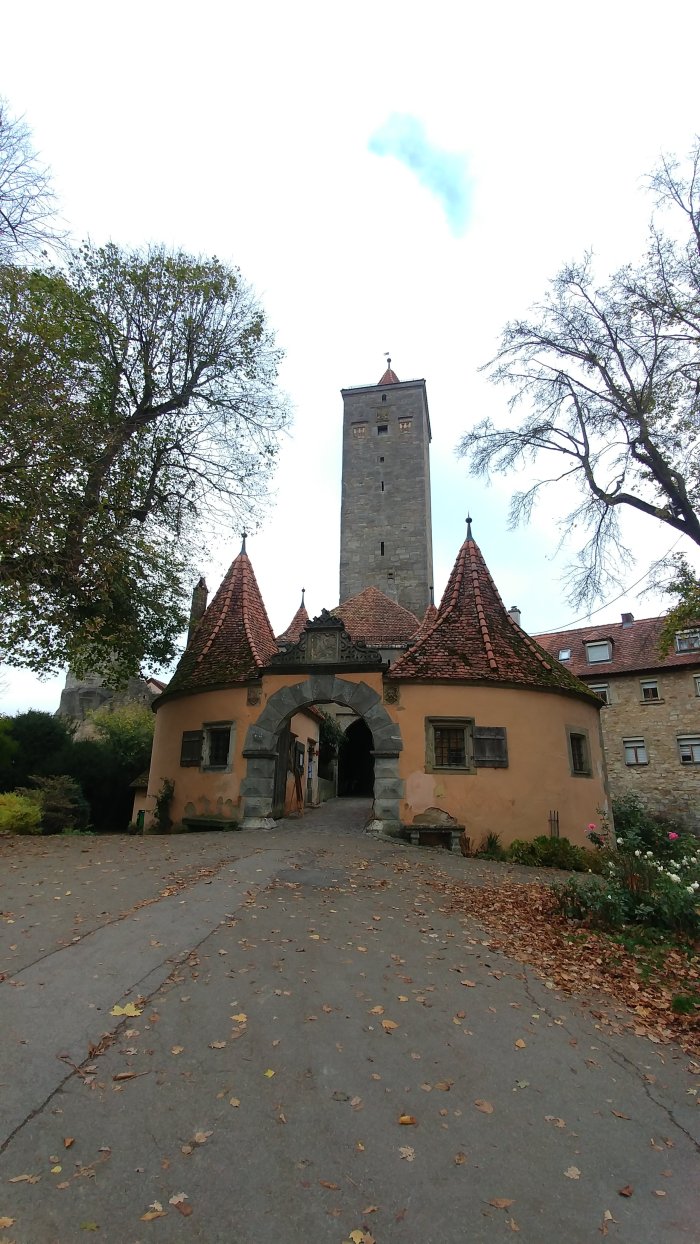
While on our honeymoon, my wife and I had the opportunity to visit Rothenburg ob der Tauber and received an excellent tour from the town’s tourism bureau. Our guide was a local (born and raised), and was a fantastic wealth of knowledge. Among the sites we visited was St. James’s Church.

While standing in awe of the church’s medieval design, our tour guide noted that the church’s construction started in 1311, and the final product wasn’t completed until 1484, 173 years later. The church was built in stages, with the first one spanning 1311-1322, then 1373-1436, and the final portion lasting from 1453-1471. It required the work and vision of four master-builders to see the project through to completion, and our guide remarked on what it might have been like for the first builders to start a project for their town that they knew they’d never see the completion of.

That has stuck with me since returning home. It reminds me of a Greek proverb (“Society grows great when men plant trees under whose shade they’ll never sit”), but seeing the results of this in the form of the church was deeply moving.

Our timescales are often limited in scope, and the rapid changes in technology have only accelerated our perceptions of change. I’m listening to Thomas L. Friedman’s book, “Thank You for Being Late,” and he remarked that prior to the last century it would take about 100 years for innovation to change society enough for people to feel the difference in their everyday lives. Now, that scale is measured in mere years for the developed world. I often take for granted how much things have changed over my life so far and I lose a sense of perspective in my sometime seeming doldrum existence.

I can barely imagine what it’s like starting a project like St. James’s Church knowing that not only will I not see the project’s completion, but that no one alive who will have seen it will likely have known me either. Everyone who had known me while alive would also have slipped away in the sands of time. Our tour guide mentioned that there were four builders who oversaw the project, and we only know the name of the last one. All that remains is that name and the building to persist through time.

At least in the case of buildings and churches, it’s easy to see how the final product will be used and valued by the future.  I think it’s harder to have the same faith of vision (pun somewhat intended) for a project that’s less well-defined as a public good, where not only will the thing be of use to future-people, but it will outlast you, everyone who ever knew you, and likely everyone who knew your children.

Stay Awesome,

Ryan

On The Bus – Hello and Thanks!

It’s been some time since I’ve had to commute on the bus.  As a student, the bus was my main mode of getting around town (and the occasional trip home), but in my post-student days, I’ve been privledged to have a vehicle of my own to commute in.

A few weeks back, I carpooled to Hamilton with my wife so that I could attend an ethics workshop at McMaster University.  After my business was done on campus, I took the bus from campus to her place of work.

I greeted the driver as I embarked the bus, paid my fare, and took a seat.  Instead of getting lost in whatever was on my phone, I took the opportunity to watch the streets as we drove by and listen to the sounds of the bus.

I was startled when I realized that I had forgotten that regular bus-riders always thank the driver when disembarking.    It was something I did back in my student days, and I was glad to see that not much had changed in the 5-7 years since I regularly rode the bus.

Given that I had forgotten this little gesture of appreciation and kindness, I wanted to take a moment in this otherwise dull blog to commit it to memory and share the sentiment.

Stay Awesome,

Ryan

Five* Digital Tools I Use

Last week I shouted from the rooftops about reaching zero unread messages in my inbox.  This feels like a good opportunity to geek out a bit on some cool digital tools I use for my process flow.  Below are a handful of applications and services I use to keep on top of things, which supplement any physical systems I use to stay organized (like my notebook, for example).  None of the referenced products below are sponsors and I have no business ties with them.

Boomerang (Paid)

I was introduced to Boomerang for Gmail a few years back and made use of their free tier for quite some time.  However, last year I made the jump to unlock some additional functionality and allow me to boomerang more messages per month.

Seamlessly integrated into Gmail, Boomerang allows me to kick messages out of my inbox and set to return at a predetermined time.  You may have noted in a caption that I mentioned “boomeranged messages;” this is what I was referencing.  If I have messages that I want to come back to, but I don’t want them to clutter my inbox, I use Boomerang to remove them temporarily without me forgetting about it.  Boomerang has other features, such as being able to append notes to myself or asking a message to return if no one responds within a certain time frame.  All in all, a great little service that doesn’t cost much for the year.

Evernote/OneNote

I use both Evernote (free) and OneNote (Enterprise).  I don’t really have a preference one way or the other at the moment, but I tend to use Evernote for personal items (saving notes, planning blog posts, etc.) where I use OneNote for Board work and my main job.  I was urged to go paperless by my boss, so I slowly adopted the services and moved away from extra notebooks and loose papers on my desk.  Especially within OneNote, I can use the attach document feature to put “print outs” of documents within a notebook page, then use my tablet’s stylus to annotate the document with handwritten notes.

Scanbot

Speaking of embedding print outs, I started using Scanbot for Android to capture paper documents and port them into my digital notes.  I like Scanbot over the regular camera because the AI recognizes the page and will use algorithms to digitally morph distortions of the page.  Instead of requiring perfect lighting and standing perfectly over the page, I can capture documents on camera and Scanbot flattens out and crops the image for me.  I’ve also found it handy for taking pictures of overhead presentation slides, and whiteboard writing.

Pushbullet

Pushbullet has a lot of features for pushing documents across devices, but I mostly use it as a way of preventing myself from always looking at my phone.  Instead, I can avoid temptation and quickly reply to text messages from my wife before jumping back into my task.  I know myself well enough that picking up my phone is inviting a trip down the rabbit hole of distraction, so Pushbullet really helps keep my monkey brain in check.  (Note: if you’re wondering about how I avoid distractions on my computer, I use the StayFocusd extension to block website during certain hours of the day)

Trello

Month over month, I will have lots of To Do items that are left incomplete.  I used to copy them over manually to the next notebook, but over time the list grew.  Out of laziness, I started porting those tasks over to Trello for longer term storage.  Yes, I should either discard those items I’m not doing or clearing my plate by completing the tasks.  However, there are items that are not urgent and not important enough to do at the time.  Instead, I’ve set up a kanban board that allows me to move tasks from a pool to an active list, then to a complete, abandon, or hold list, depending on the status of the task.  It’s a handy way of keeping on top of tasks that are not immediately pressing and allows me to use my notebook for day-to-day pressing concerns.

There are a few other tools I’m trying out, such as Toggl, RescueTime, Microsoft Teams, and Notion, but I’ll save those for a future post.

The five-ish tools above are a few things that makes it easy for me to keep on top of several process flows for work, my personal projects, and my volunteer work.  Without them, I would be drowning in trying to keep everything fresh in my mind.  Let me know what kind of tools you use (digital or analogue) in the comments below.  I’m always interested in learning what different people have set up for themselves.

Stay Awesome,

Ryan

First “Inbox Zero” In A Long Time

For as much as I read about productivity and “tactics,” I’m not all that organized, in my opinion.  I am forced to keep track of a lot of threads in my projects by necessity of having too much on my plate, so I make use of notebooks and applications to sort, categorize, and remind myself of things.  This includes my email inboxes – if something is unread, it means I haven’t tended to it yet and need to circle back.

From time to time I hack away at my unread messages, but items will sit there for long stretches during peak deadline times.

Last week, however, I hit inbox zero for my main account for the first time in a loooooong time.

inbox zero
Let’s ignore any messages currently in Boomerang limbo…

I honestly don’t remember the last time I hit zero messages in my inbox.  It’s been a long slow process of setting up filters on messages to get rid of promotions cluttering my inbox (which I started setting up in January).  I was tired of having to constantly decide whether I wanted to open promotional messages or auto-delete.  I didn’t want to block or unsubscribe from them all since I still used the promotions on occasion, but the constant, daily deluge of 30+ messages was draining.

I don’t really subscribe to the inbox zero system per se, but when I finally cleared the last message kicking around, I stared at my empty inbox in confusion.  It was weird to see.  And I feel a slight motivation to keep on top of clearing emails.  When a number pops up in the tab, an itching anxiety kicks in to get rid of it as soon as possible.

1 message

0 message
Demon be gone!

I feel odd celebrating something like this.  I know rationally that clearing emails isn’t really a marker of productivity.  Nevertheless, I think it’s important to celebrate those times when you feel a modicum of control over your life and work (even if it’s an illusion set up by my capitalist overlords… /s).

Knowledge workers, unite!

Stay Awesome,

Ryan


Beware the Salesman

Podcast ads.

Hacks and routines.

Blogs that promote and sponsored content.

Look to the incentives and see if they align with your own.

What’s in their interest might not be in mine.

This might change over time.  Sources that don’t sell might eventually sell.  There is a future where I might try to sell you something or join my mailing list.

Beware the one who sells you solutions for problems they don’t have.

Beware the sponsored content coming from authorities you like.

Beware the salesman who makes universal the particular.  The one who puts everyone into a clearly defined box.  The one who makes money on your problems.  The one who charges to join their community.

I’m not saying these are all inherently bad things; merely that they merit many second thoughts.

Secret shortcuts don’t exist.  If they were valuable, they wouldn’t be secret and they wouldn’t be a shortcut – they would be the norm.

Everyone has to make a living.  Everyone has something to sell.  But not everyone has your best interest in mind.

Caveat emptor.

Stay Awesome,

Ryan

Memorization and my Campus Response Experience

In January of 2008, I was walking through my university campus’s student centre and passed by a table for the UW Campus Response Team, whom were recruiting volunteers for the new semester.  I doubled back, chatted with the team members, and signed-up to participate in their interview process.  I had taken first aid courses periodically during my cub scout and army cadet days, plus I had ran some basic first aid courses while abroad, so it felt like a good fit.

In retrospect, my “experience” was quite paltry, but I had shown the team managers that I had enough of the “right stuff” that they invited me to join the team and participate in the weekend training course they put on for new recruits.  It’s an intense crash course in first aid skills that were well beyond my experiences and the training spanned several hours Friday night and all days Saturday and Sunday, before you perform your final scenario test to qualify as a secondary responder.

The material covered was largely derived from emergency first responder courses, along with some material covered for pre-hospital trauma professions (e.g. fire fighters and paramedics).  The training was designed to create heuristics in the responder’s mind to quickly flow through critical details while gathering as much information as possible and start treatment momentum.  The last thing you want is for a responder to have to intentionally think through what steps they should follow, because it shunts cognitive capacity away from situational awareness and into operational procedures.

In an effort to automate one’s thinking, you end up doing a lot of mock scenarios and skill drills.  As a responder, you end up creating a script in your mind to follow.  The script is based on a common set of things to attend to, which you follow according to handy mnemonics and other memory aids.

Despite the mnemonics functioning to provide mental triggers for actions, you still need to learn the process to go along with the mnemonics, and from the start of training weekend, you only have precious few hours after training concludes for the day to encode the information out of your working memory and into longer term storage.

I needed a way to quickly drill myself and aid in recall.  The system I settled on was to get some window writable markers and write out my mnemonic devices on the bathroom mirror.  Every time I used or walked passed the washroom, I would attempt to fill in as many of the mnemonics as I could remember, and note where I made mistakes.  Through constant repetition, I was able to turn:

E
M
C
A
P
I
E

A
V
P
U

P
E
A
R
L

A
B
C
D

S
A
M
P
L
E

O
P
Q
R
S
T

Into

Environment check
Mechanism of injury?
Count the casualties
Allied agencies?
Personal protection
Introduce yourself
Events leading?

Alert
Verbal
Pain
Unresponsive

Pupils are
Equal
And
Reactive to
Light

Airway
Breathing
Circulation
Deadly bleeds

Signs and Symptoms
Allergies
Medications
Past medical history
Last meal/beverage intake
Events leading

Onset
Provocation
Quality
Radiation
Severity
Time

It was a quick and dirty way to give myself quick feedback on these concepts that I could readily apply to my first aid treatment during training and eventually on shift.  Any time I lost momentum or felt nervous about the judges evaluating me, I would mentally go back to my bathroom mirror and fill in the blanks.  I haven’t been on the first aid team in almost a decade but these concepts easily come back to me, even during my crazy nights at the bar.  It’s a testament to the stickiness of the ideas and the effectiveness of the drills.

Stay Awesome,

Ryan

Knowing When To Quit

A recent article talking about knowing when to quit/retire from teaching had me reflecting on my own experiences with quitting.  Truthfully, I can’t recall many instances where I quit something.  Often, I will drag out experiences long after they have been useful, and instead of quitting as an active decision, I’m more likely to let things fall away through neglect.  Perhaps there isn’t a strong difference between the two since my history is littered with things that I eventually stopped doing.  I suppose in my mind, the difference comes down to whether I made a decision to stop – whether I took ownership over the act.

The strongest instance where I actively made a decision was when I stopped hosting at the local karaoke bar.  I was three or four years into my tenure as a host, and for the most part I enjoyed the experience.  I had a regular crew of friends who would come in and make the night interesting.  However, towards the end, I grew to resent patrons coming in who weren’t my friends.  I worked the slowest night, so if things were quiet, we’d shut down early.  But if patrons filtered in and kept purchasing stuff, we’d stay open.  Catering to the average customer felt like a chore, rather than chumming with friends with our own song preferences and inside jokes.

I started to dislike going into work, and even to this day I don’t sing much like I did while I was a host.  I’ll grab the mic from time to time, but I don’t go out to enjoy karaoke anymore.  I still work security at the bar, but I stopped hosting all together.

I made the decision to stop hosting because a small part of me knew it was time to move on.  I learned what I could from the experience, cherished the memories it gave me, but I recognized that I no longer wanted to spend time doing it.  I think that’s the critical part in the art of quitting.  It’s not about actually quitting or the how.  Instead, it’s about recognizing when the time has come and why.

Sometimes we have to slog it out in things we hate.  We don’t quit those things because we assign value to the activity (or someone else has assigned value and we are dragged along for the ride).  But quitting is more than stopping a thing you don’t like.  It’s about recognizing when the thing is no longer of value to you; that it won’t take you where you need it to go.  It is the recognition that your time is better suited elsewhere.  The art of quitting ultimately comes down to taking an active role in how you choose to spend your time.

Stay Awesome,

Ryan

Emotional Baselines and Achievement

A recent SMBC comic discussing how humans tend to revert to emotional baselines got me thinking.  Go check it out; it’s humorously astute.

Shortly after the last Game of Thrones episode aired, reports came out that actor Kit Harington checked himself into a wellness centre to work on personal issues.  This was later corroborated with behind the scenes footage showing some of his emotional reactions as they filmed the final episodes.  Given that the show was one of his first major long-running parts, it’s not unreasonable that he’s experiencing complex thoughts and feelings around the show coming to a close.

Similarly, Olympian Michael Phelps appeared on Tony Robbins’s podcast and discussed his experiences with depression after his achievements in the pool.  He notes that after running on an emotional high from training and competing, returning to “normal life” without any substantial goals is a tough adjustment for athletes.  They spend long chunks of their lives devoted to a singular aim, and once they close that chapter of their lives, it can be difficult to find meaning in more mundane pursuits.  Instead of reverting to a normal baseline, their sense of balance is skewed and their baseline dips emotionally lower.

I’m neither an acclaimed actor nor athlete, but I have experienced similar emotional falloffs that helps me relate to what these two people might be going through.  After a summer of outward bound adventure in my army cadet days (we climbed mountains, glaciers, and biked through the Albertan countryside), I returned to my normal high school life and I experienced a week or so of crushing depression.  I felt that after climbing a mountain, what else could I possibly experience in life that would top that?  Setting aside that I was a teenager and lacked a more global perspective on life, in that moment I felt that I had peaked, and there was nothing left for me to achieve or look forward to.

The so-called “quarter-life crisis,” which for many coincides with graduating from four grueling years of undergraduate study, is a similar experience, where you no longer are striving towards a goal and now have to seek out to find your own meaning in life.  The vast, open stretch before you is daunting in its emptiness.  But, instead of possibility, you view the void with pessimism – what do I have before me that can possible measure to what has come before?

I don’t have children, but I suspect that the “empty nest” feeling that parents get when their children head out on their own is similar.  You’ve spent nearly two decades caring for your children, nurturing and guiding them towards self-sufficiency, and now that they are heading out, your goal is largely fulfilled and you need to redefine your identity and time in a post-dependent world.

When you experience the closing of a long-term goal that has spanned years, there seems to be a harsh recalibration period for your emotions.  Not only do you snap back to baseline, but you have to redefine your expectations for the baseline, and re-code that experience with a new sense of purpose and meaning.  The longer you stay in this limbo, it seems the harder you languish.

Achievement and success is wonderful, but I think we tend to only tell stories of the climb up the mountain and we tend to forget the back-half of the experience when we carefully climb back down, taking care not to fall back to earth.  I think sharing these stories is important because it lets us know we are not alone in the dark.

Stay Awesome,

Ryan