Emotional Baselines and Achievement

A recent SMBC comic discussing how humans tend to revert to emotional baselines got me thinking.  Go check it out; it’s humorously astute.

Shortly after the last Game of Thrones episode aired, reports came out that actor Kit Harington checked himself into a wellness centre to work on personal issues.  This was later corroborated with behind the scenes footage showing some of his emotional reactions as they filmed the final episodes.  Given that the show was one of his first major long-running parts, it’s not unreasonable that he’s experiencing complex thoughts and feelings around the show coming to a close.

Similarly, Olympian Michael Phelps appeared on Tony Robbins’s podcast and discussed his experiences with depression after his achievements in the pool.  He notes that after running on an emotional high from training and competing, returning to “normal life” without any substantial goals is a tough adjustment for athletes.  They spend long chunks of their lives devoted to a singular aim, and once they close that chapter of their lives, it can be difficult to find meaning in more mundane pursuits.  Instead of reverting to a normal baseline, their sense of balance is skewed and their baseline dips emotionally lower.

I’m neither an acclaimed actor nor athlete, but I have experienced similar emotional falloffs that helps me relate to what these two people might be going through.  After a summer of outward bound adventure in my army cadet days (we climbed mountains, glaciers, and biked through the Albertan countryside), I returned to my normal high school life and I experienced a week or so of crushing depression.  I felt that after climbing a mountain, what else could I possibly experience in life that would top that?  Setting aside that I was a teenager and lacked a more global perspective on life, in that moment I felt that I had peaked, and there was nothing left for me to achieve or look forward to.

The so-called “quarter-life crisis,” which for many coincides with graduating from four grueling years of undergraduate study, is a similar experience, where you no longer are striving towards a goal and now have to seek out to find your own meaning in life.  The vast, open stretch before you is daunting in its emptiness.  But, instead of possibility, you view the void with pessimism – what do I have before me that can possible measure to what has come before?

I don’t have children, but I suspect that the “empty nest” feeling that parents get when their children head out on their own is similar.  You’ve spent nearly two decades caring for your children, nurturing and guiding them towards self-sufficiency, and now that they are heading out, your goal is largely fulfilled and you need to redefine your identity and time in a post-dependent world.

When you experience the closing of a long-term goal that has spanned years, there seems to be a harsh recalibration period for your emotions.  Not only do you snap back to baseline, but you have to redefine your expectations for the baseline, and re-code that experience with a new sense of purpose and meaning.  The longer you stay in this limbo, it seems the harder you languish.

Achievement and success is wonderful, but I think we tend to only tell stories of the climb up the mountain and we tend to forget the back-half of the experience when we carefully climb back down, taking care not to fall back to earth.  I think sharing these stories is important because it lets us know we are not alone in the dark.

Stay Awesome,

Ryan



Making “Good” Choices and Aging

I’ve noticed something about myself: as time goes on, it’s getting easier for me to make “good” choices.  I’m not sure if everyone shares this and it’s a common thing as we get older, but I’m finding it easier to do things that I struggled with when I was younger.  Through some combination of experience, changes in my living conditions, and physiology, my ability to adopt certain habits and mindsets has improved.  Here are a few examples I’ve noted.

First, sometime around turning 30, I found it easier to start going to the gym and exercise.  Maybe it was the tail-end of the quarter-life crisis, but going to the gym (and paying for it!) seemed like a more important thing and it was easier to embrace.  The trick is to make the habit stick.

Also around the time I turned 30, I found it important to stop pirating media content.  Instead, I sought out legitimate sources for content, such as the library, paying the $1 for song and app purchases, paying for Spotify, renting movies on my gaming system, etc.  I’m not perfect – I still pirate foreign shows from fan sites that subtitle the content and I make liberal use of an adblocker, but overall I have shifted away from feeling entitled to content to valuing paying for it.

Recently, I found it super easy to start flossing.  This might also be an existential issue, where my teeth aren’t going to get any better, so it’s important for me to take care of my gums.

Even turning down junk food is getting easier.  I appreciate that my body is changing, and it no longer has the resiliency to allow me to eat whatever I want.  In my 20’s, I could eat anything I wanted at any time and I never felt sick because of it.  Now, I find that those same poor choices lead me to feeling off or ill in the hours that follow.  The food was never good for me, but in my 20’s I didn’t experience the short-term negative feedback that told me it was bad to consume junk (instead, it was just hurting me long-term through slowly accumulating body fat and other bad stuff).

This is not to say that I’m now perfectly virtuous.  I can’t get the gym habit to stick quite yet, I binge on Nibs and Netflix when the opportunity presents itself, I enjoy my craft beers, and I never go to bed on time.  I’ve been experimenting with systems to help stem my poor self-control (such as intermittent fasting or connecting my router to a timer) in order to give my rational brain a leg up on my monkey brain.  It’s a slow, steady, incremental slog towards progress, but I keep at it.

I suppose a common thread that runs through all of this is that the short-term downsides that come with bad decisions are finally manifesting themselves, which provides near-immediate feedback.  Rather than putting off the negative outcomes to some indeterminate point in the future, my body and attitude are giving me early signals that bad choices have consequences – consequences that can be mitigated if you address it now (exercise, good nutrition, and flossing are all forms of preventative maintenance, which Jim and I talked about on our podcast a few years ago).

This reminds of an exchange between Socrates and Cephalus from Book 1 of Plato’s Republic, when Cephalus is talking about what it’s like to be old and free from the passions of youth.  Being in my 30’s is a far cry from “being old,” but I think we can derive wisdom from the speech:

“I will tell you, Socrates, (Cephauls) said, what my own feeling is. Men of my age flock together; we are birds of a feather, as the old proverb says; and at our meetings the tale of my acquaintance commonly is –I cannot eat, I cannot drink; the pleasures of youth and love are fled away: there was a good time once, but now that is gone, and life is no longer life. Some complain of the slights which are put upon them by relations, and they will tell you sadly of how many evils their old age is the cause. But to me, Socrates, these complainers seem to blame that which is not really in fault. For if old age were the cause, I too being old, and every other old man, would have felt as they do. But this is not my own experience, nor that of others whom I have known. How well I remember the aged poet Sophocles, when in answer to the question, How does love suit with age, Sophocles, –are you still the man you were? Peace, he replied; most gladly have I escaped the thing of which you speak; I feel as if I had escaped from a mad and furious master. His words have often occurred to my mind since, and they seem as good to me now as at the time when he uttered them. For certainly old age has a great sense of calm and freedom; when the passions relax their hold, then, as Sophocles says, we are freed from the grasp not of one mad master only, but of many. The truth is, Socrates, that these regrets, and also the complaints about relations, are to be attributed to the same cause, which is not old age, but men’s characters and tempers; for he who is of a calm and happy nature will hardly feel the pressure of age, but to him who is of an opposite disposition youth and age are equally a burden.”

Source

Stay Awesome,

Ryan

Looking at Shadows – An Indirect Input for Decision Making

omer-rana-rZ7aO1lorLU-unsplash
Photo by Omer Rana on Unsplash

I have a trick for finding parking at work in the morning.  The trick I use doesn’t guarantee that I’ll find a good spot every day, but it does prevent me from wasting time driving up and down lanes when there are no spots available.  The entrance to the parking lot at work is at the far end of the lot, with the building on the opposite side.  This means that when you start your search, you begin at the furthest point away from the building and your search pattern will take you towards the building.

In terms of strategy, this means that the spots with the highest probability of being empty are both the furthest from the building and the closest to you when you begin your search.  This obviously makes sense from a safety perspective – if the cars were entering the parking lot closest to the doors, then pedestrians would be in greater danger of getting hit and traffic would always be impeded.  However, this means that it’s hard to determine when you enter lot where empty spots are among the banks of cars.  Due to poor lines of sight and the number of large trucks used by students, you often won’t see an empty spot until you are a few feet away.

If you rely on this strategy for finding the closest parking spot to the door, you’ll waste a lot of time driving around except in cases where you stumble across a spot (which I estimate would be a low probability event).  I’ve started using a strategy to avoid searching for those spots and reduce wasted time in randomly driving around.

My strategy attempts to address a number of constraints:

  1. My parking utility is maximized when I find a spot close to the door.  This reduces the amount of time spent walking, which is good for inclement weather, icy conditions, and because I’m usually running late.
  2. My parking utility is diminished when I waste time circling the lot searching for ideal spots.  Instead, I’m seeking a satisficing outcome that balances maximizing utility and minimizing search time.
  3. I’m competing against other actors as they also drive around seeking empty spots.  These people are usually students, who are also usually running late or seeking to reduce their walking distance.

Keeping these considerations in mind, this is the strategy I employ in the morning.

First, I’ve limited my parking search to one of the three lots.  By reducing my options, I can make quick decisions on the fly.  Lot 1 is directly in front of the door, and since I arrive before the majority of the students, I find that it satisfies my needs most of the time.  If Lot 1 is full, I move to Lot 2, and finally Lot 3 being most sub-optimal.

Next, on my way to the entrance of Lot 1, I scan the first row of cars for empty spots there.  Since I drive passed it, it allows me to quickly eliminate it if there are no spots, or at least gauge where the spots will be relative to any additional spots in the second and third rows of the lot.

Then, I use a trick to quickly assess the likelihood of empty spots.  I look at the shadows of the cars and pay attention to noticeable gaps.  When I enter the lot, I can see down the second (middle) row.  If I see anything, I drive towards the gap and usually there is a free spot (except in cases where someone has driven a motorcycle and not parked it in the motorcycle-designated lot).  If I see no gaps in the shadows, I move on to the third row and repeat the pattern.

The majority of the time, this gives me enough information quickly to know whether I need to drive down a row.  There are two limitations to this strategy: first, it relies on there being no cloud cover, and it doesn’t allow for east-facing shadows to be examined.  This is not a perfect strategy, but my goal is to maximize my parking preferences while eliminating my wasted time driving around the lot examining each parking spot hoping to stumble onto an empty spot.  Using this strategy balances these two interests and generally gives me a satisfactory outcome quickly.

A final consideration I use is to notice cars leaving the lot when I enter, and noting where they are coming from.  That is the fastest indication of where a parking spot is on the busiest days when I’m competing against other cars looking to park.

All of this occurs within about 15 seconds of me driving up to the lot at work.

If you have reached this point in the post, you might be wondering why I spent so much time explaining how I find a parking spot (is this really the best use of a blog???).  I think this example of setting up a solution to a problem is a fun way of explaining how I ideally like to approach a problem.  I try to consider what outcomes I’m aiming to achieve and work backwards to consider options that would fit those criteria.  In doing so, I have to consider what input I need to let me quickly assess a situation and make a decision by eliminating extraneous options.

It’s important to know when you need to be right, and when you need something to work well enough most of the time.  For instance, if this were a higher-stakes situation (say, I was doing surgery), I would want a strategy that would be the equivalent of finding the closest spot to the door every time.  Instead, I know that my goal is achieved if I reduce the amount of walking time and reduce the amount of time and fuel spent hunting for an optimal spot.

When coming up with a strategy, I knew that hoping to stumble across an empty spot would be a net increase in my search time.  So, I found a way to quickly gain information that would eliminate many non-options.  Rather than looking at the cars themselves, I instead look for gaps in shadows – an indirect indicator of outcomes I want.  It’s a simple heuristic that eliminates the need to confirm that cars are occupying spaces all the way down the long row.

While the strategy will not save me time in 100% of cases, it does shift the outcomes to a net decrease in search time, which meets my goals and gets me to work on time (most of the time).

Stay Awesome,

Ryan

Short Term Content Bias

I admit that the kinds of videos I watch on YouTube and the kinds of books I read tend to gravitate towards a certain kind of self-help genre, where some productivity or business person is giving me a set of systems and protocols to follow to help me “hack” my way to a more fulfilling work and life.  These kinds of content are usually well-made but suffer from a shallowness of insight.  It’s not that the authors are deliberately trying to dupe me (at least I hope not!) but the unfortunate reality is that the incentive structures that lead to engagement online and sale of products means that in order to publish, you need to publish fast and loose.

Books that get published are usually a small essay that gets padded out with animated bibliography research or a year-long experiment where the author tests out the ideas in the short-term and reports back on what they experienced and learned about themselves.  There might be small kernels of originality and insight in there, but the rest of the book is a repackaging and restatement of the research and writing of others.  It is without irony that I wager that the same 20% of landmark examples appear at least once in 80% of the books out there.

YouTube videos run into some similar issues.  Often, I find that the videos are short think pieces and experiments that people run as a blog series or retrospective.  The editing is fast and smooth, and the experiments are reported on based on impressions from the first week, month, and sometimes quarter.

In both of these mediums, we see a presentation of the short-term result with little follow-up on the long term impacts.  On small occasions, a writer might follow-up on some of the ideas in a second book that is a direct result of the first, but by and large we don’t have insight into the impact the changes had over the long-term.

This bias towards short term content make sense.  Authors and content developers need to create products quickly in order to ensure a viable revenue stream, and once you write about your niche and experience, life moves too slowly for you to be able to keep up with that pace.  As a result, they would start to publish on things that are more nebulous and propped up by the work of others (hence, animated bibliography).

The best books with the deepest wisdom are often, as Taleb notes, ones that have been around for more than 50 years.  I’d add to that that books published as the culmination of one’s life work also fall into that category.

This is not to say that content coming out of the short-term process is worthless.  In my opinion, my life and satisfaction has improved in quality over the last 3 years of intentionally reading these books.  The problem is that after a while, very little surprises you and you start to see the same examples getting recycled.

Stay Awesome,

Ryan

Thinking and Research Habits

You can tell who has recently released a book based on who is making their way through the podcast circuit.  It’s never a coincidence if you see an author’s name pop up on the latest episodes of several shows your have saved in your playlist.  I enjoy listening to these episodes to get book recommendations, and for the most part find that the shows don’t go into too much depth with the author.

This was pointed out by a friend of mine (thanks, Wil, for smashing my illusions!) when he commented that a show I happen to listen to lacks the depth he looks for in a good podcast.  After he pointed that out, I saw it everywhere: the host of the show brings the author on, and by whatever means the talking-points get established, the show typically has the host ask 5-10 key questions that are ripped directly from the book.  It reminds me of students who skip the reading because the whole thing is covered in class.  You get a good sense of what the main points of the book are, but that’s about it.  If you’ve read the book already, you might as well skip the podcast episode.

However, there are gems in some shows, and I spotted two a few weeks back.  On two different shows, authors who had recently released books were chatting about the ideas in the book and the topic drifted to the idea-generation process.  They were short asides, but I found them fascinating to hear how these authors come up with their ideas and structure the construction of their books.

You can give the shows a listen yourself, but I’ve summarized the main points below.

David Epstein
(promoting his book Range)
The Longform Podcast, episode 348 (starts at 21:08)
https://www.stitcher.com/s?eid=62028020

How do you set up the bounds of research?  How do you delineate what you put in the book?  What should I include in the book?

  • There will be a few topics you generally know should be in, but after that you don’t know.
  • Epstein starts with a broad search down rabbit holes.  He used to think this was a bad thing and a waste of time, but now it’s thought of as a competitive advantage.  Sometimes, though, you end up with a bunch of nonsense.
  • He creates a master thought list – citation and key ideas or sentences.
  • As these coalesce into a topic, he moves like-ideas together.  When a topic emerges, he tags it with a title and creates keywords that he would use if he’s searching for it.  Then he moves similar tags together and a movie storyboard emerges where one topic flows into the next.
  • The goal is to avoid it being a bunch of journal articles stitched together.
  • It’s a road map of his brain’s exploration of the topic.
  • Unlike academics who just read journals and don’t go in-depth, he uses his journalism training to talk to the people – more will always come out in conversation than what’s included in the text.  Scientists will include interesting tidbits offhand that are related, but don’t expand on it, so it creates a thread to pull on.  It’s also a good fact-checking exercise and makes the story richer.


Cal Newport
(promoting his book Digital Minimalism)
Love Your Work, episode 183 (starts at 49:30)
https://www.stitcher.com/s?eid=62048017

How do you find ideas that are well-timed/timely with discourse on careers, technology, etc.?

  • He thinks, writes, and publishes all the time (especially blog posts and articles).  He’s constantly reading and testing out ideas.  He’s talking to people, having conversations, and seeing what topics emerges.  It’s a work ethic to him to constantly be reading and writing.
  • He tests out what he’s interested in and see if others are interested.  It might be foundational to something he works on over time, or it might wither because it doesn’t gain traction or doesn’t bear fruit.
  • To validate ideas:  1. He asks, “Are people talking about it, or leaving interesting comments on my blog posts?” 2. With ideas comes a sense of “mental confidence.”  He asks “Is this working for me?  Does it click as a structure to provide a workable framework for seeing the world?”
  • Over time, something will emerge and persist.  It generates advice that’s useful, more evidence comes up, and it is applicable across situations.
  • The search is opportunistic, but once something emerges, he does a deep dive. (Kadavy evokes the fox-porcupine reference from Isaiah Berlin, popularized by Jim Collins).

Stay Awesome,

Ryan

Books on Vocational Reflection

I finished reading Complications by Atul Gawande last week and really enjoyed it.  It was his first book and covered stories from his apprenticeship phase of becoming a surgeon.  I thought back to the first book I read from him, The Checklist Manifesto, and realized that while I enjoyed the topic Manifesto covered, I found it lacking a certain charm that Complications had.

Manifesto felt like a good idea that was stretched a bit too thin to fit the book format, and was heavily supplemented with references to studies done by other researchers.  This isn’t meant as a criticism – it was a good book!  But what I felt Complications (and his other book Better) had is the first hand reflection on one’s professional development.  It’s not just a memoir of one’s life, nor is it a tell-all, but instead it’s a focused meditation on the training, learning, failures, achievement, and lessons one gains from devoting themselves to their vocation.

Over the last three and a half years of reading, I’ve found I really enjoyed these kinds of  books.  I looked over my reading list and pulled a bunch of examples randomly below.  Some of them are about medicine, others are of actors, and a few books from the business world.  The common thread is that it’s less about the personal biography of the person and more about the development of the professional (for this reason, I didn’t include Elon Musk’s and Enrico Fermi’s biographies, or career retrospectives like the books from James Comey and Hillary Rodham Clinton).

It describes a world bigger than the person telling the story, and their attempt to grapple with the epistemological, ethical, and professional obligations that comes from entering a profession, and where their limits lie.  These are not stories about heroes – the stories are about human error and fallibility, and learning to deal with that revelation.  It also keeps its eye towards what it means to serve others, and where the profession should go in the future.

Ultimately, these books differ from the animated bibliography in one crucial area.  The animated bibliography is often a book that results from a person researching and stitching together the ideas of others.  In some cases, these books will require the author to attempt to put the ideas into practice, but in my opinion this is in service of selling the credibility of the book.  However, the books I’m discussing here and listing below are different because they are an account of people who are learning by doing.  They are applying what they previously learned during formal education, and reflecting on the outcomes to see what lessons can be derived.  In some sense, the books are an autopsy that try to tease out causes, or at least serve as a cautionary tales for those who come later.


A Thousand Naked Strangers – Kevin Hazzard


Doctored – Sandeep Juhar


I’d Like to Apologize to Every Teacher I Ever Had – Tony Danza


Total Recall – Arnold Schwarzenegger

*Note – I include this mostly because of his telling of his time as a body-builder and actor.


A Life in Parts – Bryan Cranston


The Art of Learning – Josh Waitzkin


Shoe Dog – Phil Knight


Creativity, Inc. – Ed Catmull


The Checklist Manifesto – Atul Gawande


Better – Atul Gawande


Complications – Atul Gawande

Stay Awesome,

Ryan

The Runaway Blog Post

Short meta-post on blogging.

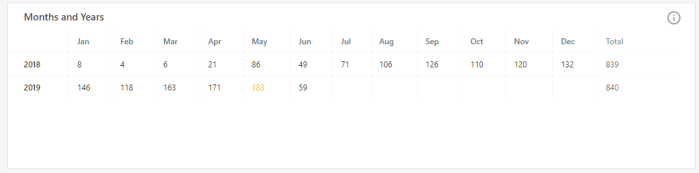
I’ve marveled a few times already that my Zombies, Run! training app review is my most popular post to date.  The screenshot below was taken June 12th, 2019.  Within six month of starting the new year, the post had more traffic than all of last year.

Zombies post stats

I’m curious if it will doubled again and I’ll be writing another post marveling how the post received the same number of hits within three months of the new year.  I doubt it, but the internet can be funny that way.

(Also, I’m fully aware that by constantly talking about it in blog posts, I’m increasing my traffic to it.  The observer effect is in full bloom and I’m sorry to muddy my data).

Stay Awesome,

Ryan

Masterclass in Political Oration – Jon Stewart

There are some people that when they speak, I will stop to listen.  We have many examples of people who are gifted public speakers, but to me few are more powerful than Jon Stewart, former host of the Daily Show.  He spoke at a House sub-committee hearing last week and so thoroughly presented his case, the bill passed unanimously.  I hope the initiative continues as smoothly through the House proper and the Senate, and is eventually passed into law, because the hypocrisy and virtue-signalling is appalling.  At the centre of Stewart’s argument is the notion that the sacrifice and bravery of the responders during 9/11 should be honoured by taking care of those who are suffering because of their service that day.

Public speaking as a skill is hard, but there is more than just vocalizing the words.  Stewart’s presentation, his ethos (he has earned the right to speak through his work), his pathos (the passion he speaks from on behalf of those he’s fighting for) and the pure logos (no one can form a devastating argument from observations the way a comedian can) all come together to give us a masterclass in political oration.

Give it a watch.  It made me feel choked up.


Stay Awesome,

Ryan

Livestreaming For My Students

Last week, I tried a new tactic to engage with my students.  I was inspired by two workshops I attended during Conestoga’s annual E3 (Employees for Excellence in Education) Conference.  The first workshop covered how to write good assignment prompts, with clarity and purpose in mind, and the second covered strategies for writing for online courses.  In the course I manage online, my students were preparing to submit their first major philosophical paper, and historically my students do poorly on the writing side.  I largely attribute this to it being their first time trying to write a philosophical paper and their only exposure to this point was either essays in high school or non-philosophy essays for other courses in college.  After sitting in on these two workshops, I reflected on what I could do, in an online course, that would improve my student’s ability to write.  It’s challenging to engage with online students for two reasons:

  • first, you (almost) never meet your students face to face, so you lose the ability to use tone, voice, inflection, and body language to convey information, and
  • second, online courses are atemporal, which means you don’t engage with your students at the same time.

An idea I’ve been kicking around for some time is creating a video for my students as an added bit of content for the course.  The problem with this option is it’s still fairly static and easy for students to skip if they feel it doesn’t contribute to improving their assessments.  It also goes in one direction, where I speak at my camera rather than engaging with the students.

However, I’ve been mulling over another option.  I have borrowed a web camera from my podcasting partner, I have a good microphone, and I delivered a webinar with a live Q&A in the middle of May.  I considered running a livestream last semester, however when I offered the option to the students, I had no requests for it.  But this semester, I decided to set it up and run it, regardless if students attended or not.  At worst, it would be a wasted hour of my time.  However, the benefits would be two-fold: my students would have a chance to interact with me and ask me questions about their assignment, and it would give me practice with a new skill set.

I picked a date and time, figured out how to broadcast (in the end, I went with Twitch, but next time I’ll test out YouTube Live) and went for it.  I had 4-7 students drop in, which is fairly low engagement, however the questions were really good and I had a lot of fun actively engaging with students again.

One unfortunate thing was I didn’t set up the system to auto-record, so I don’t have a copy of the livestream to review or upload.  I ended up recording a second (static) video to cover the main points so that my students had something to reference when they were completing and submitting their essays this past weekend.

It was a good experience and I plan to run at least one livestream per semester moving forward.  I have yet to grade the papers, so I don’t know if I had a material impact on their performance, but in time I hope that my students will get better with the added direction I can give them.  I also now have a video that I can post to help them think through the process of writing a philosophical paper.  If nothing else, it’s good to build handy resources and have them available for your students.  My goal is to help my students improve their thinking and writing as a result of taking my course.  Even if their papers are 1% better as a result of my direction, it’s worth it.

Stay Awesome,

Ryan