Top *6* Books Read in 2019

pile of books beside white printer paper and black ballpoint pen
Photo by Debby Hudson on Unsplash

In the waning days of 2018, I gave a preview of the books I read for the year by listing my top five books.  I doubt my current list of books will grow before the new year chimes in tomorrow night, but I will save the 2019 list for next week, and instead present you with my top books I read this year.

My overall volume of reading this year was less than half of what I read last year.  Since 2016, I’ve intentionally set about to increase my reading and I was able to keep the pace for three years.  However, for some reason my reading slowed down a bit.  I’ll reflect on this over the coming week and share some thoughts with my 2019 reading list post.  Given the relatively short list this year, I will instead highlight all of my favourite books since it seems that these were the books that stuck with me.

In chronological order of when I finished them, here are my top books I read in 2019.


The Graveyard Book – Neil Gaiman

A delightful fictional story about a boy who grows up in a graveyard among ghosts and other creatures of the night.  Rather than a horror story as you might expect from the premise, instead this is a charming and whimsical coming of age story that gripped me from start to finish.  Like all good stories, I was sad when the book was over and missed the characters dearly.


Bad Blood – John Carreyrou

The story of the rise and fall of Elizabeth Holmes and the Theranos company.  Not only is this book a journalistic account of the deceptive “science” and events surrounding the failed tech venture, but it also explores the toxic achievement culture at the company’s top and the lengths the journalists and ex-employees had to go to in order to bring the company down.  It’s a riveting story to experience, and I was happy to hear of the Ethics in Entrepreneurship initiative founded by two of the whistle blowers.


Becoming Superman – J. Michael Straczynski

This memoir took me to the highest highs and the lowest lows.  While Straczynski is known for his ability to craft human stories in the most magical and alien of settings, none of his work of fiction can come close to matching his own personal story of growing up in an abusive home and how that shadow followed him throughout his life.  Running in parallel with his own story, he also tells a mystery story about his family’s origins that spans three generations.  I mostly started this book to learn about his craft and the origins of some of my favourite projects he’s worked on, but in the end I witnessed a masterclass in writing and reflection.


A Game of Thrones – George R.R. Martin

With the end of the show this year, I felt like it was time for me to crack into the books that kicked-off the phenomenon.  I am grateful that I watched the series first as it really helped me keep track of all of the characters in this massive tale.  Also, reading a large fictional story was a welcomed relief.  Over the last three years, my primary genre to read is at the intersections of business, productivity, and personal development.  I think one thing that has lead to me reading less is feeling burnt out of that kind of content, so it was great to read something for pleasure.  I am still proud of going through 500-pages while up at the cottage; there is nothing quite like reading by the lake.


The Threat – Andrew G. McCabe

Thanks to the Libby app and the library, I was able to check out books I otherwise wouldn’t have encountered if I had to purchase them.  I wasn’t sure what to expect, but this memoir was fascinating.  I’m drawn to books where people look over their life and career to draw lessons when connecting their experiences.  Whatever the political climate we find ourselves in, I find it somewhat reassuring to know there are people in the deep state who work to put the mission above party, though as more evidence comes to light, that faith is beginning to crumble.


Permanent Record – Edward Snowden

Despite the subject matter, there is no other word I can think of to describe this book than “awesome.”  And I mean “awesome” in both senses of the word.  The book inspires “awe” at the sheer scope of things, but also a riveting tale of Snowden’s life to date, full of creativity, ingenuity, and technological espionage.  I marveled at the fact that he is only a few years older than me, but what he has gone through is likely to dwarf any contributions I’ll ever make.  I hope he can come home one day, but for the present I hope he remains safe while the effects of his actions continue to simmer in the current political climate.

In looking over my top books for the year, we see three genres stand out – fantasy, current events journalism, and memoirs.  I would have also included biography in this list, however one book is missing that I unfortunately couldn’t finish before it was checked back in to the library: Hamilton by Ron Chernow.  It’ll get added to my 2020 list when the library finally releases it back to me.

As I said above, I think I’m starting to burn out of the business and productivity genres of books.  When I reviewed the list for the year, I had almost no recollection of the content for nearly all of the books.  It would seem I’ve hit a bit of a block, where I’ve consumed so much content in a short amount of time that I’m failing to hold on to it (or, as a corollary, the content is so superficial that it doesn’t stick…).

I still have a number of books on the go that I hope to finish early next year (such as the first Witcher book that the game and Netflix series was based on, Robert Greene’s Laws of Human Nature, and Working by Robert A. Caro, to name a few).  Once I clear some of the current backlog, I plan to start selecting my reading a bit more intentionally so that I can reflect on the lessons the books have to offer.  Overall, the main themes that stick out in the books that speak to me personally are good moral stories, cautionary tales, and the reflections of/about people over a long period of time to draw connections and lessons from their life and work.

Stay Awesome,

Ryan
 

Measuring Health and Fitness New Year’s Goals (2019)

jennifer-burk-ECXB0YAZ_zU-unsplash
Photo by Jennifer Burk on Unsplash

As the year is winding down, I (like many others) am beginning the process of looking over the year that was and weighing in on how things went.  While I ideally would have set goals for myself for 2019, truthfully I am terrible on the follow-through and I ended up setting something more akin to an “intention.”  For instance, over the last two years, I had set as a New Year’s resolution to 1.) stop being late for things, 2.) keep exercising, and 3.) start making better eye contact when talking to people.

In reality, I’m still late for everything (but at least I track it), I stopped exercising a while ago (I’m disheartened no one called me out about it on social media), and I still feel my eye contact at work is spotty at best.

Last year though, instead of creating a quarterly goal for myself, I set a grand focus or theme for the year.  I had tried setting quarterly themes for myself a few years ago, but I found that I wasn’t making progress during the quarter through poor goal management on my part, so I simplified and decided to work on one thing for the year.

At the start of 2019, I decided I would place greater emphasis on my health.  I kept it fairly broad in its application, but I did brainstorm a number of concrete areas I could work on, such as weight loss, lowering my blood pressure, regularly attending the gym, better nutrition.

I think the fact that I kept things open-ended was a main reason why I feel like I didn’t accomplish this focus as well as I had wanted to.  Had I set specific goals with realistic action items, I might have made better progress.

That’s not to say I haven’t “lived healthier.”  For instance, I have:

  • experimented with intermittent fasting all throughout the year which did help to keep my overall weight regulated.
  • finally got a family doctor after having been dropped from my doctor when she closed her practice a decade ago.
  • went in for my first physical in a long time and had blood work done to check-in on how my body is doing.
  • been weighing myself and measuring blood pressure more frequently, though still haphazardly.
  • experimented with app-based meditation; I found the experience interesting and meriting further exploration, but I haven’t carved out the time to dedicate to it.
  • while on my honeymoon I hiked up Mt. Vesuvio and did a roundtrip on the Path of the God hike (nearly 20km and 200 flights of stairs registered on my Fitbit for the day).
  • began tracking things like my down/depressed days, headaches, and time with family and friends in addition to my sleep tracker.
  • visited my optometrist for a check-up.
  • two regular visits to the dentist.
  • cut down on the amount of junk food I take in my lunches at work to essentially zero.

While these aren’t quantified victories, there are worthwhile achievements to celebrate.  As I look to the new year, one lesson I can draw is that limiting my one thing for the year is a good way to focus my attention, but if I want to make any tangible progress (e.g. weight loss on the scale), I would still need to set proper SMART goals and create an action plan that requires me to carve out time intentionally.

Stay Awesome,

Ryan

Multi-Lifetime-Spanning Projects

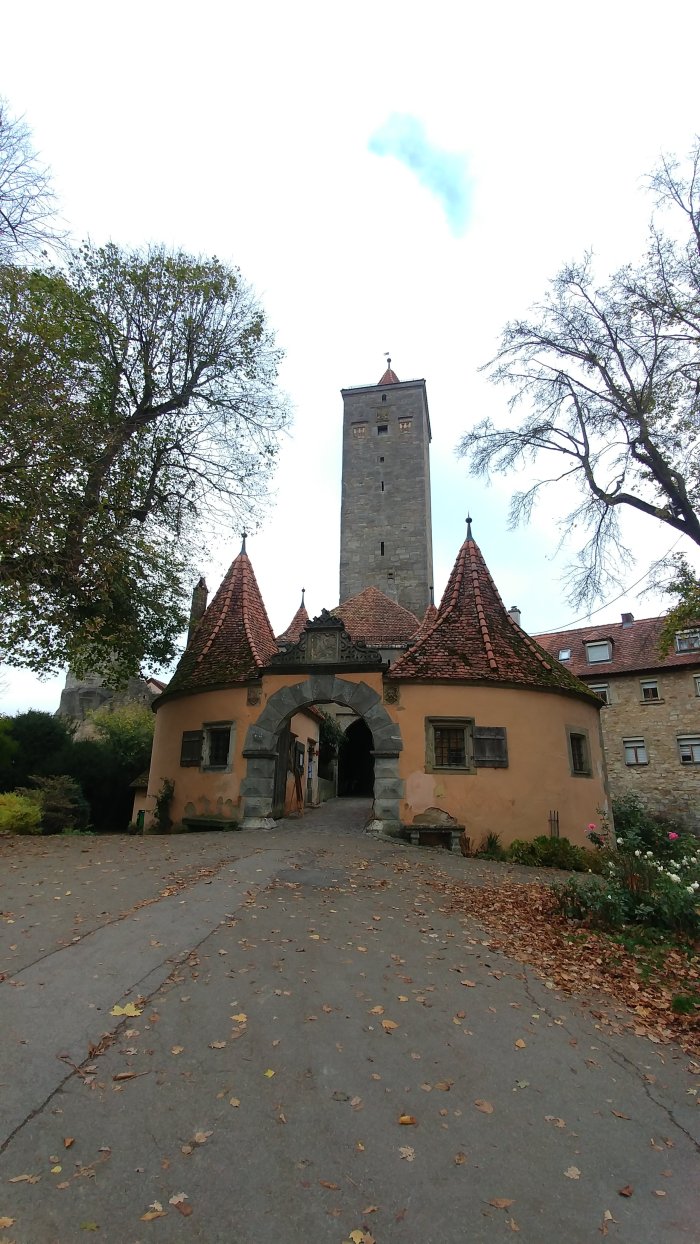
While on our honeymoon, my wife and I had the opportunity to visit Rothenburg ob der Tauber and received an excellent tour from the town’s tourism bureau. Our guide was a local (born and raised), and was a fantastic wealth of knowledge. Among the sites we visited was St. James’s Church.

While standing in awe of the church’s medieval design, our tour guide noted that the church’s construction started in 1311, and the final product wasn’t completed until 1484, 173 years later. The church was built in stages, with the first one spanning 1311-1322, then 1373-1436, and the final portion lasting from 1453-1471. It required the work and vision of four master-builders to see the project through to completion, and our guide remarked on what it might have been like for the first builders to start a project for their town that they knew they’d never see the completion of.

That has stuck with me since returning home. It reminds me of a Greek proverb (“Society grows great when men plant trees under whose shade they’ll never sit”), but seeing the results of this in the form of the church was deeply moving.

Our timescales are often limited in scope, and the rapid changes in technology have only accelerated our perceptions of change. I’m listening to Thomas L. Friedman’s book, “Thank You for Being Late,” and he remarked that prior to the last century it would take about 100 years for innovation to change society enough for people to feel the difference in their everyday lives. Now, that scale is measured in mere years for the developed world. I often take for granted how much things have changed over my life so far and I lose a sense of perspective in my sometime seeming doldrum existence.

I can barely imagine what it’s like starting a project like St. James’s Church knowing that not only will I not see the project’s completion, but that no one alive who will have seen it will likely have known me either. Everyone who had known me while alive would also have slipped away in the sands of time. Our tour guide mentioned that there were four builders who oversaw the project, and we only know the name of the last one. All that remains is that name and the building to persist through time.

At least in the case of buildings and churches, it’s easy to see how the final product will be used and valued by the future.  I think it’s harder to have the same faith of vision (pun somewhat intended) for a project that’s less well-defined as a public good, where not only will the thing be of use to future-people, but it will outlast you, everyone who ever knew you, and likely everyone who knew your children.

Stay Awesome,

Ryan

Knowing When To Quit

A recent article talking about knowing when to quit/retire from teaching had me reflecting on my own experiences with quitting.  Truthfully, I can’t recall many instances where I quit something.  Often, I will drag out experiences long after they have been useful, and instead of quitting as an active decision, I’m more likely to let things fall away through neglect.  Perhaps there isn’t a strong difference between the two since my history is littered with things that I eventually stopped doing.  I suppose in my mind, the difference comes down to whether I made a decision to stop – whether I took ownership over the act.

The strongest instance where I actively made a decision was when I stopped hosting at the local karaoke bar.  I was three or four years into my tenure as a host, and for the most part I enjoyed the experience.  I had a regular crew of friends who would come in and make the night interesting.  However, towards the end, I grew to resent patrons coming in who weren’t my friends.  I worked the slowest night, so if things were quiet, we’d shut down early.  But if patrons filtered in and kept purchasing stuff, we’d stay open.  Catering to the average customer felt like a chore, rather than chumming with friends with our own song preferences and inside jokes.

I started to dislike going into work, and even to this day I don’t sing much like I did while I was a host.  I’ll grab the mic from time to time, but I don’t go out to enjoy karaoke anymore.  I still work security at the bar, but I stopped hosting all together.

I made the decision to stop hosting because a small part of me knew it was time to move on.  I learned what I could from the experience, cherished the memories it gave me, but I recognized that I no longer wanted to spend time doing it.  I think that’s the critical part in the art of quitting.  It’s not about actually quitting or the how.  Instead, it’s about recognizing when the time has come and why.

Sometimes we have to slog it out in things we hate.  We don’t quit those things because we assign value to the activity (or someone else has assigned value and we are dragged along for the ride).  But quitting is more than stopping a thing you don’t like.  It’s about recognizing when the thing is no longer of value to you; that it won’t take you where you need it to go.  It is the recognition that your time is better suited elsewhere.  The art of quitting ultimately comes down to taking an active role in how you choose to spend your time.

Stay Awesome,

Ryan

3 Year Blogiversary

Yesterday marked my 3rd anniversary of the first post on this blog.  On April 21st, 2016, my first post went live – Welcome and First Post  It was the typical post you see on most blogs to announce a new voice has been added to the internet – the “Hello World” of the blogosphere.

In those three years, I have posted 158 times, and put up content on a nearly consistent weekly schedule.  While the blog still doesn’t really have a focus, I’m happy with the progress I’ve made and even of some of the insights and musings I’ve published.  I still find it strange that my most visited post continues to be my review of the Zombies, Run! training app, with a total of 1,366 page views as of writing (a minimum of 100 monthly visits since August 2018).  Otherwise, I’m pretty happy with having 3,136 views from 2,417 visitors.  It makes me feel special.

Shout-out to my 73 followers on WordPress!  And shout-out to my top two commenters, my Aunt K and Tis Leigh of Tis But A Moment!  I’m glad you find value in my ramblings.

Even without focus or purpose, I plan to keep up the habit of writing and posting things weekly.  Here’s to another few years of writing yet!

Stay Awesome,

Ryan


The Animated Bibliography

*Update: I’ve added bullet points to the bottom since the time of original publication.  New points are identified as “New.”

I’ve made references to the concept of the “animated bibliography” in a few recent instagram posts.  I first started conceiving of the idea when I wrote a short self-reflective critique of my habit of reading self-help books.

I doubt I’m the first person to notice this trend in publishing, and I’m not entirely confident that this is a new trend at all.  The more likely explanation is that this is something that has gone on for a while and I’m just too stuck in reading the same books listed on every “must read” list to see the broader context.  Were I to read books that were published earlier than the last decade, perhaps I would see that book have always used this strategy to convey information.

Nevertheless, it would be fun to take on a bit of a research project to see whether this trend has proliferated from a certain point in time, who the early adopters were, and how quickly it’s accelerating.

For the moment, here are my early observations:

  • The animated bibliography is a style of nonfiction where the author uses a micro expression of some authority to explain or contextualize some broader universal “truth.”
  • The authority is either scientific studies or biographical case studies.  Biographical case studies are not always literal examples, but can also be mythical or metaphorical examples.
  • The material is rarely discussed from the negative; that is, the material is presented as a causal relationship to explain a phenomenon, but less commonly are counter-examples, counterfactuals, or false-positives discussed.
  • The author is usually repackaging the work of someone else, rather than the original author of the micro expression.  For example, there is a difference between Daniel Kahneman writing a book reflecting on behavioural economics and his original studies, and someone invoking a study published by Daniel Kahneman to explain an phenomenon.  The animated bibliography would be the latter, but not the former.  The animated bibliography is a presentation of the things the author has learned.
  • The animated bibliography has parallels to how research papers are written at the undergraduate level.
  • The animated bibliography can be thought of as a narrative stitched together.  A series of vignettes (chapters) that bring stories together under a broader meta-narrative that provides a unified theory.
  • The animated bibliography is a method of delivering nonfiction, but it is not necessarily meant to be a moral lesson.  It is protreptic in aim – it attempts to be explanatory, if not educative.
  • The animated bibliography typically falls under a few key genres of nonfiction: business, productivity, leadership, personal development or self-improvement.
  • In isolation, the animated bibliography is merely a geneology of ideas, but taken as a genre it becomes self-referential.  The same studies and case studies start popping up over and over.  These, in turn, get meta-referenced by popular authors who write about them.  For instance, a reference could take the form of a book referencing another author’s book about a series of published studies.
  • Hypothesis: this phenomenon (if it is a new phenomenon) is an emergence from the overlapping worlds of start-ups and founder idolization, social media-fed ennui, high technology, scientism, and people’s inability to move from idea to action.  The books are proliferated as instructionals and how-to’s to solve a behavioural problems.  They paint an ideal way forward, but the fact that they keep getting published, and that a market still exists, means that no one book can actually be held up as the definitive voice.  The plurality exists because they singly do not provide broad answers.
  • The market creates a series of urtexts that spawn and inspire secondary and tertiary levels of reference.
  • *New* The author takes on an authoritative tone in the books, but uses the references to others as the source of their authority.
  • *New* Rarely is the book the result of a lengthy period of research or work in the field as a practitioner.  Instead, the book is the product of some period of immersion or research in the topic at hand (e.g. the author spent a year working on the topic and is writing a book about it).

I’ve deliberately kept things vague in terms of which authors and books I have in mind when I make the observations above.  Perhaps in time, I’ll have more courage and name names of those I find to be the biggest offenders of the genre.  For now, though, I choose to remain silent.

Stay Awesome,

Ryan


Within the Sound of My Voice

I attended a wedding this weekend, and have been reflecting on the service.  Specifically, I reflected on the nature of ritual and custom.  I often find that I take certain things for granted that are ubiquitous (and therefore, mundane).  Photography can sometimes feel cheapened because technology removes  the need to conserve resources like film in order to capture perfect moments.  DJ-played music fades into the background because the setlist is nearly endless.  And, thanks to social media, it would seem that everyone in my age bracket is getting married – my awareness of the intimate details of people’s lives blurs time together into a calendar of weekends punctuated with staged, curated pictures.

But this weekend felt different.  Maybe it’s because it’s my first wedding of the summer.  Maybe it’s because I’m preparing for my own wedding.  Or maybe because I’ve been more mindful lately of meaning in my life.  For whatever reason, the wedding this weekend felt special.  I didn’t concern myself with taking photos to post online (though, I did post one during the night).  I allowed myself to be fully present in the day and to pay attention to the details that infuse weddings with meaning.

There was something the officiant said  that has been playing out in my mind – “and let those know, within the sound of my voice…”  His voice was amplified for the benefit of those in attendance, but something about that sentiment stuck with me.  The wedding was a community of loved ones who came out in support of the couple.  It was a serious and sincere declaration of commitment, and a sharing of values.  We bore witness to a promise, and in doing so added weight to it.  It was not just a promise they made to each other, but it’s a promise made real by our attendance, within the sound of the minister’s voice.

While at the outset, I suggested that technology can cheapen moments like this, but I reflected on how technology intersected with this promise.  There is the obvious case where the officiant’s voice was amplified, so in principle his voice could reach more people.  But during the ceremony, there was another kind of amplification happening.  The bride had family in the UK who were unable to attend.  Rather than missing out, cellphones were used to stream the ceremony live to family abroad.  It widened the community by being inclusive.  More people were captured within the sound of his voice.

Technology wasn’t used to mediate the experience, but rather to amplify it.  The promise of love and commitment was strengthened because it allowed for more people to experience it in a meaningful way.

It may sound painfully obvious to people more mindful than I, but I saw the wedding in a different light.  We weren’t giving a gift because it’s expected.  We were sharing so that the couple could start their new life together on the right foot.  They weren’t just feeding us food because it was expected – they were sharing so that we could join them in celebration.  We didn’t put on dress clothes because it was expected – we put on our best so that we could signal that this moment was special.  And after dinner, the music wasn’t being played because that’s just what you do.  There was more meaning behind it.  The music and dancing was a way of expressing the joy within, taking the joy and putting it out in the world.

This weekend was the first time I appreciated that weddings aren’t something “you just do.”  Everything has a reason.  Everything is purposeful.  Everything is designed for one objective: to acknowledge a promise of commitment for two people and strengthen its resolve.  I had a chance to share in that moment and I was glad I could be included within the sound of the minister’s voice.

Congratulations to the lovely couple.

Stay Awesome,

Ryan