Thinking and Research Habits

You can tell who has recently released a book based on who is making their way through the podcast circuit.  It’s never a coincidence if you see an author’s name pop up on the latest episodes of several shows your have saved in your playlist.  I enjoy listening to these episodes to get book recommendations, and for the most part find that the shows don’t go into too much depth with the author.

This was pointed out by a friend of mine (thanks, Wil, for smashing my illusions!) when he commented that a show I happen to listen to lacks the depth he looks for in a good podcast.  After he pointed that out, I saw it everywhere: the host of the show brings the author on, and by whatever means the talking-points get established, the show typically has the host ask 5-10 key questions that are ripped directly from the book.  It reminds me of students who skip the reading because the whole thing is covered in class.  You get a good sense of what the main points of the book are, but that’s about it.  If you’ve read the book already, you might as well skip the podcast episode.

However, there are gems in some shows, and I spotted two a few weeks back.  On two different shows, authors who had recently released books were chatting about the ideas in the book and the topic drifted to the idea-generation process.  They were short asides, but I found them fascinating to hear how these authors come up with their ideas and structure the construction of their books.

You can give the shows a listen yourself, but I’ve summarized the main points below.

David Epstein
(promoting his book Range)
The Longform Podcast, episode 348 (starts at 21:08)
https://www.stitcher.com/s?eid=62028020

How do you set up the bounds of research?  How do you delineate what you put in the book?  What should I include in the book?

  • There will be a few topics you generally know should be in, but after that you don’t know.
  • Epstein starts with a broad search down rabbit holes.  He used to think this was a bad thing and a waste of time, but now it’s thought of as a competitive advantage.  Sometimes, though, you end up with a bunch of nonsense.
  • He creates a master thought list – citation and key ideas or sentences.
  • As these coalesce into a topic, he moves like-ideas together.  When a topic emerges, he tags it with a title and creates keywords that he would use if he’s searching for it.  Then he moves similar tags together and a movie storyboard emerges where one topic flows into the next.
  • The goal is to avoid it being a bunch of journal articles stitched together.
  • It’s a road map of his brain’s exploration of the topic.
  • Unlike academics who just read journals and don’t go in-depth, he uses his journalism training to talk to the people – more will always come out in conversation than what’s included in the text.  Scientists will include interesting tidbits offhand that are related, but don’t expand on it, so it creates a thread to pull on.  It’s also a good fact-checking exercise and makes the story richer.


Cal Newport
(promoting his book Digital Minimalism)
Love Your Work, episode 183 (starts at 49:30)
https://www.stitcher.com/s?eid=62048017

How do you find ideas that are well-timed/timely with discourse on careers, technology, etc.?

  • He thinks, writes, and publishes all the time (especially blog posts and articles).  He’s constantly reading and testing out ideas.  He’s talking to people, having conversations, and seeing what topics emerges.  It’s a work ethic to him to constantly be reading and writing.
  • He tests out what he’s interested in and see if others are interested.  It might be foundational to something he works on over time, or it might wither because it doesn’t gain traction or doesn’t bear fruit.
  • To validate ideas:  1. He asks, “Are people talking about it, or leaving interesting comments on my blog posts?” 2. With ideas comes a sense of “mental confidence.”  He asks “Is this working for me?  Does it click as a structure to provide a workable framework for seeing the world?”
  • Over time, something will emerge and persist.  It generates advice that’s useful, more evidence comes up, and it is applicable across situations.
  • The search is opportunistic, but once something emerges, he does a deep dive. (Kadavy evokes the fox-porcupine reference from Isaiah Berlin, popularized by Jim Collins).

Stay Awesome,

Ryan
The Runaway Blog Post

Short meta-post on blogging.

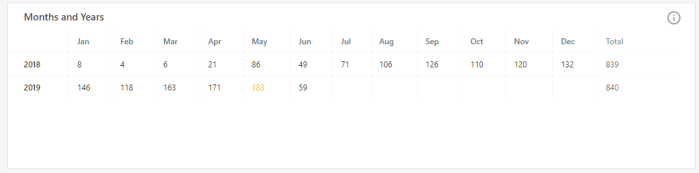
I’ve marveled a few times already that my Zombies, Run! training app review is my most popular post to date.  The screenshot below was taken June 12th, 2019.  Within six month of starting the new year, the post had more traffic than all of last year.

Zombies post stats

I’m curious if it will doubled again and I’ll be writing another post marveling how the post received the same number of hits within three months of the new year.  I doubt it, but the internet can be funny that way.

(Also, I’m fully aware that by constantly talking about it in blog posts, I’m increasing my traffic to it.  The observer effect is in full bloom and I’m sorry to muddy my data).

Stay Awesome,

Ryan

Livestreaming For My Students

Last week, I tried a new tactic to engage with my students.  I was inspired by two workshops I attended during Conestoga’s annual E3 (Employees for Excellence in Education) Conference.  The first workshop covered how to write good assignment prompts, with clarity and purpose in mind, and the second covered strategies for writing for online courses.  In the course I manage online, my students were preparing to submit their first major philosophical paper, and historically my students do poorly on the writing side.  I largely attribute this to it being their first time trying to write a philosophical paper and their only exposure to this point was either essays in high school or non-philosophy essays for other courses in college.  After sitting in on these two workshops, I reflected on what I could do, in an online course, that would improve my student’s ability to write.  It’s challenging to engage with online students for two reasons:

  • first, you (almost) never meet your students face to face, so you lose the ability to use tone, voice, inflection, and body language to convey information, and
  • second, online courses are atemporal, which means you don’t engage with your students at the same time.

An idea I’ve been kicking around for some time is creating a video for my students as an added bit of content for the course.  The problem with this option is it’s still fairly static and easy for students to skip if they feel it doesn’t contribute to improving their assessments.  It also goes in one direction, where I speak at my camera rather than engaging with the students.

However, I’ve been mulling over another option.  I have borrowed a web camera from my podcasting partner, I have a good microphone, and I delivered a webinar with a live Q&A in the middle of May.  I considered running a livestream last semester, however when I offered the option to the students, I had no requests for it.  But this semester, I decided to set it up and run it, regardless if students attended or not.  At worst, it would be a wasted hour of my time.  However, the benefits would be two-fold: my students would have a chance to interact with me and ask me questions about their assignment, and it would give me practice with a new skill set.

I picked a date and time, figured out how to broadcast (in the end, I went with Twitch, but next time I’ll test out YouTube Live) and went for it.  I had 4-7 students drop in, which is fairly low engagement, however the questions were really good and I had a lot of fun actively engaging with students again.

One unfortunate thing was I didn’t set up the system to auto-record, so I don’t have a copy of the livestream to review or upload.  I ended up recording a second (static) video to cover the main points so that my students had something to reference when they were completing and submitting their essays this past weekend.

It was a good experience and I plan to run at least one livestream per semester moving forward.  I have yet to grade the papers, so I don’t know if I had a material impact on their performance, but in time I hope that my students will get better with the added direction I can give them.  I also now have a video that I can post to help them think through the process of writing a philosophical paper.  If nothing else, it’s good to build handy resources and have them available for your students.  My goal is to help my students improve their thinking and writing as a result of taking my course.  Even if their papers are 1% better as a result of my direction, it’s worth it.

Stay Awesome,

Ryan

“Kids These Days” Part 2

Last week, I reflected on the grading process and the tendency for us as faculty to sometimes judge that a student’s performance is more tied to internal motivation issues rather than external issues and a lack of experience.  When you think of a cohort of students, you can group them into three categories – the group that “gets it” and performs well, the group that is motivated but has knowledge gaps, and the group that lacks the motivation to want to meet the course outcomes.  Of course, these are simplistic categories, but I think it’s a useful illustration of how faculty approach their class, because how we choose to define the middle category impacts how we think about students and their performance.  If you frame the discussion around a group of students who want to be helped (are motivated to succeed), then you are more likely to want to extend yourself to help the student.  However, if you frame the conversation around whether the student should bootstrap themselves to catch up, you might be less willing to take extenuating circumstances into account.

When we assume that students are the sole reason for their failure, it’s possible for us to close off other considerations that questions whether we are dealing with a level playing field.  I don’t mean to say that students should not be responsible for their performance (and by extension, failure).  We as teachers must hold students accountable to their performance.  Yet, when a student fails to meet an objective, we should ask ourselves a number of questions:

  • Was the assessment fair?
  • Was the assessment clearly communicated?
  • Should the student have worked “harder” or “smarter”?
  • Is there something I could have done to better prepare the student?
  • Was there factors that influenced the student’s performance?

It is this last bullet point I’d like to discuss, because I think there is something really interesting going on that we often miss.

Engineering programs share a common trait – the problems are hard and the only way you will get the material is by slogging through the practice problems.  Many of the concepts are difficult to master, and the only way you can see the internal logic is to grind through problems, get feedback, and understand where you go wrong so that you can fix your methodology.  Some students appear gifted and grasp concepts easier, but most engineers will tell you stories of how they spent huge chunks of their time on manual computation.

Setting aside discussions about learning styles, this way of learning how to be an engineer is a good reflection of how the brain works.  The brain really hasn’t changed much in the last few thousand years, and we haven’t found genuine shortcuts to get around this limitation.  Structured education, being the only systematic way that allows you to efficiently teach advanced concepts, is the best approach to bringing someone to proficiency.

BUT

Students aren’t just students.  They are also members of this cultural and historical epoch.  Outside of the classroom, their lives are informed by culture, technology, and social norms, and increasingly over the last several decades, culture and technology has prioritized reducing friction.  Technology and corporations are incentivized to innovate ways of reducing barriers in our lives.  The technologies and corporations that achieve this end up shaping culture.  We spend less time focusing on basic survival, sustenance, communication, and transportation, because technology, innovation, and scale has reduced the time and resources we need to devote to these tasks.

As an experiment, consider this: when was the last time you had to carry cash?  For the average person, you can go weeks without needing to go to a bank.  Almost everything in your life can be handled through banking cards, e-transfers, direct deposits, and apps that instantaneously resolve payment upon the completion of service.  These services are available to us because they make things frictionless (and this is good for corporations because it helps us spend more).

If you want to buy stuff, you order it online.  If you want entertainment, you can find it on-demand.  If you don’t know something, a search algorithm will sort and rank answers for you.  If you don’t know how to do something, video tutorials are freely available with a few keystrokes and clicks to walk you through it.

Life outside of the classroom is frictionless, and yet we are insulted when students expect their experience in the classroom to conform to every other experience they live through in their daily lives.  Students ask for shortcuts to mastering hard concepts because literally everything else in their life operates this way.  The surface level encounters they experience have been refined through intentionally designing the user-interface (UI) and user-experience (UX).  Students have little grasp of the underlying mechanisms that hold this up because they’ve never had to worry about it.  If something breaks, it is either repaired as a service, or we cast away the broken and move on with purchasing new.

I was an undergrad student in the mid-aughts, and when I look at what life is like for students now compared to when I was a freshman in the dorm, I am startled at how easy it was for me to be a student.  I didn’t have the distractions that students experience today.  My life was less guided by algorithms and the whims of corporations and technology.  You may argue that technology has put the world at student’s fingertips today, but I think that the signal-to-noise ratio has shifted from my time.  Yes, I had to work harder to get answers, but that’s because there was less distraction clogging my search.  And don’t get me started on the attention economy and designing to maximize user engagement…

When we dismiss performance as being the result of “kids these days” not valuing hard work, we miss the fact that there is no incentive for the kids to work hard when life has grown frictionless.  I personally now value friction, because I understand what friction does for the learning process.  Much in the same way that you have to introduce low level stress to the body (exercise) in order to promote health, the introduction of friction can be a good thing.  But without understanding the motivations and lived experiences of your students, your demand for frictioned lives reduces you down to an old person yelling at the clouds.

Stay Awesome,

Ryan


Values-based Decision Making

In a recent accreditation visit at work, a comment was made in the visiting team’s report that the college and engineering program need to better demonstrate the rationale behind program changes that are tied to something called “graduate attributes.”  I won’t bore you here with the details of how an engineering degree gets accredited since it’s a bit more complex than a short blog post would allow.  The main point is that the visiting team wanted to understand the motives we had when making updates to the courses in our continuous improvement process.

This reminded me of my KWCF experiences, specifically the Engage!KW program.  One of the activities we did was to reflect critically on our values.  We were asked to come up with a list of our values, and compare our espoused values with how we choose to spend our time in a week.  The point of the exercise is to a.) see whether you are living according to your values, and b.) to reinforce that you should make decisions based on your values – and if a decision does not align with your core values, it’s probably not something worth pursuing.

The visiting team’s comment didn’t sit well with the faculty and administration, largely because we felt that all of our decisions were made in the spirit of making graduates from the program better prepared for their careers.  The idea that we need to somehow demonstrate or explain better what we are already doing was hard to understand.

My best explanation for how this would work goes like this:

Suppose you receive feedback from your industry partners that in order for graduates to  be successful, the college needs to buy every student a pink hat.  The students must wear the pink hats at all times, and they must bring them with them into their careers after graduation.

Now, it might be the case that these pink hats are a good idea.  The idea originated from our industry partners, whom will be the very people hiring our grads.  However, buying the pink hats is an expensive endeavor.  The money we spend on pink hats means we can’t allocate those resources elsewhere to improve the program.

When the team evaluates the idea, they should look to the core values of the program and see whether the pink hats falls in line with those values.  In our engineering programs, we have twelve graduate attributes that we seek to instill in our students.  Every student who graduates from an engineering program will possess these attributes if the program is designed well.  If we look at the attributes (our values) we won’t see a connection of how pink hats are essential to making a better graduate or a better engineer, even though industry is telling us this is the case.  And so, we would make a decision to ignore industry’s suggestion, and instead allocate our money elsewhere.

Pinks hats might seem like a silly example, but the situation is the same for any piece of technology that industry wants us to teach, such as 3D printers and proprietary programming languages for manufacturing robots.  It costs a lot of money to adopt these technologies, and it takes a lot of time to teach and reinforce the skills in our students.  At each point, we have to ask ourselves whether this investment materially improves the students, or whether there is a better way we can allocate our time (such as teaching good computer modelling for 3D printers, or teaching good programming foundations so that our students can easily teach themselves any programming language used in industry).

The key lesson is that these decisions should not be made on a whim, but nor should they be made because a stakeholder tells you they are important.  Input from industry is only one point of data in a sea of information.  In order to tease out the signal from the noise, it’s important to use your values to help determine what’s worth pursuing, and what’s worth leaving behind.

Stay Awesome,

Ryan


Emails and Saving Mental Bandwidth

At the start of 2019, I wanted to conduct an experiment.  I had grown irritated with the volume of email in my personal account.  Each day, I would wake up to 10 or so new emails from various retailers with information on promotions, offers, and deals.  I had tolerated these emails for sometime because I liked to keep abreast of potential deals that I could take advantage of.

However, the emails weren’t just morning updates.  I would keep my personal email open at work and clear emails throughout the day, which forced me to continuously switch back and forth.  I wanted a better way of managing the inflow of messages without unsubscribing to emails that genuinely were bringing me information I would want when planning upcoming purchases.

I took some time and set up around 60 filters to automatically route messages from my inbox to a separate Promotions folder (I know Gmail can handle this, but I wanted to be intentional with the process).  I also unsubscribed to a bunch of lists where I never opened the messages.  It was a lot of front end work that took a few days to complete, but slowly my inbox got quieter.

emails
As of March 18th, 2019

Now, after 3 months of progress, I have seen between 1,500-2,000 messages get routed away from my inbox.  2,000 messages that I never read, and didn’t have to make a decision whether to open it or automatically delete.

I don’t think of this as some sort of productivity hack.  At most, I’ve saved maybe an hour of time in 3 months, so it’s not like it’s a quality of life adjustment.  Instead, the value I find is in the mental bandwidth saved from not having to constantly switch back and forth through email.

It’s a signal and noise ratio issue.  So much of my time is spent wading through a lot of noise that is distracting me from focusing my attention on what’s important.  On the best of days, I do my best to fight off my inability to focus on work and maybe carve out some meaningful time by avoiding things that have been designed to draw me towards them (I’m looking at you, social media and YouTube).  Sometimes I succeed, and sometimes my monkey brain gets the best of me.

There are two strategies to deal with this.  You can either intentionally focus the signal, or you can do what I’ve done in this instance and try to turn down the noise a bit.  Too much noise can interfere with the signals you are trying to pick up.  While email is hardly a signal-killing thing in my life, it’s a steady trickle of distractions that I’ve started intentionally cutting to make room in my attention for more important things.

Stay Awesome,

Ryan


What I Read in 2018

Here it is, my yearly update on what I read over the last 12-months.  Overall, I far exceeded my 2016 and 2017 lists in terms of the number of books (42 in 2016, 44 in 2017, and now 57 in 2018) and even the number of pages (4,600 pages more over 2017’s total).

Title Author Date Completed Pages
1 Saga, Volume One Brian K Vaughan and Fiona Staples 12-Feb 160
2 Witches Abroad Terry Pratchett 23-Feb 288
3 12 Rules for Life Jordan Peterson 5-Mar 448
4 Skin in the Game Nassim Nicholas Taleb 10-Mar 304
5 Proust and the Squid Maryanne Wolf 11-Mar 336
6 Small Gods Terry Pratchett 16-Mar 384
7 Conspiracy Ryan Holiday 21-Mar 336
8 Lords and Ladies Terry Pratchett 7-Apr 384
9 Thinking in Bets Annie Duke 7-Apr 288
10 Sapiens Yuval Noah Harari 13-May 464
11 Career Manifesto Mike Steib 4-Jun 288
12 This Is The Year I Put My Financial Life in Order John Schwartz 5-Jun 320
13 Men at Arms Terry Pratchett 12-Jun 384
14 Soul Music Terry Pratchett 24-Jun 384
15 Interesting Times Terry Pratchett 8-Jul 352
16 The Achievement Habit Bernard Roth 21-Jul 288
17 Discover Your Inner Economist Tyler Cowen 26-Jul 256
18 Maskerade Terry Pratchett 30-Jul 384
19 The Five Love Languages: Men’s Edition Gary Chapman 31-Jul 208
20 David and Goliath Malcolm Gladwell 3-Aug 320
21 Feet of Clay Terry Pratchett 10-Aug 416
22 Originals Adam Grant 13-Aug 336
23 Own the Day, Own your Life Aubrey Marcus 17-Aug 448
24 Hogfather Terry Pratchett 17-Aug 352
25 Tribe of Mentors Timothy Ferriss 20-Aug 624
26 Better than Before Gretchen Rubin 21-Aug 320
27 Jingo Terry Pratchett 25-Aug 416
28 Books for Living Will Schwalbe 27-Aug 288
29 The Last Continent Terry Pratchett 6-Sep 416
30 Unshakeable Tony Robbins 17-Sep 256
31 Shoe Dog Phil Knight 17-Sep 400
32 What Happened Hillary Rodham Clinton 26-Sep 512
33 When Daniel H. Pink 28-Sep 272
34 A Higher Loyalty James Comey 30-Sep 312
35 Creativity, Inc. Ed Catmull 2-Oct 368
36 Why Buddhism is True Robert Wright 15-Oct 336
37 The Element Ken Robinson 19-Oct 320
38 Elon Musk (Biography) Ashlee Vance 24-Oct 400
39 Reinventing You Dorie Clark 26-Oct 240
40 What the Dog Saw Malcolm Gladwell 4-Nov 448
41 The Daily Show: An Oral History Chris Smith 12-Nov 480
42 Waking Up Sam Harris 15-Nov 256
43 If You’re In My Office, It’s Already Too Late James J. Sexton 24-Nov 288
44 A Life in Parts Bryan Cranston 24-Nov 288
45 5 Love Languages Gary Chapman 27-Nov 208
46 The Perfectionists Simon Winchester 1-Dec 416
47 Entrepreneurial You Dorie Clark 3-Dec 272
48 The Dip Seth Godin 3-Dec 96
49 The Last Man Who Knew Everything David N. Schwartz 7-Dec 480
50 Ikigai Hector Garcia and Francesc Mirales 20-Dec 208
51 The One Thing Gary Keller and Jay Papasan 20-Dec 240
52 This Is Marketing Seth Godin 21-Dec 288
53 The Souls of Black Folk W.E.B. Du Bois 23-Dec 272
54 The Artist’s Journey Steven Pressfield 27-Dec 192
55 Running Down a Dream Tim Grahl 28-Dec 198
56 Zen to Done Leo Babauta 28-Dec 114
57 What I Talk About When I Talk About Running Haruki Murakami 31-Dec/1-Jan 192
Total: 18544

As I mentioned last week, I have some thoughts and reflections while reviewing the list.  First, when I was selecting my best 5 for the year, I noticed that the books in the latter part of the year were ones I felt resonate with me the most.  I think this is for two, related reasons.  First, this was a huge year for my wife and I.  We renovated our old house, sold it, bought a new house, renovated the new one, moved cities, got married, and got me a new car.  We had so much packed into one year on top of work and family, that the year seemed to have flown by without me realizing it.  Someone pointed out to me that there was a Winter Olympics at the start of last year – I couldn’t believe it and had forgotten all about it.

The second, somewhat related reason is because of the sheer volume of books finished, I don’t think I gave the material time to properly settle in my mind.  Fifty-seven books is a huge amount, and I think that by the end of the year, I couldn’t really remember what I had read during the first half of the year.  Instead, most of the impact was felt in the readings from the latter half of the year.  That’s not to say that the books from the start of the year are forgotten, because I feel that lessons taken from Skin in the Game and from Sapeins, for example, are prominent in my mind.  It’s just that they didn’t really stick out in my mind at the end of the year when I was picking my top reads of the year.

Another reason why I think I have a hard time remembering what I read from the start of the year is because the vast majority of the books finished this year were audiobooks.  Thanks to Audible and the Libby app, I was flushed with books to go through.  And because I listen to books at a minimum of 1.5x speed, I can get through the books at a far faster rate than if I were carving out time to read physical books.  This has its advantages, such as being exposed more rapidly to new ideas.  However, this advantage comes at the cost of little overall integration of the information and general lowered retention of information over time. The speed at which I’m listening to books is more like skimming than true reading.

Nevertheless, I’m very satisfied with my accomplishment for the year.  I’m not really interested in trying to top this list intentionally next year.  I will keep reading/listening/consuming books at whatever rate I happen to finish them, but I will go with whatever pace I happen to settle in, rather than trying to hit weekly or monthly targets.

For the upcoming year, I’d like to try and move away from the self-help, business, and animated bibliography genres of books, and instead tackle more books on history, biographies, and fiction that’s not just Terry Pratchett (though I will still keep ploughing through the Discworld series – that’s not changing any time soon).  If you have any book recommendations, feel free to let me know!  I’ve already got “Educated” by Tara Westover and “When They Call You A Terrorist” by Patrisse Khan-Cullors and Asha Bandele on my bookshelf as recommended by friends.  I’m always on the lookout for the next book to read.

Have a great new year and happy reading!

Stay Awesome,

Ryan

Self-Education Resources

Post-secondary education has never been more accessible to the average person.  We may have a long ways to go in terms of making courses more accessible for learners and reducing the financial barriers that keep students from being successful in school, but it is nevertheless an undeniable fact that there are more people who have been to post-secondary schooling than the entire history of people attending higher learning.

One issue with the proliferation of access is that it’s getting harder to stand-out in the workforce.  With so many people carrying credentials, the golden ticket that a diploma or degree used to confer has lost some of its value.  Your choices are to either go to industries where they are starving for workers (if you are looking for a solid career with good prospects, you should become a welder NOW), or figure out a way to become a better problem-solver to stand out amongst the crowd.

Another issue that complicates matters is that industry and technology is changing at such a rapid rate that you can no longer rest on your laurels that your program of study will adequately prepare you for work in your industry.  The techniques, technologies, and skills you learn in your first year may be obsolete by the end of your final year.

Therefore, it’s important to develop your ability to self-educate.  Knowing where you can find free or cheap resources can be a huge advantage when developing yourself in your career.  Here are some of the resources I use to teach myself.

Top Spot: your Public Library

In my humble opinion, the public library is one of the greatest inventions of all time.  Whether you are taking classes they offer, using resources in their catalog, or availing yourself of the free access to materials like online journals and portals, there is almost no limit to  the access your library card can provide.  When my HVAC system went on the fritz, I was able to check out an HVAC manual to help me learn just what the heck an HVAC system does so that I could understand what repairs were needed, and how to better care for the system in the future.

YouTube

YouTube changed the game when it comes to sharing knowledge.  Don’t get me wrong, books are great (the necessary precursor to the greatest invention of all time; see: public library entry), but unless your book has incredibly detailed diagrams, the video format will always be the superior resource for teaching hands-on skills.  When I had to fix my roof, I turned to videos to learn how to remove individual shingles and replace them myself.

Coursera

Coursera is all the benefits of attending lectures without the associated costs.  Granted, if you want formal recognition of completing Coursera courses, you’ll need to pay for the access.  However, nearly every Coursera course has the option for you to audit the course for free, which gives you access to the lecture content and some of the supplementary material.

Reddit (and other specialty discussion forums)

I suppose I should have used “Google” as the category here since I often will search for solutions through Google’s indexed results.  However, dedicated online communities are some of the best resources to learn from.  They often post comprehensive resources and how-to manuals, and are usually great about providing solutions when you are stuck on specific problems.  If you can find a good community that isn’t locked behind a paywall, you can lose yourself for hours in it’s wealth of information.

Lynda.com

While not a free resource, this is something that my employer has provided to its employees at no cost.  You should check to see if your employer offers any services for employees to self-develop because you might be missing out on a ton of non-financial benefits.  Lynda is a great resource for comprehensive courses on a wide variety of tech and business topics.  It’s a bit restrictive if you are looking for non-business courses, but it’s worth checking out for learning the basics you’ll need to navigate your early career development.

Udemy

Another paid service, I find Udemy great for high tech courses where I want to develop specific skills, such as in Python or in using Adobe software.  I wait for courses to go on sale, and I snap up courses up to 90% off their full price.

Ask friends

My final suggestion is to tap your friends to see if anyone can help you learn new skills.  Obviously, you don’t want to exploit your friends – you should pay for their services where appropriate.  However, in some cases your friends can be great resources to tackle projects.  Not only do you get to leverage their unique skills or experience, but you also get quality time together.  My entire podcast and music run for Woot Suit Riot has been some of the most formative experiences I’ve had, all because I was making stuff with friends.

All of this is framed as advice to help you in your career, however the truth is that you should be seeking to educate yourself for any project your’re interested in, regardless of whether you can get paid for the skills or not.  I took painting classes earlier this year at my local art store because I wanted to learn how to paint.  This isn’t a skillset that directly will get me promoted, but it rounds me out and allows me to explore my creative side.

The point of self-education or self-development is for you to become more of the person you want to be.  It’s often hard work, but the experiences are well-worth the effort.

Stay Awesome,

Ryan

Tracking Ideas – A Technological System

Here’s a cool trick you might find useful.

I carry a physical notebook with me pretty much at all times so that I can jot down to-do lists, ideas, quotes, etc.  While my commonplace book system is great, I wanted a better system for tracking those spur of the moment ideas that I want to file away for later, such as blog posts, vlog ideas, career ideas, etc.  I could record it in my notebook, but then I would either need a way to collect them at the end of each month when I switch to a new notebook, or I would be forced to copy them over month to month.

The system needed two things.  First, it needed to be mobile.  My notebook is mobile, but for the reasons above, it was proving to be inadequate.  Tracking ideas in a document or spreadsheet from my computer solves the ease of use problem, but it limits the mobility.  Similarly, just having a digital file on something like Dropbox is cumbersome because, while I can access it from my smartphone, navigating the file directory on my phone is tedious and updating files on a small screen is frustrating for something that I wanted to be quick and painless.

The second need, alluded to in the problems above, is that it needs to be frictionless.  The more complex a system is, the less likely I am to use it over time.  Hacks, systems, tricks, and tips are great, but if it’s a chore to use and implement, I tend to abandon them relatively quickly because, let’s face it, I’m weak-willed and lazy (see any of my posts about failing to go to the gym…)

With those two considerations in mind, I stumbled on an option and found inspiration in a video my vlogging partner, Jim, posted on Youtube:


I set about to appropriate his system and adapted it for my own use.

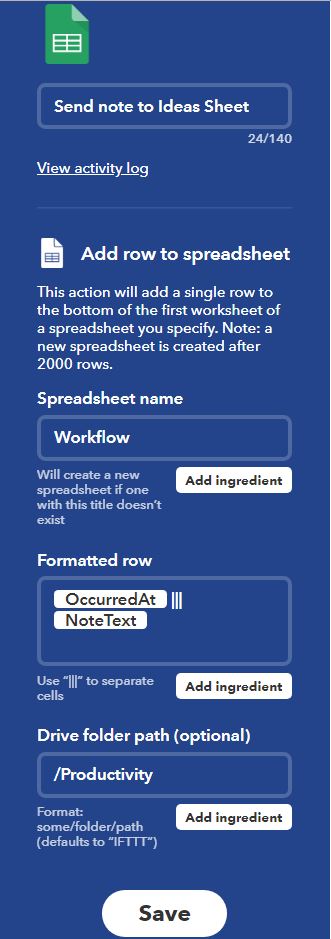
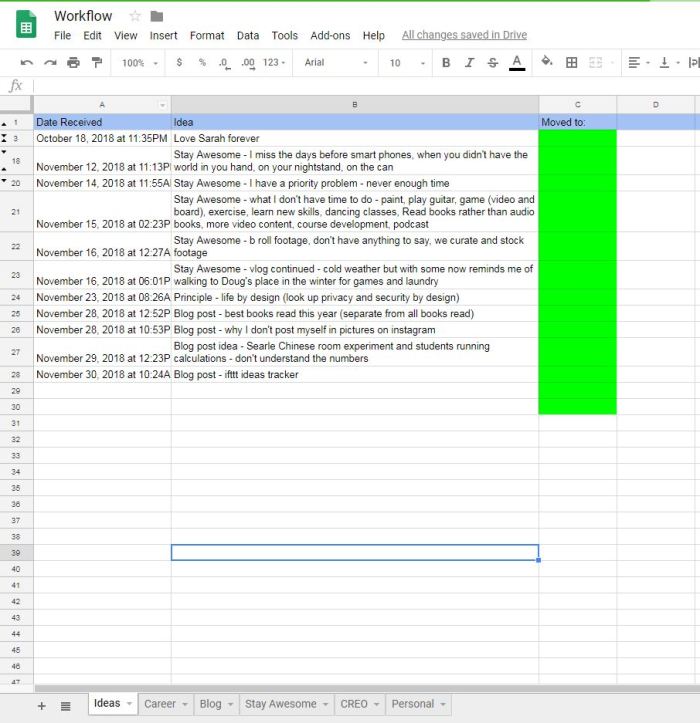
I created an IFTTT (IF This Then That) action that when I made a note from a homescreen widget on my phone, it would automatically save it to a designated spreadsheet in my Google Drive.

IFTTT ingredient


I have it set up to just record the date and time of the note, and the notes content to the next empty row.

In Google Drive, I set up a new spreadsheet with multiple tabs.  This way, all the ideas come from my phone to the first tab of the spreadsheet.  From there, I can move the ideas to different tabs to better organize them by category.  In the green cells, I note where I moved the idea, then I hide the relevant row when the information is copied over.  This allows me to have all the ideas collected in one place (the front page), but completed actions are hidden to streamline the process.

IFTTT spreadsheet 2


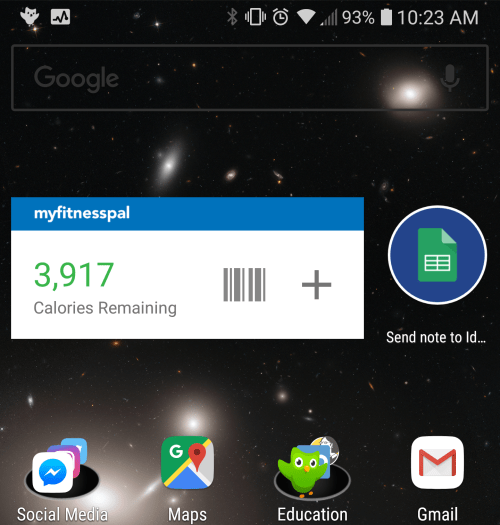
All that was left to do was set up a widget on my phone and start recording ideas.  The widget for IFTTT was already available as an option, so I didn’t need to download any extra applications.

Screenshot_2018-11-30-10-23-34~2
From my homepage, I tap the round icon at the top-right of my screen.


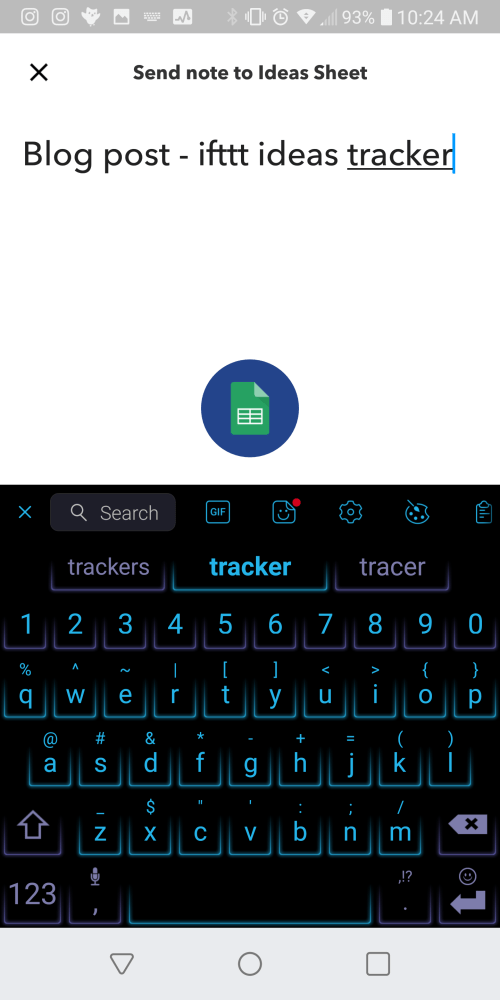
Screenshot_2018-11-30-10-24-28
From there, I type in the idea, usually with a preface comment to help me sort things later.


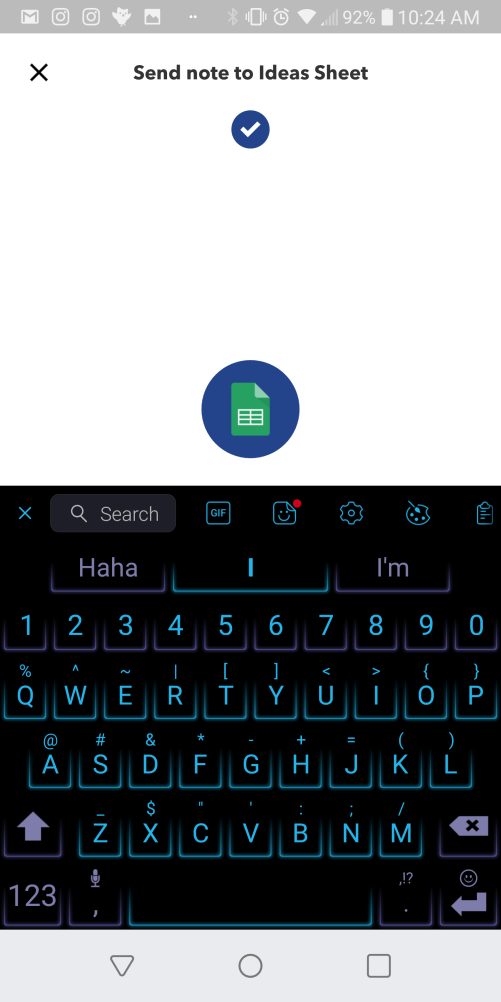
Screenshot_2018-11-30-10-24-52
I then tap the blue circle at the bottom of the note and it sends it to the spreadsheet. 


IFTTT spreadsheet


It’s been a handy system so far.  I can access the sheet from my phone, but primarily I need it on my computer, so the cross-platform utility is great for me.  It also allows me to captures a wide variety of ideas without needing to put them to separate lists initially, whereas if I captured these in my notebook, it would be hard to sort, search, and categorize without dedicated lists.  I like the flexibility and the streamlined process.

Let me know if you have any systems that you find handy.  I’m always on the lookout for good ideas to test out.

Stay Awesome,

Ryan