Screenshot from “The Death of Stalin” (2017) Steve Buscemi as Nikita Khrushchev (left) and Sylvestra Le Touzel as Nina Khrushchev (right)
I was watching the dark comedy “The Death of Stalin” the other day and noticed an interesting scene that imparted some wisdom about relationship management. Early in the movie, Nikita Khrushchev, played by Steve Buscemi, has returned home at the end of a long day with Joseph Stalin and other politicians. As he undresses for the evening, he is listing off a series of topics to his wife, who is in bed and taking notes in a book. As he lists off the topics, he comments on which topics landed well with Stalin, and which he should avoid in the future.
Setting aside the bleakness of needing to make notes on things that will keep you alive around a dictator, it was an unexpected example of good relationship management in action.
I’ve done stuff similar to this. At first, I thought it was a sleazy practice, but after overcoming those initial thoughts, I realized it’s an entirely effective way of keeping track of important details either early in a relationship (here, I mean relationship in an extended sense, not in a romantic sense), or for relationships with infrequent contact points.
If it’s worth maintaining a good relationship, then it’s beneficial to reflect on your interactions and take notes on things worth remembering. Whether you use a book as in the film, or making notes in your phone’s contact cards, it can be helpful for refreshing yourself when you interact with a person again. I’ve made notes on business hours, names of employees at a shop, the names of a person’s significant others, and even early in my relationship with my wife I would note ideas for the future.
Far from sleazy, it’s a useful way of paying attention and making others feel special because you’ve taken the time to learn and remember details about them. And, instead of relying on your memory, you can have the confidence that you’ll get the particulars right and avoid looking like a fool.
During a throwaway thought experiment in his 1641 treatise, Meditations on First Philosophy in which the existence of God and the immortality of the soul are demonstrated, René Descartes posited the idea of an evil genius or demon that systematically deceives us to distort our understanding of the world. Contrary to first year philosophy students everywhere (a younger version of myself included), Descartes did not actually believe in the existence of an evil manipulator that was holding us back from understanding the nature of the real world. Instead, he was using it as part of a larger project to radically re-conceive epistemology in an era of rapid advancements in science that was threatening to overturn centuries of our understanding of the world. He felt that knowledge was built upon shaky ground thanks to an over-adherence on the received authorities from Greek antiquity and the Church’s use of Aristotelian scholasticism. Similar to Francis Bacon twenty years earlier, Descartes set out to focus on knowledge that stood independent of received authority.
Through Meditations one and two of his book, Descartes considers the sources of our beliefs and considers how we come to know what we think we know. He wants to find an unshakable truth to build all knowledge from, and through an exercise of radical doubt he calls into question many of the core facts we hold – first that knowledge gained from the senses are often in error, that we often can’t distinguish the real from fantasy, and through the use of the evil genius, that perhaps even our abstract knowledge like mathematics could be an illusion.
André Hatala [e.a.] (1997) De eeuw van Rembrandt, Bruxelles: Crédit communal de Belgique, ISBN 2-908388-32-4.
When I teach this to first year students, they either don’t take his concerns seriously because of the force of the impressions the real world gives us in providing sense data for knowledge (a stubbed toe in the dark seems to forcefully prove to us that the external world to our senses is very real), or they take Descartes too seriously and think Descartes really thought that a demon was actively deceiving him. Regardless of which side the student falls on, they will then conclude that Descartes’ concerns are not worth worrying about; that this mode of thinking is the product of an earlier, less sophisticated age.
Unless you are a scholar delving into Descartes’ work, the real purpose of teaching the Meditations is to provide students with a framework to understand how one can go about thinking through complex philosophical problems. Descartes starts from a position of epistemic doubt, and decided to run with it in a thought experiment to see where it took him. The thought experiment is a useful exercise to run your students through to get them to think through their received opinions and held-dogmas.
However, in light of my rant a few weeks back about informed consent and vaccines, I’ve discovered a new contemporary use for thinking about Descartes’ evil genius. In some sense, the evil genius is *real* and takes the form of fear that shortcuts our abilities to learn about the world and revise our held beliefs. Descartes posited that the evil demon was able to put ideas into our heads that made us believe things that were completely against logic. The demon was able to strip away the world beyond the senses and even cast doubt on abstract concepts like mathematics.
Much in the same way Descartes’ demon was able to “deceive” him into believing things that were contrary to the nature of reality, our fear of the unknown and of future harm can cause us to hold beliefs that do not map onto facts about the world. Worse yet, the story we tell about those facts can get warped, and new explanations can be given to account for what we are seeing. This becomes the breeding ground for conspiracy thinking, the backfire effect, and entrenched adherence to one’s beliefs. We hate to be wrong, and so we bend over backwards to contort our understanding of the facts to hold-fast to our worldview.
In truth, we are all susceptible to Descartes’ demon, especially those whom believe themselves to be above these kinds of faults of logic. In psychology, it’s called the Dunning-Kruger effect, of which there are all sorts of reasons given why people overestimate their competence. But in the context of an entrenched worldview that is susceptible to fear of the unknown lurks Descartes’ Demon, ready to pounce upon us with false beliefs about the world. Its call is strong, its grip is tight, and the demon is there to lull us into tribalism. We fight against those we see as merchants of un-truth and in a twisted sense of irony, the weapons of truth we yield only affect those already on our side, while those we seek to attack are left unaffected. It becomes a dog-whistle that calls on those who already think and believe as we do.
If we hope to combat this modern Cartesian demon, we’ll need to find a new way of reaching those we see on the other side.
Unrelated to the post below, but this is my 200th blog post! I hit post number 100 in March of 2018, which feels like forever at this point. Here’s to another 200 more!
***
On a long(ish) car ride with my mother-in-law over the holidays, we got chatting on the subject of learning from experience. She reminded me of something I’ve known for some time, yet keep forgetting: if you keep an open mind, you can learn something from everyone.
I don’t think this is a trite piece of advice, though often it comes from an experience we would otherwise hope to forget. In my case, I tend to forget this bit of wisdom as I have developed a bad habit of being somewhat dismissive or condescending. There really is no excuse for it – nothing in my experience explains why I’ve adopted this mindset. I just developed the attitude gradually over time.
But it’s good to be reminded that with the right mindset, every encounter you have with others can be an opportunity to learn something, whether that is a piece of knowledge that is exchanged, or if through your interaction with them you learn something about yourself. Rather than seeing things through the lens of whether the person adding or subtracting value (e.g. “this was a waste of my time”) we should look at it from a growth perspective – “what did I learn or discover about myself that I can carry forward and do things better in the future?” This also dovetails nicely with a vlog post I put up recently about finding your tools along the way.
By reframing things this way, you open yourself to serendipitous opportunities to grow and develop. Or, at the very least, you take yourself (and your time) a little less seriously.
I’ve hit a couple of milestones recently. For instance, last week I hit a nice big milestone in Duolingo when I hit 600 consistent days of doing lessons.
I wouldn’t say I’m particularly fluent in German, but during my trip in October of last year, I was able to follow some of the conversation going on around me and put into practice the lessons given by the app. I was able to manage thanks to small, consistent daily micro-lessons that expanded my vocabulary a bit at a time.
Something similar happened for this blog as well. From time to time I check-in on the site’s stats and analytics. I don’t have any plans or intentions to seek monetization, so I only check in on things out of a sense of curiosity rather than seeking optimization. I originally set up this blog as an exercise to see if I could keep a consistent weekly writing schedule. At the time, I had the aspirations to go back to school to become a paramedic, and so I also had intended to use this blog to apply the concepts I was learning to help me reinforce my learning. I’ve sinceabandoned that path, and so the blog largely remains a project to force me to come up with something to post on a weekly schedule.
I was looking at the stats last week and felt a sense of satisfaction for hitting a couple of milestones. First, it appears that I have not missed a weekly post in the last three years (I might be late posting, but I still get something up). Also, I’m happy to see that overall my words per post are trending upwards, though I hope this means I’m providing more meaningful, nuanced posts rather than just being verbose.
Then, I decided to check on how many words I had written for this blog.
Year
Total Posts
Total Words
Avg Words per Post
2016
37
17,660
477
2017
54
28,625
530
2018
52
26,545
511
2019
52
32,210
619
2020
3
3,075
1,025
Sum
108,115
As it turns out, I had written the rough equivalent of a book in the four years I’ve been at this. Beyond the urge to create something and a desire to force myself to “write more,” the steady drip of a weekly schedule has now pooled into a large body of words.
I take a lot of inspiration from Seth Godin, and I learned from him the value of consistently showing up and putting in the work. It’s not about creating high quality giant pieces of work from fiat, but instead the slow, plodding, steady work of creating a little bit at a time. When you look back, you see the vast distance you’ve covered by forcing yourself to focus on putting one foot in front of the other. Not everything is going to be good – in fact, most of it will suck. But, over time you get better at the work, and sometimes you can find the good stuff emerging from the mediocre.
Last week, I gave a highlight of the best books I read in 2019. Below, I present what I read in 2019. By comparison to 2016, 2017, and 2018, last year was a paltry year in reading for me.
Title
Author
Date Completed
Pages
1
Harry Potter and the Deathly Hallows
J.K. Rowling
6-Jan
640
2
The Bullet Journal Method
Ryder Carroll
31-Jan
320
3
Daring Greatly
Brene Brown
4-Feb
320
4
Trumpocracy – The Corruption of the American Republic
David Frum
25-Feb
320
5
Drive
Daniel H. Pink
4-Mar
288
6
Twilight
Stephenie Meyer
10-Mar
544
7
The Gift of Failure
Jessica Lahey
12-Mar
304
8
Better – A Surgeon’s Notes on Performance
Atul Gawande
27-Mar
288
9
The Graveyard Book
Neil Gaiman
11-Apr
368
10
Bad Blood
John Carreyrou
9-May
352
11
Atomic Habits
James Clear
23-May
320
12
Built to Last
Jim Collins
25-May
368
13
Digital Minimalism
Cal Newport
30-May
304
14
Right Here Right Now
Stephen J. Harper
14-Jun
240
15
Mastery
Robert Greene
20-Jun
352
16
Complications – A Surgeon’s Notes on an Imperfect Science
Atul Gawande
25-Jun
288
17
Vagabonding
Rolf Potts
29-Jul
240
18
Becoming Superman
J. Michael Straczynski
4-Aug
480
19
A Game of Thrones
George R.R. Martin
11-Aug
864
20
Ultralearning
Scott H. Young
31-Aug
304
21
Reader Come Home
Maryanne Wolf
11-Sep
272
22
The Threat
Andrew G. McCabe
14-Sep
288
23
Indistractable
Nir Eyal
19-Sep
300
24
Permanent Record
Edward Snowden
22-Sep
352
25
The Path Made Clear
Oprah Winfrey
19-Nov
208
Total:
8924
I have a few thoughts as to why my reading rate dropped off significantly last year and what I can do about it in the year to come.
Life Pressures
Last year had a few significant pressures on my life that might have affected my desire to read. We started basement renovations early in the year, only to discover our basement’s foundation was cracked, requiring us to source quotes and opinions for repairs. This delayed our basement renovation, which didn’t finish until the summer. The protracted project weighed heavily on our minds throughout the year as we questioned whether we were making the right decisions for our home repairs, or whether we would need to make additional fixes later down the line.
Another big change for me was a change of my job at work. While I wouldn’t say it affected me as strongly as the basement renos, it disrupted my routine enough to impact my desire to focus on reading when I came home from work. Couple that with another full year as Board Chair for the non-profit I head up, and it left me with less cognitive bandwidth for self-improvement.
Podcasts and Music
If 2016 was my year of purchasing books, 2017 saw me start to utilize Libby to access the library, and 2018 was an all-out race for me to go through as many audiobooks as my brain could absorb, I felt a greater push away from books in 2019. Instead of working my way through 8-15 hours of content for one piece of work, I found the shorter format of podcasts more satisfying on my commutes. I enjoyed the variety in topics, shows, and voices.
However I also found I was drawn back to listening to music instead of information. With the sheer volume of books I’ve consumed in the last three years, it was nice to go long stretches without a goal of getting through books (or trying to learn new things) and instead allow the melodies, riffs, percussion, and lyrics sweep me away.
Book Burnout?
Overall, my rate for the year was a bit varied. I started slow in January and February, then picked back up in March. April only saw one book completed, then I found my footing again through May onward. However, October is when my wife and I traveled abroad for our honeymoon, and I never recovered my reading habit for the rest of the year.
Given that I spent most of the last three years focusing on business, personal development, and productivity books, I didn’t feel a strong desire to read those books in 2019. Even among the books I did read from that area, I found looking back that I don’t remember anything of note from those books. Neither the book’s theses nor the examples they offered have stuck with me as I enter the new year.
I’ve mentioned a few time the concept of the animated bibliography on this blog, and I think I’ve hit peak saturation for the genre. I’ve read the canon, and find that reading new books in the genre is resulting in diminishing returns; that is, I’m not really seeing a lot of new insights being offered that leaves me wanting more.
In my list last week, I commented that the books that I’m drawn to now is starting to shift away from business and productivity and more towards moral lessons found in fiction, biography/memoir, and journalistic explorations of current events. That’s not to say I won’t continue to be tempted to pick up the latest book that promises to fix my life, but it does mean that I’m intending to be more selective in what I choose to prioritize.
Assuming I continue to live a somewhat healthy life that is free from accidents, I figure that I have around 45-50 more years of life left. If I read around 3 books consistently per month, I will get another 1,650 books in my lifetime (4 per month is 2,208 books, and 5 books per month is 2,760 more books before I die). While that sounds like a lot, it’s a drop in the bucket compared to the number of books that come out each year and the books that have already been written. There is more to life and learning than being more productive or seeking more meaning in one’s life. I’ve grown to appreciate the value of storytelling this past year, and there are a lot of stories out there to sink into. If I only get access to a few thousand more stories, I should make sure they count.
In the waning days of 2018, I gave a preview of the books I read for the year by listing my top five books. I doubt my current list of books will grow before the new year chimes in tomorrow night, but I will save the 2019 list for next week, and instead present you with my top books I read this year.
My overall volume of reading this year was less than half of what I read last year. Since 2016, I’ve intentionally set about to increase my reading and I was able to keep the pace for three years. However, for some reason my reading slowed down a bit. I’ll reflect on this over the coming week and share some thoughts with my 2019 reading list post. Given the relatively short list this year, I will instead highlight all of my favourite books since it seems that these were the books that stuck with me.
In chronological order of when I finished them, here are my top books I read in 2019.
The Graveyard Book – Neil Gaiman
A delightful fictional story about a boy who grows up in a graveyard among ghosts and other creatures of the night. Rather than a horror story as you might expect from the premise, instead this is a charming and whimsical coming of age story that gripped me from start to finish. Like all good stories, I was sad when the book was over and missed the characters dearly.
The story of the rise and fall of Elizabeth Holmes and the Theranos company. Not only is this book a journalistic account of the deceptive “science” and events surrounding the failed tech venture, but it also explores the toxic achievement culture at the company’s top and the lengths the journalists and ex-employees had to go to in order to bring the company down. It’s a riveting story to experience, and I was happy to hear of the Ethics in Entrepreneurship initiative founded by two of the whistle blowers.
This memoir took me to the highest highs and the lowest lows. While Straczynski is known for his ability to craft human stories in the most magical and alien of settings, none of his work of fiction can come close to matching his own personal story of growing up in an abusive home and how that shadow followed him throughout his life. Running in parallel with his own story, he also tells a mystery story about his family’s origins that spans three generations. I mostly started this book to learn about his craft and the origins of some of my favourite projects he’s worked on, but in the end I witnessed a masterclass in writing and reflection.
With the end of the show this year, I felt like it was time for me to crack into the books that kicked-off the phenomenon. I am grateful that I watched the series first as it really helped me keep track of all of the characters in this massive tale. Also, reading a large fictional story was a welcomed relief. Over the last three years, my primary genre to read is at the intersections of business, productivity, and personal development. I think one thing that has lead to me reading less is feeling burnt out of that kind of content, so it was great to read something for pleasure. I am still proud of going through 500-pages while up at the cottage; there is nothing quite like reading by the lake.
Thanks to the Libby app and the library, I was able to check out books I otherwise wouldn’t have encountered if I had to purchase them. I wasn’t sure what to expect, but this memoir was fascinating. I’m drawn to books where people look over their life and career to draw lessons when connecting their experiences. Whatever the political climate we find ourselves in, I find it somewhat reassuring to know there are people in the deep state who work to put the mission above party, though as more evidence comes to light, that faith is beginning to crumble.
Despite the subject matter, there is no other word I can think of to describe this book than “awesome.” And I mean “awesome” in both senses of the word. The book inspires “awe” at the sheer scope of things, but also a riveting tale of Snowden’s life to date, full of creativity, ingenuity, and technological espionage. I marveled at the fact that he is only a few years older than me, but what he has gone through is likely to dwarf any contributions I’ll ever make. I hope he can come home one day, but for the present I hope he remains safe while the effects of his actions continue to simmer in the current political climate.
In looking over my top books for the year, we see three genres stand out – fantasy, current events journalism, and memoirs. I would have also included biography in this list, however one book is missing that I unfortunately couldn’t finish before it was checked back in to the library: Hamilton by Ron Chernow. It’ll get added to my 2020 list when the library finally releases it back to me.
As I said above, I think I’m starting to burn out of the business and productivity genres of books. When I reviewed the list for the year, I had almost no recollection of the content for nearly all of the books. It would seem I’ve hit a bit of a block, where I’ve consumed so much content in a short amount of time that I’m failing to hold on to it (or, as a corollary, the content is so superficial that it doesn’t stick…).
I still have a number of books on the go that I hope to finish early next year (such as the first Witcher book that the game and Netflix series was based on, Robert Greene’s Laws of Human Nature, and Working by Robert A. Caro, to name a few). Once I clear some of the current backlog, I plan to start selecting my reading a bit more intentionally so that I can reflect on the lessons the books have to offer. Overall, the main themes that stick out in the books that speak to me personally are good moral stories, cautionary tales, and the reflections of/about people over a long period of time to draw connections and lessons from their life and work.
As the year is winding down, I (like many others) am beginning the process of looking over the year that was and weighing in on how things went. While I ideally would have set goals for myself for 2019, truthfully I am terrible on the follow-through and I ended up setting something more akin to an “intention.” For instance, over the last two years, I had set as a New Year’s resolution to 1.) stop being late for things, 2.) keep exercising, and 3.) start making better eye contact when talking to people.
In reality, I’m still late for everything (but at least I track it), I stopped exercising a while ago (I’m disheartened no one called me out about it on social media), and I still feel my eye contact at work is spotty at best.
Last year though, instead of creating a quarterly goal for myself, I set a grand focus or theme for the year. I had tried setting quarterly themes for myself a few years ago, but I found that I wasn’t making progress during the quarter through poor goal management on my part, so I simplified and decided to work on one thing for the year.
At the start of 2019, I decided I would place greater emphasis on my health. I kept it fairly broad in its application, but I did brainstorm a number of concrete areas I could work on, such as weight loss, lowering my blood pressure, regularly attending the gym, better nutrition.
I think the fact that I kept things open-ended was a main reason why I feel like I didn’t accomplish this focus as well as I had wanted to. Had I set specific goals with realistic action items, I might have made better progress.
That’s not to say I haven’t “lived healthier.” For instance, I have:
experimented with intermittent fasting all throughout the year which did help to keep my overall weight regulated.
finally got a family doctor after having been dropped from my doctor when she closed her practice a decade ago.
went in for my first physical in a long time and had blood work done to check-in on how my body is doing.
been weighing myself and measuring blood pressure more frequently, though still haphazardly.
experimented with app-based meditation; I found the experience interesting and meriting further exploration, but I haven’t carved out the time to dedicate to it.
while on my honeymoon I hiked up Mt. Vesuvio and did a roundtrip on the Path of the God hike (nearly 20km and 200 flights of stairs registered on my Fitbit for the day).
began tracking things like my down/depressed days, headaches, and time with family and friends in addition to my sleep tracker.
visited my optometrist for a check-up.
two regular visits to the dentist.
cut down on the amount of junk food I take in my lunches at work to essentially zero.
While these aren’t quantified victories, there are worthwhile achievements to celebrate. As I look to the new year, one lesson I can draw is that limiting my one thing for the year is a good way to focus my attention, but if I want to make any tangible progress (e.g. weight loss on the scale), I would still need to set proper SMART goals and create an action plan that requires me to carve out time intentionally.
I’ve been thinking about endurance recently, specifically in two areas of my life. First, I’ve been experimenting with intermittent fasting since January of this year and I’ll be sharing some reflections on it soon. By fasting each day, it requires a certain amount of endurance to push through on cognitively and physically demanding tasks while your body deals with the exertion in a fasted state.
Second, as the winter weather hits us, I have to endure colder temperatures while working at the bar. I’ve managed to push myself over the last two years and use a sufficient number of clothing layers to eschew wearing a coat while on the door position. I have the coat on hand, but I like the challenge of working without it and standing outdoors for long stretches of time exposed to the elements.
It might seem silly or pointless to put myself in these positions when I don’t have to – I make enough money so that I never need to worry about food scarcity or not owning enough proper clothing to protect myself. On some level, it’s stupid machismo to willfully deprive myself in this way. Yet, I like the challenge and the sense of satisfaction that I can achieve some level of control or mastery over myself and my situation.
While recently listening to Oprah’s book The Path Made Clear, I came across a really interesting way of framing this tendency I have. The specific section runs from 4:53-5:52 of the clip below, where Oprah is chatting with Alanis Morissette about the yearning to seek out a time in the future where all your present problems are solved and you are finally happy. They discuss that this forward-orientated hope for the future never manifests itself as peace; that money and fame doesn’t bring you happiness or contentment. Instead, you are always chasing that future where you are free from whatever pain you feel in the present.
“One of the big lessons I’ve learned over the last little while has been that if I can be comfortable with pain, which is different than suffering, if I can be comfortable with pain, as just an indication, and it’s potentially a daily thing (in my case it often is) then there won’t be my living in the future all the time; that one day if and when I will be happy.
“And even if I’m not comfortable doing that, I’m very uncomfortable in pain – I hate it – we run from it with all kinds of addictive, fun things (temporarily fun things). But at least knowing it’s a portal, and that on the other side is this great sense of peace that goes beyond this ego development.”
~Alanis Morissette (lightly edited for readability)
This sentiment spoke to me. I have an affinity towards stoicism and the idea that one should re-frame their relationship with the external. To me, I like knowing that I can endure, even when I don’t have to. It becomes practice for those moments when I need to dig in deep to perform, because life isn’t always easy. Through this practice, I can also appreciate my comforts all the more. And, it also doesn’t need to run in opposition of my goal to remove discomfort from my life so long as I remember that I’m not entitled to a life of comfort and ease and instead have to intentionally earn it.
I acknowledge that I’m fortunate not to live with serious pain or suffering. I have a comfortable life and I wouldn’t exchange it for machismo points. I don’t think the point of life is to suffer, but instead my goal is to learn to suffer well when life brings me pain.
It is sometimes amazing how cyclical social and political problems can be. While I am not pessimistic in our ability to move forward in something that can be recognized as “progress,” I do have some cynical attitudes towards our collective habit to backslide. I realized some time ago that while we espouse enlightened positions, such as “never again,” people as a whole tend to by historically myopic and prone to letting fear get the best of them – or to quote Agent Kay “A person is smart. People are dumb, panicky dangerous animals and you know it.”
As of writing, I’m working my way through Ron Chernow’s biography of Alexander Hamilton. Around ten-hours into the audiobook, Chernow is discussing the political maneuvering between Hamilton and New York Governor George Clinton over trying to get the newly-drafted Constitution ratified in 10 States in order to bring it into force. The two sat on opposite sides of the federal government question, with Hamilton believing a strong central federal government was the key to sustaining the American experiment, while Clinton was distrustful of a central government superseding the power of the States. Hamilton had a poor opinion of Clinton, believing Clinton to be only concerned with consolidating his own wealth and power, and only pandering to the populace when elections rolled around.
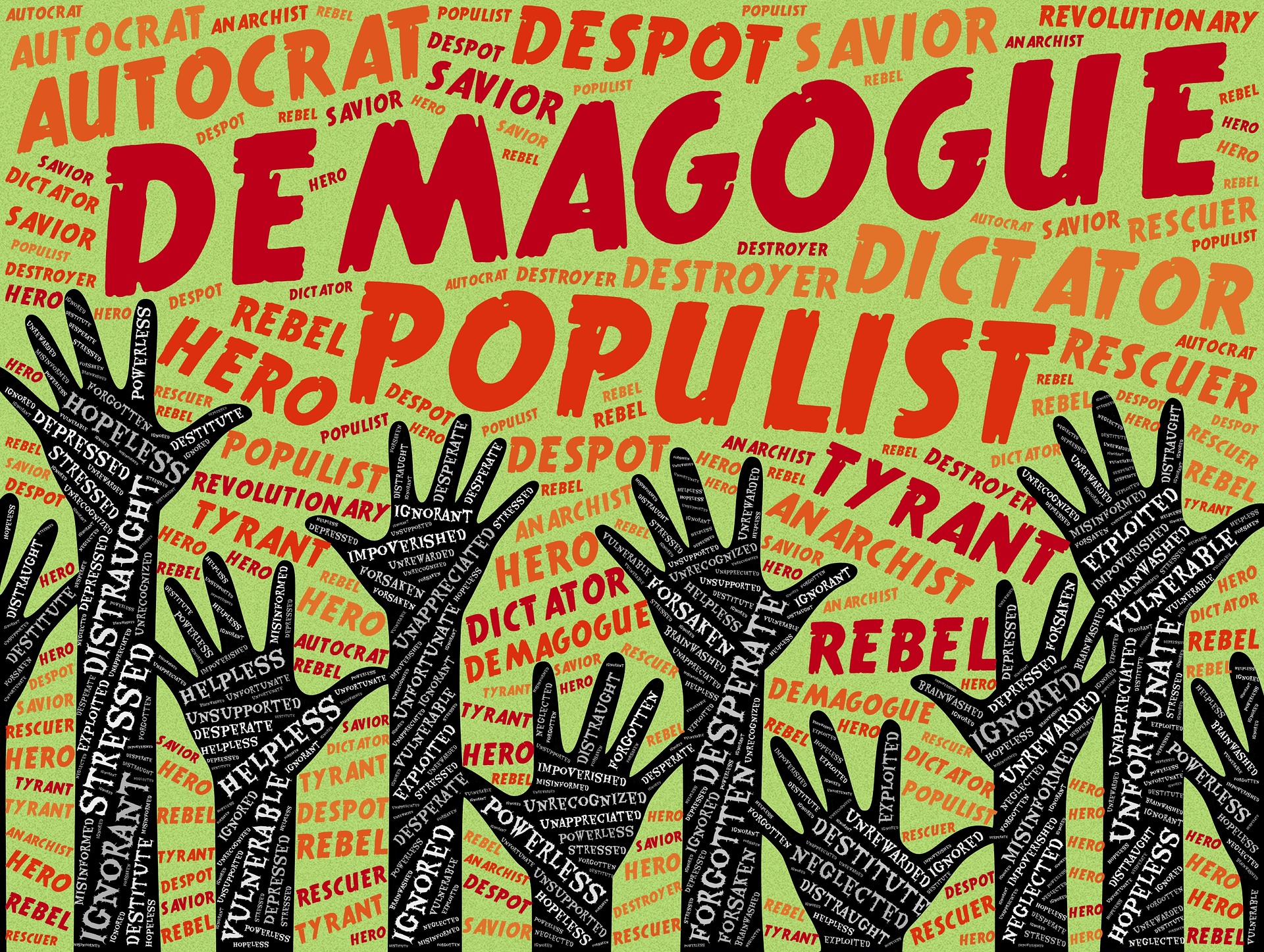
Chernow gives a striking description of what Hamilton feared, and in a single line spells out a looming threat we are seeing anew in our own modern political discourse. Hamilton worried that “American democracy would be spoiled by demagogues who would mouth populace shibboleths to conceal their despotism.”
Chernow penned those words some fifteen years ago. Whether it’s 1788, 2004, or the dawning of the neo-20’s, the fears expressed in those words caution us that we must remain vigilant against those who seek to exploit our fears to manifest their vision in reality.






 A Paramedic's Notebook