Relearning an Old Lesson About Self-Directed Learning

Relearning an Old Lesson About Self-Directed Learning

Originally published on LinkedIn.

During my period of unemployment, I reflected on my career and identified a few areas I could develop now that I had some spare time on my hands.  One of those development areas is seeking an ASQ certification as a Six Sigma Green Belt (h/t to Andrea for the suggestion!). At first, I delayed starting because I was looking for a low-cost near-free course to guide my study, such as something on Coursera I could audit, learning paths on LinkedIn Learning, or a discounted Udemy class I’d already purchased. But as I started watching the video modules, I quickly realized I wasn’t truly engaging. I was watching lecture content without retaining much.  While yes, watching at 2x speed is largely to blame for it, I couldn’t escape the fact that I was engaging in passive consumption.

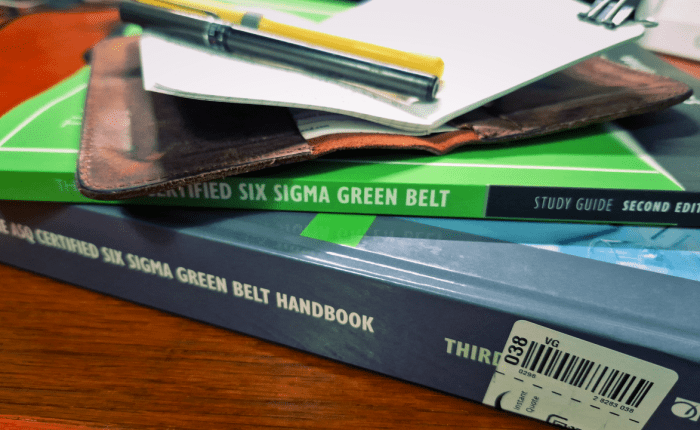
While I waited to figure out how to learn the material, I looked up the ASQ requirements and purchased used copies of the Six Sigma green belt handbook and a test prep study guide with practice questions.

Knowing that getting started is better than waiting around for a perfect plan, I started reading the handbook and planned to sort out my study strategy as I went. Almost immediately, I began connecting concepts to my past work and imagining how I could apply them now in my current role.

That’s when I realized: I’d done this before.

Paramedicine (2015–2016)

In 2015, I hit the transition point between early and mid-career phases and started questioning if I was on the right path (I found office work not very fulfilling). I thought it was a good opportunity to seek a career change and embark into paramedicine – I had a passion for first aid, I was a first responder on a few occasions in university (shoutout to University of Waterloo Campus Response Team!), dealt with emergencies while working as a bouncer, and I had written my masters thesis on the ethics of first aid.  It aligned with my values of helping people and provided a fast-paced technical job that would give me fulfilment.

The first step was meeting the admissions requirements, which included needing a high school biology credit. I enrolled in a self-paced college prep biology course.

There was no active instructor; just a course outline, a textbook, weekly tests, and two major summative exams. Here’s how I approached it:

  1. Used the course outline and test schedule as a learning roadmap – Matched unit outcomes in the course outline to textbook chapters covered on tests – Prioritized readings based on the self-paced testing schedule
  2. Created active study tools – Flashcards for definitions and concepts – Hand-drawing diagrams (cells, organs, systems) labeled front-and-back for drill practice
  3. Focused on comprehension-level mastery – Enough to explain, label, and connect systems without unnecessary complexity – The test was multiple choice, true/false, and labelling diagrams, so sticking to the first two levels in Bloom’s taxonomy was sufficient.

This gave me a clear plan and a feedback loop through frequent testing.  I passed the course with an above 90% final grade.

Article content
Samples of my flash cards and hand-drawn diagrams.

The Present

For my Green Belt prep, I have:

  • A roadmap: The Body of Knowledge in the handbook’s appendix, which outlines each section, topics, and the number of exam questions per section.
  • Content: The handbook itself for deep reading and marginalia.
  • Practice: A test prep guide with exam-style questions.

By combining these, I can map my study plan to the exam structure.  I also asked AI to use my weekly time constraints to suggest a manageable plan to break up the work and prepare to take the test by mid-Fall.  Then, I can prioritize topics by weighting and test my knowledge incrementally as I go.

The Lesson

I realized I don’t always need a formal course, especially for a certification with a defined body of knowledge and predictable exam format.  By having a clear syllabus, a learning map, a primary content source to learn from, and a way to test and reinforce learning, I can direct my learning effectively.

Courses have advantages: expert guidance, tailored examples, real-time feedback, and adaptive teaching.  However, courses are not the only route for learning and self-development. By having a well-defined body of knowledge to study from, and using active learning methods like taking notes, journaling on my learning, short feedback cycles, and finding ways to apply the content to my work and experience, I have all that I need to be successful.  All it will cost is some used textbooks, a registration fee, and remembering a lesson I learned a decade ago.

Looking at Old Problems

Here is a note I wrote to myself watching a training video:

“While a lot of these (insights) are basics that I already know, I am doing a terrible job at following them (to use my time effectively during the work day). Yes, I’m procrastinating by watching (the) video as if it will be the magical thing that fixes all my problems. Still, I also believe in the need to repeat messages, messages resonating at different times, and new ways to view old problems.”

There is something to be said for shiny new toys distracting us from just sitting down to get the work done. It’s not a knowledge problem, it’s an application problem. As Derek Sivers points out, if it were a matter of knowing, we’d all have six-pack abs and a million dollars in the bank. I fully acknowledge that I don’t need another video to teach me how to be more productive.

As it is said, there are many paths up the mountain. Some are harder, some are more direct. I have to allow myself some space and grace to realize that I don’t know everything, that I’m going to make mistakes, and that each day resets to zero to try again.

Stay Awesome,

Ryan

A Decent Day

My productivity has been garbage recently. Maybe the lingering effects of working from home during the pandemic has finally ground me down, but I’ve been struggling with staying on task. I’m failing to prioritize my work, I’m failing to follow-through on intentions, and while I’m keeping up with some deliverables, it’s a real slog to turn stuff around. Even this blog consistently goes up days late.

I try to not take this to heart, because it genuinely wears me down. On a good day, I cross items off my list and stick to the pomodoro timer, letting its ticking provide a meditative soundtrack to my flow. On bad days, it feels like the whole days gets past me with nothing of substance to show; time that’s gobbled up by the Past forever.

On the days when I catch myself heading towards an abysmal performance by 5pm, I tell myself to just get one thing done. It doesn’t have to be huge or complicated, but get at least one important thing done and shipped, and you’ll have had a decent day.

It’s not the best day, it’s not a great day, but a decent day is better than nothing. And it’s easier to chain decent days together to push forward in your work.

Aim for decent days, when you get at least one thing done, then give yourself permission to be satisfied with that.

If you aim for perfection, you stall yourself out. If you aim for decent, you get at least this blog post out.

Stay Awesome,

Ryan

“Just One More Mile” – My First (Elliptical) Half-Marathon

Last week, I hit a new milestone in my ongoing fitness journey. Since the start of the year, I’ve been following an exercise regiment that is having me progressively adding distance to weekly targets that I run on our elliptical at home. I plan to post a more in-depth explanation of how and why I set the system up in the future, but the main gist is that for each week of the new year, I add one mile on the distance I have to cover for the week. As of writing, I’m in week 22 of the year, which means I will be running 22 miles this week.

On Friday, I still had just over 10 miles that I needed to cover to hit my target for the week. I had initially planned on running half on Friday and half on Saturday. As I started my run, I felt that I was in a good groove, and decided to run more than half the distance for the session. Five miles turned to six, then seven. Around the eighth mile, I figured I could easily go the full ten to close off the week.

Then I had another thought. When we first purchased the elliptical, I thought it might be a good goal to try and run a half-marathon. The furthest I ran on the machine was 10 miles, so it wouldn’t be much to go the extra three. With me being so close to the target, why not?

The hardest mile was probably going from mile ten to mile eleven. The display on the machine only shows three digits, so 9.99 miles became 10.0, meaning it took longer to see progress getting counted.

A mantra started to form at the top of each mile – “just one more mile; you can do it.” This was something I learned from my army cadet days. During a particularly hard summer, I felt extremely dispirited with having to last six-weeks on a challenging leadership course. I learned to focus less on the whole six-weeks and instead focus on just getting through to the next day. It’s a lesson I’ve carried with me and try to apply anytime I’m faced with a seemingly insurmountable task.

Instead of running 13.1 miles, I focused myself to just completing the next mile. And when I finished that mile, I focused on the next; then the next.

Ten miles gave way to eleven, then twelve, and finally thirteen.

Running a half-marathon on an elliptical isn’t the greatest of achievements. However, it was an excellent application of focus and drive that affirmed to me that a.) I’ve come a long way since January; and b.) progress is made by focusing on the next goal, not the end goal.

Stay Awesome,

Ryan

My Fab Fit Friends

person wearing orange and gray Nike shoes walking on gray concrete stairs
Photo by Bruno Nascimento on Unsplash

This week, I want to pause to celebrate some of my friends who I find really inspiring. I don’t get a chance to see these folks much in person anymore as we’ve all moved on with our lives. They came into my life through various avenues – a childhood friend (C), high school (Sh), community work (K), and two I met through working at the bar (Sa and Y) – and yet thanks to technology and one of the few positive benefits of social media, I get to be a passive viewer as they live out their lives.

The concept of fitness is fraught with some terrible associations about what it means to be or look healthy. I don’t look to these friends because they embody some ideal of fitness, but for a more important reason. I admire them because they are consistent and dedicated, which is something I struggle with from time to time. Every day that I scroll through my feed, one or more of my friends are sharing the fitness part of their lives by showing up and putting in their time towards their goals.

“C”, for instance, is killer with her cardio and puts my runs to shame. “Sh” is in the gym almost every morning before I am conscious enough to roll out of bed. “K” has logged so many days of running on the trail, riding on her bike, and hours on the mat that she could stop all activity and I doubt I’d still catch up in my lifetime. “Y” is an absolute beast of a man and can deadlift two of me, but is one of the nicest guys I’ve had the privilege of working with. And “Sa,” who I’ve been fortunate to train with, is there, everyday, training his students in athletics and the martial arts.

These aren’t perfect people. Each of them has had their ups and downs, and has struggled in battle with their own personal demons. It’s not the “fitness” that makes me proud of their work, it’s because they inspire me to show up and not get discouraged.

To my friends – I see you. I see all of your hard work. I appreciate how honest you are. And I applaud that you all seem to do what you do for good, noble reasons. You aren’t vain and aren’t doing it for the attention. You are doing it for you, to live your best lives. To challenge yourself and to focus your energies.

Thank-you.

Stay(ing as) Awesome (as they are),

Ryan

Measuring Health and Fitness New Year’s Goals (2019)

jennifer-burk-ECXB0YAZ_zU-unsplash
Photo by Jennifer Burk on Unsplash

As the year is winding down, I (like many others) am beginning the process of looking over the year that was and weighing in on how things went.  While I ideally would have set goals for myself for 2019, truthfully I am terrible on the follow-through and I ended up setting something more akin to an “intention.”  For instance, over the last two years, I had set as a New Year’s resolution to 1.) stop being late for things, 2.) keep exercising, and 3.) start making better eye contact when talking to people.

In reality, I’m still late for everything (but at least I track it), I stopped exercising a while ago (I’m disheartened no one called me out about it on social media), and I still feel my eye contact at work is spotty at best.

Last year though, instead of creating a quarterly goal for myself, I set a grand focus or theme for the year.  I had tried setting quarterly themes for myself a few years ago, but I found that I wasn’t making progress during the quarter through poor goal management on my part, so I simplified and decided to work on one thing for the year.

At the start of 2019, I decided I would place greater emphasis on my health.  I kept it fairly broad in its application, but I did brainstorm a number of concrete areas I could work on, such as weight loss, lowering my blood pressure, regularly attending the gym, better nutrition.

I think the fact that I kept things open-ended was a main reason why I feel like I didn’t accomplish this focus as well as I had wanted to.  Had I set specific goals with realistic action items, I might have made better progress.

That’s not to say I haven’t “lived healthier.”  For instance, I have:

  • experimented with intermittent fasting all throughout the year which did help to keep my overall weight regulated.
  • finally got a family doctor after having been dropped from my doctor when she closed her practice a decade ago.
  • went in for my first physical in a long time and had blood work done to check-in on how my body is doing.
  • been weighing myself and measuring blood pressure more frequently, though still haphazardly.
  • experimented with app-based meditation; I found the experience interesting and meriting further exploration, but I haven’t carved out the time to dedicate to it.
  • while on my honeymoon I hiked up Mt. Vesuvio and did a roundtrip on the Path of the God hike (nearly 20km and 200 flights of stairs registered on my Fitbit for the day).
  • began tracking things like my down/depressed days, headaches, and time with family and friends in addition to my sleep tracker.
  • visited my optometrist for a check-up.
  • two regular visits to the dentist.
  • cut down on the amount of junk food I take in my lunches at work to essentially zero.

While these aren’t quantified victories, there are worthwhile achievements to celebrate.  As I look to the new year, one lesson I can draw is that limiting my one thing for the year is a good way to focus my attention, but if I want to make any tangible progress (e.g. weight loss on the scale), I would still need to set proper SMART goals and create an action plan that requires me to carve out time intentionally.

Stay Awesome,

Ryan

Locus of Control – I Re-Assembled the Elliptical!

While I have recently joined a new gym in our new city after the move, I have used it once as of writing.  I have yet to work out a schedule that allows me to easily pick up the habit of exercising.  This is, of course, a terrible excuse to not exercise.

Exercising at the gym will either be something I do before work, or something done after work.  Each of these options have complications that provide just enough friction that implementing them is stopped by my slothful lizard brain.

In order to exercise at the gym before work, I’d have to wake up earlier.  This is hard for me for a few reasons:

  • Because I work at the bar a few nights per week, my sleep schedule is variable, so keeping a consistent bed and wake-up time is challenging.
  • I’m a heavy sleeper, so finding a way to wake me up without disturbing my partner is difficult.
  • I’ve developed a habit of snoozing when my alarm goes off.
  • Being late to work is bad, so if I’m late to get to the gym, it throws things off for me.
  • I’m lazy.

In order to exercise at the gym after work, I have a few barriers that I’d need to overcome.  Ideally, I’d go straight from work, but:

  • On days when the dog is at daycare, I’m usually the only one who can pick him up before they close since my work is closer.
  • On days when the dog is at home, I need to go home first to take him out to relieve himself.
  • Because I’m the first one home, it makes more sense for me to start dinner.
  • I have the habit that once my “pants come off,” or if I sit on the couch, it’s hard for me to get up and go again.
  • Exercising after work is challenging if I’m tired from work.
  • I wouldn’t be able to workout on days after work when I also work at the bar or have board meetings (mornings are more likely to be clear of other scheduled activities).
  • I value spending time with my significant other over going to the gym.

These are all excuses.  They are in no way real impediments to going to the gym.  Instead, they provide just enough friction to stop me from making a change.

Another option would be for me to workout at home.  Until recently, we’ve been limited in what we could unpack while the renovations were ongoing.  However, now that the renos are done, we are in a position to reclaim more space in the basement.  The disassembled elliptical was buried behind boxes of stuff, and there was little extra floor space that could be used to set up the machine.

Last week, I decided that I wanted to finally set up the elliptical so that I had no excuses for skipping some form of exercise.  I wanted to take back some locus of control for my fitness.  Everything listed above is coded in language that suggests I have no control over my situation.  There’s always a reason outside of myself that prevents me from committing to exercise – “if only things were different, I’d exercise.”

But this is wrong.

In truth, there is nothing stopping me from exercising.  I’m making excuses on why I’m not modifying my behaviour.  Instead of whining and whinging about why I can’t exercise, I need to address the nagging feeling that I am drifting about in my day to day life.  I don’t feel in control of things, but this is false.  I tend to react, without intention.  I act as if I don’t have an active agency in how I spend my time.  By not making decisions about how to fix my behaviour, I’m still making a decision – only now I’m pretending to be a victim of circumstance and pushing off ownership of that decision to do nothing.

And so, last week I decided to take back some locus of control and re-assemble the elliptical and go for a run.  This is not a behaviour change, but merely a first step.  (Or several steps according to my FitBit…)

Now, I must be responsible for continuing to take those steps.

Stay Awesome,

Ryan

The Gap Between Reading and Doing


“For studying courage in textbooks doesn’t make you any more courageous than eating cow meat makes you bovine. By some mysterious mental mechanism, people fail to realize that the principal thing you can learn from a professor is how to be a professor — and the chief thing you can learn from, say, a life coach or inspirational speaker is how to become a life coach or inspirational speaker. So remember that the heroes of history were not classicists and library rats, those people who live vicariously in their texts. They were people of deeds and had to be endowed with the spirit of risk taking.”

— Nassim Nicholas Taleb, author of Skin in the Game

One of my big personal shortcomings is my inability to turn knowledge into action.  A few weeks back, I talked about how I tend to read a lot in the area of personal development, to the point of feeling over-saturated in the field.  However, for all the books I’ve read in the past two years in this area, I can’t really point to a lot of areas where I’ve successfully translated what I read into meaningful action.

This isn’t to say that I haven’t personally developed myself since 2016; I would say I’ve come a long way in two years to improving my life and myself.  Yet, in a pure comparison of books to identifiable changes, I can’t really say that a lot of specific changes have been made.  This seems somewhat at odds with the nature of the “advice” these books give, where you can deploy specific hacks, tips, and protocols, and everything will be better.

I don’t have a good explanation for why this is the case.  I feel it goes beyond just being lazy (though I am quite a lazy person).  I think the closest explanation that I can offer is something akin to a lack of confidence meeting decision paralysis.  I lack confidence in my ability to make decisions, so I research and read to see what others have done.  But there comes a point where I have too many options available, and I fail to cross the threshold from knowing to doing.  Rationally, I know that seeking more knowledge does not necessarily mean I’ll be more likely to act (there’s a quip that if knowing more was the solution, no one would need to diet and everyone would be healthy).  The gap between knowledge and action, where the will lies, stubbornly refuses to shrink for me.  This could be my fixed reality, but I’d like to think that I haven’t found the right combination of motivations yet that would bring me to where I want to go (setting aside the problems with the notion that I have to wait around for a muse to motivate me).

This could also be a problem because I have too many things on the go (the old “I’m too busy” rebuke).  With too many balls in the air, I’m worn down with just managing how things are going in the present, and I have little cognitive bandwidth left to steer me in a direction I want to go for the future.  This, too, is a personal shortcoming for me, but I think it’s a separate concern from the action-gap.

Truthfully, I don’t have a meaningful, satisfying way to close off this post.  I don’t have a magic bullet that will fix the problem for me.  I can’t say that I’ve found a solution to the problem, and that this post is building towards a resolution.  It’s an ongoing problem for me, and I hope that by bringing it to the surface, I can at least be aware of the problem and try to work around it until the gap can be plugged.

Stay Awesome,

Ryan


Reflections on Self-Help and Diminishing Returns

If you were to ask my fiancee, she’d tell you I have a book-buying problem.  I buy books faster than I can read them, and I have a small collection weighing down my shelves at home.  In a month’s time, we will be moving houses and part of the burden is to box the books and be mindful just how heavy books in boxes can actually be.  I prefer printed books, but I also have a steadily growing Kindle library and now an Audible library.

For 2018, the pace of my reading has slowed down significantly since 2016 and 2017.  At present, I have only completed 10 books for the year (with many half-read books strewn around the house).

If you go through the books I’ve read since my first reading list in 2016, you will notice a large proportion of my books fall under the self-help and personal development banners.  While I acknowledge that these books have been helpful in kicking off my attempts to make positive changes at work and in my life, I’m noticing a trend – I’m not really getting as much out of the books as I used to.  I seem to have hit a point of diminishing returns.  I started noticing it in the books I was reading, but it’s also spilled over into the daily lists of articles I get from Quora, Pocket, Medium, etc.

There is an over-saturation of the same studies being cited and a dearth of tips, tricks, tactics, protocols, hacks, systems, routines, mental models, and insights that tend to recycle similar themes.  Especially mental models – those seem to be in vogue right now with the online think-pieces and people creating courses for you to enroll in.

I also noticed that the further out from primary sources you get, the more recycling you find.  There tends to be four broad classes of folks who populate this domain:

  1. the innovators who write reflectively about what they did or the systems they created (the Ramit’s, the Dalio’s, the Covey’s, etc.);
  2. the populizers who interview, report, and connect ideas from the innovators (the Gladwell’s, the Duhigg’s, the Ferriss’s, etc.) ;
  3. the repeaters who recycle from columns one and two (this is typically the people writing Medium and Quora posts and asking you to sign-up for their email lists); and
  4. the folks who spend a year doing a thing then write a book about it, which pairs something they experienced with a study/book/system that is supposed to give insight or explain what happened in case study format (I won’t name names here, but the books are usually structured like those in group 3 above).

I wish the insight above was mine, but in full disclosure I had read this idea from someone and for the life of me I can’t remember where (the irony is not lost on me).  I suppose the only thing I’ve added to the above is item four.

I know it’s not fair to pigeon-hole people into only these four categories.  Some people in the second group produce novel insights that place them in group one, and some who write in group one are also guilty of slipping into group two from time to time.  The point is not to dismiss the books that are coming out, but rather to try and objectively draw circles around them in meaningful categories.

I think the diminishing returns I’m seeing is a result of my desire to find a magic bullet to fix whatever problem is “holding me back” from being in a place I want to be, mixed with one of my greatest flaws – I will read, and read, and read, and never make behavioural changes to take action.  Instead of making progress towards my goals in a meaningful way, I instead stay “productive” by reading.

Will this stop me from reading these kinds of books?  Probably not. Let’s be honest, these books are designed to be appealing.  They are a mix of relatable narratives and the promise of a better tomorrow.  They are my harlequin romance novels, my pulp reads.  They are easy to digest because someone else has done the thinking for you.  It’s my own kind of soma that keeps me peaceful and happy.  I know it’s not really that nutritious, but I enjoy it as a guilty pleasure nonetheless.

Stay Awesome,

Ryan