Beyond the European Default Follow-up (7/4 time)

Last week I shared some thoughts on appreciating musical languages developed beyond the European music theory standard, and how it can be inappropriate to judge musical modalities using the vocabulary and standards of your cultural (musical) heritage. This isn’t to say that viewing art through different lenses can’t bring about interesting discoveries of the artform, but rather using one standard to pass a value-judgement of the merits of an artform can be fraught with problems.

Thanks to YouTube’s algorithm, the recommended videos feed provided some great gems appreciating the original. Through a drum cover, I learned the original was in 7/4 time (whereas I thought it might have been alternating 2/4-2/8 measures; sounds like I missed a 1/8 beat).

And here was another drum cover with some artistic interpretations on the beat.

I was able to learn a bit more about Konnakkol, and how it builds increasing complexity to the music.

And here was a great beatbox cover that got a shoutout from the male performer in the original video, Somashekar Jois.

Finally, I found that Somashekar Jois has a YouTube channel where he teaches lessons in Konnakkol. I was a little nervous about posting this since one of his past videos was an artist’s endorsement for Prime Minister Modi of India, but I still felt it important to provide the link here to learn more about the artform. If possible, I’m trying to focus on the art, rather than the artist (or his whatever his politics happens to be).

Oh, and a recent video from Adam Neely again touched on the problems with passing judgement on musical performance when you don’t critically engage with the sources of your musical taste. At best, you are falsely applying a single standard as a universal judge of taste, and at worst you are using music theory to justify sexist bullying of people just trying to have fun creating.

Stay Awesome,

Ryan

Beyond the European Default

Tim Ferriss recently shared the following video in his newsletter. From the video’s description, we are treated to a short but wonderful performance “on the most traditional, classical and ancient vocal percussive art form of India; the mother of all percussive languages – Konnakkol.”

I found as I was watching the video, I was trying to discern the time signature being used (I suppose in the hope of finding the cadence to bob my head along with the rhythm). Most of the song sounds like it switches between some sort of 2/4 and 2/8 back to back rhythm, alternating one bar of each. For a brief moment, I was going to push this out to my network to see what my music theory friends would say, since I consider myself an amateur at best.

But then I realized that the folks who I thought would be better equipped to give me an answer were likely trained in classic music theory; that is to say, European music theory. But applying a European music theory framework would be wholly inappropriate for classical Indian music. I don’t mean inappropriate in a politically correct sense (quite the contrary, it would be a fun exercise to apply European music theory as an exercise to see where the similarities and differences are between the two music styles), but instead it would be inappropriate from a practical sense. The two musical styles share the common thread of using percussion and pitches to “tell a story” but the similarities end there. They are two styles with differing underlying grammar and syntax. Applying a different musical theory lens would be inadequate to capture the nuances of the performance, and possibly miss a richer historical context to give the performance more meaning.

It reminds me of a video Adam Neely put out almost a year ago that’s well worth a revisit because he raises important points about what we choose as our defaults – what “counts” as music. If we judge everything based on what’s been given primacy over the last few hundred years, we at best have an impoverished understanding of music and culture, and at worst continue to perpetuate a systemic bias (read: racist) in favour of some kinds of music to the exclusion of others that we deem inferior (coded as foreign, exotic, world, or worse).

This isn’t to say you have to like any one kind of music – let your tastes take you wherever and drink in the art of whomever speaks to you. It’s just important to remember that art extends far beyond the preferences we think of as universal, and that our taste should not be placed at the centre of culture.

Stay Awesome,

Ryan

Return to Normal

Well, I certainly was optimistic in my last post about when I’d return to normal. The move proved to be a bit more onerous, so I missed last week’s post, as well as this week’s deadline. C’est la vie. We press on.

As we start getting our vaccines rolled out to younger folks in my part of the country, we are beginning to have virtual watercooler chats about what the return to normal will be. The gut-reaction is that our higher education institutions will kowtow to pressure to return to face-to-face delivery as soon as possible – whether it’s students looking for the ol’ college experience, administrators looking to address gaps in the bottom line, or employees desperate to escape working from home.

It’s tempting to think things will return to normal, back to the pre-pandemic status quo. We, as creatures of habit, like to slide back into what’s comfortable and expend the least amount of energy that we need to.

But knowing what I know about people, a “return to normal” is going to smack straight into the loss aversion wall – people don’t like to lose benefits once they have them. It switches to an entitlement mentality. I don’t mean this in a negative sense. Entitlements are good! When we talk about entitlements, it carries a negative connotation of something not earned. But to the contrary, I think “unearned” entitlements are the point of society, culture, and government. Rather than everyone being forced to create everything for themselves, we can leverage divisions in labour, experience, technology, and collective action to ensure that benefits get spread around. The metaphorical tide should raise all ships.

So, what does it mean when we are rushing back to return to normal – what do we think we are missing, and what would a return to normal cost us?

A return to normal means hours of commuting per week, instead of going upstairs to work.

A return to normal means rigid schedules and limited campus space, instead of blending the flexibility of synchronous and asynchronous delivery.

A return to normal means bringing back flu seasons at work.

A return to normal brings back all the issues around inclusion and accessibility for those who don’t fit the “normal” not built for them.

Here at home, a return to normal means less time with our infant son. It would also mean less quality time with my wife.

I haven’t packed a lunch in a year. My office dress clothes have been hanging untouched in my closet. I’ve fueled up as many times as maybe months we’ve been working from home.

Not everyone is as fortunate as I am to still be working from home. Many employees at my institution still have to go on campus to work because they’re essential, so their current normal differs from mine. However, we must question whether we want the consequences of having the rest of us join the essential few. I sincerely doubt it is automatically a return to something better.

Stay Awesome,

Ryan

Initial Assumptions

I was reflecting on Seth Godin’s musings about the number of moons in our solar system. The initial assumptions we use to make predictions about our world can sometimes be orders of magnitude off from truth.

We as humans don’t like to be wrong, but we shouldn’t be overly concerned with our initial assumptions being off the mark. After all, if we knew the truth (whatever “truth” happens to be in this case), there would be no need to start from initial assumptions. It is because we are starting from a place of ignorance that we have to start from an assumption (or hypothesis) in order to move forward.

The problem lies with whether we realize we are making assumptions, and how committed we are to holding on to them. Assumptions made about the physical world can often be value-neutral, but assumptions that intersect with the lived experiences of people always come pre-packaged with history that’s value-loaded. It’s fine to make an assumption that your experiences are shared with others, but that assumption can only be carried so far. At some point, you have to acknowledge that there will be a lot missing in your initial assumptions that need to be accounted for.

The lesson then is this: when working from an estimation or prediction, be careful with your initial assumptions. It’s fine to begin with your own experiences, but always put an asterisks beside it because your experience is likely not universal. We must guess, then check. Test, verify, then revise.

Aiming at truth is a noble goal, but we should settle for asymptotically moving closer towards it as it more likely reflects reality.

Stay Awesome,

Ryan

The Duke of Edinburgh’s Impact on My Life

With the passing of Prince Philip last week, I reflected on his impact on my life. Normally, the goings-on of the Royal family impacts me little directly, albeit I am a commonwealth subject as a Canadian. However, Prince Philip was also the creator of the Duke of Edinburgh Award Program, which I participated in as a youth. I was fortunate to be introduced to the program during my Army Cadet days, and I progressed through each of the three levels before I aged out of the program, completing my Gold Level in late 2011.

I recently participated in a survey of Gold Level holders asking about the program’s impact on my life. At the time, I answered that the program had little lasting impact on me. I said this in relation to each of the four core areas of the program – physical fitness, skill development, community service, and the adventure component. For each of these areas, I felt like little had directly carried over all these years later. I’m not a particularly fit person, I don’t remember any of the skills I had developed, and I haven’t gone camping in about a decade. The only domain that I am still highly active in concerns volunteering.

So, on the surface, I feel somewhat disconnected from my achievements in the DofE program. Yet, as I reflected over the weekend, I was struck by a realization: had it not been for my gold level trip to Kenya (I joined a group who travelled to Kenya in 2007 to perform a service project and climb Mt. Kenya), I would not be where I am today.

My trip overseas came at the midpoint of my undergraduate experience. As I returned home and went back to school in September 2007 for my third year, I had a profound change in outlook. Prior to my trip, I was a residence-body. I rarely ventured out beyond the dorms and was too shy to join on-campus clubs and groups. But after returning from the trip, when I was faced with an opportunity that I was nervous to attempt, I would remind myself that I had just climbed a mountain, and now anything seemed possible. It gave me the confidence to step outside of my shyness and embrace new challenges.

I joined the campus first aid team and the departmental undergraduate society. In time, I took over both groups and lead my peers through successful tenures as Operations Coordinator and Society President respectively. I committed more fully to my studies, and continued my education into graduate school. The friends I made on the first aid team lead me to a job in the gambling lab as a field researcher. It also lead me through the same connections to volunteering for a local non-profit board and working with the local Community Foundation. Those experiences then helped me get my first full time job at Conestoga College, where I currently am employed.

I’m not saying that I wouldn’t be where I am had I not been in the DofE program. However, I can draw a strong link through each of these personal developments that traces back to a decision I made one day to join in when a friend told me about this fun opportunity to travel abroad. And while I don’t often remind myself anymore that I climbed a mountain when I’m trying to convince myself to be brave, I feel a deep sense of gratitude for being a part of something that pushed me to grow beyond what I thought I was capable.

Kurt Hahn was a mentor of Prince Philip who provide inspiration for what would become the DofE program. He is known for saying that “there is more in us than we know if we could be made to see it; perhaps, for the rest of our lives we will be unwilling to settle for less.” Without realizing it, these words infused themselves into who I am as a person, and I didn’t understand what it meant or its impact until the passing of Prince Philip.

Rest in Peace, His Royal Highness, The Prince Philip, Duke of Edinburgh.

Stay Awesome,

Ryan
Increasing Vocabulary To Understand Experience

On a recent episode of the podcast Owls at Dawn, one of the cohosts shared the tragic news of a loss in the family due to suicide. He discusses some of his family history and his relationship with faith as he takes time to publicly process some of his grief. It’s a haunting and sad episode. I appreciate that he shared his grief and I hope he and his family can recover from the loss.

One section of his thoughts veered into an idea that I wanted to capture here. He discusses the feeling one has coming out of a crisis of faith (in the context of the episode, it was largely about religion, but this could equally apply to a crisis of identity as well). When one feels themselves breaking away from faith, it sounds as if it creates a vacuum of epistemic knowledge about how one engages with or defines oneself against the world. Austin, the host, notes that if you lack a kind of vocabulary to apply meaning and labels to your worldview, it can create a kind of despair because of the anxiety that comes with not knowing how to relate to ones feelings.

This reminds me of those lists you see floating around the internet of words to describe feelings in other languages that don’t have analogues in the English language. I always enjoy reading these lists and seeing if I can recall a time I’ve felt the emotion being described. I feel a sense of excitement when I discover a label to apply to how I feel, but more importantly than that, it gives me an epistemic awareness of the feeling so I can identify and name it in the future if it happens again.

What happened to Austin’s family member was tragic, and I don’t know if having a vocabulary to describe the emotions he was feeling would have helped bring him comfort. I think there is a lesson to be learned here about the importance of increasing one’s own vocabulary of the lived-experiences of others so that you can either a.) have a greater sense of empathy to the inner lives of people different from yourself, or b.) be more sensitive to your own emotional states to help you make sense of the world.

By naming the feeling, you can come to understand it. And by understanding it, you can work towards addressing, integrating it, or enriching your identity and sense of self.

Austin, I’m sorry for your loss.

Stay Awesome,

Ryan

Material Possessions and Perspective

While walking the dog the other day, I seemed to have dropped the case for my wireless ear buds. It was night time, I was listening to a podcast, it was cold and a little slippery, and somewhere along the short route the case appears to have fallen out of my sweater pocket. It might have been while I was pulling a flashlight out to pick up after my dog, or it could have been one of the times I pulled my phone out along the route. After discovering the missing case (the case is important because it’s the only way to a.) turn the buds off when not in use, and b.) to charge the buds after use), I dropped the dog off at home and re-walked the route twice to see if I dropped it somewhere on the sidewalk or in the snow. Sadly, I couldn’t find it.

I’m embarrassed to say that losing the case majorly bummed me out that night. I tried to remind myself that it’s only a thing (albeit a somewhat expensive thing) and that I shouldn’t take its loss so hard. Our book club recently finished reading Meditations by the stoic emperor of Rome, Marcus Aurelius, and I admonished myself for feeling sad over the missing possession – how utterly unstoic I was at allowing myself to be affected by a trivial event. I even confessed to my lovely wife the next day that I felt conflicted over feeling bad for losing the case AND feeling bad about allowing myself to feel bad (my wife is awesome – she reminded me to give myself permission to feel bad about something I was using on a near-daily basis since I purchased the headphones mid-last year).

After some quick research, I found that I could purchase an inexpensive off-brand case that will provide charging capacity to the earbuds so that I don’t have to discard them. The unit thankfully works as I had hoped and I’ve been reunited with my bluetooth audio experience once more.

It’s such a silly thing to write about; I almost feel a sense of embarrassment in talking about the experience because it’s a perfect example of a “first world problem.” But I thought I’d also document the self-reflection that happened as a reminder that these kinds of silly things do affect me, and that I’m not immune to these kinds of material losses. Yes, it’s just a thing and I shouldn’t allow it to occupy my thoughts so readily (or “rent-free” as is now the apt description), but I should also remember to feel free to live with these feelings. It might just be an object, but it’s also a nice tool that I’ve used to make my life just a little happier during the pandemic. And I’m allowed to feel bad at the economics of it – money is a representation of the time I spent exchanging my labour for, so losing the item and having to replace it is a further loss of my time.

I’m certainly not perfect and will endeavor to keep a level head about these things. I just hope that if I discover it when the snow melts, I don’t treat myself too harshly.

Stay Awesome,

Ryan

Nerd Time Nostalgia

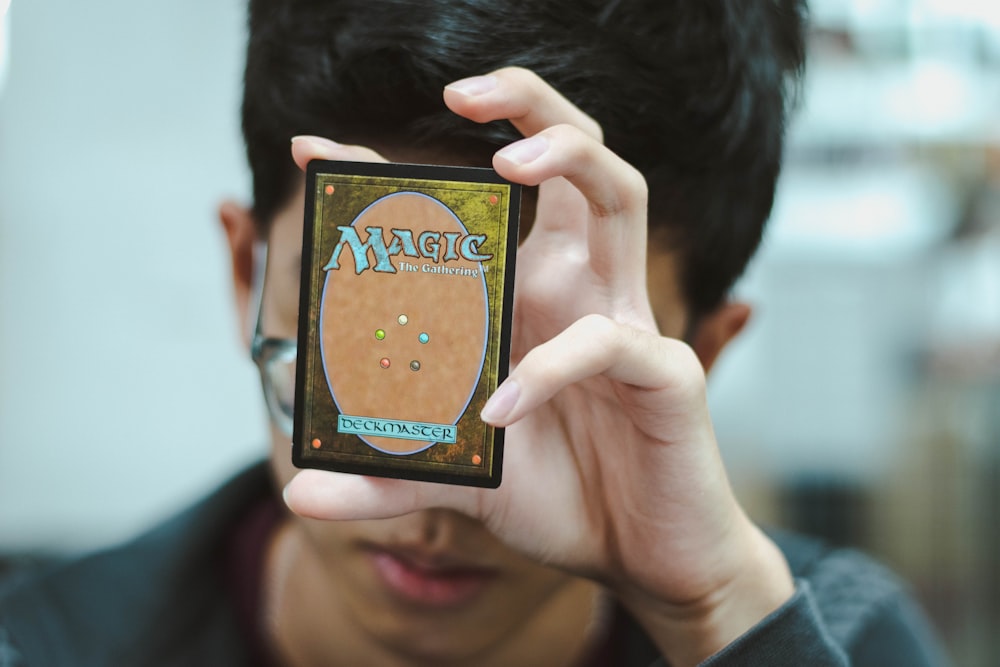
boy holding Magic: The Gathering trading card
Photo by Wayne Low on Unsplash

Generally speaking, I’ve handled the social isolation during the pandemic well. Technology has allowed me to keep in contact with friends and family, though I admit it’s a poor substitute for quality in-person time. And I am fortunate to have family that has kept their bubbles small, so we have the occasional visit to help alleviate parenting our infant son. Most importantly, I’m very fortunate to have a partner who I enjoy spending time with, which has made weathering the time at home much easier.

Recently, though, I’ve been finding myself longing for the good ol’ days where I’d get together with friends for nerd stuff like board/card games, video games, or just getting together for the sake of company. I’m getting wistful for a time, almost ten years ago, where I’d walk down to a friend’s house on a weekend, spend the day doing laundry at his house and watching him play video games all night (and I’d eventually walk home around two in the morning). It’s not that he preferred to play solo, or in any way excluded me from play, but I just enjoyed relaxing and chatting with something to watch on the screen. It was Twitch before Twitch was a common thing.

I miss getting together for card tournaments on weekends, whether it was at the game shop for a Magic: The Gathering release or at a friend’s house for a fun draft tournament. With a few packs of cards and a couple boxes of pizza, we’d whittle a whole day away laughing and cursing our poor card draw.

A colleague at work just announced that he’s accepted a job 5-hours away and will be resigning this week. He noted to us that his decision came about as a result of the pandemic – in reflecting on the last year, he realized he wanted to live closer to his family and home town. I will miss him terribly and I wish him all the success he can find in his new job. His reasoning for finding a new job resonated with me – as I reflect on the pandemic, what are the values that have been highlighted to me in my time disengaged from our larger society and culture?

Yes, family is important. But I’ve learned to appreciate the time spent with my friends. Whether it was games, music, or getting together to watch the Super Bowl (which I don’t care about, I just like hanging with my friends), I see the value in building community and creating shared history with people who matter to you. I’ve found little ways of connecting with friends while living at home, but until life allows us to mingle unfettered, I want to be more intentional with how I foster connection with friends.

Stay Awesome,

Ryan

Meaningful Actions

Over the weekend, I attended a virtual board meeting for engineering education. One of the reports pertained to a working-group’s findings and recommended actions to support the aims the 30 by 30 Campaign to address low representation of women in the engineering profession. This is a great initiative and I’m looking at ways we can improve our own processes to support women in STEM in our programs at the college. There was a comment that made me think, and it’s worth considering.

One of the board members expressed support for the report, but also commented that she had provided input as early as the 1990’s on this very initiative. Her comment was not meant to cast doubt over the process, but instead highlighted two important things – that this is not a new issue, and that many people have tried to make sweeping changes for the profession, which clearly hasn’t been entirely successful. Her advice was to be cautious about taking on too much scope with the recommendations, and instead to support a “divide and conquer” strategy for making targeted, meaningful actions to promote change.

I don’t hold any illusions that we will solve systemic issues overnight. If I’ve learned anything this past year, it’s that my hopes for reform are likely to fail and that instead of refinement, we should be aiming at transformative changes.

There is also another tension – on some level, this line of thinking suggests a teleological progression of progress for society and culture. I want to think that our culture is aiming at progress (“the arc of the moral universe is long, but it bends towards justice” is a powerful vision to work towards), but a skeptical voice reminds me that, like our misunderstanding of Darwinian evolution, there is nothing inherent in the progress of change that aims towards a higher, final form. A kind of defeatism can creep in when one thinks that meaningful actions do not contribute towards progress, but instead are just the spinning of our collective wheels.

I reject this defeatist view and want to aim towards a higher vision. I grant that the universe is largely amoral and unconcerned with our progress. So, instead, we must clearly define our values and principles, and take actions towards achieving these ends. The actions are neither good nor bad in an absolute sense. Rather, we mark progress with how close we come to realizing the values we want to see manifested in our lives. Meaningful actions are measured not against morality, but instead on efficacy for the outcomes. There are trade-offs and consequences along the way, and so we must be prudent. Both history and mythology have given us plenty of examples of why hubris should be avoided.

I don’t have a good answer on what meaningful actions we ought to settle on as part of our agenda. As noted, this issue has been discussed far longer than my tenure in the employment game. I’ll defer to folks much smarter than I, and try to learn from their efforts to do my part.

Stay Awesome,

Ryan