For as much as think I am in control of my impulses, the reality is I am buffeted around by my whims far more than I wish were true. The biggest bane to my daily work is the mighty well of distraction that is YouTube. I’ve lost hours of time in a day allowing my subscriptions to serve me fresh content. I try to justify it to myself – “I’m just going over for a quick mental break,” or “I just need to see a tutorial on how to do x-action in Excel.”
Then, I look up and hours might have passed without me consciously knowing it.
Some time ago, I used a browser blocker to prevent me from accessing the worst offenders for distraction (all social media, YouTube, and Reddit specifically). I’m no stranger to signing an Odysseus contract, which I’ve written about before. However during the pandemic, I relaxed it a bit since, hey, we are all going through a rough time.
As of late, I’m forced to conclude that enough is enough, it’s time to hold myself to a higher standard. I went back in, and toggled StayFocusd back on, and so far have done a better job of accounting for my time. Between blocking distractions, using pomodoro sprints, and writing down what I do in my time blocks (quick estimates, nothing too detailed), I’ve done a pretty good job of limiting distracted time.
It’s not perfect, but it’s more than a 1% improvement, which will hopefully compound over time.
I have a tendency to measure progress according to leaps forward in productivity. I block off my calendar with large swaths of time, which gives the illusion that the time spent in a labelled block of time will be proportionate to how far the needle is moved.
But these are just that: illusions.
There are only two kinds of progress I make – the last minute panic against the deadline, and the lesser used but more sustainable drip by drip of micro-steps. The former is very cathartic, but we have to remember that catharsis means to purge, and so in the end you are left drained and must recover.
A focus on small steps, in the 1% change, is harder to track without perspective, but ultimately is an easier trek if you have the focus to stay on the path.
I was listening to a podcast late last year where author/speaker Michael Bungay Stanier was on to promote his new book. The podcast host asked him a question, and Stanier prefaced his response with something to the tune of “I’m not sure how I think about that since I’ve never thought about it before, so please allow me to feel my way into the answer.“
This really stuck with me over the last few months as it gives me words to describe something I’m somewhat known for. Whether it’s for my work with engineering accreditation or for the research ethics boards I sit on, whenever I’m asked to opine on a matter of interpretation, I’ll often externalize my thinking to help sift through the relevant details or principles at play. I’d like to think I do this as part of teaching the other person how I reason through problems, but I think it’s more charitably the way I test ideas out slowly and give language to thoughts or ideas that are more emotionally based in my mind.
I suspect this is an offshoot of my training in philosophy, where if we cannot deduce an answer through deductive reasoning, then we employ inductive and abductive strategies to generate thought experiments. I craft a set of considerations or scenarios, say them out loud, and evaluate if it satisfies the criteria, and check to ensure there are no counter-examples, counter-factuals, or missing considerations that should be accounted for.
I’m under no illusion that this can be frustrating for someone looking for a simple answer; brevity is not one of my virtues. However, having this phrase to describe how my mind works makes me feel slightly less embarrassed when I’m talking my way into an answer.
The calendar has rolled over, meaning it’s time to provide an update on my reading over the last year. For my previous lists, you can see what I read in 2020, 2019, 2018, 2017, and 2016.
Title
Author
Date Completed
Pages
1
Clanlands
Sam Heughan & Graham McTavish
01-Jan
352
2
Lean Out
Tara Henley
03-Jan
336
3
Moon of the Crusted Snow
Waubgeshig Rice
05-Jan
224
4
Sovereignty
Ryan Michler
12-Jan
266
5
Eat a Peach: A Memoir
David Chang
14-Jan
304
6
Neverwhere
Neil Gaiman
19-Jan
480
7
The Office: The Untold Story…
Andy Greene
24-Jan
464
8
Angels & Demons
Dan Brown
30-Jan
736
9*
Meditations
Marcus Aurelius
07-Feb
256
10
The Practice
Seth Godin
23-Feb
272
11*
The Righteous Mind
Jonathan Haidt
12-Mar
528
12
A Clash of Kings
George R.R. Martin
29-Mar
1040
13
Hold Me Tight
Dr. Sue Johnson
26-Apr
320
14*
To Pixar and Beyond
Lawrence Levy
26-Apr
272
15
Cool Sex
Diana Richardson & Wendy Doeleman
30-Apr
128
16
Mindfuck
Christopher Wylie
10-May
288
17*
The Massey Murder
Charlotte Gray
24-May
336
18*
On Immunity
Eula Biss
21-Jun
224
19
At The Existentialist Café
Sarah Bakewell
30-Jul
448
20
Learn Like a Pro
Barbara Oakley & Olav Schewe
05-Aug
160
21
The Great Influenza
John M Barry
05-Aug
560
22
The New Father
Armin A. Brott
07-Aug
336
23
Effortless
Greg McKeown
07-Aug
272
24
Can’t Even
Anne Helen Petersen
13-Aug
304
25
The Happiness Hypothesis
Jonathan Haidt
13-Aug
320
26
Switch
Chip Heath and Dan Heath
16-Aug
320
27
The Bully Pulpit
Doris Kearns Goodwin
22-Aug
912
28
Saving Justice
James Comey
22-Aug
240
29
An Elegant Defense
Matt Richtel
27-Aug
448
30
Infinitely Full of Hope
Tom Whyman
06-Sep
218
31*
The Black Count
Tom Reiss
22-Sep
432
32
Think Again
Adam Grant
01-Oct
320
33
Lives of the Stoics
Ryan Holiday and Stephen Hanselman
03-Oct
352
34*
A Knock on the Door
Truth and Reconciliation Commission of Canada
06-Oct
296
35
Our Own Worst Enemy
Tom Nichols
07-Oct
256
36
A Storm of Swords
George R.R. Martin
11-Oct
1216
37
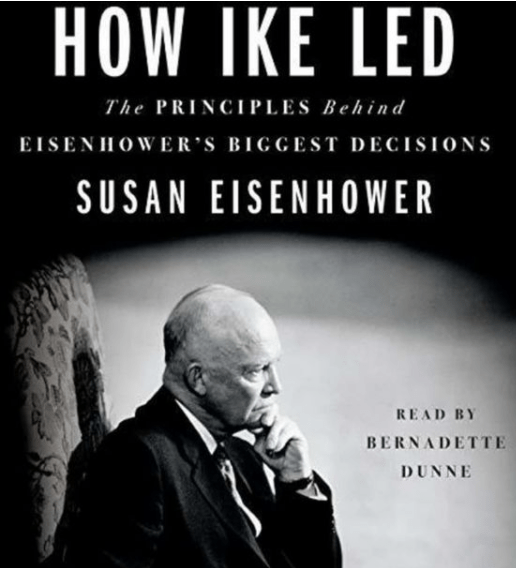
How Ike Led
Susan Eisenhower
17-Oct
400
38
Braiding Sweetgrass
Robin Wall Kimmerer
29-Oct
408
39*
Social Empathy
Elizabeth Segal
05-Nov
256
40
Noise
Daniel Kahneman, Olivier Sibony, Cass R. Sunstein
09-Nov
464
41
Finding Your Element
Ken Robinson with Lou Aronica
12-Nov
320
42
The Storyteller
Dave Grohl
14-Nov
384
43
Why We Make Things and Why It Matters
Peter Korn
16-Nov
176
44
For Small Creatures Such As We
Sasha Sagan
18-Nov
288
45
Courage is Calling
Ryan Holiday
24-Nov
304
46*
The Seven Principles for Making Marriage Work
John M Gottman and Nan Silver
06-Dec
288
47
Mr. Dickens and His Carol
Samantha Silva
08-Dec
288
48
The Ghost of Christmas Past
Rhys Bowen
14-Dec
272
49
Why We Sleep
Matthew Walker
19-Dec
368
50
In A Holidaze
Christina Lauren
20-Dec
336
51
Christmas Every Day
Beth Moran
24-Dec
408
52
A Christmas Carol
Charles Dickens
24-Dec
112
Total
19308
Entries whose number is asterisked was read for our bookclub.
This year was a huge step up in the number of books I got through. In 2020 I came in at 38 books, whereas I settled into a good groove and managed 52 books for 2021, or a book per week on average. The big months were January (8 books), August (10 books), and October through December (7 books each month). 2020 was a tough year on everyone as we made the pivot to pandemic life; I was also preoccupied with my wife’s pregnancy and later the birth of our son. For 2021, things settled and we found new normals to operate within. I still relied heavily on audiobooks, but I found that where I made the majority of my reading progress during my work commutes in the before-times, I now find time while walking the dog and doing chores around the house to squeeze in a listen.
I’m also happy to see I continued my trend started in 2020 to move away from predominantly reading self-help and business books. While they are still sprinkled throughout, I embraced more fiction, memoirs, books on history, and discussions of complex social issues.
My book club was down slightly over last year, coming in at 9 books for the year. We also celebrated a birth and added a new member which is exciting. In the table above, the asterisked numbers denote book club entries, but I have included them collected below:
Meditations by Marcus Aurelius
The Righteous Mind by Jonathan Haidt
To Pixar and Beyond by Lawrence Levy
The Massey Murder by Charlotte Gray
On Immunity by Eula Biss
The Black Count by Tom Reiss
A Knock on the Door by Truth and Reconciliation Commission of Canada
Social Empathy by Elizabeth Segal
The Seven Principles for Making Marriage Work by John M Gottman and Nan Silver
And to round out the post, here are my top five reads of the year in chronological order:
Moon of the Crusted Snow by Waubgeshig Rice (this book was so good, I bought two copies and mailed them to friends as gifts – one going all the way to Scotland!)
The Great Influenza by John M Barry (if history doesn’t repeat itself, then at the very least it rhymes, and so learning about the Influenza Pandemic of 1918-1919 helps to contextualize our experiences over the last two years)
How Ike Led by Susan Eisenhower (I took so many notes reading this book and will revisit the lessons of Dwight Eisenhower often)
Braiding Sweetgrass by Robin Wall Kimmerer (this was my first proper introduction to Indigenous ways of knowing, and my worldview has been made richer for it)
Why We Make Things and Why It Matters by Peter Korn (a beautiful memoir and reflection on the nature of making, craft, art, and finding your calling within a career)
2021 was a great year of reading for me. Despite feeling adrift in the monotony of the pandemic (or languishing, as Adam Grant claims it), I found exploring both ideas and fictional worlds to be immensely rewarding. My horizons have expanded and I’m looking forward to continuing this exploration into the new year. I’m intending on tackling more biographies, books on history, and works of fiction. I’ve also decided to explore another genre – comic books! With all the great media being adapted from comic books (and now that I have disposable income), I’m intending on diving into some of the celebrated collected volumes that I missed out back in my Wizard reading days.
A friend who recently was appointed CEO of a company called me this week looking for a soundboard to sort out ideas he had in his head about how to proceed with company operations and strategic direction. The company is looking to shift strategic priorities, and he was looking for an outside voice to make sense of the new direction in relation to the legacy systems he’d need to grapple with.
One of the topics that came up reminded me of a concept I learned about while reading Susan Eisenhower’s book about her grandfather’s time during World War 2 and his subsequent Presidential years.
At two times during Dwight Eisenhower’s tenure in significant leadership roles, he had to create a beachhead to establish his forces (literal and metaphorical) to push towards his objectives. During the war, Operation Overlord’s first phase was to establish a beachhead in Normandy to create a defensible position to allow Allied Forces to work their way into Europe to push back Germany’s army. Establishing a beachhead is critical to success, but is often difficult for offensive forces to complete as the defending force usually has the upper hand in terms of resources and strategic positioning. While the offensive forces need to both set up a foothold and protect its lines to allow more troops to arrive, the defending forces merely have to reinforce it’s occupying positions to clamp down on fresh troops from joining the beachhead. Once the effects of first-mover advantage wears off, the offensive force must contend with protecting supply lines, fighting active defense from the opponent, and pushing past inertia to avoid grinding to a halt in order to win. Once established, a successful beachhead serves as a ratchet for the offensive force – the location of which all future offensives are launched from, and from which the troops need not backslide past. Traction is gained, and the army moves forward.
Similarly, during Eisenhower’s presidency, he saw the importance of passing civil rights legislation, but saw the difficult uphill battle that would needed to both move the country towards accepting civil rights AND enshrining those rights in law (turning both hearts and minds of the nation). While he would have aspired to complete civil rights equality in his time, he knew that if poorly planned, then history, culture, and opposing interests would ensure that forward progress towards equality would halt. Instead, he sought to establish a kind of metaphorical beachhead for civil rights, working on government programs and legislation that would lay the foundation for future leaders to take up and ratchet their work – allowing the movement to progress forward without worrying about losing traction and backsliding.
In listening to my friend, I noted that he also needed to take this lesson from history and focus on his own beachhead. While we think that a CEO is all-powerful in terms of exerting their will over the company, we must also face the reality that comes with working with legacy systems and people. Change is difficult and slow, and when poorly executed either stalls from inertia or alienates your workforce. And so I suggested he take a leaf from Eisenhower’s example and focus on what his core objective is that is reasonable within the timeline he’s being given, and focus on establishing a beachhead to deliver value back to the company president.
Since reading about Eisenhower, I’ve thought about my own beachheads – what are the areas of my life that I must focus on to ensure I’m moving forward with my goals, whether they are family, work, health, or passions. It is still very much a work in progress, but I want to find those areas that I can carve out and secure so that when it’s time to take risks towards my goals, I have a safe space to launch from.
I’ve been thinking about the limits of my world, specifically as it relates to my ability to understand it. Much of the time, I operate as if I have access to capital-T Truth, that I have some connection with facts about the world. It’s easy to fall into this kind of thinking – when I can predict and explain events, it gives me feedback that I know things about the world in a meaningful sense.
But I also know that this confidence in my knowledge is not as strong as I assume it to be. I have to remind myself to adjudicate the claims I encounter, or to remind myself of the difference between history and the past. It’s also good to listen to others who have learned about issues from multiple vantage points (see this amazing conversation on the Tim Ferriss podcast with Noah Feldman, and his experiences with constitution building in the Middle East).
Generally speaking, all of our experience in life has presented us with a mostly successful set of interactions with the world, but those interactions are subjective and limited. Taking the long view of world events, learning new languages, and empathy provide the Archimedean point beyond ourselves to attempt to stand on some point of objectivity (if this is even possible).
As Wittgenstein says, “the limits of my language are the limits of my world.” This shouldn’t be literally taken to mean language (though I’m assuming that’s what Wittgenstein meant), but we should apply this to our understanding vis a vis experience. The limits of my world are constrained by the limits of my experience and the mental framework I use to make sense of it. If I want to seek to expand my worldview, it’s important to both prune out the dead branches of knowledge while cultivating new seeds of wisdom.
We should think of our beliefs and the evidence we engage with as if we had a little homunculus tv courtroom in our brain adjudicating whether to admit evidence into the record. Obviously, this is incredibly difficult to pull off in real time, but it’s a nice thought experiment to pause and consider the weight of a claim being made.
This idea came to me while watching a YouTube video covering the recent downfall of a famous hustle influencer, where the presenter made an observation that she (the presenter) would normally not take people’s personal lives into consideration when judging their professional work, but the case that the influencer sold conferences and products marketed as relationship coaching courses under the pretenses of having a great marriage was swiftly undermined by her (the influencer) getting a divorce approximately two years later.
I was impressed with this statement by the presenter – she was right! Under normal circumstances, the personal life of a person shouldn’t bear weight on something like this, but given the fact that the evidence under consideration was whether someone was misleading about their personal life and getting others to pay for her “expertise,” it would be grounds to consider this piece of evidence as relevant or bearing weight. My homunculus courtroom judge ruled that the testimony was admissible.
This is a silly thought experiment to anthropomorphize cognitive thought-processes that are otherwise just a black box to me. I suppose it’s a little farfetched to think that we have this much control over our beliefs, but maybe the next time I listen to a claim (or gossip, or something that doesn’t jive with my experience… or claims that I want to be true…), I will remember my homunculus courtroom and think twice about the claim’s believability.
On the days when I’m languishing and finding it difficult to be productive, where procrastination and anxiety keep me in rabbit holes of distraction, and at the end of the day I look at the clock and realize how much time I’ve wasted, it’s easy to write myself off as a lazy, slovenly person. It’s easy to think of myself as the kind of person who does not have discipline, that I wasn’t born with that trait – fatalism has kicked in; I should accept who I am.
But that’s not what self-discipline is. It’s easy to see self-discipline as some sort of binary state when you are comparing yourself against others further along their own paths than where you want to go.
The Romans had a saying that “we can’t all be Cato’s,” referring to the stoic politician who served the State with self-sacrifice. But that saying is wrong. It should be “we aren’t all Cato’s, yet.”
In virtue ethics, your moral character is judged against an abstract ideal – the Stoic Sage. But possessing virtue is not a trait or character state. Possessing virtue is a process of becoming, of doing the right thing at the right time.
Having self-discpline doesn’t mean you are a paragon of discpline. It means you are exercising discpline in the moment. If you fail, it just means you are still working on becoming who you want to be.
The Japanese refer to this as “Dō“, the Way. You never reach perfection, but your life is one long project of incremental progress towards what you are meant to be.
On a recent CBC podcast episode about Leibniz and Voltaire’s thoughts about evil and God, one of the interviewees referred to Leibniz as “the last man to know everything.” I find this notion utterly fascinating. Upon hearing that title, I jumped online to search for the “best biography on Leibniz” and found a highly acclaimed book detailing an intellectual biography of the 17th-century thinker. Once I clear some books on my current reading list, I’ll dive into this hefty book.
“Leibniz: An Intellectual Biography” by Maria Rosa Antognazz
This isn’t the first time I’ve encountered the moniker of “the last person who knew everything.” In fact, that was the title of a biography I read back in late 2018 on Enrico Fermi.
I’ve been drawn to this idea for a long time, probably originating with the first time I saw the 1994 film Renaissance Man starring Danny DeVito. That was where I first learned of the term renaissance man, or more commonly known as a polymath – a person with considerable knowledge and expertise across a wide variety of domains. While I wouldn’t quite call it a goal, this is an aspiration of mine since I was a child.
I suppose as the sciences progress, it becomes increasingly difficult to lay claim to being “the last person who knew everything.” Each field grows increasingly complex as we push the boundaries of the known world, which raises the threshold higher of what counts as expertise.
It would seem we need to seriously consider the observation recently made by Professor Adam Grant on the differences between experience and expertise:
Instead of seeking to always have depth of knowledge, perhaps we should give equal consideration to wisdom and how we can apply our experiences and expertise to solve interesting problems. While more nebulous as a goal, I think it steers us in the right direction. At the very least, it’s a good vision to aspire towards.
Stay Awesome,
Ryan
PS – an unexhaustive list of the traits that distinguishes a “last person who knew everything:”
Intellectual curiosity
Intellectual humility
Interests spanning a variety of domains, both sciences and arts
A grasp of the methods and tools of science
Generating novel insights
The ability to see problems in terms of first principles


 A Paramedic's Notebook