Second Order Brother’s Keeper

person behind mesh fence
Photo by Mitch Lensink on Unsplash

I apologize for the late post this week. I had a few ideas kicking around in my head, but given the updates, I felt this ramble-post was a better attempt to capture some of the zeitgeist, rather than my usual attempt to feign some sort of authority on whatever it is I’m trying to accomplish on this site. Maybe I’ll rant another time about the scummy people who are profiteering through the COVID-19 scare.

Most of the information circulating concerns how an individual can help protect themselves from contracting the virus. Obviously this information is spread around not to protect any one individual, but because it’s the government’s attempt to flatten the curve and ease the economic and public health downsides to the current behaviours of people, from clogging up emergency rooms with sniffles to wholesale runs on items in the grocery store.

I’m heartened by some of the genuinely positive messages being shared around, from people finding clever ways to spend time with loved ones in lockdown, to our Canadian Prime Minister ending his recent public address with a message of watching out for each other, to care for each other, and reinforce this as a Canadian value.

I’m not entirely sure what I should write about this week. It’s pretty hard to form a coherent thought when the majority of my bandwidth is occupied with keeping up with the shifting narrative around what’s going on. Thanks to technology, information (or misinformation) spreads quickly, and we are seeing multiple updates per day as a result. At my place of employment, they took the unprecedented step of shutting down face-to-face curriculum delivery. Unlike the faculty strike from Fall 2017, the College is working to keep the educational process running. While it may be that in the School of Engineering it can be impossible to replicate lab or shop time, the majority of faculty are working hard to translate their delivery to an online format.

So far, our employer has done a good job, in my opinion, with taking prudent steps to a.) keep people meaningfully occupied in their work so that no one has to lose their salary, and b.) do its part to stop the spread of the virus. I’m not saying that things couldn’t be better, but given the circumstances they’ve done a good job.

I’ve been thinking about the purpose of social isolation as a pandemic response. As I said above, the point is less about protecting oneself and is instead about protecting hospitals from being overwhelmed. If we’ve learned anything from countries around the world that are going through the worst right now, it’s that it becomes impossible to protect our vulnerable when there is a shortage of hospital beds. Hospitals are having to triage patients to focus on saving those who can be saved, who have the highest chances of recovering.

It is because of this that I’ve been thinking about the concept of a “brother’s keeper.” It’s not necessarily enough that governments or citizens remain mindful about the well-being of our vulnerable populations. Oftentimes while we are focusing on immediate dangers before us, we tend to not anticipate higher-order consequences of our policies or decisions.

Closing schools is great in theory – children are rabid spreaders of contagions, whether they are actually symptomatic or not, which means they infect their parents (some of whom are front line medical workers). But when we close schools, you have second order consequences that parents struggle with childcare, or children living in poverty lose access to food that is supplied at school.

When you close borders, you stop carriers of the virus from entry. But it also means that our international students (who are in some cases being vacated from post-secondary residences as school’s work to limit social contact among students) have no where to go. Airports are limiting international travel and the cost of purchasing tickets are skyrocketing. By them being in a foreign country, these students are vulnerable and caught in difficult positions on how to keep themselves safe.

By shutting down public spaces, you are helping to keep people from accidentally infecting each other. But when you close down businesses such as restaurants, you cut off people from the economic means they need to support themselves. Sure, the government is offering assistance to persons and businesses alike, but that will provide little comfort to people who can neither travel for groceries, nor pay for the supplies they need.

And let’s not forget what panic purchasing is doing to our supply chain – leaving store shelves cleared out of supplies, which means folks like the elderly are left without.

The hardest part I’m finding in all of this is the feeling of being powerless. You can’t control other people, and so you are forced to anticipate their moves to ensure you won’t be left without. But it’s this kind of thinking that leads to more drastic measures being taken. The virus also makes you feel powerless because you feel like an invisible stalker is coming for you – you don’t know who will be the final vector that leads to you. And you aren’t totally sure if our ritualistic hand-washing and hand-sanitizing is actually keeping us safe, or merely providing comfort. You can’t predict the future, and you can’t be sure you’re doing everything you can; you always feel like there is more you could be doing.

This reminds me of the story of the tinfoil house and pink dragons. A person covers their house in tinfoil, and when asked about it they say it keeps the pink dragons away. When asked if it works, the person shrugs and says “I don’t know, but I haven’t been attacked yet.” Of course, asking “if it works” is the wrong question here because there are no pink dragons. But as Taleb tells us in his book about Black Swans, there are always those highly unprobable events with massive downsides that we don’t see coming. Public policy and budgets are created to deal with clear and present dangers, and those policies and budgets are eroded when it’s felt that the money is not being allocated optimally. Therefore, you run into problems where you are never sure if the resources you spend to prevent something actually works – it’s really hard to prove causality in something that never happens.

Instead, we often are left to scramble to try and get ahead of trouble when we are already flat-footed, which means that our vision narrows as we focus on the fires in front of us that needs to be put out. Fighting fires is great (even heroic at times), but often the measures we take to deal with crisis have unanticipated second-order consequences that become difficult to deal with.

I’m not sure how to deal with this, but it makes me wonder about being my brother’s keeper, and what I can do to protect them.

Stay Awesome,

Ryan

Appealing to my Smarmy Brain

selective focus photography of spiderweb
Photo by Nicolas Picard on Unsplash

From time to time, I catch myself thinking some pretty stupid stuff for entirely dumb reasons. A piece of information finds a way to bypass any critical thinking faculties I proudly think I possess and worms its way into my belief web. Almost like a virus, which is a great segue.

A perfect example of this happened last week in relation to the COVID-19 news, and I thought it important to share here, both as an exercise in humility to remind myself that I should not think myself above falling for false information, and as my contribution to correcting misinformation floating around the web.

Through a friend’s Stories on Instagram, I saw the following screencap from Twitter:

My immediate thought was to nod my head in approval and take some smug satisfaction that of course I’m smart enough to already know this is true.

Thankfully, some small part at the back of my brain immediately raised a red flag and called for a timeout to review the facts. I’m so glad that unconscious part was there.

It said to me “Hang on… is hand-sanitizer ‘anti-bacterial’?

I mean, yes, technically it is. But is it “anti-bacterial” in the same way that it is getting implied in this tweet? The way the information is framed, it treats the hand-sanitizer’s anti-bacterial properties as being exclusively what it was designed for, like antibiotics. For example, you can’t take antibiotics for the cold or flu, because those are not bacterial infections but viral infections.

Rather than leaving this belief untested, I jumped on ye ol’ Googles to find out more. I found a write-up in the National Center for Biotechnology Information discussing alcohol sanitizers.

According to the author on the topic of alcohol-based hand sanitizers (ABHS),

A study published in 2017 in the Journal of Infectious Diseases evaluated the virucidal activity of ABHS against re-emerging viral pathogens, such as Ebola virus, Zika virus (ZIKV), severe acute respiratory syndrome coronavirus (SARS-CoV), and Middle East respiratory syndrome coronavirus (MERS-CoV) and determined that they and other enveloped viruses could be efficiently inactivated by both WHO formulations I and II (ethanol-based and isopropanol-based respectively). This further supports the use of ABHS in healthcare systems and viral outbreak situations.

There are some special cases where ABHS are not effective against some kinds of non-enveloped viruses (e.g. norovirus), but for the purposes of what is happening around the world, ABHS are effective. It is also the case that the main precaution to protect yourself is to thoroughly wash your hands with soap and water, and follow other safety precautions as prescribed.

The tweet, while right about the need for us to wash our hands and not overly rely on hand-sanitizers, is factually wrong generally. Thanks to a mix of accurate information (bacteria =/= virus) and inaccurate information(“hand sanitizer is not anti-bacterial”), and a packaging that appeals to my “I’m smarter than you” personality, I nearly fell for its memetic misinformation.

There are a number of lessons I’ve taken from this experience:

  1. My network is not immune to false beliefs, so I must still guard against accepting information based on in-group status.
  2. Misinformation that closely resembles true facts will tap into my confirmation bias.
  3. I’m more likely to agree with statements that are coded with smarmy or condescending tonality because it carries greater transmission weight in online discourse.
  4. Appeals to authority (science) resonate with me – because this was coming from a scientist who is tired of misinformation (I, too, am tired of misinformation), I’m more likely to agree with something that sounds like something I believe.
  5. Just because someone says they are a scientist, doesn’t make the status true, nor does it mean what they are saying is automatically right.
  6. Even if the person is factually a scientist, if they are speaking outside of their primary domain, being a scientist does not confer special epistemological status.
  7. In the aftermath, the tweet was pulled and the person tried to correct the misinformation, but the incident highlights that the norms of Twitter (and social media more broadly) are entirely antithetical to nuance and contextual understanding.

It’s interesting how much information spread (memetics) resembles pathogen spreading. If the harmful thing attacking us is sufficiently designed to sidestep our defenses, whether that’s our body’s immune system or our critical thinking faculties, the invading thing can easily integrate within, establish itself within our web, and prepare to spread.

The one thing that really bums me out about this event is the inadvertent harm that comes to scientific authority. We as a society are caught in a period of intense distrust of the establishment that is coinciding with the largest explosion of information our species has ever seen. The result of this is not that good information is scarce, but rather the signal-to-noise ratio is so imbalanced that good information is getting swept away in the tide. If people grow distrustful of the sources of information that will help protect us, then forget worrying about gatekeepers that keep knowledge hidden; there will be no one left to listen.

Stay Awesome,

Ryan

My Fab Fit Friends

person wearing orange and gray Nike shoes walking on gray concrete stairs
Photo by Bruno Nascimento on Unsplash

This week, I want to pause to celebrate some of my friends who I find really inspiring. I don’t get a chance to see these folks much in person anymore as we’ve all moved on with our lives. They came into my life through various avenues – a childhood friend (C), high school (Sh), community work (K), and two I met through working at the bar (Sa and Y) – and yet thanks to technology and one of the few positive benefits of social media, I get to be a passive viewer as they live out their lives.

The concept of fitness is fraught with some terrible associations about what it means to be or look healthy. I don’t look to these friends because they embody some ideal of fitness, but for a more important reason. I admire them because they are consistent and dedicated, which is something I struggle with from time to time. Every day that I scroll through my feed, one or more of my friends are sharing the fitness part of their lives by showing up and putting in their time towards their goals.

“C”, for instance, is killer with her cardio and puts my runs to shame. “Sh” is in the gym almost every morning before I am conscious enough to roll out of bed. “K” has logged so many days of running on the trail, riding on her bike, and hours on the mat that she could stop all activity and I doubt I’d still catch up in my lifetime. “Y” is an absolute beast of a man and can deadlift two of me, but is one of the nicest guys I’ve had the privilege of working with. And “Sa,” who I’ve been fortunate to train with, is there, everyday, training his students in athletics and the martial arts.

These aren’t perfect people. Each of them has had their ups and downs, and has struggled in battle with their own personal demons. It’s not the “fitness” that makes me proud of their work, it’s because they inspire me to show up and not get discouraged.

To my friends – I see you. I see all of your hard work. I appreciate how honest you are. And I applaud that you all seem to do what you do for good, noble reasons. You aren’t vain and aren’t doing it for the attention. You are doing it for you, to live your best lives. To challenge yourself and to focus your energies.

Thank-you.

Stay(ing as) Awesome (as they are),

Ryan

Masterclass in Storytelling – Hamilton

This past weekend, I had the privilege of seeing Hamilton the musical on stage. As I noted in my Instagram post, I was blown away by the experience, and was moved to tears by the performance. My emotional reaction was due, in part, to my having completed the audiobook a few weeks back. Had I not already been familiar with the story of Alexander Hamilton, I think I would have struggled a bit with the fast paced delivery of the lyrics.

In my mind, the musical is perfect – it is a shining example of why art exists and what it is capable of. Hamilton the musical takes a 35-hour book, of which spans the nearly 50-year life of Hamilton, and distills it down into a powerful 2-hour performance.

There are so many fantastic elements of the play. I don’t want to spoil the experience, but I can’t not list some of my favourite parts.

For instance, in the second song, a throughline is set-up that spans Hamilton’s life where he ambitiously declares that he won’t throw his shot (waste an opportunity to advance himself). But, at the end of his life, when he is dueling Aaron Burr over a matter of honour, he chooses to “throw his shot” (raise one’s weapon in the air to waste your shot, signalling that you are not participating in the duel) as he becomes morally opposed to dueling. It was haunting to hear this theme get set up so early.

I loved the use of space on stage. The floor was set up with two circular discs that could rotate in different directions, which meant that the actors could allow the stage to carry them around the space to give the illusion of traversing great distances.

Speaking of those discs, there were a few moments in the play where things could freeze in time or rewind. The actors could halt in tableau, but the discs would rotate them around, giving the appearance that they were reversing in time. This was so cool to see – we were able to watch a scene play out twice: once from Hamilton’s perspective, and one from the narration of a side character who was singing her motivations while guiding the scene along.

I’m not normally a great fan of dancing, but even the bodily movements of the performers had me transfixed. The ways they moved around to evoke things like battlefield war, or Hamilton feeling at the centre of a hurricane made me forget I was watching a play on stage.

So many other elements came together in amazing ways – how they used space on the stage to signal travelling over vast distances, how costumes took on symbolic meanings, the politics of ceding from England through the Kings’ songs, and the incredible attention to detail of every word spoken, rapped, and sung by the cast. The last straw was Eliza getting the final word. So. Good!

The experience was so wonderful and memorable, I can’t put into words what it meant for me to see it. I simply don’t have the vocabulary developed to articulate how smart and charming the musical was. It was a pure masterclass of how to put together a modern piece of art to tell the story of one of the United State’s founding fathers – a man whose impact lasts through to today, but whose legacy is unknown to most everyday persons.

I’ll end with one final note. In the premiere week of the show in Toronto, the CBC news company ran a short piece about the show. Within the segment, they showed a clip of an interview with the musical’s writer and original-run star, Lin Manuel Miranda, where he gives advice to up and coming playwrites. Now, granted, his words are meant to speak to marginalized voices who fall outside of what is deemed normal or popular art. However, his words, more generally applied, can speak to the creative urge in all of us.

“Well, I’ll tell you the only advice I can give is: write what’s missing. Write what you don’t see on stage. I started writing in the Heights because I really wanted a life in musical theatre and so I wanted to write the kind of show I wasn’t seeing. So, don’t write the next Hamilton. Write what isn’t Hamilton. Write the story that only you can write.”

Stay Awesome,

Ryan

A Modern Cartesian Demon

grey and brown concrete building close-up photography
Photo by Marius on Unsplash

During a throwaway thought experiment in his 1641 treatise, Meditations on First Philosophy in which the existence of God and the immortality of the soul are demonstrated, René Descartes posited the idea of an evil genius or demon that systematically deceives us to distort our understanding of the world. Contrary to first year philosophy students everywhere (a younger version of myself included), Descartes did not actually believe in the existence of an evil manipulator that was holding us back from understanding the nature of the real world. Instead, he was using it as part of a larger project to radically re-conceive epistemology in an era of rapid advancements in science that was threatening to overturn centuries of our understanding of the world. He felt that knowledge was built upon shaky ground thanks to an over-adherence on the received authorities from Greek antiquity and the Church’s use of Aristotelian scholasticism. Similar to Francis Bacon twenty years earlier, Descartes set out to focus on knowledge that stood independent of received authority.

Through Meditations one and two of his book, Descartes considers the sources of our beliefs and considers how we come to know what we think we know. He wants to find an unshakable truth to build all knowledge from, and through an exercise of radical doubt he calls into question many of the core facts we hold – first that knowledge gained from the senses are often in error, that we often can’t distinguish the real from fantasy, and through the use of the evil genius, that perhaps even our abstract knowledge like mathematics could be an illusion.

André Hatala [e.a.] (1997) De eeuw van Rembrandt, Bruxelles: Crédit communal de Belgique, ISBN 2-908388-32-4.

When I teach this to first year students, they either don’t take his concerns seriously because of the force of the impressions the real world gives us in providing sense data for knowledge (a stubbed toe in the dark seems to forcefully prove to us that the external world to our senses is very real), or they take Descartes too seriously and think Descartes really thought that a demon was actively deceiving him. Regardless of which side the student falls on, they will then conclude that Descartes’ concerns are not worth worrying about; that this mode of thinking is the product of an earlier, less sophisticated age.

Unless you are a scholar delving into Descartes’ work, the real purpose of teaching the Meditations is to provide students with a framework to understand how one can go about thinking through complex philosophical problems. Descartes starts from a position of epistemic doubt, and decided to run with it in a thought experiment to see where it took him. The thought experiment is a useful exercise to run your students through to get them to think through their received opinions and held-dogmas.

However, in light of my rant a few weeks back about informed consent and vaccines, I’ve discovered a new contemporary use for thinking about Descartes’ evil genius. In some sense, the evil genius is *real* and takes the form of fear that shortcuts our abilities to learn about the world and revise our held beliefs. Descartes posited that the evil demon was able to put ideas into our heads that made us believe things that were completely against logic. The demon was able to strip away the world beyond the senses and even cast doubt on abstract concepts like mathematics.

Much in the same way Descartes’ demon was able to “deceive” him into believing things that were contrary to the nature of reality, our fear of the unknown and of future harm can cause us to hold beliefs that do not map onto facts about the world. Worse yet, the story we tell about those facts can get warped, and new explanations can be given to account for what we are seeing. This becomes the breeding ground for conspiracy thinking, the backfire effect, and entrenched adherence to one’s beliefs. We hate to be wrong, and so we bend over backwards to contort our understanding of the facts to hold-fast to our worldview.

In truth, we are all susceptible to Descartes’ demon, especially those whom believe themselves to be above these kinds of faults of logic. In psychology, it’s called the Dunning-Kruger effect, of which there are all sorts of reasons given why people overestimate their competence. But in the context of an entrenched worldview that is susceptible to fear of the unknown lurks Descartes’ Demon, ready to pounce upon us with false beliefs about the world. Its call is strong, its grip is tight, and the demon is there to lull us into tribalism. We fight against those we see as merchants of un-truth and in a twisted sense of irony, the weapons of truth we yield only affect those already on our side, while those we seek to attack are left unaffected. It becomes a dog-whistle that calls on those who already think and believe as we do.

If we hope to combat this modern Cartesian demon, we’ll need to find a new way of reaching those we see on the other side.

Stay Awesome,

Ryan

Openness to Learn

mirror photography of trees on hill
Photo by Steve Halama on Unsplash

Unrelated to the post below, but this is my 200th blog post! I hit post number 100 in March of 2018, which feels like forever at this point. Here’s to another 200 more!

***

On a long(ish) car ride with my mother-in-law over the holidays, we got chatting on the subject of learning from experience. She reminded me of something I’ve known for some time, yet keep forgetting: if you keep an open mind, you can learn something from everyone.

I don’t think this is a trite piece of advice, though often it comes from an experience we would otherwise hope to forget. In my case, I tend to forget this bit of wisdom as I have developed a bad habit of being somewhat dismissive or condescending. There really is no excuse for it – nothing in my experience explains why I’ve adopted this mindset. I just developed the attitude gradually over time.

But it’s good to be reminded that with the right mindset, every encounter you have with others can be an opportunity to learn something, whether that is a piece of knowledge that is exchanged, or if through your interaction with them you learn something about yourself. Rather than seeing things through the lens of whether the person adding or subtracting value (e.g. “this was a waste of my time”) we should look at it from a growth perspective – “what did I learn or discover about myself that I can carry forward and do things better in the future?” This also dovetails nicely with a vlog post I put up recently about finding your tools along the way.

By reframing things this way, you open yourself to serendipitous opportunities to grow and develop. Or, at the very least, you take yourself (and your time) a little less seriously.

Stay Awesome,

Ryan

Enough Blog Words to Fill A Book!

fountain pen on black lined paper
Photo by Aaron Burden on Unsplash

I’ve hit a couple of milestones recently. For instance, last week I hit a nice big milestone in Duolingo when I hit 600 consistent days of doing lessons.

I wouldn’t say I’m particularly fluent in German, but during my trip in October of last year, I was able to follow some of the conversation going on around me and put into practice the lessons given by the app. I was able to manage thanks to small, consistent daily micro-lessons that expanded my vocabulary a bit at a time.

Something similar happened for this blog as well. From time to time I check-in on the site’s stats and analytics. I don’t have any plans or intentions to seek monetization, so I only check in on things out of a sense of curiosity rather than seeking optimization. I originally set up this blog as an exercise to see if I could keep a consistent weekly writing schedule. At the time, I had the aspirations to go back to school to become a paramedic, and so I also had intended to use this blog to apply the concepts I was learning to help me reinforce my learning. I’ve since abandoned that path, and so the blog largely remains a project to force me to come up with something to post on a weekly schedule.

I was looking at the stats last week and felt a sense of satisfaction for hitting a couple of milestones. First, it appears that I have not missed a weekly post in the last three years (I might be late posting, but I still get something up). Also, I’m happy to see that overall my words per post are trending upwards, though I hope this means I’m providing more meaningful, nuanced posts rather than just being verbose.

Then, I decided to check on how many words I had written for this blog.

YearTotal PostsTotal WordsAvg Words per Post
20163717,660477
20175428,625530
20185226,545511
20195232,210619
202033,0751,025
Sum108,115

As it turns out, I had written the rough equivalent of a book in the four years I’ve been at this. Beyond the urge to create something and a desire to force myself to “write more,” the steady drip of a weekly schedule has now pooled into a large body of words.

I take a lot of inspiration from Seth Godin, and I learned from him the value of consistently showing up and putting in the work. It’s not about creating high quality giant pieces of work from fiat, but instead the slow, plodding, steady work of creating a little bit at a time. When you look back, you see the vast distance you’ve covered by forcing yourself to focus on putting one foot in front of the other. Not everything is going to be good – in fact, most of it will suck. But, over time you get better at the work, and sometimes you can find the good stuff emerging from the mediocre.

Stay Awesome,

Ryan

Informed Consent and the Virus of Harmful Rhetoric

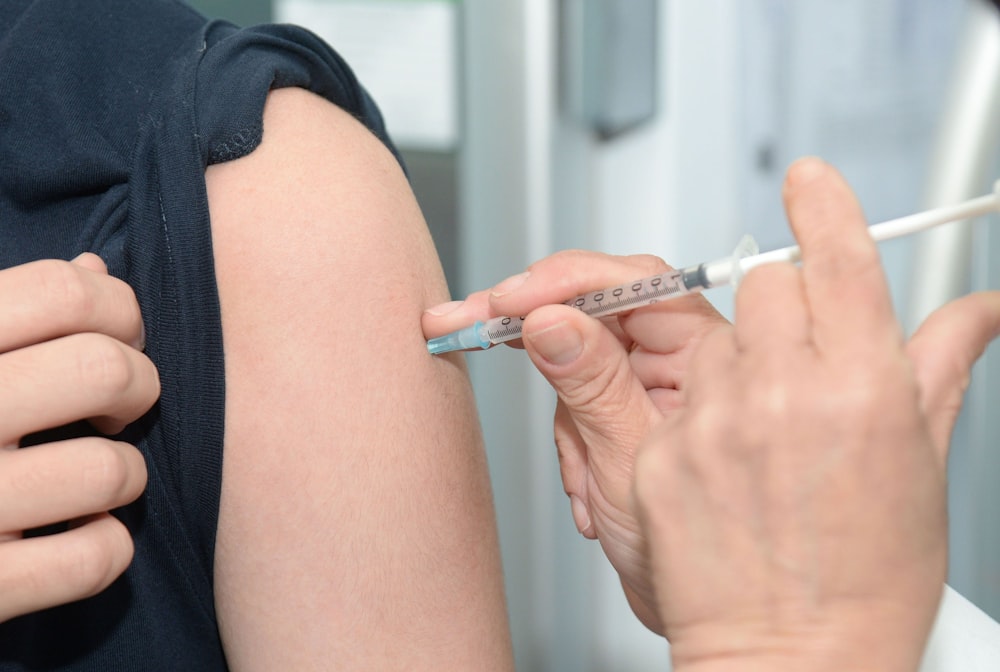
person injecting someone on his arm
Photo by Hyttalo Souza on Unsplash

In the ethics of conducting research with human participants, there is the concept of “informed consent.” At its foundation, informed consent is the process of communicating a sufficient amount of information about a research project to a prospective participant so that the prospect is able to decide whether they want to consent to being a participant in a study. There is a lot of nuance that can go into selecting what gets communicated because you have a lot of necessary information that needs be shared but you don’t want to share so much information that the participant is overwhelmed by the volume of information.

When I review research ethics applications, I am privy to a lot of information about the project. In the course of reviewing the project, I have to make judgement calls about what should be included in the informed consent letters that participants read. It would be counter-productive if the participant had to read all the documentation I am required to read when reviewing an application, so we use certain best practices and principles to decide what information gets communicated as a standard, and what is left in the application.

There is, of course, some challenges that we must confront in this process. As I said, when reviewing a research project, you have to balance the needs of the project with the needs of a participant. All research, by virtue of exploring the unknown, carries with it an element of risk. When you involve humans in a research project, you are asking them to shoulder some of the risk in the name of progress. Our job as researchers and reviewers is to anticpate risk and mitigate it where possible. We are stewards of the well-being of the participants, and we use our experience and expertise to protect the particpants.

This means that one challenge is communicating risk to participants and helping them understand the implications of the risks of the research. In many instances, the participants are well aware of risks posed to their normal, every-day lived experiences and how the research intersects with it. The patient living with a medical condition is aware of their pain or suffering, and can appreciate risks associated with medical interventions. A person living in poverty is acutely aware of what it means to live in poverty, and understands that discussing their experiences can be psychologically and emotionally difficult. Our jobs (as reviewers and researchers) is to ensure that the participant is made aware of the risk, mitigate it as much as we can without compromising the integrity of the research program, and to contextualize the risk so that the participant can make choices for themselves without coercion.

The concept of informed consent is hugely important, arguably the most important component of research projects involving humans as participants. It is an acknowledgement that people are ends in themselves, not a means to furthering knowledge or the researcher’s private or professional goals. Indeed, without a respect for the autonomy of the participant, research projects are likely to not be moved into action even when research funds are available.

All of this is a preamble to discuss the anger I felt when I read a recent CBC report on how anti-vaxxer advocates are using the concept of informed consent as a dog-whistle to their adherents, and are using informed consent as a way of both furthering their awareness and raising money with well-meaning politicians and the public.

In fairness, I can see the chain of reasoning at play that tries to connect informed consent with concerns about vaccines. For instance, in the article there is a photo of supporters of a vaccine choice group with a banner that reads “If there is a risk there must be a choice.” This sentiment is entirely consistent with the principles of informed consent. The problem with this application is that the risk is not being communicated and understood properly within context, and instead fear, misinformation, and conspiracies that lead to paternalistic paranoia are short-cutting the conversation. Further, the incentive structures that are borne out of the economics of our medical system are doing little to address these fears. Because so little money is flowing from the government to the medical system, doctors are forced to maximize the number of patients they see in a day just to ensure enough money is coming into the practice to pay for space, equipment, staff, insurance, and supplies. Rather than seeking quality face-to-face time with a patient, doctors have to make a choice to limit patient time to just focus on a chief complaint and address questions as efficiently as they can.

I don’t think it’s all the doctor’s fault either. I think we as patients, or more specifically we as a society, have a terrible grasp of medical and scientific literacy. I don’t have a strong opinion about what the root cause of this is, but some combination of underfunded schooling, rapid technological innovation, growing income disparities, entertainment pacification, a lack of mental health support, increasingly complex life systems, and precarious economic living in the average household are all influencing the poor grasp people have about what makes the world around us work. Rather than being the case that we are hyper-specialized in our worldviews, I think it’s the case that “life” is too complex for the average person to invest time into understanding. Let’s be clear, it is not the case that the average person isn’t smart enough to grasp it (even if sometimes my frustration with people leads me to this conclusion). Instead, I think that people are pulled in so many directions that they don’t have the time or economic freedom to deal with things that don’t immediately pay off for them. People are so fixated on just making it day-to-day and trying not to fall behind that it becomes a luxury to have the leisure time to devote to these kinds of activities.

What this results in, then, is the perfect storm of ignorance and fear that congeals into a tribal call to rebel against the paternalism of a system that is ironically also too cash-strapped to allow the flexibility to educate people on the nature of risk. People don’t have the time and ability to educate themselves, and doctors don’t have the time to share their experiences and knowledge with their patients.

Within this gap, opportunistic charlatans and sophists thrive to capitalize on people’s fears to push their own agendas. This is why bad actors like the disgraced former doctor Andrew Wakefield and movement leader Del Bigtree are able to charge fees to profit from speaking at anti-vaccination events. I’m not saying a person who spreads a message should do it for free. What I am saying is that they are able to turn a personal profit by preying on people’s fears while doing little to investigate the thing they claim to worry about.

We must find a way to communicate two simultaneous truths:

  1. There is an inherent risk in everything; bad stuff happens to good people, and you can do everything right and still lose. Nevertheless, the risks involved when it comes to vaccines are worth shouldering because of the net good that comes from it and the risks themselves are vanishingly small.
  2. In the 22 years since Wakefield published his study and the 16 years since its retraction, there has not been any peer-reviewed credible evidence that supports many of the claims given by the anti-vaxx movement. The movement is predicated on fears people have of the probability of something bad happening to them or their loved ones. The motivation behind the fear is legitimate, but the object of the fear is a bogeyman that hides behind whatever shadows it can find as more and more light is cast on this area.

The anti-vaxx ideology knows it cannot address head-on the mounting scientific evidence that discredits its premise, and so it instead focuses on a different avenue of attack.

This bears repeating: the anti-vaxx ideology cannot debate or refute the scientific evidence about vaccination. We know vaccines work. We know how they work; we know why they work. We understand the probabilities of the risk; we know the type and magnitudes of the risks. These things are known to us. Anti-vaxx belief is a deliberate falsehood when it denies any of what we know.

Because of this, the anti-vaxx ideology is shifting to speak to those deep fears we have of the unknown, and instead of dealing with the facts of medicine, it is sinking its claws into the deep desire we have for freedom and autonomy. It shortcuts our rational experience and appeals to the fears evolution has given us to grapples with the unknown – the knee-jerk rejection of things we don’t understand.

Informed consent as a concept is the latest victim of anti-vaxx’s contagion. It’s seeping in and corrupting it from the inside, turning the very principle of self-directed autonomy against a person’s self-interest. It doesn’t cast doubt by calling the science into question. Instead, it casts doubt precisely because the average person doesn’t understand the science, and so that unknown becomes scary to us and we reject or avoid what brings us fear.

Anti-vaxx ideology is a memetic virus. In our society’s wealth, luxury, and tech-enabled friction-free lives, we have allowed this dangerous idea to gain strength. By ignoring it and ridiculing it until now, we have come to a point where it threatens to disrupt social homeostasis. Unless we do something to change the conditions we find ourselves in – unless we are willing to do the hard work – I fear that this ideology is going to replicate at a rate that we can’t stop. It will reach a critical mass, infect enough people, and threaten to undo all the hard work achieved in the past. We have already seen the evidence of this as once-eradicated diseases are popping up in our communities. The immunity and innoculations have weakened. Let’s hope those walls don’t break.

Stay Awesome,

Ryan

The Value of Coziness

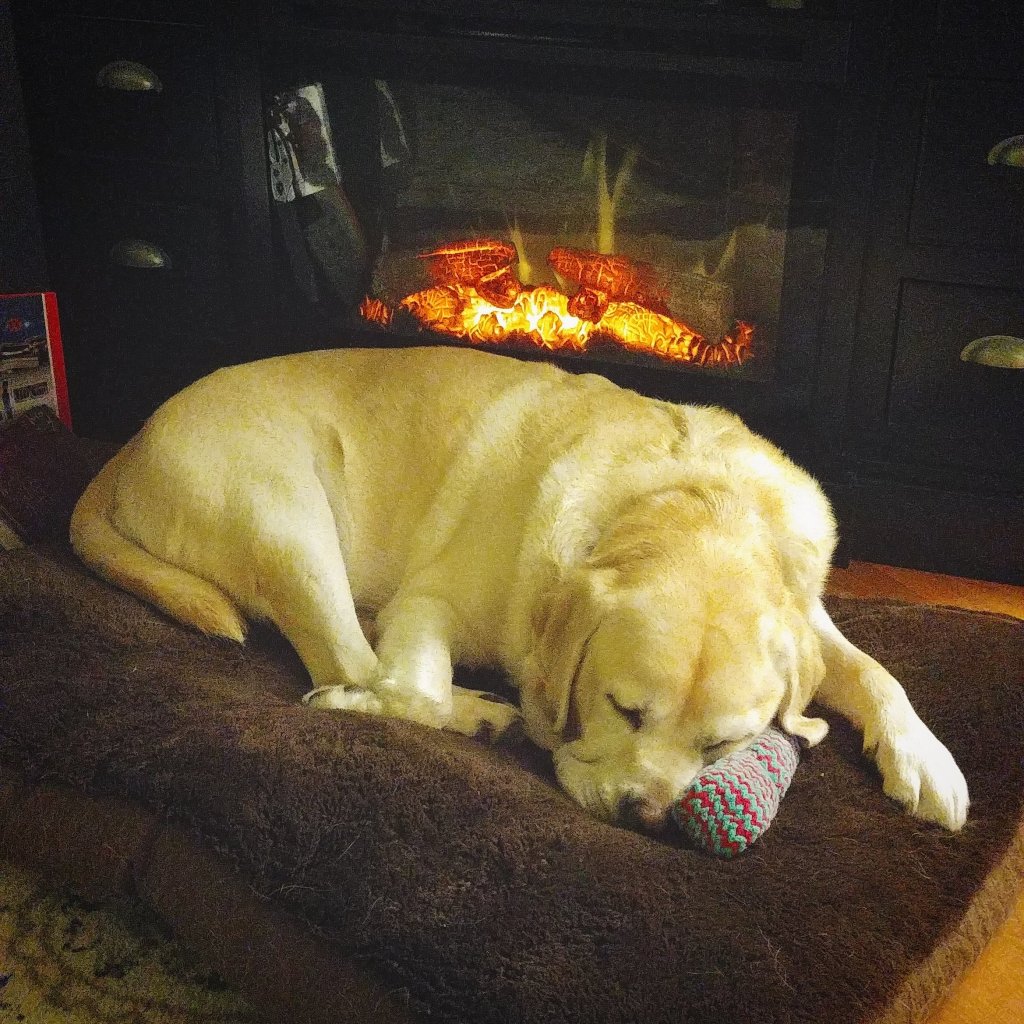
Our dog, Gus, sleeping in front of the (artificial) fire.

I learned a valuable lesson this Christmas about being intentional with how one goes about building their space. With all the decorations up – the tree, the lights, and arranging the room to nurture a sense of closeness and conversation – my wife and I were creating a feeling of a cozy home. As we packed up the decorations this past weekend to reflect the end of the holiday season, I felt a twinge of sadness. I will both miss the excitement that comes with the holiday break (yay time off work!), but also the feeling of coziness that comes from Christmas decorations. The green from the tree, the red from the decorations, and the warm yellow hue of the lights. More than time off, I am going to miss relaxing in the living room with the main lights off, basking in the glow of the tree and candles we had burning.

Surprising, candles played an important role of this. I first noticed it back in October during our honeymoon. We had a short stop in Germany to visit family, and it was customary for us to enjoy dinner together by candle light. It gave things an intimate, personal feeling, where time stood still as we enjoyed each other’s company.

I learned that there is a word to describe this feeling. I was listening to the Art of Manliness podcast where they discussed the Danish concept of hygge, which can be translated to represent something like the art of getting cozy. It encompasses a number of sensory feelings you get, such as when you come in after being out in the snow, and you warm up in fresh clothes and a hot beverage. Light, smells, decorations, comfort, and warmth all help one feel cozy, which is attributed in part to explain how the Danes endure long, harsh winters.

This is something I want to carry forward throughout the year. Until now, I’ve largely viewed where I live from a utilitarian perspective – it’s a place to store my stuff. However, now that my basic needs are met, I feel a call to build my space into something that brings me happiness for itself and what it represents, instead of for what it can give or do for me. I want to pay closer attention to all the flourishes that make a house into a home, such as decorations and having things in their place. It’s not just orderliness or tidiness, but instead giving us a place that makes us happy regardless of the harshness beyond our door.

Stay Awesome,

Ryan