Appealing to my Smarmy Brain

selective focus photography of spiderweb
Photo by Nicolas Picard on Unsplash

From time to time, I catch myself thinking some pretty stupid stuff for entirely dumb reasons. A piece of information finds a way to bypass any critical thinking faculties I proudly think I possess and worms its way into my belief web. Almost like a virus, which is a great segue.

A perfect example of this happened last week in relation to the COVID-19 news, and I thought it important to share here, both as an exercise in humility to remind myself that I should not think myself above falling for false information, and as my contribution to correcting misinformation floating around the web.

Through a friend’s Stories on Instagram, I saw the following screencap from Twitter:

My immediate thought was to nod my head in approval and take some smug satisfaction that of course I’m smart enough to already know this is true.

Thankfully, some small part at the back of my brain immediately raised a red flag and called for a timeout to review the facts. I’m so glad that unconscious part was there.

It said to me “Hang on… is hand-sanitizer ‘anti-bacterial’?

I mean, yes, technically it is. But is it “anti-bacterial” in the same way that it is getting implied in this tweet? The way the information is framed, it treats the hand-sanitizer’s anti-bacterial properties as being exclusively what it was designed for, like antibiotics. For example, you can’t take antibiotics for the cold or flu, because those are not bacterial infections but viral infections.

Rather than leaving this belief untested, I jumped on ye ol’ Googles to find out more. I found a write-up in the National Center for Biotechnology Information discussing alcohol sanitizers.

According to the author on the topic of alcohol-based hand sanitizers (ABHS),

A study published in 2017 in the Journal of Infectious Diseases evaluated the virucidal activity of ABHS against re-emerging viral pathogens, such as Ebola virus, Zika virus (ZIKV), severe acute respiratory syndrome coronavirus (SARS-CoV), and Middle East respiratory syndrome coronavirus (MERS-CoV) and determined that they and other enveloped viruses could be efficiently inactivated by both WHO formulations I and II (ethanol-based and isopropanol-based respectively). This further supports the use of ABHS in healthcare systems and viral outbreak situations.

There are some special cases where ABHS are not effective against some kinds of non-enveloped viruses (e.g. norovirus), but for the purposes of what is happening around the world, ABHS are effective. It is also the case that the main precaution to protect yourself is to thoroughly wash your hands with soap and water, and follow other safety precautions as prescribed.

The tweet, while right about the need for us to wash our hands and not overly rely on hand-sanitizers, is factually wrong generally. Thanks to a mix of accurate information (bacteria =/= virus) and inaccurate information(“hand sanitizer is not anti-bacterial”), and a packaging that appeals to my “I’m smarter than you” personality, I nearly fell for its memetic misinformation.

There are a number of lessons I’ve taken from this experience:

  1. My network is not immune to false beliefs, so I must still guard against accepting information based on in-group status.
  2. Misinformation that closely resembles true facts will tap into my confirmation bias.
  3. I’m more likely to agree with statements that are coded with smarmy or condescending tonality because it carries greater transmission weight in online discourse.
  4. Appeals to authority (science) resonate with me – because this was coming from a scientist who is tired of misinformation (I, too, am tired of misinformation), I’m more likely to agree with something that sounds like something I believe.
  5. Just because someone says they are a scientist, doesn’t make the status true, nor does it mean what they are saying is automatically right.
  6. Even if the person is factually a scientist, if they are speaking outside of their primary domain, being a scientist does not confer special epistemological status.
  7. In the aftermath, the tweet was pulled and the person tried to correct the misinformation, but the incident highlights that the norms of Twitter (and social media more broadly) are entirely antithetical to nuance and contextual understanding.

It’s interesting how much information spread (memetics) resembles pathogen spreading. If the harmful thing attacking us is sufficiently designed to sidestep our defenses, whether that’s our body’s immune system or our critical thinking faculties, the invading thing can easily integrate within, establish itself within our web, and prepare to spread.

The one thing that really bums me out about this event is the inadvertent harm that comes to scientific authority. We as a society are caught in a period of intense distrust of the establishment that is coinciding with the largest explosion of information our species has ever seen. The result of this is not that good information is scarce, but rather the signal-to-noise ratio is so imbalanced that good information is getting swept away in the tide. If people grow distrustful of the sources of information that will help protect us, then forget worrying about gatekeepers that keep knowledge hidden; there will be no one left to listen.

Stay Awesome,

Ryan

My Fab Fit Friends

person wearing orange and gray Nike shoes walking on gray concrete stairs
Photo by Bruno Nascimento on Unsplash

This week, I want to pause to celebrate some of my friends who I find really inspiring. I don’t get a chance to see these folks much in person anymore as we’ve all moved on with our lives. They came into my life through various avenues – a childhood friend (C), high school (Sh), community work (K), and two I met through working at the bar (Sa and Y) – and yet thanks to technology and one of the few positive benefits of social media, I get to be a passive viewer as they live out their lives.

The concept of fitness is fraught with some terrible associations about what it means to be or look healthy. I don’t look to these friends because they embody some ideal of fitness, but for a more important reason. I admire them because they are consistent and dedicated, which is something I struggle with from time to time. Every day that I scroll through my feed, one or more of my friends are sharing the fitness part of their lives by showing up and putting in their time towards their goals.

“C”, for instance, is killer with her cardio and puts my runs to shame. “Sh” is in the gym almost every morning before I am conscious enough to roll out of bed. “K” has logged so many days of running on the trail, riding on her bike, and hours on the mat that she could stop all activity and I doubt I’d still catch up in my lifetime. “Y” is an absolute beast of a man and can deadlift two of me, but is one of the nicest guys I’ve had the privilege of working with. And “Sa,” who I’ve been fortunate to train with, is there, everyday, training his students in athletics and the martial arts.

These aren’t perfect people. Each of them has had their ups and downs, and has struggled in battle with their own personal demons. It’s not the “fitness” that makes me proud of their work, it’s because they inspire me to show up and not get discouraged.

To my friends – I see you. I see all of your hard work. I appreciate how honest you are. And I applaud that you all seem to do what you do for good, noble reasons. You aren’t vain and aren’t doing it for the attention. You are doing it for you, to live your best lives. To challenge yourself and to focus your energies.

Thank-you.

Stay(ing as) Awesome (as they are),

Ryan

Relationship Management in “The Death of Stalin”

Screenshot from “The Death of Stalin” (2017)
Steve Buscemi as Nikita Khrushchev (left) and Sylvestra Le Touzel as Nina Khrushchev (right)

I was watching the dark comedy “The Death of Stalin” the other day and noticed an interesting scene that imparted some wisdom about relationship management. Early in the movie, Nikita Khrushchev, played by Steve Buscemi, has returned home at the end of a long day with Joseph Stalin and other politicians. As he undresses for the evening, he is listing off a series of topics to his wife, who is in bed and taking notes in a book. As he lists off the topics, he comments on which topics landed well with Stalin, and which he should avoid in the future.

Setting aside the bleakness of needing to make notes on things that will keep you alive around a dictator, it was an unexpected example of good relationship management in action.

I’ve done stuff similar to this. At first, I thought it was a sleazy practice, but after overcoming those initial thoughts, I realized it’s an entirely effective way of keeping track of important details either early in a relationship (here, I mean relationship in an extended sense, not in a romantic sense), or for relationships with infrequent contact points.

If it’s worth maintaining a good relationship, then it’s beneficial to reflect on your interactions and take notes on things worth remembering. Whether you use a book as in the film, or making notes in your phone’s contact cards, it can be helpful for refreshing yourself when you interact with a person again. I’ve made notes on business hours, names of employees at a shop, the names of a person’s significant others, and even early in my relationship with my wife I would note ideas for the future.

Far from sleazy, it’s a useful way of paying attention and making others feel special because you’ve taken the time to learn and remember details about them. And, instead of relying on your memory, you can have the confidence that you’ll get the particulars right and avoid looking like a fool.

Stay Awesome,

Ryan

Openness to Learn

mirror photography of trees on hill
Photo by Steve Halama on Unsplash

Unrelated to the post below, but this is my 200th blog post! I hit post number 100 in March of 2018, which feels like forever at this point. Here’s to another 200 more!

***

On a long(ish) car ride with my mother-in-law over the holidays, we got chatting on the subject of learning from experience. She reminded me of something I’ve known for some time, yet keep forgetting: if you keep an open mind, you can learn something from everyone.

I don’t think this is a trite piece of advice, though often it comes from an experience we would otherwise hope to forget. In my case, I tend to forget this bit of wisdom as I have developed a bad habit of being somewhat dismissive or condescending. There really is no excuse for it – nothing in my experience explains why I’ve adopted this mindset. I just developed the attitude gradually over time.

But it’s good to be reminded that with the right mindset, every encounter you have with others can be an opportunity to learn something, whether that is a piece of knowledge that is exchanged, or if through your interaction with them you learn something about yourself. Rather than seeing things through the lens of whether the person adding or subtracting value (e.g. “this was a waste of my time”) we should look at it from a growth perspective – “what did I learn or discover about myself that I can carry forward and do things better in the future?” This also dovetails nicely with a vlog post I put up recently about finding your tools along the way.

By reframing things this way, you open yourself to serendipitous opportunities to grow and develop. Or, at the very least, you take yourself (and your time) a little less seriously.

Stay Awesome,

Ryan

The Value of Coziness

Our dog, Gus, sleeping in front of the (artificial) fire.

I learned a valuable lesson this Christmas about being intentional with how one goes about building their space. With all the decorations up – the tree, the lights, and arranging the room to nurture a sense of closeness and conversation – my wife and I were creating a feeling of a cozy home. As we packed up the decorations this past weekend to reflect the end of the holiday season, I felt a twinge of sadness. I will both miss the excitement that comes with the holiday break (yay time off work!), but also the feeling of coziness that comes from Christmas decorations. The green from the tree, the red from the decorations, and the warm yellow hue of the lights. More than time off, I am going to miss relaxing in the living room with the main lights off, basking in the glow of the tree and candles we had burning.

Surprising, candles played an important role of this. I first noticed it back in October during our honeymoon. We had a short stop in Germany to visit family, and it was customary for us to enjoy dinner together by candle light. It gave things an intimate, personal feeling, where time stood still as we enjoyed each other’s company.

I learned that there is a word to describe this feeling. I was listening to the Art of Manliness podcast where they discussed the Danish concept of hygge, which can be translated to represent something like the art of getting cozy. It encompasses a number of sensory feelings you get, such as when you come in after being out in the snow, and you warm up in fresh clothes and a hot beverage. Light, smells, decorations, comfort, and warmth all help one feel cozy, which is attributed in part to explain how the Danes endure long, harsh winters.

This is something I want to carry forward throughout the year. Until now, I’ve largely viewed where I live from a utilitarian perspective – it’s a place to store my stuff. However, now that my basic needs are met, I feel a call to build my space into something that brings me happiness for itself and what it represents, instead of for what it can give or do for me. I want to pay closer attention to all the flourishes that make a house into a home, such as decorations and having things in their place. It’s not just orderliness or tidiness, but instead giving us a place that makes us happy regardless of the harshness beyond our door.

Stay Awesome,

Ryan

Kindness and Picking Fights Online

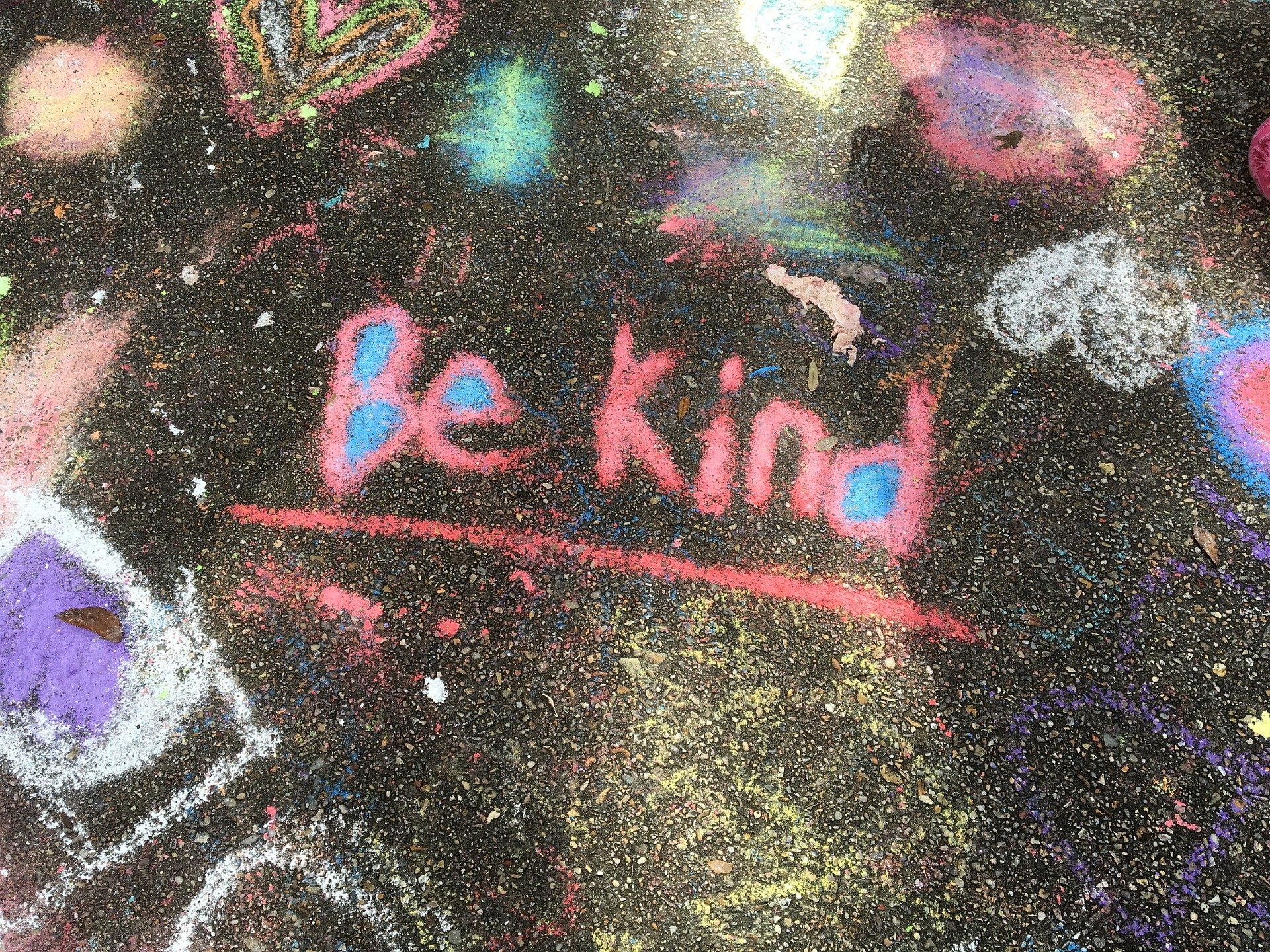
kindness-1197351_1920
Image by reneebigelow from Pixabay

Recently, a lot of things circulating through social media and my podcast feeds have been enraging me.  I try to mitigate these things through a number of strategies – limiting my time on social media, intentionally targeting positive messages, not reading comments, not engaging, reminding myself that it is ok to disagree about things, etc.  The hardest things for me to let go are cases where my thought-processes seem to wildly diverge from others about the framing of the same set of facts.

Initially, I wanted this blog post to be my master rebuttal.  I wanted to lay out my case for why the conclusions others are drawing from this or that event are wrong and why.  I wanted to emphasize what the important, salient points are that we should keep in mind.

But I know in my heart that would be an exercise in futility.  A blog post is easy to skip; easy to ignore.  I won’t change hearts and minds by arguing against a strawman average of the viewpoints expressed in my network of known-people.  It would be antagonistic, hostile, and unproductive towards my goals.  In all likelihood, it would backfire and entrench or alienate friends.

Instead, I will offer a different approach that I want to continuously remind myself of.  When I feel compelled to dig in my heels for an argument, I should remind myself of the following.

First, remember what Aristotle (via Will Durant) tells us about virtue and excellence.  It doesn’t matter what others say or share/post online; we are what we repeatedly do.  Excellence, then, is not an act, but a habit.

Second, turning to fiction, remember why The Doctor helps people.

“Winning; is that what you think it’s about?  I’m not trying to win.  I’m not doing this because I want to beat someone or ‘cause I hate someone, or because I want to blame someone.  It’s not because it’s fun.  God knows it’s not because it’s easy.  It’s not even because it works because it hardly ever does.  I do what I do because it’s right!  Because it’s decent.  And above all, it’s kind.  It’s just that.  Just kind.”

Series 10, Episode 12: “The Doctor Falls”

Ultimately, it’s not about what I will say, or argue.  Arguing with other people doesn’t make me a decent person; picking fights online doesn’t put me on the high road.  If I want to bring about change in people I care about, it’s important to remember to be kind.  Always be kind and help people, because it’s the right thing to do.

I recognize that being kind doesn’t give a lot of direction and can seem cowardly when meeting the systems that do real harm to the vulnerable and oppressed.  In fact, espousing kindness can easily slip into inaction or forced neutrality.  It’s hard to be prescriptive in this case at a granular level.

However, if I start with the core values of kindness and action, that what is important is doing things that are kind to others, then you can use your values as a filter for determining what you will choose to do.

Instead of arguing online, I choose to try and lead by being kind.

Stay Awesome,

Ryan

On The Bus – Hello and Thanks!

It’s been some time since I’ve had to commute on the bus.  As a student, the bus was my main mode of getting around town (and the occasional trip home), but in my post-student days, I’ve been privledged to have a vehicle of my own to commute in.

A few weeks back, I carpooled to Hamilton with my wife so that I could attend an ethics workshop at McMaster University.  After my business was done on campus, I took the bus from campus to her place of work.

I greeted the driver as I embarked the bus, paid my fare, and took a seat.  Instead of getting lost in whatever was on my phone, I took the opportunity to watch the streets as we drove by and listen to the sounds of the bus.

I was startled when I realized that I had forgotten that regular bus-riders always thank the driver when disembarking.    It was something I did back in my student days, and I was glad to see that not much had changed in the 5-7 years since I regularly rode the bus.

Given that I had forgotten this little gesture of appreciation and kindness, I wanted to take a moment in this otherwise dull blog to commit it to memory and share the sentiment.

Stay Awesome,

Ryan

“Give Business Card” As A Default Action

I had a strange realization last week.  I am now at a point in my career where I need to make “give business card” a default action for when I’m out and about, but not for the reason you may think.  Under normal circumstances, I feel it’s relatively rare that I have to give out a business card.  In most instances, my role has been too small and insignificant to warrant it, but also because I don’t really buy into the culture of swapping business cards with people in an effort to ‘network.’  I have been promoted to a new role, which entails more responsibility and autonomy when it comes to business meetings, but I’m still getting used to the idea of thinking of myself as an administrator or a manager.

Last week, I was in a coffee shop to grab a quick bite to eat before a meeting.  The cashier saw that I was wearing a jacket with our school’s logo, and he excitedly asked if I was a student or employee.  I let him know that I work at the college, and he asked in what area.  When he heard I work in the school of engineering, he proudly told me that he received multiple acceptances into our mechanical engineering diploma programs.  Since the coffee shop was dead, he then launched into a mini history of his background – he was born in east Africa, immigrated to the Middle East, did secondary school in the US, and now has his visa to study in Ontario.  He told me some of his education, that he had top marks in design in high school, and even has a portfolio.

His energy and enthusiasm was infectious, and he left a strong impression on me.  He sounds like a great kid, and I have no doubt that he will be successful in his studies.  I told him where he could find me on campus, and he said he’d find me in the future.

I realized as I was driving away that I had missed the perfect opportunity to give him my card and promise to follow-up if he had any questions.  I want to see him succeed, and if there was anything I could do to help, I’d gladly try.

Rather than seeing the business card as a way of helping myself, I should put more emphasis on seeing the business card as a way of helping others.

Stay Awesome,

Ryan


Was My “Really Good Day” Healthy?

Last week, I discussed how I felt really good after a particularly productive day.  Just as I was drafting the post, I shared my thoughts with my wife.  She was happy for my sense of accomplishment and expressed encouraging words about the value of feeling fulfilled, productive, and useful.  But, I didn’t just marry her to build me up; my wife is also my best sounding board to check my intuitions.

In her wisdom, she asked if that kind of feeling of satisfaction is a healthy one.  I knew what she was getting at right away.  She wasn’t expressing skepticism about this one instance, but instead she was gesturing at a longer trend of mine.

I have a mindset and set of expectations on myself that are dangerously close to being unhealthy, to the point where I know I would never try and convince a person to adopt it themselves.

You see, I hate feeling like I’m wasting my time.  I don’t mean this in a hustle/grind sort of way, nor does this mean that I don’t waste loads of my time (hello YouTube; you are my true weakness).

I hate napping because I feel like it’s a waste of my time.

I should qualify that a little bit.  When I say a waste of my time, I don’t mean that napping isn’t good for me.  I know that sleep is good.  Sleep will rejuvenate you, help your brain work better, help you feel better, etc.

Image may contain: 1 person, sitting and text
A friend conveniently shared this meme on Facebook while I was brainstorming this post.

When I say that napping is a waste of my time, I mean it in an existential sense.  When I sleep, I am unconscious, and when I’m unconscious, time slips past me faster.  It’s almost like time travel.  I go to sleep and wake up in the future.  All the time in the middle is gone, and I can never get it back.  I have done nothing, and made no memories.

This line of thinking extends to downtime.  I don’t handle downtime very well, often feeling guilty to take time to myself to mindlessly indulge in “non-productive” things (the aforementioned YouTube, movies/tv, videogames, etc).  When I give myself permission to focus on fun things, it’s always clouded with the knowledge that by taking time to do a fun thing, it’s time not spent on something productive, and no matter how much fun I have, I know that those tasks and projects I need to work on will still have to be done.  I’m not trading off tasks; I’m delaying progress because time runs linearly.

My wife (rhetorically) asked if this line of thinking is sustainable, and it is obviously not.  Indeed, she rightfully labelled it as a stupid worldview to hold.

The real problem is that while I would never advocate for anyone else to frame their worldview in these terms, I want to (and choose to) do it for myself.  I think this is largely because I’m so disordered in my productivity and I’m always battling against my akrasia (a fancy Greek term for making bad decisions due to weakness of the will).  It’s my way of punishing myself for not focusing when I want to focus.

The reason why I mentioned that this is an existential problem for me is because when I think about my mortality, I know that every moment that passes is bringing me closer to death.  Every moment that I spend watching YouTube videos instead of getting stuff done is non-renewable time that I can’t get back and exchange for time on more important things like my wife, my dog, family, friends, or leisurely pursuits.  Realistically, I have finite time, a finite number of heartbeats, and no way of buying more.  Instead, decisions like not going to the gym, not sleeping, or eating unhealthily have the opposite effect and are likely shortening my life.

I know this is stupid.  I know this is unhealthy.  And I don’t have a good solution to address it.  This isn’t a case of believing that hustling for the sake of hustling is inherently virtuous.  Quite the opposite, I think grinding away should be in service of something higher than itself.  This is, plainly, a different flavour of a fear of missing out.  I’m worried about missing out on things by not being productive.

I don’t have an adequate response to the charge that my worldview is not good.  At least I have some semblance of self-awareness and a great partner in my wife that calls me out on my shenanigans.

Stay Awesome,

Ryan