On a recent CBC podcast episode about Leibniz and Voltaire’s thoughts about evil and God, one of the interviewees referred to Leibniz as “the last man to know everything.” I find this notion utterly fascinating. Upon hearing that title, I jumped online to search for the “best biography on Leibniz” and found a highly acclaimed book detailing an intellectual biography of the 17th-century thinker. Once I clear some books on my current reading list, I’ll dive into this hefty book.
“Leibniz: An Intellectual Biography” by Maria Rosa Antognazz
This isn’t the first time I’ve encountered the moniker of “the last person who knew everything.” In fact, that was the title of a biography I read back in late 2018 on Enrico Fermi.
I’ve been drawn to this idea for a long time, probably originating with the first time I saw the 1994 film Renaissance Man starring Danny DeVito. That was where I first learned of the term renaissance man, or more commonly known as a polymath – a person with considerable knowledge and expertise across a wide variety of domains. While I wouldn’t quite call it a goal, this is an aspiration of mine since I was a child.
I suppose as the sciences progress, it becomes increasingly difficult to lay claim to being “the last person who knew everything.” Each field grows increasingly complex as we push the boundaries of the known world, which raises the threshold higher of what counts as expertise.
It would seem we need to seriously consider the observation recently made by Professor Adam Grant on the differences between experience and expertise:
Instead of seeking to always have depth of knowledge, perhaps we should give equal consideration to wisdom and how we can apply our experiences and expertise to solve interesting problems. While more nebulous as a goal, I think it steers us in the right direction. At the very least, it’s a good vision to aspire towards.
Stay Awesome,
Ryan
PS – an unexhaustive list of the traits that distinguishes a “last person who knew everything:”
Intellectual curiosity
Intellectual humility
Interests spanning a variety of domains, both sciences and arts
A grasp of the methods and tools of science
Generating novel insights
The ability to see problems in terms of first principles
I started this blog for two reasons – because I wanted a public way of practicing what I was learning at the time, and to force myself to write consistently. I decided posting once per week was a manageable target, and I’ve been relatively successful for the last few years. Recently, I’ve added the Friday Round-up as a way to force myself to write more and to share interesting content I stumble upon. When I added the Friday posts, I questioned whether it was worth putting in the effort – was I adding value to any part of the process? On some level, I feel it’s worth it, if for nothing else than to force myself to be a bit more reflective on what I consume. However, Derek Sivers’s point about forcing one’s self to post rapidly comes with some trade-offs. I imagine Seth Godin (another prolific blog poster) sometimes feels the same way by posting daily – that most of his posts aren’t what he would consider good. The mentalities are a bit different; Godin posts as part of his process, whereby you have to make a lot of crap to find the good stuff. Sivers would rather keep the crap more private to give him time to polish up the gems. I’m not sure which style is better. Both admit to keeping the daily writing practice, which is probably the more important lesson to draw from their examples, but it’s still worth considering.
*Addendum*
After drafting the above, I kept reading some bookmarked posts from Sivers’s page and found this one written in 2013 after a friend of his died. It’s a heartbreaking reflection on how one spends their time, which included this:
For me, writing is about the most worthy thing I can do with my time. I love how the distributed word is eternal — that every day I get emails from strangers thanking me for things I wrote years ago that helped them today. I love how those things will continue to help people long after I’m gone.
I’m not saying my writing is helping anyone, but the thought that my words will live beyond me touched something within.
I’ve known the author of this YouTube channel for a few years, and I follow him on ye ol’ Instagrams (I love his scotch and cigar posts). But I didn’t know until last month that he also reviews books as part of the BookTube community. I wanted to share this link to show him some love, and because it reminds me of one of my roomies in undergrad who introduced me to the world (and language) of poker. While I’m a terrible player, I have fond memories of watching my roomie play online, if for nothing else than the humor of him yelling at the screen.
Oh, and I like Maria Konnikova’s writing, so I think I’ll check out her book. Another good book by a poker player about thinking better – Annie Duke’s Thinking in Bets.
With all the anti-mask beliefs floating around, I wanted to do my part to share good information about the benefits of masks and to help dispel some of the dis/misinformation out there.
After a poor performance last week left me with no Friday post, and even though today’s post is much later than I intended, here I am to make good on my promise to do better.
Here is my round-up list for the week ending on June 19th:
Sorry if you hit a paywall on this article (I managed to read it fine from Pocket). I’ve lamented elsewhere that I genuinely miss Jon Stewart, not just from his tenure on the Daily Show, but also from other initiatives he’s thrown his weight behind (remember his masterclass in oration?). While this interview is part of Stewart’s media blitz for his upcoming movie release, it is also chocked-full of wonderful insights and observations about the world we find ourselves in. He’s ever poignant in his wit, but also speaks from a cautious place. The interview is so good, I quickly reached the limit of my free highlights in Pocket.
💭 Reflection Mega-Thread – How We Process Information
I want to turn this into a more formal blog post in the near future, but for now I’d like to lay out a few strands that have come together over the last two weeks about how we process, curate, and digest information.
First, a short listen from the Daily Stoic reflecting on how our minds are not reliable when it comes to processing truth. Instead, we are bound up in our own biases that we seek to confirm. If we want to be functioning, contributing members of society, we must actively exercise our critical faculties, including seeking out when we are wrong. Or as the closing lines state: “It’s the snowflakes who fly into a rage when someone challenges their views. It’s the snowflakes who can never admit they’re wrong or address deserved criticism or feedback.”
Next, a thought-provoking podcast episode from the CBC that tackles expertise in a seeming post-truth world. There is a lot of good information floating around in the ether, waiting for us to latch on to its wisdom. And yet, despite good information there for us to seize, we see many people in our peer groups turn away and distrust the experts. Shunning the norms of knowledge communities, they instead embrace their own norms of knowledge and assertion.
Speaking of experts, one of the voices I’ve turned to on Twitter to help me filter the signal from the noise is Mr. Bergstrom. He has provided both some levity :
I have a blog post percolating in my mind about curating news feeds, but I’ll leave that breadcrumb here for now.
🏳🌈🎧 Listen – I Don’t Want To Get Over You (Season 3 Mission 9) | Zombies, Run!🏳🌈
Finally, I want to give a huge shout-out to the writers and folks behind Zombies, Run! for this episode I listened to last week. The episode really stuck out for me. A large portion of the dialogue involves two lesbian characters discussing a mutual love interest (the love interest is the current partner of one of the characters, and a former lover of the other character in the conversation). The conversation between the characters touches on topics like “gold stars” and the fears that bisexual partners may have, even in committed relationships. I’ve heard my own queer friends discuss these topics, and while it felt noteworthy that the development team included “voices” from a wide range of folks, it was awesome to hear conversations that weren’t centered on the heterosexual experience that’s often given as the default in media. It gives the game a sense of realness and depth, despite it being about living in a post-apocalyptic zombie wasteland. It’s also important, as we reflect on this Pride month, to think about the kinds of voices we engage with that represents life, and whether we are seeking out sources that look to bring more diversity to the table. I’m happy to be supporting the app and the team.
In the ethics of conducting research with human participants, there is the concept of “informed consent.” At its foundation, informed consent is the process of communicating a sufficient amount of information about a research project to a prospective participant so that the prospect is able to decide whether they want to consent to being a participant in a study. There is a lot of nuance that can go into selecting what gets communicated because you have a lot of necessary information that needs be shared but you don’t want to share so much information that the participant is overwhelmed by the volume of information.
When I review research ethics applications, I am privy to a lot of information about the project. In the course of reviewing the project, I have to make judgement calls about what should be included in the informed consent letters that participants read. It would be counter-productive if the participant had to read all the documentation I am required to read when reviewing an application, so we use certain best practices and principles to decide what information gets communicated as a standard, and what is left in the application.
There is, of course, some challenges that we must confront in this process. As I said, when reviewing a research project, you have to balance the needs of the project with the needs of a participant. All research, by virtue of exploring the unknown, carries with it an element of risk. When you involve humans in a research project, you are asking them to shoulder some of the risk in the name of progress. Our job as researchers and reviewers is to anticpate risk and mitigate it where possible. We are stewards of the well-being of the participants, and we use our experience and expertise to protect the particpants.
This means that one challenge is communicating risk to participants and helping them understand the implications of the risks of the research. In many instances, the participants are well aware of risks posed to their normal, every-day lived experiences and how the research intersects with it. The patient living with a medical condition is aware of their pain or suffering, and can appreciate risks associated with medical interventions. A person living in poverty is acutely aware of what it means to live in poverty, and understands that discussing their experiences can be psychologically and emotionally difficult. Our jobs (as reviewers and researchers) is to ensure that the participant is made aware of the risk, mitigate it as much as we can without compromising the integrity of the research program, and to contextualize the risk so that the participant can make choices for themselves without coercion.
The concept of informed consent is hugely important, arguably the most important component of research projects involving humans as participants. It is an acknowledgement that people are ends in themselves, not a means to furthering knowledge or the researcher’s private or professional goals. Indeed, without a respect for the autonomy of the participant, research projects are likely to not be moved into action even when research funds are available.
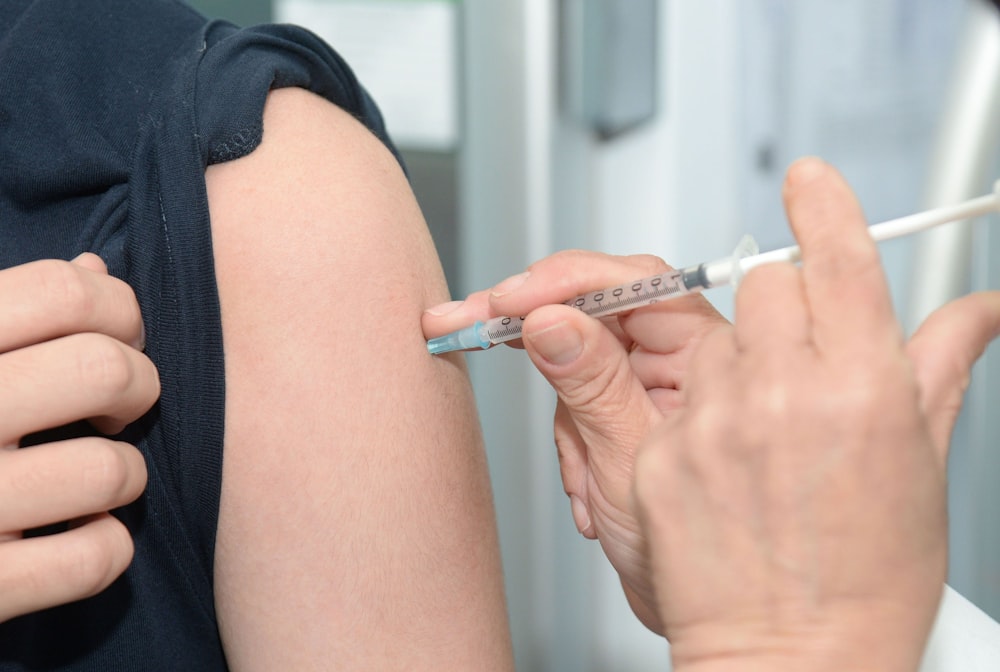
All of this is a preamble to discuss the anger I felt when I read a recent CBC report on how anti-vaxxer advocates are using the concept of informed consent as a dog-whistle to their adherents, and are using informed consent as a way of both furthering their awareness and raising money with well-meaning politicians and the public.
In fairness, I can see the chain of reasoning at play that tries to connect informed consent with concerns about vaccines. For instance, in the article there is a photo of supporters of a vaccine choice group with a banner that reads “If there is a risk there must be a choice.” This sentiment is entirely consistent with the principles of informed consent. The problem with this application is that the risk is not being communicated and understood properly within context, and instead fear, misinformation, and conspiracies that lead to paternalistic paranoia are short-cutting the conversation. Further, the incentive structures that are borne out of the economics of our medical system are doing little to address these fears. Because so little money is flowing from the government to the medical system, doctors are forced to maximize the number of patients they see in a day just to ensure enough money is coming into the practice to pay for space, equipment, staff, insurance, and supplies. Rather than seeking quality face-to-face time with a patient, doctors have to make a choice to limit patient time to just focus on a chief complaint and address questions as efficiently as they can.
I don’t think it’s all the doctor’s fault either. I think we as patients, or more specifically we as a society, have a terrible grasp of medical and scientific literacy. I don’t have a strong opinion about what the root cause of this is, but some combination of underfunded schooling, rapid technological innovation, growing income disparities, entertainment pacification, a lack of mental health support, increasingly complex life systems, and precarious economic living in the average household are all influencing the poor grasp people have about what makes the world around us work. Rather than being the case that we are hyper-specialized in our worldviews, I think it’s the case that “life” is too complex for the average person to invest time into understanding. Let’s be clear, it is not the case that the average person isn’t smart enough to grasp it (even if sometimes my frustration with people leads me to this conclusion). Instead, I think that people are pulled in so many directions that they don’t have the time or economic freedom to deal with things that don’t immediately pay off for them. People are so fixated on just making it day-to-day and trying not to fall behind that it becomes a luxury to have the leisure time to devote to these kinds of activities.
What this results in, then, is the perfect storm of ignorance and fear that congeals into a tribal call to rebel against the paternalism of a system that is ironically also too cash-strapped to allow the flexibility to educate people on the nature of risk. People don’t have the time and ability to educate themselves, and doctors don’t have the time to share their experiences and knowledge with their patients.
Within this gap, opportunistic charlatans and sophists thrive to capitalize on people’s fears to push their own agendas. This is why bad actors like the disgraced former doctor Andrew Wakefield and movement leader Del Bigtree are able to charge fees to profit from speaking at anti-vaccination events. I’m not saying a person who spreads a message should do it for free. What I am saying is that they are able to turn a personal profit by preying on people’s fears while doing little to investigate the thing they claim to worry about.
We must find a way to communicate two simultaneous truths:
There is an inherent risk in everything; bad stuff happens to good people, and you can do everything right and still lose. Nevertheless, the risks involved when it comes to vaccines are worth shouldering because of the net good that comes from it and the risks themselves are vanishingly small.
In the 22 years since Wakefield published his study and the 16 years since its retraction, there has not been any peer-reviewed credible evidence that supports many of the claims given by the anti-vaxx movement. The movement is predicated on fears people have of the probability of something bad happening to them or their loved ones. The motivation behind the fear is legitimate, but the object of the fear is a bogeyman that hides behind whatever shadows it can find as more and more light is cast on this area.
The anti-vaxx ideology knows it cannot address head-on the mounting scientific evidence that discredits its premise, and so it instead focuses on a different avenue of attack.
This bears repeating: the anti-vaxx ideology cannot debate or refute the scientific evidence about vaccination. We know vaccines work. We know how they work; we know why they work. We understand the probabilities of the risk; we know the type and magnitudes of the risks. These things are known to us. Anti-vaxx belief is a deliberate falsehood when it denies any of what we know.
Because of this, the anti-vaxx ideology is shifting to speak to those deep fears we have of the unknown, and instead of dealing with the facts of medicine, it is sinking its claws into the deep desire we have for freedom and autonomy. It shortcuts our rational experience and appeals to the fears evolution has given us to grapples with the unknown – the knee-jerk rejection of things we don’t understand.
Informed consent as a concept is the latest victim of anti-vaxx’s contagion. It’s seeping in and corrupting it from the inside, turning the very principle of self-directed autonomy against a person’s self-interest. It doesn’t cast doubt by calling the science into question. Instead, it casts doubt precisely because the average person doesn’t understand the science, and so that unknown becomes scary to us and we reject or avoid what brings us fear.
Anti-vaxx ideology is a memetic virus. In our society’s wealth, luxury, and tech-enabled friction-free lives, we have allowed this dangerous idea to gain strength. By ignoring it and ridiculing it until now, we have come to a point where it threatens to disrupt social homeostasis. Unless we do something to change the conditions we find ourselves in – unless we are willing to do the hard work – I fear that this ideology is going to replicate at a rate that we can’t stop. It will reach a critical mass, infect enough people, and threaten to undo all the hard work achieved in the past. We have already seen the evidence of this as once-eradicated diseases are popping up in our communities. The immunity and innoculations have weakened. Let’s hope those walls don’t break.

 A Paramedic's Notebook