While I am Canadian and our Thanksgiving was back in October, I’ve been reflecting this week on what I continue to be thankful for. This week, my kid has been home sick from daycare. In the before times, this would be difficult enough, but now you have to be mindful of covid tests and access to healthcare risks.
This week, I’m finding myself being thankful for my employer and my supportive colleagues who show compassion and sympathy as I take time off work to wait out my kid getting over his daycare cold. Not everyone is fortunate to be in a position like we are, and we should support more accessible childcare options for everyone. Children deserve better, and parents need slack in the system for their sanity.
I uploaded my post last week without much thought. When I went back to draft some ideas for a future post, I saw that Beachhead was my 301st post. I missed the opportunity to both celebrate the milestone and reflect on its significance.
Earlier this year, I missed the 5-year anniversary of this blog. I let the milestone pass by, unlike yearspast. I think part of the lack of enthusiasm for these significant milestones is due to general pandemic-induced apathy (we’re all feeling it). But the optimistic side of me also thinks that these milestones are less important than the work itself. I used to be more metrics-driven with my blog, excitedly noting the passing of the first year or the first 100-posts. However now I’m not concerned with reaching a future target but instead focus more on ensuring I’m keeping up with the weekly schedule and trying to come up with decent thoughts worth publishing.
That’s not to say that all of my posts are worth reading. I wouldn’t say I take a lot of pride in the final product of what goes up weekly; I’m not ashamed either. It’s just that the quality of the final draft isn’t as important as sitting down to do the work. Of taking an idea from brainstorm to coherent narrative. I find more satisfaction in putting in the work than the bragging rights of the final product. I try to think of it as more of a craft-mentality rather than creating a masterpiece corpus of writing.
Each post is an exercise that stretches the muscles, practices the movements, and gives me an opportunity to learn and develop slowly over time. At present, this blog operates at a loss (no income is generated to offset the nominal fees I pay for the site and URL). And I’m completely fine with that. At one time I thought about turning this into a brand and trying to monetize it. I’m not opposed to scraping money out of the endeavor, but it’s not the primary focus of this blog.
When I shifted away from the blog being an exercise in becoming a paramedic, it merely became a place to publicly share my practice of writing to meet a deadline. That’s good enough for me. It doesn’t have to seek to achieve anything grand – not everything has to be epic or monetizable. It’s still fun and I feel good shipping the work. As the mass of posts grow, I can look at the incremental progress and take satisfaction in what it represents – time well spent.
A friend who recently was appointed CEO of a company called me this week looking for a soundboard to sort out ideas he had in his head about how to proceed with company operations and strategic direction. The company is looking to shift strategic priorities, and he was looking for an outside voice to make sense of the new direction in relation to the legacy systems he’d need to grapple with.
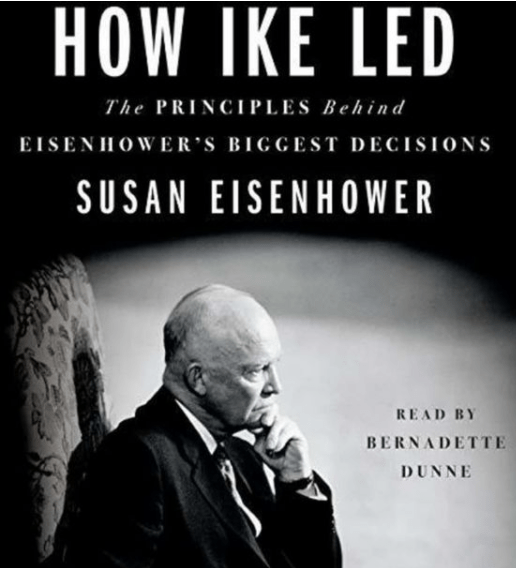
One of the topics that came up reminded me of a concept I learned about while reading Susan Eisenhower’s book about her grandfather’s time during World War 2 and his subsequent Presidential years.
At two times during Dwight Eisenhower’s tenure in significant leadership roles, he had to create a beachhead to establish his forces (literal and metaphorical) to push towards his objectives. During the war, Operation Overlord’s first phase was to establish a beachhead in Normandy to create a defensible position to allow Allied Forces to work their way into Europe to push back Germany’s army. Establishing a beachhead is critical to success, but is often difficult for offensive forces to complete as the defending force usually has the upper hand in terms of resources and strategic positioning. While the offensive forces need to both set up a foothold and protect its lines to allow more troops to arrive, the defending forces merely have to reinforce it’s occupying positions to clamp down on fresh troops from joining the beachhead. Once the effects of first-mover advantage wears off, the offensive force must contend with protecting supply lines, fighting active defense from the opponent, and pushing past inertia to avoid grinding to a halt in order to win. Once established, a successful beachhead serves as a ratchet for the offensive force – the location of which all future offensives are launched from, and from which the troops need not backslide past. Traction is gained, and the army moves forward.
Similarly, during Eisenhower’s presidency, he saw the importance of passing civil rights legislation, but saw the difficult uphill battle that would needed to both move the country towards accepting civil rights AND enshrining those rights in law (turning both hearts and minds of the nation). While he would have aspired to complete civil rights equality in his time, he knew that if poorly planned, then history, culture, and opposing interests would ensure that forward progress towards equality would halt. Instead, he sought to establish a kind of metaphorical beachhead for civil rights, working on government programs and legislation that would lay the foundation for future leaders to take up and ratchet their work – allowing the movement to progress forward without worrying about losing traction and backsliding.
In listening to my friend, I noted that he also needed to take this lesson from history and focus on his own beachhead. While we think that a CEO is all-powerful in terms of exerting their will over the company, we must also face the reality that comes with working with legacy systems and people. Change is difficult and slow, and when poorly executed either stalls from inertia or alienates your workforce. And so I suggested he take a leaf from Eisenhower’s example and focus on what his core objective is that is reasonable within the timeline he’s being given, and focus on establishing a beachhead to deliver value back to the company president.
Since reading about Eisenhower, I’ve thought about my own beachheads – what are the areas of my life that I must focus on to ensure I’m moving forward with my goals, whether they are family, work, health, or passions. It is still very much a work in progress, but I want to find those areas that I can carve out and secure so that when it’s time to take risks towards my goals, I have a safe space to launch from.
Last week, Seth Godin wrote a poignant observation about the wisdom of refilling your gas tank at the right time. This of course was a metaphor; it’s not about literally filling your gas tank (except when it is). Instead, the observation is about recognizing that you are better able to weather uncertainty when you are mindful about resources, whether that’s financial, physical, human, or even your own attention.
Yes, sometimes we are so strapped for time that it’s hard to remember to prioritize fil1ing before empty, but if you pay attention to your resources, then as he says you can “have your emergency on your own schedule.”
His post was well-timed, because I’ve found myself falling behind this week on some critical tasks. When I reflected on it in my journal, it’s easy to say I was busy. It’s true, I was busy – I was in a lot of long meetings, I had appointments, and obligations at home. But I’m always busy, so this week wasn’t necessarily out of the ordinary.
Instead, my lack of progress is due less in part to other people’s demands on my time, and instead it’s largely due to my own poor planning and preparation. Without an appropriate plan for the time that was all my own, I was left to flit carelessly to this whim and that urgent thing.
As a reminder to myself, open blocks of time in my calendar are not default downtime. I have more control over my time than I realize (or behave).
I’ve been thinking about the limits of my world, specifically as it relates to my ability to understand it. Much of the time, I operate as if I have access to capital-T Truth, that I have some connection with facts about the world. It’s easy to fall into this kind of thinking – when I can predict and explain events, it gives me feedback that I know things about the world in a meaningful sense.
But I also know that this confidence in my knowledge is not as strong as I assume it to be. I have to remind myself to adjudicate the claims I encounter, or to remind myself of the difference between history and the past. It’s also good to listen to others who have learned about issues from multiple vantage points (see this amazing conversation on the Tim Ferriss podcast with Noah Feldman, and his experiences with constitution building in the Middle East).
Generally speaking, all of our experience in life has presented us with a mostly successful set of interactions with the world, but those interactions are subjective and limited. Taking the long view of world events, learning new languages, and empathy provide the Archimedean point beyond ourselves to attempt to stand on some point of objectivity (if this is even possible).
As Wittgenstein says, “the limits of my language are the limits of my world.” This shouldn’t be literally taken to mean language (though I’m assuming that’s what Wittgenstein meant), but we should apply this to our understanding vis a vis experience. The limits of my world are constrained by the limits of my experience and the mental framework I use to make sense of it. If I want to seek to expand my worldview, it’s important to both prune out the dead branches of knowledge while cultivating new seeds of wisdom.
We should think of our beliefs and the evidence we engage with as if we had a little homunculus tv courtroom in our brain adjudicating whether to admit evidence into the record. Obviously, this is incredibly difficult to pull off in real time, but it’s a nice thought experiment to pause and consider the weight of a claim being made.
This idea came to me while watching a YouTube video covering the recent downfall of a famous hustle influencer, where the presenter made an observation that she (the presenter) would normally not take people’s personal lives into consideration when judging their professional work, but the case that the influencer sold conferences and products marketed as relationship coaching courses under the pretenses of having a great marriage was swiftly undermined by her (the influencer) getting a divorce approximately two years later.
I was impressed with this statement by the presenter – she was right! Under normal circumstances, the personal life of a person shouldn’t bear weight on something like this, but given the fact that the evidence under consideration was whether someone was misleading about their personal life and getting others to pay for her “expertise,” it would be grounds to consider this piece of evidence as relevant or bearing weight. My homunculus courtroom judge ruled that the testimony was admissible.
This is a silly thought experiment to anthropomorphize cognitive thought-processes that are otherwise just a black box to me. I suppose it’s a little farfetched to think that we have this much control over our beliefs, but maybe the next time I listen to a claim (or gossip, or something that doesn’t jive with my experience… or claims that I want to be true…), I will remember my homunculus courtroom and think twice about the claim’s believability.
On the days when I’m languishing and finding it difficult to be productive, where procrastination and anxiety keep me in rabbit holes of distraction, and at the end of the day I look at the clock and realize how much time I’ve wasted, it’s easy to write myself off as a lazy, slovenly person. It’s easy to think of myself as the kind of person who does not have discipline, that I wasn’t born with that trait – fatalism has kicked in; I should accept who I am.
But that’s not what self-discipline is. It’s easy to see self-discipline as some sort of binary state when you are comparing yourself against others further along their own paths than where you want to go.
The Romans had a saying that “we can’t all be Cato’s,” referring to the stoic politician who served the State with self-sacrifice. But that saying is wrong. It should be “we aren’t all Cato’s, yet.”
In virtue ethics, your moral character is judged against an abstract ideal – the Stoic Sage. But possessing virtue is not a trait or character state. Possessing virtue is a process of becoming, of doing the right thing at the right time.
Having self-discpline doesn’t mean you are a paragon of discpline. It means you are exercising discpline in the moment. If you fail, it just means you are still working on becoming who you want to be.
The Japanese refer to this as “Dō“, the Way. You never reach perfection, but your life is one long project of incremental progress towards what you are meant to be.
On a recent CBC podcast episode about Leibniz and Voltaire’s thoughts about evil and God, one of the interviewees referred to Leibniz as “the last man to know everything.” I find this notion utterly fascinating. Upon hearing that title, I jumped online to search for the “best biography on Leibniz” and found a highly acclaimed book detailing an intellectual biography of the 17th-century thinker. Once I clear some books on my current reading list, I’ll dive into this hefty book.
“Leibniz: An Intellectual Biography” by Maria Rosa Antognazz
This isn’t the first time I’ve encountered the moniker of “the last person who knew everything.” In fact, that was the title of a biography I read back in late 2018 on Enrico Fermi.
I’ve been drawn to this idea for a long time, probably originating with the first time I saw the 1994 film Renaissance Man starring Danny DeVito. That was where I first learned of the term renaissance man, or more commonly known as a polymath – a person with considerable knowledge and expertise across a wide variety of domains. While I wouldn’t quite call it a goal, this is an aspiration of mine since I was a child.
I suppose as the sciences progress, it becomes increasingly difficult to lay claim to being “the last person who knew everything.” Each field grows increasingly complex as we push the boundaries of the known world, which raises the threshold higher of what counts as expertise.
It would seem we need to seriously consider the observation recently made by Professor Adam Grant on the differences between experience and expertise:
Instead of seeking to always have depth of knowledge, perhaps we should give equal consideration to wisdom and how we can apply our experiences and expertise to solve interesting problems. While more nebulous as a goal, I think it steers us in the right direction. At the very least, it’s a good vision to aspire towards.
Stay Awesome,
Ryan
PS – an unexhaustive list of the traits that distinguishes a “last person who knew everything:”
Intellectual curiosity
Intellectual humility
Interests spanning a variety of domains, both sciences and arts
A grasp of the methods and tools of science
Generating novel insights
The ability to see problems in terms of first principles
While listening to a BBC podcast about Heroditus, the panelists described how Heroditus set about his project with the purpose of recording events with some accuracy before the details were lost from memory. Unlike some historians from Greek antiquity, Heroditus was writing about events that were within his lifetime. This created a new kind of writing that set itself apart from others in his genre because it aimed at corroborating stories rather than recording myth.
This is an interesting distinction worth keeping in mind. There is a difference between “history” and “the past.” It can be helpful to think of history as a subset of the past. History is the collection of stories we tell, and as a consequence it is necessarily selective in what gets included and what is left out. This makes sense from a practical standpoint – it is nearly impossible to capture every detail, nor does every fact in the past bear a tangible, causal relationship to the story being told (even if arguably from a systems perspective, many things create ripples of unknown influence that overlap with other events).
The challenge of history is accuracy – capturing events that happened with fidelity and charity. As new facts are discovered, and as new facits of importance enter the discourse, history is revised to (hopefully) move closer to our aim of truth. (For the moment, let’s ignore questions about power and who tells these stories and for what aim).
However, we must not confuse history (the stories we tell) with the past (events that happened prior to the now). Ignoring this distinction places us in danger of imbuing our myths with an illusion of objectivity. The stories we tell ouselves matter, of course, but they also carry power. Who tells the stories, and whose stories get left out, can carry harmful consequences.
We try to learn the lessons from history, but we cannot be so arrogant to think that history is complete.

 A Paramedic's Notebook