Relearning an Old Lesson About Self-Directed Learning

Relearning an Old Lesson About Self-Directed Learning

Originally published on LinkedIn.

During my period of unemployment, I reflected on my career and identified a few areas I could develop now that I had some spare time on my hands.  One of those development areas is seeking an ASQ certification as a Six Sigma Green Belt (h/t to Andrea for the suggestion!). At first, I delayed starting because I was looking for a low-cost near-free course to guide my study, such as something on Coursera I could audit, learning paths on LinkedIn Learning, or a discounted Udemy class I’d already purchased. But as I started watching the video modules, I quickly realized I wasn’t truly engaging. I was watching lecture content without retaining much.  While yes, watching at 2x speed is largely to blame for it, I couldn’t escape the fact that I was engaging in passive consumption.

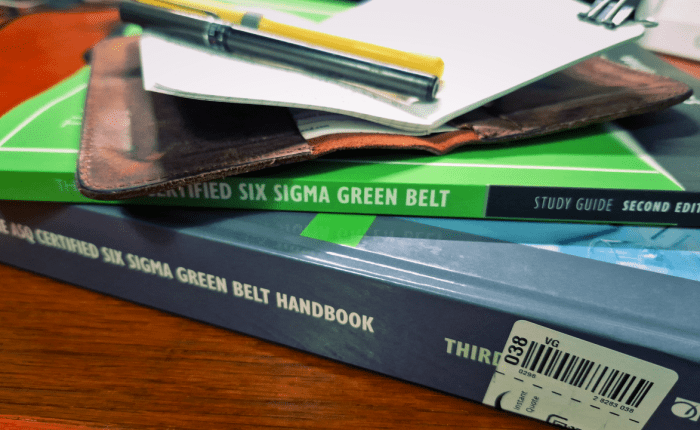
While I waited to figure out how to learn the material, I looked up the ASQ requirements and purchased used copies of the Six Sigma green belt handbook and a test prep study guide with practice questions.

Knowing that getting started is better than waiting around for a perfect plan, I started reading the handbook and planned to sort out my study strategy as I went. Almost immediately, I began connecting concepts to my past work and imagining how I could apply them now in my current role.

That’s when I realized: I’d done this before.

Paramedicine (2015–2016)

In 2015, I hit the transition point between early and mid-career phases and started questioning if I was on the right path (I found office work not very fulfilling). I thought it was a good opportunity to seek a career change and embark into paramedicine – I had a passion for first aid, I was a first responder on a few occasions in university (shoutout to University of Waterloo Campus Response Team!), dealt with emergencies while working as a bouncer, and I had written my masters thesis on the ethics of first aid.  It aligned with my values of helping people and provided a fast-paced technical job that would give me fulfilment.

The first step was meeting the admissions requirements, which included needing a high school biology credit. I enrolled in a self-paced college prep biology course.

There was no active instructor; just a course outline, a textbook, weekly tests, and two major summative exams. Here’s how I approached it:

  1. Used the course outline and test schedule as a learning roadmap – Matched unit outcomes in the course outline to textbook chapters covered on tests – Prioritized readings based on the self-paced testing schedule
  2. Created active study tools – Flashcards for definitions and concepts – Hand-drawing diagrams (cells, organs, systems) labeled front-and-back for drill practice
  3. Focused on comprehension-level mastery – Enough to explain, label, and connect systems without unnecessary complexity – The test was multiple choice, true/false, and labelling diagrams, so sticking to the first two levels in Bloom’s taxonomy was sufficient.

This gave me a clear plan and a feedback loop through frequent testing.  I passed the course with an above 90% final grade.

Article content
Samples of my flash cards and hand-drawn diagrams.

The Present

For my Green Belt prep, I have:

  • A roadmap: The Body of Knowledge in the handbook’s appendix, which outlines each section, topics, and the number of exam questions per section.
  • Content: The handbook itself for deep reading and marginalia.
  • Practice: A test prep guide with exam-style questions.

By combining these, I can map my study plan to the exam structure.  I also asked AI to use my weekly time constraints to suggest a manageable plan to break up the work and prepare to take the test by mid-Fall.  Then, I can prioritize topics by weighting and test my knowledge incrementally as I go.

The Lesson

I realized I don’t always need a formal course, especially for a certification with a defined body of knowledge and predictable exam format.  By having a clear syllabus, a learning map, a primary content source to learn from, and a way to test and reinforce learning, I can direct my learning effectively.

Courses have advantages: expert guidance, tailored examples, real-time feedback, and adaptive teaching.  However, courses are not the only route for learning and self-development. By having a well-defined body of knowledge to study from, and using active learning methods like taking notes, journaling on my learning, short feedback cycles, and finding ways to apply the content to my work and experience, I have all that I need to be successful.  All it will cost is some used textbooks, a registration fee, and remembering a lesson I learned a decade ago.

Sustainable Effort in Work

I reflected in my journal today that, once again, I went through another weekend without circling back on to do’s I had intended to get to when I left the office on Friday. Whether I have a good reason for not working on the weekend (such as us hosting family this weekend) or I just absentmindedly forget to look at my notebook at home, the net result is the same – my good intention effort to squeeze in work was never realized.

The thing is, I keep deluding myself into thinking that I can get all this work done in my downtime. I used to do it all the time, why not now?

But it’s foolish to believe that what worked for me in my twenties, when I was not married, without a kid, and with fewer responsibilities to carry, will somehow magically work for me now through hard work and gritty determination.

Maybe my expectations are wrong. Maybe I just need to accept that when I leave the office, I leave work behind to be picked up on Monday. Perhaps that feels unambitious, but if the work isn’t getting done anyway, maybe I should feel less crappy in disappointing myself.

And at least it’s more honest.

Stay Awesome,

Ryan

A Burnout Metaphor

I’ve recently been turned onto Van Neistat’s YouTube channel. Van, the older brother of Casey Neistat, is a true pleasure to watch – he’s the DIYer’s DIYer and his style is untainted by modern social media. He’s the best of the Gen X cohort without the pretension or cynicism.

In his video meditating on the nature of burnout, he described slow burnout in terms of a motor with the cylinders breaking down one at a time. I’ve never thought about burnout in this way, but the image struck me hard. I find it to be a very apt description, where a motor can lose a cylinder and still operate, but there will be consequences to continuing to run, such as damage to the motor, inefficiencies of fuel consumption, increased wear on other components in the chain, and vibration in the ride. From a mechanical perspective, if you choose not to fix the issue, so long as you reduce the load on the engine and cut the fuel going to the cylinder, you can get away with running down a cylinder. For a time.

Of course, this probably will be harder and costlier to fix later.

It’s better to fix the issue up front, but that usually is expensive as well – the time, cost to diagnose, and cost to repair.

Work and life burnout seems to function the same way – if you choose to ignore the problem, you can still operate, but you have to accept the knock-on consequences of operating out of balance. At some point, the engine will stop running. Or, you can pause and try to identify the problem up front and fix it then, which can be expensive and uncomfortable.

Stay Awesome,

Ryan

Small Health Improvements

At some point in one’s thirties, you become aware that you cannot rely on your body to bounce back as it once did after your poor decisions. It becomes harder to ignore the signals from your body telling you that not sleeping enough, not maintaining healthy maintenance habits, and indulgences cause harm to the body. It’s as if your body used to quietly repair the damage but now it makes sure you know what you are doing is stupid and bad for you in the long run.

In response to these signals, I started making small adjustments to my day that aims to improve my health in targeted areas. Here are a few that I’ve tweaked recently.

Sleep

After my wife noticed I was snoring really badly at night, I scheduled a sleep study through my doctor. It was a long process because of the pandemic, however I was eventually diagnosed with sleep apnea and I was prescribed a CPAP machine to improve my sleep quality. I am currently in the trial period, so it’s too soon to have an appreciation of the fix, but the stats from the machine are showing a dramatic drop in my nightly breathing issues, and I generally feel less tired during the day (though I still feel groggy in the morning). I still have a problem with going to bed too late at night, but getting my sleep quality back on track is a first step.

Physical health

I am among the people who picked up some weight over the last two years of being at home. Between having a toddler and trying to maintain some semblance of work and life balance, I’ve found it difficult to keep a regular exercise routine – it just becomes too easy to put it off to tomorrow. I took a leaf out of BJ Fogg’s Tiny Habits book to shrink the action of exercise down to slowly build up a regular practice. I’ll have more to say on this topic in a few months after I give it an honest try, but so far I have kept my commitment through the experiment.

Dental health

I had poor dental habits through my twenties. While I always brushed my teeth at night, I was terrible at morning brushing and never flossed. While my dentist has noted I have good teeth generally, because of my sleep apnea, they’ve noted some effects of grinding my teeth at night. And I have a tendency to brush too hard, causing damage to my gums. Also, I chipped one of my front teeth while biting my nails – turns out 30 years of grinding the teeth together to bite my nails will eventually wear the corner out. During my last visit, the hygienist asked if I used an electric brush. I didn’t realize it would be a gentler option for my gums, so I asked for their recommendation and bought a Philips Sonicare unit specifically because it will alert you when you apply too much pressure while brushing (this is not an endorsement; it just happens to be what my dentist recommended to me). So far, the novelty of the electric brush has been a good change in my routine, and I’m more diligent with brushing. I also combined the wisdom of Fogg (see above) and John Call (Jujimufu) and addressed my flossing habit by buying a better quality floss (a stronger but softer floss that hurt less to use), and put it right next to my electric brush instead of the drawer as I used to do. I enjoy using the electric brush, so I’ve used it every night. And because I see the floss next to the brush, I grab it first and floss before brushing. I even tried using a mouth wash, though stopped when I noticed that it really dried out my mouth in the night.

Lessons

These aren’t perfect solutions, and they won’t undo all of the damage of my neglect. They also aren’t fast solutions, but I see them as sustainable changes. I didn’t get into this problem overnight – it was years (now decades) of steady poor choices that lead to issues in my health, and so it will take small steps to correct these issues.

The lessons learned so far that have helped:

  1. Be ruthlessly intolerant of friction points. If something is causing you problems, if something in the behaviour you want to change is making it difficult to stick with it, sit down to define the problem and make an adjustment to address it, whether it is a physical change (like moving the floss out of the drawer to beside you brush) or a financial change (like buying an electric toothbrush instead of thinking you’ll do better).
  2. Shrink the change. Fogg’s book is probably the best I’ve seen on the topic of habits that actually sets out a plan for change. It’s the most comprehensive but comprehendible book I’ve seen on the topic. Instead of making grand sweeping changes, focus on the tiniest thing you can change towards the positive.
  3. Look for resources to support your wellbeing. I’m fortunate that my Province supports people with sleep apnea. If you are in a position to take advantage of these supports, make sure you do it. Get the doctor’s referral, commit to the trial period and sleep studies, and get the financial support to buy the equipment you need. Not everyone is in a position to do this, but do it if you can.
  4. This will take time. Don’t look for overnight solutions, and expect to not see results right away. Trust the process and give it a fair chance to work.
  5. Be kind to yourself. You can beat yourself up over past bad choices, but it won’t help change your behaviour. Start fresh on a new day, forgive yourself, and try again. Try different things; see what sticks. Treat it like an experiment. You aren’t a failure, you are just testing what works best for you.

Stay Awesome,

Ryan

Defaults

I’ve been thinking about habits lately. It mostly started when I would reflect or review on my weekly productivity output – or more specifically the lack of output – and realized that I tended to procrastinate a lot in fairly predictable ways. My behaviour of choice to avoid work is to allow myself just a small indulgence on YouTube in the morning before I get started on tasks for the day, and then I look up and it’s been hours.

It’s not that I’m unaware of the time passing me by. I fully accept that it’s a choice I’m making. It just so happens to also be a choice that is hard to make to stop yourself from continuing when the cost to switch to work is so high (objectively less enjoyable than watching a video).

Somewhat coincidentally, I just read BJ Fogg’s book Tiny Habits. I didn’t choose it with the explicit purpose of fixing my work productivity; it just happened to be a happy coincidence. I have read a fair number of the self-help books centering around habits. In 2016, I read Duhigg’s book The Power of Habit, Deep Work from Newport, and 7-Habits from Covey; in 2019 I read Atomic Habits from Clear, Mastery from Greene; and in 2021 was The Practice by Godin. At this point, I think I have a pretty good grasp on the common understanding of how behaviour works in the mind, at least as distilled by pop-psychology.

Having said that, I thought Fogg’s book was pretty good. It’s been a while since I read Duhigg and Clear’s books, but while I finished those books feeling like they laid out a decent explanation of a process for changing habits. I felt that Fogg covered the topics in greater depth with more actionable steps. On top of that, Duhigg is a journalist and Clear is a motivational/productivity writer, whereas Fogg is a behavioural scientist. It was super refreshing to have a book entirely based on his work. He avoided having an animated bibliography of summarizing all the work of other people and rehashing old ideas. The anecdotes he included were samples from his own students, which helped give context to the topics he covered.

Finishing this book (especially his section on replacing habits you want to discontinue) made me think of something Ali Abdaal discussed in a recent video on intentional defaults. A lot of my bad habits seem to stem from poor default choices. For instance, when I don’t want to start work, I’ll indulge procrastination by seeing what’s on my YouTube feed. Or when I have a night off, I’ll default to watching television.

Despite these not feeling like a choice, I am still making a choice to do these activities because they are the defaults I have set in those instances. ~When I feel the anxiety associated with work, I default to soothing myself with YouTube.~ Same with downtime at home. Rather than doing something productive, I passively consume because it feels better.

I don’t mean to say that we should maximize productivity at all times. That is a toxic attitude to take.

What I am suggesting is that I should question the process by which I choose to fill my time. When I want to do something productive, say knock off small tasks on my to do list, I approach it as something that needs to be scheduled. That is, I have to think about my time as something I’m earmarking to get stuff done. For instance, my Saturday is free, so I’ll do the laundry, bake some banana bread, etc. I fill that time intentionally.

But it doesn’t have to be this way. I can flip it around and think “I have free time until the next planned thing to do, so what small thing could I do that will help me out?” It might be the case that sometimes I just want to zone out and not think about anything. However, when I do this every time I have free time, it suggests that I’m not choosing how to fill my time but instead am just falling into whatever action will make me feel good in the moment.

I should take the time to reflect meaningfully on my defaults and see if there are better, more fulfilling ways I can occupy my empty time.

Stay Awesome,

Ryan

Food for Thought – On Self-Discipline

Michael Sugrue recently posted a series of one-liner observations on his YouTube Community page; one of them grabbed a hold of me, and I wanted to share it.

“Brakes make a car go faster: self-discipline produces freedom”

While it reminded me of Jocko Willink’s Discipline Equals Freedom mantra, it still gave me pause to reflect on this quasi-koan. There are two paths for speed – you either are able to control it, or you give over to speed for its own sake. Unless you disregard all safety and practicality, there is little benefit to unrestrained speed or freedom. It is through imposing limits (or the ability to control the forces at play) that you are truly able to take advantage of what speed (or it is a proxy of) has to offer. It is narrow-minded to believe in absolute freedom without guardrails. To believe we should live without restraint is to place yourself and your needs above everyone else. You might win on a few games, but it is a poor strategy in the long term that hurts everyone.

Stay Awesome,

Ryan

Advice from Col. Chris Hadfield’s Keynote

At my college, there is a yearly multi-day event for employees to deliver PD workshops to each others to teach skills and share experiences. The college invites thought-leaders to delivery keynote addresses to kick-off and close-out the event.

This year, the closing address was delivered by Canadian astronaut Col. Chris Hadfield. After his inspiring talk, he fielded a few questions. I was one of the lucky ones whose question was posed to him. Here is a summary of his key lessons to my question:

“How do you and fellow astronauts handle coming back to Earth? That is, the depression that comes after the high of achieving your goal/mission. “I just did that… now what?””

  • There is a misperception about going to space. It’s not just a random good thing that happens to you out of the blue – the mission has been an endeavor that is decades in the making (26-years for him from the time he decided to become an astronaut to his first mission). Even if he wasn’t chosen to go to space, he still enjoyed his job. Going to space afforded him unique experiences that honed his skills. He was gathering experiences and capabilities, then after coming back from space he could take those skills to support others and apply them in other areas of his life. He sees it as a tremendous set of gifts, tools, and new abilities to tackle the rest of his life. If you try to measure your life by one or two shiny peaks, then by definition you’ll make your life dismal. (As a side note, I read his book “An Astronaut’s Guide To Life on Earth” after his speech, and in it he goes into greater detail of what happens to astronauts after they come back. The experience doesn’t end; the job of being an astronaut has succession plans built into it that keeps astronauts useful. They spend months debriefing the mission to identify best practices that will keep future astronauts safe. They help train others, and handle mission control duties. They also help support the families of other astronauts when their loved ones are away on mission. The impression I got is that the job is designed to be a.) in service of others, and b.) purpose-driven).
  • Don’t spend a lot of time looking backwards. “If you spend a lot of your life looking backwards, you’re going to bump into your future. That’s not where things are coming from; they’re not coming from the past.”
  • The most important decision you’ll ever make is “What am I going to do next?” Some of your opportunities and skills will diminish as you age, but that doesn’t mean it can’t be vital, important, interesting, or challenging to you.
  • There are cool things happening to you everyday. Allow yourself to succeed everyday, it doesn’t have to matter to anyone else. Celebrate it. Recognize that yeah, there is crappy stuff happening, but there are cool things happening to you too, so try and choose to focus on them. There are compulsory things you have to do, but like in figure skating there are freestyle points. Try to revel in the freestyle. That leads to a life well-lived.

I’m so glad I got a chance to hear him speak and that my question was selected for response. I devoured his book and dropped many bookmarks in to return to so that I can absorb his experiences. It really drove home the problem with many self-help books that are released today – the books are written by people who are telling the stories of others. The purpose of the book (aside from sales) is to collect stories from the deeds of others in order to fit a narrative or thesis. There is an assumption that because someone else made things work that the author has the borrowed authority to provide advice to others.

I’ve learned that it’s much more instructive to turn to the primary sources and read the undiluted message from those who’ve actually been “in the arena.”

Stay Awesome,

Ryan

On Slowing Down

At Christmas time, I shared with my wife that I was thinking about getting a vinyl turntable and records. She had asked for gift ideas, and being pretty content with things and not feeling immediately drawn to any shiny new toy, I reflected that I’m starting to look for gift ideas to help me slow down and appreciate things more. With all the access to music through streaming services, listening to music sometimes feels disposable – something you put on in the background instead of silence. I thought with a turntable, it would force me to be more mindful of the activity. I had grown-up with a turntable in the house, but I never appreciated it until my adult life. There is something alluring about a single-purpose device that is a centre-point of a room. You put on a record and sit and listen to it. It doesn’t last very long before you have to flip sides, so you can’t just walk away to do something else. It’s a point of focus in the room; something people can gather around.

My wife, being the wonderful partner she is, surprised me with a turntable and my first album. While I tested it out at Christmas time, it was only this week that I finally set up the space in my office with the turntable. It was great to quietly sit and listen to music, doing nothing else. The pops and crackles of the needle, creating a sense of imperfection, gave the affair a unique analogue experience compared to the perfect replication of digital playback.

Of course, I noticed right away a difference of pitch in the playback, indicating that the turntable was playing slightly off from the 33-1/3 speed it was set to. With new toys come new maintenance responsibilities if we want to keep enjoying things. Still, despite the altered playback, I found the sensory experience a satisfying way of capping off my day. Always more to learn.

Stay Awesome,

Ryan

Stepping Back Into The River

As the saying goes from Heraclitus, you can’t step in the same river twice. There are two ways we can interpret this metaphor. The most common interpretation is that you cannot step in the same river twice because the river is constantly changing. The water is flowing past, the flux of the water is changing the boundaries and composition of the river, and so it’s impossible to step into the exact same river twice. But another way to interpret the metaphor is to place more emphasis on the youYou can’t step in the same river twice – whereby the you stepping into the river changes and is not the same over time. This can be taken as literally as when describing the flux of the river – your cells are changing, etc. But I like the more poetic version of the metaphor that speaks to us changing with our experiences through our lives.

When you return to a river (the river being a stand-in for any number of things), you are a different person, and your past experiences make the phenomenological event that you experience different. The first time I encountered this was retaking a course in high school. I was the kid that took a course called Writer’s Craft, loved it and the instructor so much that in the following year I enrolled in it again with the same teacher. However, the materials selected for the class by the teacher, and indeed my fellow students, were all different. It was different, less enjoyable this time around. I still enjoyed studying under my teacher, Mr. Steffler, but with it being a different cohort of students (students from the grade below me), I realized that the experience lacked the magic of when I took it with my original cohort. I tried to step in the same river twice and was surprised when it was different; that I was different.

There is also the case where you revisit a book you read previously and it speaks to you on a different level. Maybe your experiences help you connect with the characters on a different level, or you empathize with the characters differently. Your values might have changed. Or just that you are older and more knowledgeable, you understand more of the text and draw different connections.

This happened to me recently. My job promotion at work was approved, and I’m taking on management tasks as part of my portfolio. Maybe because I have mild imposter syndrome (I sometimes believe I am continuing to fail upwards), or maybe because I’m trying to be proactive, I decided to pull my copies of books by Peter Drucker off the shelf to learn what it means to be in management and how to do it well. I started with a short text of his called Managing Oneself, which I read back in 2017.

Something in the book landed differently this time, which I think breaks down to two differences about me now versus who I was five years ago. The first is I am busier now than I was then. This isn’t to say I was idle then – I was working three jobs, heading up a non-profit, in a relationship, etc. However now my life feels fuller with things that feel more critical – a higher stakes position at work with more responsibility, co-managing a household with my wife, the responsibilities of family and childcare, dealing with a pandemic, etc. I might have fewer work domains on my radar than I did in the past, but things have higher stakes now, and the idea of more effectively managing myself speaks to who I am as a person, where I’m trying to be mindful of others, plan for the future, and lay down a good foundation to support our family as we go.

The second thing that landed differently was the section about learning more about yourself and how you operate as you manage yourself/your life. I don’t remember this sticking in quite the same way (and based on my blurb from Instagram, it seems I was slightly underwhelmed by the text). For as much as I feel like I’m an imposter sometimes, I also know myself more now, am more confident in my skills, and have cultivated experience and expertise as I travelled along my career path from then until now. And so to revisit this section about managing yourself (that is, identifying what you should prioritize your focus on nurturing and developing) speaks to me. Rather than being frenetic and jumping on every opportunity while you are early in your career, it is better to slow down, be mindful, and think through what will add value to your life.

I don’t need to worry about losing out on opportunities by not acting fast. Instead, I can think about enhancing quality, enriching life, and paring down the things that no longer serve me.

I thought I was going to read the book a second time to remind myself of its content. Instead, I realized I was coming at the book afresh, for the first time, ready to learn.

Stay Awesome,

Ryan