Friday Round-Up – May 15, 2020

Note – this is an experimental posting format. I’ve thought about increasing the number of posts I commit to per week, but I don’t want to add unnecessary work if I’m not willing to stick it out. Let’s be honest: sometimes it’s really hard to get a single post out each Monday that I’m satisfied with, so increasing my posting frequency just to for the sake of increasing my output is a terrible idea. I will run a short experiment to see how easy it is for me to get out a Friday Round-up for the next month. If the experiment goes well, I’ll consider making it a part of the regular rotation. You can find the first round-up post here from April 24ththe second here from May 1st, and the third here from May 8th.

Sadly, I don’t have a proper post for today. Maybe the reading I engaged with was relatively poor this week. I’ve also been feeling down recently, which probably had something to do with it.

So, instead of an article round-up, how about two fun things:

👨‍🍳Kitchen – Cinnamon Buns | Household Activity

I’ve never made cinnamon buns from scratch before, and I had some live yeast that needs to be used before it expires, so I decided to make a sweet treat for the household. I’m quite happy with how they turned out. For the recipe, I just used the first search result in Google for “cinnamon bun recipe.”

A few weeks back, while on a grocery trip with my grandmother, she commented to one of the shop’s proprietors that I am a good cook. I quickly corrected any misunderstandings he might have had about my abilities, and that as a grandson everything I do is wonderful to a grandmother’s eyes. Instead, the secret to my success, I told him, is that I have the courage to make mistakes along the way. Overall, that’s how I see my activities in the kitchen: I like to experiment and have the courage to try new things out. They don’t all succeed, but I find value in the striving.

💭 Reflection – On “Deep Philosophical Thoughts” | Plato’s Symposium

Ugh…

As I mentioned in this week’s post about my recent difficulties with reading, I recently joined a book club, and we are currently reading through Plato’s Symposium. Since I have a physical copy, I decided to crack it open to read the dialogue on love. The last time I was reading the massive tomb, I had already started developing the practice of marginalia and notes to myself about the reading. I spotted the gem above.

In 2011, I felt a strong affinity with the narrator’s passion for thinking big thoughts. Now, almost a decade later, I felt myself groaning at the sentiment. As I noted in the margins, internet smart guys ruined the passage for me as it sounds so pretentious. It probably read that way in 2011, but I’m more attuned to the snobbery. I don’t blame Plato, I blame the trolls.

Stay Awesome,

Ryan
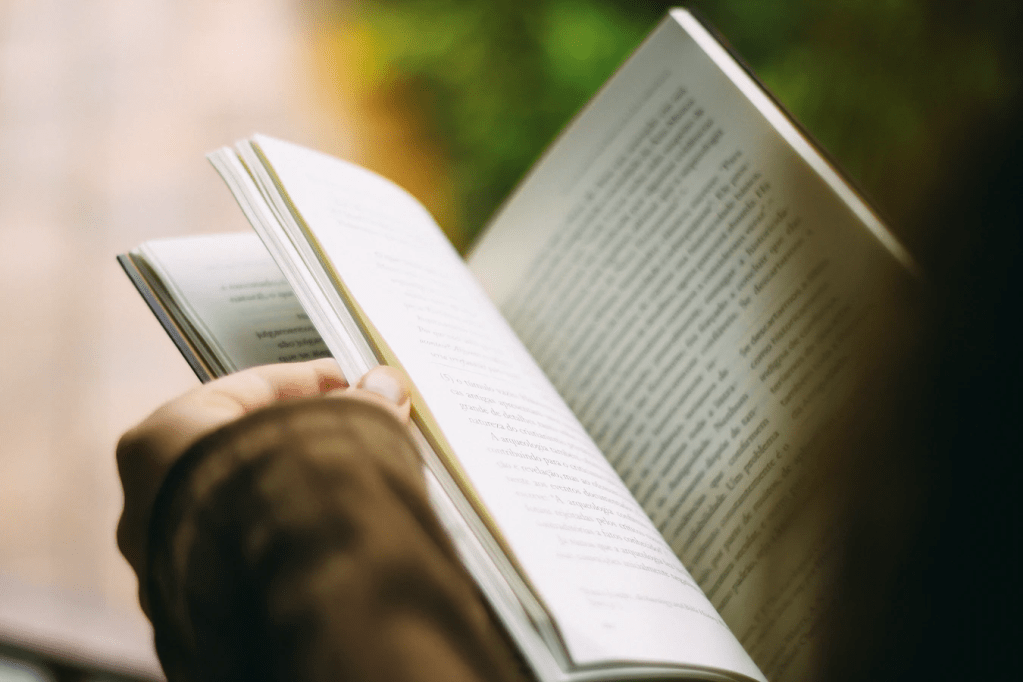
Why Is Reading So Hard Right Now?

Photo by João Silas on Unsplash

Right as the pandemic was shutting down work for us, some friends and I decided to start a book club. Last week, we met for our second session to discuss Gulliver’s Travels. I had chosen the book, largely because I was intending to read the book for myself and it seemed like a convenient way to pull double duty.

The book club’s initial pitch was largely for us to use audiobooks to read through non-fiction books since it was mostly what the three of us were doing in our personal lives. Yet I chose a fictional story because, as I mentioned in my overview of what I read in 2019, I feel largely burnt out of self-help, productivity, and business books and I want to broaden my reading a bit.

Not only did I choose a work of fiction, but I decided that since I owned a copy of the book I would try and read my physical copy. It seemed relatively straightforward, and I thought I would make my way through the book at a decent pace.

However, when we met last week to discuss the book, I had to admit in shame that I hadn’t finished the book. I barely made it out of the first of the four voyages Gulliver undertakes.

Truthfully, I’m finding reading (in all forms) difficult at the moment. I found it challenging to read the book since it was sometimes inconvenient to try and read it at night in bed, so I borrowed an ebook copy from the library to read on my phone or tablet. I didn’t elect to purchase an audio copy (but if my own audiobooks are any indication, I wouldn’t be making much progress there either).

So, why is it so hard to read right now? Three reasons have occured to me.

First, unlike when I used to travel to work, I don’t have 40-60 minutes each day where I’m stuck in my car. The lack of captive audiences is considered the biggest reason why podcast authors are noting a dip in listening time since the middle of March. Unlike a few months ago, it’s difficult to plow through a book when I’ve got nothing else going on during a commute.

Second, you’d think being at home all day means I would have plenty of opportunities to listen to podcasts and audiobook guilt-free. Turns out, this isn’t true for me. I feel guilty listening to books or podcasts during “working hours.” And aside from time when I’m running on the elliptical or out doing yard work, I feel guilty listening to my stuff when in shared spaces with others in the house.

But in this case, I had elected not to listen to the story but to read it. That posed a challenge because unlike time when I’m exercising, doing chores, or driving, you can’t multitask while reading. Instead, I have to carve out dedicated time away from my family, when there are no pressing chores, and when I’m not supposed to be working. I’m finding it challenging to eke out those quiet moments that I can set aside just for reading.

Finally, unlike when I was working from the college, my time is much more fluid now. Without context or code switching, the lack of liminality means I don’t mentally put myself in a head-space to read like I did a few months ago. But further than that, I find that I don’t hold fast to “normal working hours,” and instead I’ve noticed myself shifting later into the evening with my work. As work creeps later in the evening, I lose the demarcation of time, especially discretionary time for reading.

I don’t think this is a lost cause. I may be finding it challenging to read while working from home, but it’s merely something to be mindful of, and I have to be more intentional with my time if I want to give myself opportunities to read. The pandemic has forced us all to change how we live our lives, and it stands to reason that the habits I used before to find reading time during the day are not appropriate to expect to carry forward. Instead, if I want to succeed, I have to find a way to create new habits from our new circumstances.

Stay Awesome,

Ryan

Productivity From Home

Note – not my workspace.
Photo by Anna Auza on Unsplash

It’s taken me six weeks, but I think I’ve finally found a good system for working from home. Like many people who are fortunate to work from home during the pandemic, I’ve been struggling with keeping my normal routines while working from my computer at home. I won’t pretend that I had a perfectly productive system when I used to commute to the office everyday, but where I had the illusion of being productive simply by being at work and conversing with my colleagues, at home I am totally cut off from those signifiers of “work.” In the last few weeks, I’ve had spurts of productive time, but those were relatively few in number.

Late last week, however, I found a good combination that allowed me to really focus on moving my tasks along. I’ll share some of the tools that have been working for me.

First, using headphones to play noise while I work helps me make the mental shift in context from “home” to “work”. I have two sets of headphones at home, and both work well – a wired set of Sony headphones with noise canceling function, as well as a set of Philips Bluetooth headphones that also cancel noise actively.

I don’t just listen to music, however. I find most music to be distracting to my workflow – even lyric-less songs. My mind tends to pick up on the melody, and I’ll focus on that instead of the task at hand. I have two sources of noise I currently use – a pomodoro Chrome extension that plays fuzzy white noise (and conveniently tracks my pomodoro sessions), as well as a pomodoro video on YouTube that includes a visual timer and ticking clock. The white noise blocks out ambient noises that otherwise gets through my headphone’s noise canceling feature, and the ticking noise helps me focus.

Speaking of pomodoros, I use the pomodoro method to break down the tasks into manageable chunks. It also has the benefit of bypassing my motivation drive. Rather than committing to working an 8-hour work day, I commit to the next 25-minute block of work.

I have a lot of projects and tasks to keep track of, so I use two systems to prioritize and track my work. For long term, multi-step tasks, I have set up a dedicated board on Trello to manage where each project is in the pipeline. I have created buckets that I can move tasks through, from the general pool of tasks, to the planning phase, into an active phase, and if the project is put on hold, I can take notes on what I need to do to push things along while the task is in limbo.

For day to day task planning, I went simple and set up a text file that I number tasks as I think of them for the day, then I keep track of what I accomplish each day in a growing list. I usually would do this in my notebook, but I liked being able to cleanly re-order tasks. On paper, you can only order tasks in the initial stack you wrote them in, but if something changes during the day (e.g. a meeting gets scheduled on short notice), it’s harder to move things around.

Aside from the Microsoft Office tools provided by my employer (Outlook, Teams, Sharepoint, and OneNote), that covers my current workflow. Depending on how long the stay-home order is in place, I might update how this system evolves. It’ll also be interesting to see what of this system I port back with me to the office (I have a feeling I might bring the headphones to help me focus).

If you have any systems or tools you like, I’m curious to hear about it in the comment section.

Stay Safe and Awesome,

Ryan

Friday Round-up – May 1, 2020

Note – this is an experimental posting format. I’ve thought about increasing the number of posts I commit to per week, but I don’t want to add unnecessary work if I’m not willing to stick it out. Let’s be honest: sometimes it’s really hard to get a single post out each Monday that I’m satisfied with, so increasing my posting frequency just to for the sake of increasing my output is a terrible idea. I will run a short experiment to see how easy it is for me to get out a Friday Round-up for the next month. If the experiment goes well, I’ll consider making it a part of the regular rotation. You can find the first round-up post here from April 24th.

Have you ever noticed the tendency that when you’re thinking about a topic, you seem to notice it everywhere? I first became aware of its phenomenology back in my university days, where stuff that I was learning in my lectures seemingly popped up randomly in my non-class time. Turns out, there is a word for that feeling – the Baader-Meinhof phenomenon, also known as the frequency bias. It’s why you start to see your car’s model everywhere after buying one. I bring this up because today’s articles are all loosely connected with scientific literacy in the digital age (especially as it relates to COVID). The more I read about thoughts concerning how to understand research about the pandemic, the more content I noticed about the topic of scientific literacy in general. This might be the phenomenon/my bias at play, or maybe the algorithms that govern my feeds are really in tune with my concerns.

Here is my round-up list for the week ending on May 1st:

📖Article – What You Need to Know about Interpreting COVID-19 Research | The Toronto Star

My round-up for the week started with this short article that was open in one of my browser tabs since last week. There is a lot of information floating around in our respective feeds, and most of it can charitably be called inconclusive (and some of it is just bad or false). We’ve suddenly all become “experts” in epidemiology over the last month, and I want to remind myself that just because I think I’m smart, doesn’t mean I have the context or experience to understand what I’m reading. So, this article kicked off some light reflection on scientific and data literacy in our media landscape.

📖Article – Experts Demolish Studies Suggesting COVID-19 is No Worse Than Flu | Ars Technica

This next piece pairs nicely with our first link, and includes reporting and discussion of recent flair ups on Twitter criticizing recent studies. Absent of the pressure being applied by the pandemic, what this article describes is something that normally takes place within academic circles – experts putting out positions that are critiqued by their peers (sometimes respectfully, sometimes rudely). Because of the toll the pandemic is exacting on us, these disagreements are likely more heated as a result, which are taken to be more personally driven. I link this article not to cast doubt over the validity of the scientific and medical communities. Rather, I am linking to this article to highlight that our experts are having difficulty grappling with this issues, so it’s foolish to think us lay-people will fare any better in understanding the situation. Therefore, it’s incumbent on journalists to be extra-vigilant in how they report data, and to question the data they encounter.

📽Video – Claire Wardle: Why Do We Fall for Misinformation | NPR/TED

The Ars Technica piece raises a lot of complex things that we should be mindful of. There are questions such as:

  • Who should we count as authoritative sources of information?
  • How do we determine what an authoritative source of information should be?
  • What role does a platform like Twitter play in disseminating research beyond the scientific community?
  • How much legitimacy should we place on Twitter conversations vs. gated communities and publication arbiters?
  • How do we detangle policy decisions, economics, political motives, and egos?
  • How much editorial enforcement should we expect or demand from our news sources?

There are lots of really smart people who think about these things, and I’m lucky to study at their feet via social media and the internet. But even if we settle on answers to some of the above questions, we also have to engage with a fundamental truth about our human condition – we are really bad at sorting good information from bad when dealing at scale. Thankfully, there are people like Claire Wardle, and her organization FirstDraft that are working on this problem, because if we can’t fix the signal to noise ratio, having smart people fixing important problem won’t amount to much if we either don’t know about it, or can’t action on their findings. I was put onto Claire Wardle’s work through an email newsletter from the Centre for Humane Technology this week, where they highlighted a recent podcast episode with her (I haven’t had time to listen to it as of writing, but I have it queued up: Episode 14: Stranger Than Fiction).

📖 Essay – On Bullshit | Harry Frankfurt

All of this discussion about knowledge and our sources of it brought me back to grad school and a course I took on the philosophy of Harry Frankfurt, specifically his 1986 essay On Bullshit. Frankfurt, seemingly prescient of our times, distinguishes between liars and bullshitters. A liar knows a truth and seeks to hide the truth from the person they are trying to persuade. Bullshit as a speech act, on the other hand, only seeks to persuade, irrespective of truth. If you don’t want to read the essay linked above, here is the Wikipedia page.

I hope you find something of value in this week’s round-up and that you are keeping safe.

Stay Awesome,

Ryan

Quarantine Reflections – The Second Mile

person running on tracking field
Photo by Jakob Owens on Unsplash

Last week, I discussed how important exercise has become in helping to regulate my mood while I stay safe at home. I wanted to share a quick second observation I’ve noticed for exercising. When I first started my challenge for the year, I told myself that I just had to make small commitments to keep the progress going. I started the challenge very light – just 1 mile in the first week. It was easy to manage and commit to. Each week adds a mile, which is a doable amount: 2 miles in week 2, 3 miles in week 3, etc.

I am in week 17 now, and it’s forcing me to run consecutive days. While I’m not running distances that really necessitate me to need recovery days, there are inevitably days where I wake up and my body feels stiff and my joints feel like I’m full of sand. It’s a lot harder to tell myself that if I just commit to one mile, I can easily do the rest. That trick no longer works on me.

But I’ve realized something different that really helps me. I’ve noticed that no matter how I feel physically (assuming I’m not ill), if I can stick it out until the end of the second mile, I know I can do the run. There is something that happens between the first and second mile where the stiffness goes away. It’s likely the official warm-up period, but by mile-two I hit my stride, my breath falls into cadence, and I’m able to easily keep my target pace.

Understanding the magic of the second mile doesn’t make it psychologically easier to get on with the run (my mind still loves to procrastinate when I know I’m about to spend 45-minutes sweating), but it does let me know that physically I’m up to the task. The resolution sets in and I get to work.

Stay Awesome,

Ryan

Friday Round-up – April 24, 2020

Note – this is an experimental posting format. I’ve thought about increasing the number of posts I commit to per week, but I don’t want to add unnecessary work if I’m not willing to stick it out. Let’s be honest: sometimes it’s really hard to get a single post out each Monday that I’m satisfied with, so increasing my posting frequency just to for the sake of increasing my output is a terrible idea. I will run a short experiment to see how easy it is for me to get out a Friday Round-up for the next month. If the experiment goes well, I’ll consider making it a part of the regular rotation.

Many of the bloggers and thinkers I follow have some sort of curated list they share on a regular basis of the best pieces of content they came across in their weekly browsing. During this week, I came across a few thought provoking posts that I felt deserved to be shared.

Here is my round-up list for the week ending on April 24th:

📖 Blog – All models are wrong, some models are useful | Seth’s Blog

We should be reminded that maps are not the terrain, and that models are predictions (read: guesses), not certainty. We rely on models to help us understand the world, but we should remember that they have their limitations.

📖 Blog – COVID-19: What’s wrong with the models? – Peter Attia

Paired nicely with Seth Godin’s post above, Dr. Attia gives a good lay-primer on how a model is created, and what the limitations are when trying to model something like a virus when so little is known about it. The two takeaways I have from this piece are: we should be more willing to accept that good models gives us ranges, not fixed numbers (and we should be more comfortable with the ambiguity); and just because the worst case didn’t arrive, it doesn’t mean that the model was overblown – we need to find out more about why the model was off. It might be that the virus isn’t as dangerous as we initially thought, or it might be that physical distancing greatly impacted the viruses capacity to spread (it’s probably a little of both), but until we know which side maps to reality, we can’t be confident of what we should do next.

📽 Video – BEST Pomodoro Timer on YouTube | Ticking Sounds … – Virtual Crickets

This is actually something I’ve used for some time, but wanted to share. When I’m trying to focus, I have discovered that I can’t listen to music (even of the lo-fi variety) because I find the melodies too distracting. However, I’ve found it helpful for me to listen to regularly repeating noises, such as white noise and ticking metronome sounds. I’ve experimented with a few options, such as a 10-hour “cosmic white noise” video, but while working from home during the pandemic, I’ve settled on this Pomodoro video that I also have paired with a Pomodoro Chrome browser extension that plays white noise (the ticking gives me focus, the white noise blocks out ambient sounds in my room). Forcing myself to focus in 25-minute spurts keeps me on track while I move through my to do list.

Let me know if you find any of these interesting or useful. Also, feel free to share your best round-ups in the comments below.

Stay Awesome,

Ryan

Extra Post – 4 Year Milestone!

I normally post on Monday’s, but today is the 4 year anniversary of my first post on this site (tomorrow if the 4 year anniversary of my substantive first post, but let’s batch them into this post for funsies).

With everything that’s going on, I wanted to pause for a moment to commemorate my “Hello World” moment on this blog. Even though I still don’t have any concrete plans for this site, I’m still going strong by committing myself to consistently putting in the work. If I’ve learned anything in 4 years, it’s less about the business plan and more about putting in the work. In this case, it’s better to focus on quantity, rather than waiting for the quality to start.

Stay Awesome,

Ryan

Quarantine Reflections – Exercise

Photo by Risen Wang on Unsplash

Participating in physical distancing has given me some time to reflect. From the relative stillness of being home everyday, I have had a chance to think about my daily experiences without the distractions that comes from what used to be my normal routine. I’d like to share some of these reflections as they clarify in my mind under the banner of Quarentine Reflections.

First, I’ve had a personal realization recently concerning exercise. I have attempted to cultivate the habit of exercising for some time, going back several years on this blog alone. While I haven’t written about it yet for 2020, I started an exercise routine in January that I can happily report that I’ve maintained til the present. I’ll write about the routine in the future, but for now I’m sticking to the schedule and putting in my time.

Normally when I exercise, it’s something I try to fit into my busy days. Often it takes the form of a run in the morning before work: I try to squeeze in a run on our elliptical at home, then rush to shower and get to work without being too late. While at work, I remain somewhat distracted from paying attention to my body’s cues, so I don’t think too much about how I feel the rest of the day aside from the feeling of accomplishment that comes from knocking off a run early in your day.

But with physical distancing in effect, things are quieter. I am still working, but from at home. There is no context switching that happens in my mind that shifts gears from home to work. There are no coworkers to socialize with when I don’t feel like being productive. The lack of shift in my brain has create a scenario where I am able to sit with my thoughts for longer periods of time.

In these stretches of time, I’ve noticed that regular exercising noticably boosts my mood for the rest of the day. This isn’t a unique experience; it’s often touted as a benefit of exercising (once you get over the newbie hump of bodily pain). But while working in the office, I rarely noticed the affective change that exercise gave me. Usually, it was a cognitive change that came from mentally congratulating myself for exercising (or the social benefits that came from being that guy in the office who tells people that he got in a workout that morning – sadly, I am also that kind of person…).

I didn’t notice this benefit at first. When we first started working from home, I kept up my regular runs during the week as a way of imposing some sort of routine on my now drifting life. But last week I noticed a few days early in the week where I felt really crummy. I have a few forms of reflection that I engage with at the moment – I rate my mood in my notebook out of 10, I vlog a personal diary during the week, and I’ve taken up a form of morning pages to capture my internal monologue. In all three areas, I had noticed that I was feeling down and unmotivated. The day after I first logged the down mood, I exercised, and later that afternoon I did my check-in and noticed that my mood was a lot higher compared to the previous day. Nothing had materially changed about my day – I didn’t sleep more, my diet was consistent, and I hadn’t been any more productive in my tasks at work. The only big change over the previous day is that I had gotten a few miles in on the elliptical.

In looking back over the last month, I think I have spotted a trend. For days where I had the lowest mood, I did not exercise in the morning. On days where I exercised, I had higher mood levels. This isn’t to say that exercise is the only thing that correlates with an increase in my mood – there are plenty of days (e.g. weekends) where I feel fine but don’t exercise. However, it would seem reasonable to assert that there is a close connection with exercising and an overall improvement in my mood.

I plan to continue to follow my exercise routine, and I hope to set aside time in the near future to document it here or in a vlog format. But for now, it appears that I’ve found a more intrinsic reason to continue to exercise beyond vanity. Not only does exercise help me look better, but I feel better when I commit to the schedule.

Stay Awesome,

Ryan

What I’ve Been Reading (As of April 12th, 2020)

person holding opened book
Photo by João Silas on Unsplash

It’s been a while since I’ve written one of these posts (last one was October 2018!). Since many people find themselves with some extra reading time, here is what I’m working through while staying safe at home.

Salt, Fat, Acid, Heat by Samin Nosrat

With some extra time at home and wanting to ensure I’m using my perishable foods wisely to cut down on waste, I decided to finally crack this book that I bought for myself at Christmas. When it originally arrived, I was slightly disappointed to see it was less of a recipe book and more of a primer on cooking (which I stuffily thought I had already a good grasp on). However, I recently checked out Nosrat’s latest podcast miniseries, which endeared me to her instantly (she’s so bubbly and full of passion, it was infectious!). Then I checked out the Netflix series that was created based on this book. Then I set to work cooking a minestrone soup from scratch (taking some cues from Jamie Oliver’s YouTube channel) and channeled Nosrat’s thoughts on what makes food taste good. The soup was a hit here at home, and it’s given me the confidence to keep practicing.

Gulliver’s Travels by Jonathan Swift

Some friends and I started a book club just before the government started shutting things down in the province. Our first book was Jim Mattis’ military memoir, and I chose Gulliver’s Travels as our second read. I had first encountered the story as a child, then again in first year of undergrad when I had to read excerpts for a class. However I don’t think I’ve read the unabridged book in its entirety, so I’m trying to approach this read fresh and wrap it up before we meet later this week.

Gates of Fire by Steven Pressfield

I’ve been experimenting with reading fiction in bed before I go to sleep. I found the practice worked well reading The Alchemist, so I decided to continue the practice by grabbing a copy of Pressfield’s Gates of Fire, a fictional telling of the Battle of Thermopylae. I chose this book because I learned in Mattis’s memoir that it’s one of the books on the US Marine Corps mandatory reading list for all enlisted soldiers, and it sounded interesting.

Every Tool’s a Hammer by Adam Savage

I mentioned while reflecting on my 2019 reading list that I’m gravitating more towards biographies and memoirs as of late, and when I was reminded that Savage released a book recently, I grabbed it on audiobook to listen to. I love Savage’s worldview when it comes to making, and I would jump at an opportunity to spend a day with him. I’ll have to settle for this book instead.

Coders by Clive Thompson

I was flirting with learning coding a little while back (also seems like a good skill to pick up now), so I had ordered this one since it had some good reviews. I didn’t buy it to learn coding itself, but because it was presented as a good primer for learning about the world/community of coding. It provides a quick overview of the history of coding and dives into a bit of the lives and psychology of people who devote themselves to coding. I also was interested by the section at the end where the author reflects on learning to code during the writing of the book. I’m only around 100 pages in, so I still have a bit more to go.