The Beachhead

A friend who recently was appointed CEO of a company called me this week looking for a soundboard to sort out ideas he had in his head about how to proceed with company operations and strategic direction. The company is looking to shift strategic priorities, and he was looking for an outside voice to make sense of the new direction in relation to the legacy systems he’d need to grapple with.

One of the topics that came up reminded me of a concept I learned about while reading Susan Eisenhower’s book about her grandfather’s time during World War 2 and his subsequent Presidential years.
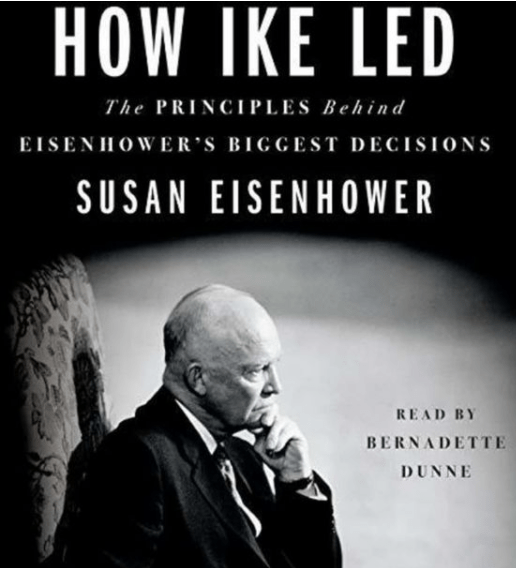
At two times during Dwight Eisenhower’s tenure in significant leadership roles, he had to create a beachhead to establish his forces (literal and metaphorical) to push towards his objectives. During the war, Operation Overlord’s first phase was to establish a beachhead in Normandy to create a defensible position to allow Allied Forces to work their way into Europe to push back Germany’s army. Establishing a beachhead is critical to success, but is often difficult for offensive forces to complete as the defending force usually has the upper hand in terms of resources and strategic positioning. While the offensive forces need to both set up a foothold and protect its lines to allow more troops to arrive, the defending forces merely have to reinforce it’s occupying positions to clamp down on fresh troops from joining the beachhead. Once the effects of first-mover advantage wears off, the offensive force must contend with protecting supply lines, fighting active defense from the opponent, and pushing past inertia to avoid grinding to a halt in order to win. Once established, a successful beachhead serves as a ratchet for the offensive force – the location of which all future offensives are launched from, and from which the troops need not backslide past. Traction is gained, and the army moves forward.

Similarly, during Eisenhower’s presidency, he saw the importance of passing civil rights legislation, but saw the difficult uphill battle that would needed to both move the country towards accepting civil rights AND enshrining those rights in law (turning both hearts and minds of the nation). While he would have aspired to complete civil rights equality in his time, he knew that if poorly planned, then history, culture, and opposing interests would ensure that forward progress towards equality would halt. Instead, he sought to establish a kind of metaphorical beachhead for civil rights, working on government programs and legislation that would lay the foundation for future leaders to take up and ratchet their work – allowing the movement to progress forward without worrying about losing traction and backsliding.

In listening to my friend, I noted that he also needed to take this lesson from history and focus on his own beachhead. While we think that a CEO is all-powerful in terms of exerting their will over the company, we must also face the reality that comes with working with legacy systems and people. Change is difficult and slow, and when poorly executed either stalls from inertia or alienates your workforce. And so I suggested he take a leaf from Eisenhower’s example and focus on what his core objective is that is reasonable within the timeline he’s being given, and focus on establishing a beachhead to deliver value back to the company president.

Since reading about Eisenhower, I’ve thought about my own beachheads – what are the areas of my life that I must focus on to ensure I’m moving forward with my goals, whether they are family, work, health, or passions. It is still very much a work in progress, but I want to find those areas that I can carve out and secure so that when it’s time to take risks towards my goals, I have a safe space to launch from.

Stay Awesome,

Ryan

Evidence, Credibility, and the Homunculus Courtroom

We should think of our beliefs and the evidence we engage with as if we had a little homunculus tv courtroom in our brain adjudicating whether to admit evidence into the record. Obviously, this is incredibly difficult to pull off in real time, but it’s a nice thought experiment to pause and consider the weight of a claim being made.

This idea came to me while watching a YouTube video covering the recent downfall of a famous hustle influencer, where the presenter made an observation that she (the presenter) would normally not take people’s personal lives into consideration when judging their professional work, but the case that the influencer sold conferences and products marketed as relationship coaching courses under the pretenses of having a great marriage was swiftly undermined by her (the influencer) getting a divorce approximately two years later.

I was impressed with this statement by the presenter – she was right! Under normal circumstances, the personal life of a person shouldn’t bear weight on something like this, but given the fact that the evidence under consideration was whether someone was misleading about their personal life and getting others to pay for her “expertise,” it would be grounds to consider this piece of evidence as relevant or bearing weight. My homunculus courtroom judge ruled that the testimony was admissible.

This is a silly thought experiment to anthropomorphize cognitive thought-processes that are otherwise just a black box to me. I suppose it’s a little farfetched to think that we have this much control over our beliefs, but maybe the next time I listen to a claim (or gossip, or something that doesn’t jive with my experience… or claims that I want to be true…), I will remember my homunculus courtroom and think twice about the claim’s believability.

Stay Awesome,

Ryan

The Art of Self-Discipline

On the days when I’m languishing and finding it difficult to be productive, where procrastination and anxiety keep me in rabbit holes of distraction, and at the end of the day I look at the clock and realize how much time I’ve wasted, it’s easy to write myself off as a lazy, slovenly person. It’s easy to think of myself as the kind of person who does not have discipline, that I wasn’t born with that trait – fatalism has kicked in; I should accept who I am.

But that’s not what self-discipline is. It’s easy to see self-discipline as some sort of binary state when you are comparing yourself against others further along their own paths than where you want to go.

The Romans had a saying that “we can’t all be Cato’s,” referring to the stoic politician who served the State with self-sacrifice. But that saying is wrong. It should be “we aren’t all Cato’s, yet.”

In virtue ethics, your moral character is judged against an abstract ideal – the Stoic Sage. But possessing virtue is not a trait or character state. Possessing virtue is a process of becoming, of doing the right thing at the right time.

Having self-discpline doesn’t mean you are a paragon of discpline. It means you are exercising discpline in the moment. If you fail, it just means you are still working on becoming who you want to be.

The Japanese refer to this as ““, the Way. You never reach perfection, but your life is one long project of incremental progress towards what you are meant to be.

That is the way of self-discipline.

Stay Awesome,

Ryan

The Last Person to Know Everything

On a recent CBC podcast episode about Leibniz and Voltaire’s thoughts about evil and God, one of the interviewees referred to Leibniz as “the last man to know everything.” I find this notion utterly fascinating. Upon hearing that title, I jumped online to search for the “best biography on Leibniz” and found a highly acclaimed book detailing an intellectual biography of the 17th-century thinker. Once I clear some books on my current reading list, I’ll dive into this hefty book.

“Leibniz: An Intellectual Biography” by Maria Rosa Antognazz

This isn’t the first time I’ve encountered the moniker of “the last person who knew everything.” In fact, that was the title of a biography I read back in late 2018 on Enrico Fermi.

I’ve been drawn to this idea for a long time, probably originating with the first time I saw the 1994 film Renaissance Man starring Danny DeVito. That was where I first learned of the term renaissance man, or more commonly known as a polymath – a person with considerable knowledge and expertise across a wide variety of domains. While I wouldn’t quite call it a goal, this is an aspiration of mine since I was a child.

I suppose as the sciences progress, it becomes increasingly difficult to lay claim to being “the last person who knew everything.” Each field grows increasingly complex as we push the boundaries of the known world, which raises the threshold higher of what counts as expertise.

It would seem we need to seriously consider the observation recently made by Professor Adam Grant on the differences between experience and expertise:

Instead of seeking to always have depth of knowledge, perhaps we should give equal consideration to wisdom and how we can apply our experiences and expertise to solve interesting problems. While more nebulous as a goal, I think it steers us in the right direction. At the very least, it’s a good vision to aspire towards.

Stay Awesome,

Ryan

PS – an unexhaustive list of the traits that distinguishes a “last person who knew everything:”

  • Intellectual curiosity
  • Intellectual humility
  • Interests spanning a variety of domains, both sciences and arts
  • A grasp of the methods and tools of science
  • Generating novel insights
  • The ability to see problems in terms of first principles
  • Engaging in idea arbitrage
  • Focus and flow in work – liking what you do

History vs The Past

While listening to a BBC podcast about Heroditus, the panelists described how Heroditus set about his project with the purpose of recording events with some accuracy before the details were lost from memory. Unlike some historians from Greek antiquity, Heroditus was writing about events that were within his lifetime. This created a new kind of writing that set itself apart from others in his genre because it aimed at corroborating stories rather than recording myth.

This is an interesting distinction worth keeping in mind. There is a difference between “history” and “the past.” It can be helpful to think of history as a subset of the past. History is the collection of stories we tell, and as a consequence it is necessarily selective in what gets included and what is left out. This makes sense from a practical standpoint – it is nearly impossible to capture every detail, nor does every fact in the past bear a tangible, causal relationship to the story being told (even if arguably from a systems perspective, many things create ripples of unknown influence that overlap with other events).

The challenge of history is accuracy – capturing events that happened with fidelity and charity. As new facts are discovered, and as new facits of importance enter the discourse, history is revised to (hopefully) move closer to our aim of truth. (For the moment, let’s ignore questions about power and who tells these stories and for what aim).

However, we must not confuse history (the stories we tell) with the past (events that happened prior to the now). Ignoring this distinction places us in danger of imbuing our myths with an illusion of objectivity. The stories we tell ouselves matter, of course, but they also carry power. Who tells the stories, and whose stories get left out, can carry harmful consequences.

We try to learn the lessons from history, but we cannot be so arrogant to think that history is complete.

Stay Awesome,

Ryan

My Best Interest

If you want a good newsletter, you should check out Arnold Schwarzenegger’s newsletter. I signed up a few months back and have thoroughly enjoyed each update. I find him such a fascinating and inspiring person, not just from his bodybuilding work, his acting career, or even his time in politics, but above all because he strikes me as a fundamentally decent person.

He made two interrelated observations in the latest issue that stuck out for me. A significant portion of the email dealt with his clarifying and elaborating on his viral “screw your freedoms” moment during an interview talking about why people should get their vaccines. In his expanded comments, he urges his readers to pay attention to the motivations of people trying to give them advice, and discard those opinions which are not in your best interest (including his own). By this, he means fitness influencers and politicians, whose motivations are clicks and ad revenue in the former, as well as outrage, donations, and votes in the latter. When it comes to your health, these people are not giving advice based on your own health and wellbeing.

The second related comment is that if you can’t trust government or social media, who should you trust? To that, he says you should trust your doctor because your doctor took an oath to protect you. Your doctor is paid with only one expectation in return – the promotion of your wellbeing and health.

Talk to your doctor, not people who don’t have your health as their main responsibility. The Instagram and Facebook accounts you follow that give information on vaccines are not concerned about your health. They are concerned with getting more followers and making money.

I have seen way too many stories about people who listened to politicized information about the vaccine instead of their doctors, and then changed their minds when it was too late.

At the end of the day, everyone has to make their own decision about getting vaccinated. But if I can inspire even a few of you or your friends or family to avoid another one of these tragic stories that tore families apart, I want to do it.

He urges us to trust the experts and take wisdom from their experience. When presented with advice, we should ask ourselves what the advice-giver gets in return for our compliance. Do they benefit from our participation? What do we lose by their gain? These are important checks that we should make when deciding what’s in our best interest.

Stay Awesome,

Ryan

Parenting and the Return to “Normal”

I’ve been very fortunate to work from home since the start of the pandemic. I have only stepped foot in the office once in the last year, and have otherwise been plugging away at tasks from home. I was also fortunate that this time overlapped with the birth of our son, so I have been home for his first year of life. My wife returns to work in September, and our son will head off to daycare, signaling our first steps towards a return to “normal.” At present, I will likely continue working from home until January, assuming public health doesn’t pull back on restrictions to limit the virus spread.

Two recent podcasts had me reflecting on the kinds of things that changed about life both as a result of the pandemic as well as experiencing parenthood while at home. The first was a musing from The Daily Dad on the slow life of the pandemic, and the second was from Scott Young on how parenting changed his views on productivity.

The pandemic hit a hard stop to the busy lifestyle I had adopted. This isn’t to say I embraced “busyness” as a mark of distinction, but rather I was the kind of person who said yes to a lot of things and wanted to be involved in cool stuff. My calendar was filled with lots of obligations, work and social alike. I juggled three jobs while running a non-profit, a social club, and podcasting and vlogging projects. I enjoyed being busy and helping others.

But as a parent, I carry a different set of responsibilities that conflict with this kind of lifestyle. I was never faced with the choices to prune back my (mostly) optional obligations in order to fulfill my parental duties – the pandemic largely did that for me.

And as we think about returning to “normal,” I will obviously have to think carefully about what sorts of things I add back into my life (the pandemic will end, but being a parent won’t). Some of the effects from the pandemic and being at home to take a greater prominence in co-parenting our child makes me reflect on what kind of home life I wish to cultivate, and ask which elements of the pandemic do I want to carry forward into the new normal. For instance, in thinking about the slow life, things like bedtime routines, long blocks of time with kid(s), weekends set aside for family time, are all things I want to hold sacred.

The pandemic was referred to as The Great Pause. I should get some more of this thinking done before we un-pause and move on with life.

Stay Awesome,

Ryan

Falling Through My Systems

This late post is a nice springboard into something I’ve been thinking about throughout the pandemic. Pre-pandemic, when I was still commuting to work, I had a fair number of systems to help me get stuff done. My commute to work helped me film daily vlogs, listen to books, and think about big ideas for blog posts and Stay Awesome vlogs. When we started working from home, those outputs began fading. Now, I feel behind on my blog posts, I *maybe* film a personal vlog once every two weeks, and Stay Awesome has been put on an indefinite hiatus until Jim and I get some extra headspace bandwidth to devote attention to it.

I was also known for my notebook. I carried a Field Notes notebook everywhere with me, and was constantly scribbling notes into it. Then, around 4 months into working from home, I found myself abandoning the monthly notebook and appropriating a disused larger notebook to jot down tasks, lists, and random thoughts. The Field Notes book was small, portable, convenient, and had many systems to track things I found important, such as exercise, health, habits, etc. Now, my notebook is largely devoted to task management, because when every day feels the same, you can quickly find yourself several weeks down the line having nothing to show for your time.

In a sense, I’ve fallen through my systems. The various “systems” I implemented succumbed to inertia when I both lost the cues that triggered them and lost the will to keep putting effort in the system to power the flywheel, and friction has ground them to a halt.

James Clear has a pithy phrase, that “you do not rise to the level of your goals. You fall to the level of your systems.” This is a riff on an older Greek observation from Archilochus: “We don’t rise to the level of our expectations, we fall to the level of our training.”

Regardless, the question I have is whether I truly had a system if it was a fair-weather operation that wasn’t robust enough to adapt to these kinds of radical changes. When I lost the external liminal cues that came from commuting to work, or from even leaving the house on a regular basis, the things I called systems disappeared as well. Is it charitable to call these things “systems”? In virtue ethics, you aren’t said to possess a virtue if you only exercise it some of the time – you aren’t considered courageous if you don’t act courageously in a moment that requires it. Does this apply to systems as well?

Part of me says yes, but that’s not very helpful. Perhaps I should reframe my thinking and consider the quality and attributes of the system. Borrowing from Taleb, some systems are fragile, some are robust, and I suppose some are antifragile. I understand antifragile systems in the context of biology (e.g. stressing muscles can allow them to get stronger over time), though as of writing I can’t think of any productivity system that get stronger under pressure.

Regardless, it’s clear that much of my productivity was built upon what can now be labelled as fragile systems. They worked under certain conditions, but outside of that narrower band they are less able to withstand fluctuations or variance. In my reflections over the last few months, I’ve been seeing the value in understanding the causes of system failures so that I can create new processes to help me in work and life. For now, the first step is to acknowledge that I’ve fallen through my systems, and having acknowledged this, I can stop spinning my wheels and start seeking traction.

Stay Awesome,

Ryan

The Right Season To Learn

Something that I’ve started taking more seriously as of late is the idea that there is a seasonality to learning some things in life. In this case, I mean “seasonality” not in the calendar sense that we experience during the year (Spring, Summer, etc.), but more in a broad metaphorical sense, such as seasons of life. I think there are seasons of our lives where certain lessons are easier to learn than others. This is not to say that you can’t learn them outside of the “right” season, but that some lessons are easier to learn at certain points in your life.

For instance, I’ve heard complaints about the secondary school system’s curriculum not teaching useful skills. Where the modern high school student is wasting their time learning about Shakespeare, the argument goes, they should instead be focusing their attention on more practical matters such as learning how to budget.

I’ve long been skeptical of this criticism for two reasons. First, I don’t think it should be the job of the school to teach every skill that’s deemed important. When people complain that they didn’t learn useful things in school like how to do laundry, how to eat properly, how to do taxes, etc., I place the blame of the lack of skills on them and their parents. Those bits of know-how are readily searchable online now, and short of an accessibility issue with being able to use technology, I see no reason for being ignorant. No, instead, I see school as the domain of more specialized knowledge that would be challenging to teach in the home environment by your parents who otherwise might not be skilled in teaching subjects like the maths, sciences, and humanities.

However, the second reason why I don’t find those arguments persuasive is that there are some concepts that are not easily absorbed at that time of your life. I can only speak from my experience, but when I was a teen, I wasn’t earning an income to support myself, nor was I carrying the bills and debts that would require me to keep a budget. I didn’t have the frame of reference, experience, or need to learn those kinds of skills. Instead, I understood what it meant to set up a budget, but not how to actually keep it.

I’m finding the same for home repair during this season of my life. Prior to owning my own home (where I am directly responsible for its upkeep and my family’s comfort and security), I didn’t feel an incentive to invest time and energy into learning how to maintain the home. Growing up, I would help with the chores and some light maintenance, but otherwise my parents largely were the ones who did the important stuff with troubleshooting problems. Now, those responsibilities fall squarely on my shoulders, and I’ve had a number of instances where I’ve had to pay costly invoices to tradespeople for repairs and work that largely could have been handled by me had I possessed a better understanding of how my home worked.

This is not to say that people don’t learn these skills when they are young. Whether it is through personal interested, a keen disposition, or a patient and knowledgeable parent/mentor, plenty of people know how to do amazing things by hand that puts my simple repairs to shame. Nevertheless, I have now reached a season where I’m more receptive to these lessons, and I’m embracing them with an open mind and a willingness to try.

Stay Awesome,

Ryan