My attention this week has largely focused on what’s happening in the United States with the protests and marches. As such, the vast majority of this week’s round-up are a collection of posts from social media that I want to help amplify.
Here is my round-up for the week ending on June 5th, 2020:
I read Mattis’s memoir a few months back, and in it he specifically states that he does not intend to publically comment or speak out against a sitting President. He notes that it’s inappropriate as a former military member (he feels that there should be a separation between executive politics and the military) and as a former Cabinet member. The implication is that while he resigned his post in protest over the policy decisions being made by the White House, there will come a time when he feels it would be appropriate to finally criticize the President he served under. That is what made this post all the more surprising (thought not surprising when you read it) – things have gotten to the point that he feels his silence is counter-productive to upholding the American Constitution. Based on his memoir, I hold Mattis in high regard, both as a leader and as a thinker, so this is something I took note of.
💭 Reflection – What can I do as a white ally?
When this week started, I could find no words that would be appropriate. This is, of course, a huge privilege – that I can choose to remain silent while people are out fighting for their lives and a better world.
It would be inappropriate for me to wax on about my thoughts because that would mean centering my voice (even if this is my blog). My voice, my thoughts, and my opinions are not important in this social conversation. Instead, I want to share and amplify some of the great ideas that I bookmarked in my feed.
Star Trek: The Next Generation – Season 3 Episode 7 “The Enemy”
As with many other people right now, I have chosen to go back and re-watch favourite television shows. I decided that with Star Trek: Picard’s recent release, it would be a great time to go back to the beginning (of the modern era, anyway) and revisit Star Trek: The Next Generation. I had probably watched every episode in my teen years, but I had always watched it in syndication, so this is my first time going through the show in order.
Approaching the series in my 30’s has been a real treat. I have more life and cultural experience to draw upon as I watch these incredibly written episodes play out. I knew the show was amazing, but I never appreciated how well it engages with moral issues.
I want to highlight one excellent episode from the third season – episode 7, “The Enemy.” The characters provide us with a moral issue about autonomy, and a good lesson in leadership.
The story centres on the conflict that arises when the protagonists rescue an enemy officer from an out of bounds planet. The officer, from a race of people called Romulans, is gravely wounded and requires a blood transfusion. There is only one member of the crew whose blood could be usable, but that crew member, Worf, has a history with the enemy’s peoples – Worf’s parents had been killed during a Romulan attack when he was a child. Worf, still carrying his anger for their death all these years, refuses to give his blood.
Meanwhile, a Romulan ship is en route to recover the officer. There is a tenuous peace treaty that prevents an all out war, but the Romulans have a history of subterfuge and deceit. It is believed they will cross the border and assume an antagonistic stance to provoke a war. Worf’s Captain, Jean Luc Picard, is seeking any means that would avoid an armed encounter, and decides to plead with Worf to reconsider his decision.
In this moment, it would be expedient to Picard and his crew to order Worf to donate his blood. He is about to contend with an adversary whom has no issue with breaking a peace treaty by provoking an attack (whether or not his side is initially in the wrong). Picard is seeking to recover a still-stranded crew member on the planet below, keep his ship safe, maintain the territorial sovereignty of the Federation, and maintain tenuous diplomatic relations with a rival group. This is all threatened because the one solution to his problem, keeping the enemy officer alive, is being blocked by a crew member whose personal history and honour motivate him to not help the enemy.
There is a beautiful scene where Picard appeals to Worf for him to reconsider:
Picard: So, there is no question that the Romulan officer is more valuable to us alive than dead. Worf: I understand. Picard: Lieutenant, sometimes the moral obligations of command are less than clear. I have to weigh the good of the many against the needs of the individual and try to balance them as realistically as possible. God knows, I don’t always succeed. Worf: I have not had cause to complain, Captain. Picard: Oh, Lieutenant, you wouldn’t complain even if you had cause. Worf: If you order me to agree to the transfusion, I will obey of course. Picard: I don’t want to order you. But I ask you, I beg you, to volunteer. Worf: I cannot.
In silence, Picard slowly walks back around his desk and sits in his chair.
Picard: Lieutenant. Worf: Sir? Picard: That will be all.
We then learn from the ship’s Chief Medical Officer that the Romulan has died. Picard has lost the only bargaining chip he had to keep things peaceful with the approaching enemy ship.
Picard could have chosen to order Worf to allow the blood transfusion. Instead, he chooses to respect his crew member’s personal wish, and as a leader deal with the hand he’s given. He also knows that making an order against the personal rights of a crew member under his command sets a dangerous precedence – that anyone is disposable if the captain judges it. Instead, he accepts that this closes off options. He knows that this places him not just on the back-foot, but also with his arms tied behind his back as he prepares for the possibility that his ship will be destroyed. However, the burden of command requires him to take these realities as they come and make the best decisions that he can. Events are being shaped around him that are beyond his control, but he strives to make the best decision that he can. He’s not perfect, but he becomes a role model in striving to do the right thing.
Even if the right thing might mean the death of he and his crew.
It’s a wonder piece of science fiction that I’m glad to be discovering anew.
Note – this is an experimental posting format. I’ve thought about increasing the number of posts I commit to per week, but I don’t want to add unnecessary work if I’m not willing to stick it out. Let’s be honest: sometimes it’s really hard to get a single post out each Monday that I’m satisfied with, so increasing my posting frequency just to for the sake of increasing my output is a terrible idea. I will run a short experiment to see how easy it is for me to get out a Friday Round-up for the next month. If the experiment goes well, I’ll consider making it a part of the regular rotation. You can find the first round-up post here from April 24th, the second on May 1st, the third here from May 8th, and last week’s on May 15th.
I’m enjoying this posting format so far, so I’ll continue for a few more weeks before making a decision whether it’ll stick around. This week, I stumbled across a lot of heartwarming videos and some cool, creative content.
Here is my round-up list for the week ending on May 22nd:
I stumbled across Arjun Menon’s work through a post on Peta Pixel, however I really encourage you to check out his Instagram page. Once you get past his recent project of filming figurines, you’ll also find many incredible photos from his portfolio. But his figurine photos are super creative and inspiring!
The link above takes you to broxh_’s Twitch page, but I learned about this sweet and wholesome dude on a compilation video elsewhere on the interwebs. Check out how awesome this guy is!
GAH! I just can’t get enough of how genuine and good he is. He’s so friendly and just wants to share his craft with people. I would gladly travel to New Zealand just to meet him in person.
The “Dad, how do I?” YouTube channel has blown-up recently, and I stumbled across a “Mom, how do I?” companion channel that was likely inspired by the Dad channel. The apparent story behind the Dad channel is the host, Rob, wanted to create videos to impart his wisdom now that his kids have grown. Rob’s father walked out on his family when he was in his early teens, so these videos also serve to help kids who were like him who don’t have someone they can turn to for how-to help. Like broxh_ above, the Dad and Mom channels show us that there are wonderful people out there who are spreading kindness in small, meaningful ways.
💭 Reflection – On Experimentation and the Unknown | Think Like a Rocket Scientist by Ozan Varol
This was an interesting observation that I stumbled across while reading Varol’s new book. While there are pedagogical reasons why we do experiments with known outcomes, I think sometimes we forget that the point of experiments is to test hypotheses because we don’t know the outcome with certainty. This pairs nicely with a quote Varol includes a few pages later from Richard Feynman: “Scientific knowledge is a body of statements of varying degrees of certainty – some most unsure, some nearly sure, none absolutely certain.” We tend to demand fixed answers from our experts and media, when instead we should be reminded repeatedly and often that our understanding of the universe is based on probabilities and not binary truth-conditions.
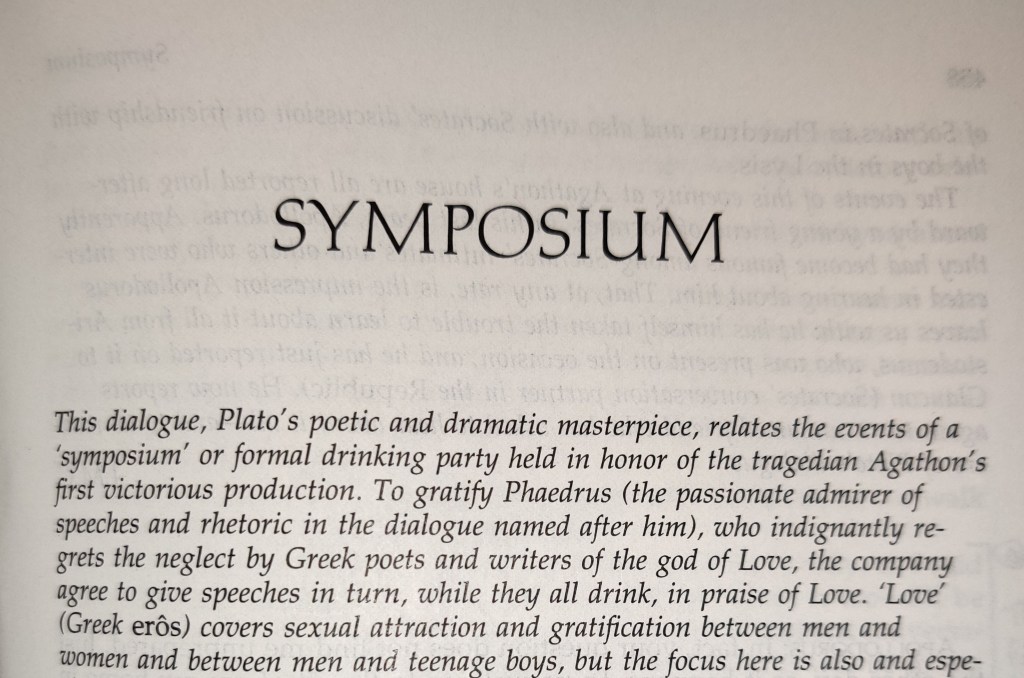
In preparation for my upcoming book club meeting, I’ve been reading through our current selection, Plato’s Symposium. While on Friday I chuckled at a little dialogue I’ve started with myself as a reader over time, I stumbled across a very interesting footnote that I wanted to share.
23. The word can be translated also as “temperance” and, most literally, “sound-mindedness.” (Plato and Aristotle generally contrast sophrosune as a virtue with self-control: the person with sophrosune is naturally well-tempered in every way and so does not need to control himself, or hold himself back.) From: Plato: Complete Works, edited by John M. Cooper (Hackett) p479.
I love learning about words in foreign languages that don’t have an exact translation into English. The great thing about these words is that is serves as a worldview expanding device that adds to the filters we use to engage with the world. Sophrosune (or sophrosyne as I later learned from Wikipedia) is often translated to mean temperance or self-control. But as this footnote discusses, the world has an added element that sets it apart from self-control.
It carries an added moral character dimension that describes a certain kind of disposition. Implied in the idea of self-control is an element of instability – the self-control is needed to push against some felt desire or want. Were the desire absent, there would be no need for self-control. We don’t think of a person who is not thirsty as exercising self-control because they are not drinking water. Self-control would instead apply to the person who is actively thirsty but must resist imbibing for some reason. There is a force of will that is being applied against a desire to tamp it down.
Thirst for water might be a poor example here since water is necessary for life. Instead, we can think of the addict who is fighting an impulse to consume something they seek to abstain from. When they fight against the impulse, they can be said to be exercising self-control.
By contrast, sophrosune describes a moral quality of a person who is, in some sense, harmonious in their inner life. They don’t have the cravings that create impulses that require self-control. Instead of fighting cravings, as in the case of the addict, they may choose to engage or not engage in an activity without any internal pull towards it.
Whether this is a quality that is possible to attain, I cannot say. But it was an interesting word to learn about as separate from what one typically thinks about when pondering self-control and temperance.
Note – this is an experimental posting format. I’ve thought about increasing the number of posts I commit to per week, but I don’t want to add unnecessary work if I’m not willing to stick it out. Let’s be honest: sometimes it’s really hard to get a single post out each Monday that I’m satisfied with, so increasing my posting frequency just to for the sake of increasing my output is a terrible idea. I will run a short experiment to see how easy it is for me to get out a Friday Round-up for the next month. If the experiment goes well, I’ll consider making it a part of the regular rotation. You can find the first round-up post here from April 24th.
Have you ever noticed the tendency that when you’re thinking about a topic, you seem to notice it everywhere? I first became aware of its phenomenology back in my university days, where stuff that I was learning in my lectures seemingly popped up randomly in my non-class time. Turns out, there is a word for that feeling – the Baader-Meinhof phenomenon, also known as the frequency bias. It’s why you start to see your car’s model everywhere after buying one. I bring this up because today’s articles are all loosely connected with scientific literacy in the digital age (especially as it relates to COVID). The more I read about thoughts concerning how to understand research about the pandemic, the more content I noticed about the topic of scientific literacy in general. This might be the phenomenon/my bias at play, or maybe the algorithms that govern my feeds are really in tune with my concerns.
Here is my round-up list for the week ending on May 1st:
My round-up for the week started with this short article that was open in one of my browser tabs since last week. There is a lot of information floating around in our respective feeds, and most of it can charitably be called inconclusive (and some of it is just bad or false). We’ve suddenly all become “experts” in epidemiology over the last month, and I want to remind myself that just because I think I’m smart, doesn’t mean I have the context or experience to understand what I’m reading. So, this article kicked off some light reflection on scientific and data literacy in our media landscape.
This next piece pairs nicely with our first link, and includes reporting and discussion of recent flair ups on Twitter criticizing recent studies. Absent of the pressure being applied by the pandemic, what this article describes is something that normally takes place within academic circles – experts putting out positions that are critiqued by their peers (sometimes respectfully, sometimes rudely). Because of the toll the pandemic is exacting on us, these disagreements are likely more heated as a result, which are taken to be more personally driven. I link this article not to cast doubt over the validity of the scientific and medical communities. Rather, I am linking to this article to highlight that our experts are having difficulty grappling with this issues, so it’s foolish to think us lay-people will fare any better in understanding the situation. Therefore, it’s incumbent on journalists to be extra-vigilant in how they report data, and to question the data they encounter.
The Ars Technica piece raises a lot of complex things that we should be mindful of. There are questions such as:
Who should we count as authoritative sources of information?
How do we determine what an authoritative source of information should be?
What role does a platform like Twitter play in disseminating research beyond the scientific community?
How much legitimacy should we place on Twitter conversations vs. gated communities and publication arbiters?
How do we detangle policy decisions, economics, political motives, and egos?
How much editorial enforcement should we expect or demand from our news sources?
There are lots of really smart people who think about these things, and I’m lucky to study at their feet via social media and the internet. But even if we settle on answers to some of the above questions, we also have to engage with a fundamental truth about our human condition – we are really bad at sorting good information from bad when dealing at scale. Thankfully, there are people like Claire Wardle, and her organization FirstDraft that are working on this problem, because if we can’t fix the signal to noise ratio, having smart people fixing important problem won’t amount to much if we either don’t know about it, or can’t action on their findings. I was put onto Claire Wardle’s work through an email newsletter from the Centre for Humane Technology this week, where they highlighted a recent podcast episode with her (I haven’t had time to listen to it as of writing, but I have it queued up: Episode 14: Stranger Than Fiction).
All of this discussion about knowledge and our sources of it brought me back to grad school and a course I took on the philosophy of Harry Frankfurt, specifically his 1986 essay On Bullshit. Frankfurt, seemingly prescient of our times, distinguishes between liars and bullshitters. A liar knows a truth and seeks to hide the truth from the person they are trying to persuade. Bullshit as a speech act, on the other hand, only seeks to persuade, irrespective of truth. If you don’t want to read the essay linked above, here is the Wikipedia page.
I hope you find something of value in this week’s round-up and that you are keeping safe.
I normally post on Monday’s, but today is the 4 year anniversary of my first post on this site (tomorrow if the 4 year anniversary of my substantive first post, but let’s batch them into this post for funsies).
With everything that’s going on, I wanted to pause for a moment to commemorate my “Hello World” moment on this blog. Even though I still don’t have any concrete plans for this site, I’m still going strong by committing myself to consistently putting in the work. If I’ve learned anything in 4 years, it’s less about the business plan and more about putting in the work. In this case, it’s better to focus on quantity, rather than waiting for the quality to start.
I apologize for the late post this week. I had a few ideas kicking around in my head, but given the updates, I felt this ramble-post was a better attempt to capture some of the zeitgeist, rather than my usual attempt to feign some sort of authority on whatever it is I’m trying to accomplish on this site. Maybe I’ll rant another time about the scummy people who are profiteering through the COVID-19 scare.
Most of the information circulating concerns how an individual can help protect themselves from contracting the virus. Obviously this information is spread around not to protect any one individual, but because it’s the government’s attempt to flatten the curve and ease the economic and public health downsides to the current behaviours of people, from clogging up emergency rooms with sniffles to wholesale runs on items in the grocery store.
I’m not entirely sure what I should write about this week. It’s pretty hard to form a coherent thought when the majority of my bandwidth is occupied with keeping up with the shifting narrative around what’s going on. Thanks to technology, information (or misinformation) spreads quickly, and we are seeing multiple updates per day as a result. At my place of employment, they took the unprecedented step of shutting down face-to-face curriculum delivery. Unlike the faculty strike from Fall 2017, the College is working to keep the educational process running. While it may be that in the School of Engineering it can be impossible to replicate lab or shop time, the majority of faculty are working hard to translate their delivery to an online format.
So far, our employer has done a good job, in my opinion, with taking prudent steps to a.) keep people meaningfully occupied in their work so that no one has to lose their salary, and b.) do its part to stop the spread of the virus. I’m not saying that things couldn’t be better, but given the circumstances they’ve done a good job.
I’ve been thinking about the purpose of social isolation as a pandemic response. As I said above, the point is less about protecting oneself and is instead about protecting hospitals from being overwhelmed. If we’ve learned anything from countries around the world that are going through the worst right now, it’s that it becomes impossible to protect our vulnerable when there is a shortage of hospital beds. Hospitals are having to triage patients to focus on saving those who can be saved, who have the highest chances of recovering.
It is because of this that I’ve been thinking about the concept of a “brother’s keeper.” It’s not necessarily enough that governments or citizens remain mindful about the well-being of our vulnerable populations. Oftentimes while we are focusing on immediate dangers before us, we tend to not anticipate higher-order consequences of our policies or decisions.
Closing schools is great in theory – children are rabid spreaders of contagions, whether they are actually symptomatic or not, which means they infect their parents (some of whom are front line medical workers). But when we close schools, you have second order consequences that parents struggle with childcare, or children living in poverty lose access to food that is supplied at school.
When you close borders, you stop carriers of the virus from entry. But it also means that our international students (who are in some cases being vacated from post-secondary residences as school’s work to limit social contact among students) have no where to go. Airports are limiting international travel and the cost of purchasing tickets are skyrocketing. By them being in a foreign country, these students are vulnerable and caught in difficult positions on how to keep themselves safe.
By shutting down public spaces, you are helping to keep people from accidentally infecting each other. But when you close down businesses such as restaurants, you cut off people from the economic means they need to support themselves. Sure, the government is offering assistance to persons and businesses alike, but that will provide little comfort to people who can neither travel for groceries, nor pay for the supplies they need.
And let’s not forget what panic purchasing is doing to our supply chain – leaving store shelves cleared out of supplies, which means folks like the elderly are left without.
The hardest part I’m finding in all of this is the feeling of being powerless. You can’t control other people, and so you are forced to anticipate their moves to ensure you won’t be left without. But it’s this kind of thinking that leads to more drastic measures being taken. The virus also makes you feel powerless because you feel like an invisible stalker is coming for you – you don’t know who will be the final vector that leads to you. And you aren’t totally sure if our ritualistic hand-washing and hand-sanitizing is actually keeping us safe, or merely providing comfort. You can’t predict the future, and you can’t be sure you’re doing everything you can; you always feel like there is more you could be doing.
This reminds me of the story of the tinfoil house and pink dragons. A person covers their house in tinfoil, and when asked about it they say it keeps the pink dragons away. When asked if it works, the person shrugs and says “I don’t know, but I haven’t been attacked yet.” Of course, asking “if it works” is the wrong question here because there are no pink dragons. But as Taleb tells us in his book about Black Swans, there are always those highly unprobable events with massive downsides that we don’t see coming. Public policy and budgets are created to deal with clear and present dangers, and those policies and budgets are eroded when it’s felt that the money is not being allocated optimally. Therefore, you run into problems where you are never sure if the resources you spend to prevent something actually works – it’s really hard to prove causality in something that never happens.
Instead, we often are left to scramble to try and get ahead of trouble when we are already flat-footed, which means that our vision narrows as we focus on the fires in front of us that needs to be put out. Fighting fires is great (even heroic at times), but often the measures we take to deal with crisis have unanticipated second-order consequences that become difficult to deal with.
I’m not sure how to deal with this, but it makes me wonder about being my brother’s keeper, and what I can do to protect them.
This week, I want to pause to celebrate some of my friends who I find really inspiring. I don’t get a chance to see these folks much in person anymore as we’ve all moved on with our lives. They came into my life through various avenues – a childhood friend (C), high school (Sh), community work (K), and two I met through working at the bar (Sa and Y) – and yet thanks to technology and one of the few positive benefits of social media, I get to be a passive viewer as they live out their lives.
The concept of fitness is fraught with some terrible associations about what it means to be or look healthy. I don’t look to these friends because they embody some ideal of fitness, but for a more important reason. I admire them because they are consistent and dedicated, which is something I struggle with from time to time. Every day that I scroll through my feed, one or more of my friends are sharing the fitness part of their lives by showing up and putting in their time towards their goals.
“C”, for instance, is killer with her cardio and puts my runs to shame. “Sh” is in the gym almost every morning before I am conscious enough to roll out of bed. “K” has logged so many days of running on the trail, riding on her bike, and hours on the mat that she could stop all activity and I doubt I’d still catch up in my lifetime. “Y” is an absolute beast of a man and can deadlift two of me, but is one of the nicest guys I’ve had the privilege of working with. And “Sa,” who I’ve been fortunate to train with, is there, everyday, training his students in athletics and the martial arts.
These aren’t perfect people. Each of them has had their ups and downs, and has struggled in battle with their own personal demons. It’s not the “fitness” that makes me proud of their work, it’s because they inspire me to show up and not get discouraged.
To my friends – I see you. I see all of your hard work. I appreciate how honest you are. And I applaud that you all seem to do what you do for good, noble reasons. You aren’t vain and aren’t doing it for the attention. You are doing it for you, to live your best lives. To challenge yourself and to focus your energies.
In the ethics of conducting research with human participants, there is the concept of “informed consent.” At its foundation, informed consent is the process of communicating a sufficient amount of information about a research project to a prospective participant so that the prospect is able to decide whether they want to consent to being a participant in a study. There is a lot of nuance that can go into selecting what gets communicated because you have a lot of necessary information that needs be shared but you don’t want to share so much information that the participant is overwhelmed by the volume of information.
When I review research ethics applications, I am privy to a lot of information about the project. In the course of reviewing the project, I have to make judgement calls about what should be included in the informed consent letters that participants read. It would be counter-productive if the participant had to read all the documentation I am required to read when reviewing an application, so we use certain best practices and principles to decide what information gets communicated as a standard, and what is left in the application.
There is, of course, some challenges that we must confront in this process. As I said, when reviewing a research project, you have to balance the needs of the project with the needs of a participant. All research, by virtue of exploring the unknown, carries with it an element of risk. When you involve humans in a research project, you are asking them to shoulder some of the risk in the name of progress. Our job as researchers and reviewers is to anticpate risk and mitigate it where possible. We are stewards of the well-being of the participants, and we use our experience and expertise to protect the particpants.
This means that one challenge is communicating risk to participants and helping them understand the implications of the risks of the research. In many instances, the participants are well aware of risks posed to their normal, every-day lived experiences and how the research intersects with it. The patient living with a medical condition is aware of their pain or suffering, and can appreciate risks associated with medical interventions. A person living in poverty is acutely aware of what it means to live in poverty, and understands that discussing their experiences can be psychologically and emotionally difficult. Our jobs (as reviewers and researchers) is to ensure that the participant is made aware of the risk, mitigate it as much as we can without compromising the integrity of the research program, and to contextualize the risk so that the participant can make choices for themselves without coercion.
The concept of informed consent is hugely important, arguably the most important component of research projects involving humans as participants. It is an acknowledgement that people are ends in themselves, not a means to furthering knowledge or the researcher’s private or professional goals. Indeed, without a respect for the autonomy of the participant, research projects are likely to not be moved into action even when research funds are available.
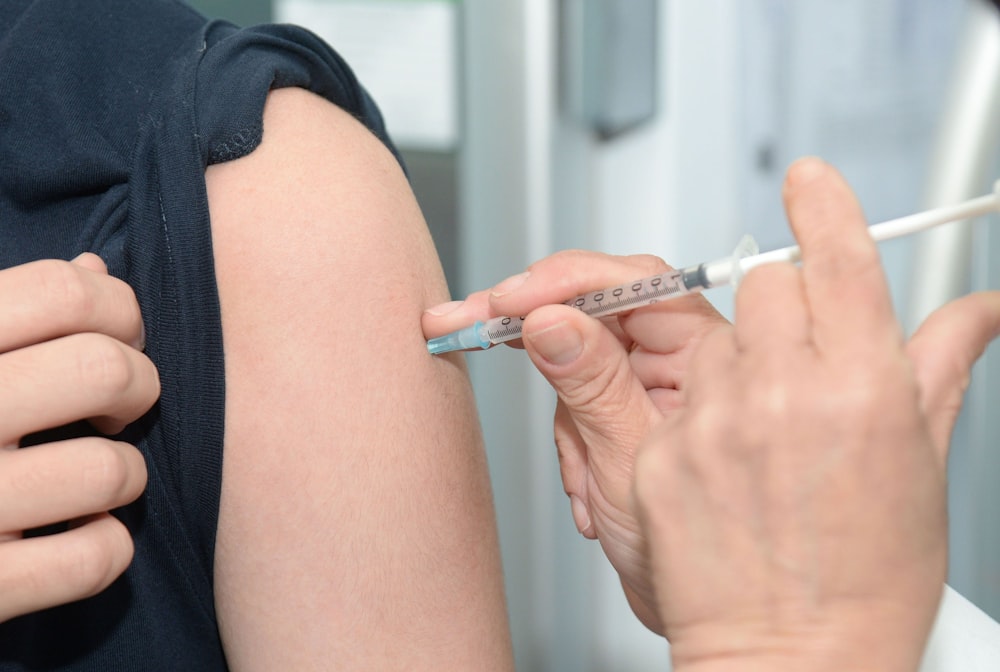
All of this is a preamble to discuss the anger I felt when I read a recent CBC report on how anti-vaxxer advocates are using the concept of informed consent as a dog-whistle to their adherents, and are using informed consent as a way of both furthering their awareness and raising money with well-meaning politicians and the public.
In fairness, I can see the chain of reasoning at play that tries to connect informed consent with concerns about vaccines. For instance, in the article there is a photo of supporters of a vaccine choice group with a banner that reads “If there is a risk there must be a choice.” This sentiment is entirely consistent with the principles of informed consent. The problem with this application is that the risk is not being communicated and understood properly within context, and instead fear, misinformation, and conspiracies that lead to paternalistic paranoia are short-cutting the conversation. Further, the incentive structures that are borne out of the economics of our medical system are doing little to address these fears. Because so little money is flowing from the government to the medical system, doctors are forced to maximize the number of patients they see in a day just to ensure enough money is coming into the practice to pay for space, equipment, staff, insurance, and supplies. Rather than seeking quality face-to-face time with a patient, doctors have to make a choice to limit patient time to just focus on a chief complaint and address questions as efficiently as they can.
I don’t think it’s all the doctor’s fault either. I think we as patients, or more specifically we as a society, have a terrible grasp of medical and scientific literacy. I don’t have a strong opinion about what the root cause of this is, but some combination of underfunded schooling, rapid technological innovation, growing income disparities, entertainment pacification, a lack of mental health support, increasingly complex life systems, and precarious economic living in the average household are all influencing the poor grasp people have about what makes the world around us work. Rather than being the case that we are hyper-specialized in our worldviews, I think it’s the case that “life” is too complex for the average person to invest time into understanding. Let’s be clear, it is not the case that the average person isn’t smart enough to grasp it (even if sometimes my frustration with people leads me to this conclusion). Instead, I think that people are pulled in so many directions that they don’t have the time or economic freedom to deal with things that don’t immediately pay off for them. People are so fixated on just making it day-to-day and trying not to fall behind that it becomes a luxury to have the leisure time to devote to these kinds of activities.
What this results in, then, is the perfect storm of ignorance and fear that congeals into a tribal call to rebel against the paternalism of a system that is ironically also too cash-strapped to allow the flexibility to educate people on the nature of risk. People don’t have the time and ability to educate themselves, and doctors don’t have the time to share their experiences and knowledge with their patients.
Within this gap, opportunistic charlatans and sophists thrive to capitalize on people’s fears to push their own agendas. This is why bad actors like the disgraced former doctor Andrew Wakefield and movement leader Del Bigtree are able to charge fees to profit from speaking at anti-vaccination events. I’m not saying a person who spreads a message should do it for free. What I am saying is that they are able to turn a personal profit by preying on people’s fears while doing little to investigate the thing they claim to worry about.
We must find a way to communicate two simultaneous truths:
There is an inherent risk in everything; bad stuff happens to good people, and you can do everything right and still lose. Nevertheless, the risks involved when it comes to vaccines are worth shouldering because of the net good that comes from it and the risks themselves are vanishingly small.
In the 22 years since Wakefield published his study and the 16 years since its retraction, there has not been any peer-reviewed credible evidence that supports many of the claims given by the anti-vaxx movement. The movement is predicated on fears people have of the probability of something bad happening to them or their loved ones. The motivation behind the fear is legitimate, but the object of the fear is a bogeyman that hides behind whatever shadows it can find as more and more light is cast on this area.
The anti-vaxx ideology knows it cannot address head-on the mounting scientific evidence that discredits its premise, and so it instead focuses on a different avenue of attack.
This bears repeating: the anti-vaxx ideology cannot debate or refute the scientific evidence about vaccination. We know vaccines work. We know how they work; we know why they work. We understand the probabilities of the risk; we know the type and magnitudes of the risks. These things are known to us. Anti-vaxx belief is a deliberate falsehood when it denies any of what we know.
Because of this, the anti-vaxx ideology is shifting to speak to those deep fears we have of the unknown, and instead of dealing with the facts of medicine, it is sinking its claws into the deep desire we have for freedom and autonomy. It shortcuts our rational experience and appeals to the fears evolution has given us to grapples with the unknown – the knee-jerk rejection of things we don’t understand.
Informed consent as a concept is the latest victim of anti-vaxx’s contagion. It’s seeping in and corrupting it from the inside, turning the very principle of self-directed autonomy against a person’s self-interest. It doesn’t cast doubt by calling the science into question. Instead, it casts doubt precisely because the average person doesn’t understand the science, and so that unknown becomes scary to us and we reject or avoid what brings us fear.
Anti-vaxx ideology is a memetic virus. In our society’s wealth, luxury, and tech-enabled friction-free lives, we have allowed this dangerous idea to gain strength. By ignoring it and ridiculing it until now, we have come to a point where it threatens to disrupt social homeostasis. Unless we do something to change the conditions we find ourselves in – unless we are willing to do the hard work – I fear that this ideology is going to replicate at a rate that we can’t stop. It will reach a critical mass, infect enough people, and threaten to undo all the hard work achieved in the past. We have already seen the evidence of this as once-eradicated diseases are popping up in our communities. The immunity and innoculations have weakened. Let’s hope those walls don’t break.





 A Paramedic's Notebook