Increasing Vocabulary To Understand Experience

On a recent episode of the podcast Owls at Dawn, one of the cohosts shared the tragic news of a loss in the family due to suicide. He discusses some of his family history and his relationship with faith as he takes time to publicly process some of his grief. It’s a haunting and sad episode. I appreciate that he shared his grief and I hope he and his family can recover from the loss.

One section of his thoughts veered into an idea that I wanted to capture here. He discusses the feeling one has coming out of a crisis of faith (in the context of the episode, it was largely about religion, but this could equally apply to a crisis of identity as well). When one feels themselves breaking away from faith, it sounds as if it creates a vacuum of epistemic knowledge about how one engages with or defines oneself against the world. Austin, the host, notes that if you lack a kind of vocabulary to apply meaning and labels to your worldview, it can create a kind of despair because of the anxiety that comes with not knowing how to relate to ones feelings.

This reminds me of those lists you see floating around the internet of words to describe feelings in other languages that don’t have analogues in the English language. I always enjoy reading these lists and seeing if I can recall a time I’ve felt the emotion being described. I feel a sense of excitement when I discover a label to apply to how I feel, but more importantly than that, it gives me an epistemic awareness of the feeling so I can identify and name it in the future if it happens again.

What happened to Austin’s family member was tragic, and I don’t know if having a vocabulary to describe the emotions he was feeling would have helped bring him comfort. I think there is a lesson to be learned here about the importance of increasing one’s own vocabulary of the lived-experiences of others so that you can either a.) have a greater sense of empathy to the inner lives of people different from yourself, or b.) be more sensitive to your own emotional states to help you make sense of the world.

By naming the feeling, you can come to understand it. And by understanding it, you can work towards addressing, integrating it, or enriching your identity and sense of self.

Austin, I’m sorry for your loss.

Stay Awesome,

Ryan
1000 Days of Language Learning

On the weekend, I hit my 1,000th consecutive day of language lessons in Duolingo for German.

One hundred days ago, I gave an update and reflection on my experiences at the 900th consecutive day of learning German. I noted that a large part of the competency I felt was attributable to pattern-matching, and I feel that is largely still the case. I am reasonably adept at visual pattern-matching based on context when reading the language prompts. I am less adept at auditory matching due to me often using the app with the sound off. I can’t comment on my skill at writing, though I pair that with my skills in speaking, which is hard to judge because I’ve had so little practice at speed. There are a few prompts from the app to attempt speech, but outside of my trip to Germany in 2019, I’ve had no practical exposure to speaking German in a way that provides immediate feedback.

There is one other note in my use of the app over the last few hundred days that I would like to share. Once I reached the end of the new lessons in the app (that is, I completed all language levels and earned a level ranking at least once) I stopped most of the novel practice and switched goals to improve my ranking on the weekly language league board. This changed my interaction with the app dramatically – I optimized for experience point accumulation rather than language mastery in order to earn a high enough ranking on the language board to progress through the various levels until I sat in the diamond league for a few weeks. I will fully admit that this was not language learning but instead gaming the system. I would only practice low-level lessons where I maxed out my level to earn experience point (XP) bonuses for the lesson. When the app was updated and new (more difficult) lessons were rolled out, I switched to completing the same language story each day to reliably hit my XP requirements. Eventually, after sitting in the diamond league for many weeks, I felt no motivation to maximize my weekly XP grind, and so I allowed my league ranking to fall, and instead focused on the bare minimum maintenance of maintaining my streak.

Obviously, this is not language learning as was intended by the development of the app. Thus remains a question: if I’m not intending on using the platform as it was intended, is there any reason to keep the streak? The short answer is yes – I’ve built up enough of a pride in the raw number that to break the streak I’ve built over the last 1000 days (almost three years of consistent work) would make me feel terrible. So I plan to keep plugging away at the streak for the time being.

But I do feel it’s important to return to the intent of the app – to practice the skills and develop better fluency in the German language. I’ll keep with German for now so I can continue to impress my wife’s family overseas, though I should probably also devote time to learning French as it’s an official language of my country.

If my streak were to end today, I would feel happy with what I’ve accomplished. Even if I haven’t reached a point of truly feeling conversational, I had learned enough through the app to be able to contribute somewhat meaningfully when I was speaking with family overseas. That alone justified the investment of time I made.

Stay Awesome,

Ryan

Material Possessions and Perspective

While walking the dog the other day, I seemed to have dropped the case for my wireless ear buds. It was night time, I was listening to a podcast, it was cold and a little slippery, and somewhere along the short route the case appears to have fallen out of my sweater pocket. It might have been while I was pulling a flashlight out to pick up after my dog, or it could have been one of the times I pulled my phone out along the route. After discovering the missing case (the case is important because it’s the only way to a.) turn the buds off when not in use, and b.) to charge the buds after use), I dropped the dog off at home and re-walked the route twice to see if I dropped it somewhere on the sidewalk or in the snow. Sadly, I couldn’t find it.

I’m embarrassed to say that losing the case majorly bummed me out that night. I tried to remind myself that it’s only a thing (albeit a somewhat expensive thing) and that I shouldn’t take its loss so hard. Our book club recently finished reading Meditations by the stoic emperor of Rome, Marcus Aurelius, and I admonished myself for feeling sad over the missing possession – how utterly unstoic I was at allowing myself to be affected by a trivial event. I even confessed to my lovely wife the next day that I felt conflicted over feeling bad for losing the case AND feeling bad about allowing myself to feel bad (my wife is awesome – she reminded me to give myself permission to feel bad about something I was using on a near-daily basis since I purchased the headphones mid-last year).

After some quick research, I found that I could purchase an inexpensive off-brand case that will provide charging capacity to the earbuds so that I don’t have to discard them. The unit thankfully works as I had hoped and I’ve been reunited with my bluetooth audio experience once more.

It’s such a silly thing to write about; I almost feel a sense of embarrassment in talking about the experience because it’s a perfect example of a “first world problem.” But I thought I’d also document the self-reflection that happened as a reminder that these kinds of silly things do affect me, and that I’m not immune to these kinds of material losses. Yes, it’s just a thing and I shouldn’t allow it to occupy my thoughts so readily (or “rent-free” as is now the apt description), but I should also remember to feel free to live with these feelings. It might just be an object, but it’s also a nice tool that I’ve used to make my life just a little happier during the pandemic. And I’m allowed to feel bad at the economics of it – money is a representation of the time I spent exchanging my labour for, so losing the item and having to replace it is a further loss of my time.

I’m certainly not perfect and will endeavor to keep a level head about these things. I just hope that if I discover it when the snow melts, I don’t treat myself too harshly.

Stay Awesome,

Ryan

Nerd Time Nostalgia

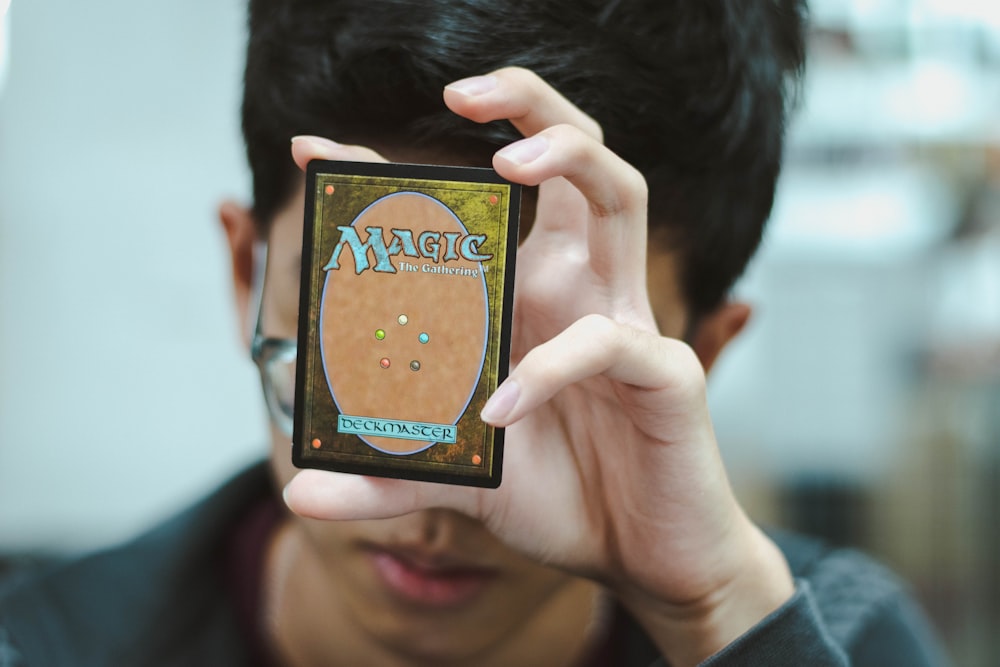
boy holding Magic: The Gathering trading card
Photo by Wayne Low on Unsplash

Generally speaking, I’ve handled the social isolation during the pandemic well. Technology has allowed me to keep in contact with friends and family, though I admit it’s a poor substitute for quality in-person time. And I am fortunate to have family that has kept their bubbles small, so we have the occasional visit to help alleviate parenting our infant son. Most importantly, I’m very fortunate to have a partner who I enjoy spending time with, which has made weathering the time at home much easier.

Recently, though, I’ve been finding myself longing for the good ol’ days where I’d get together with friends for nerd stuff like board/card games, video games, or just getting together for the sake of company. I’m getting wistful for a time, almost ten years ago, where I’d walk down to a friend’s house on a weekend, spend the day doing laundry at his house and watching him play video games all night (and I’d eventually walk home around two in the morning). It’s not that he preferred to play solo, or in any way excluded me from play, but I just enjoyed relaxing and chatting with something to watch on the screen. It was Twitch before Twitch was a common thing.

I miss getting together for card tournaments on weekends, whether it was at the game shop for a Magic: The Gathering release or at a friend’s house for a fun draft tournament. With a few packs of cards and a couple boxes of pizza, we’d whittle a whole day away laughing and cursing our poor card draw.

A colleague at work just announced that he’s accepted a job 5-hours away and will be resigning this week. He noted to us that his decision came about as a result of the pandemic – in reflecting on the last year, he realized he wanted to live closer to his family and home town. I will miss him terribly and I wish him all the success he can find in his new job. His reasoning for finding a new job resonated with me – as I reflect on the pandemic, what are the values that have been highlighted to me in my time disengaged from our larger society and culture?

Yes, family is important. But I’ve learned to appreciate the time spent with my friends. Whether it was games, music, or getting together to watch the Super Bowl (which I don’t care about, I just like hanging with my friends), I see the value in building community and creating shared history with people who matter to you. I’ve found little ways of connecting with friends while living at home, but until life allows us to mingle unfettered, I want to be more intentional with how I foster connection with friends.

Stay Awesome,

Ryan

Meaningful Actions

Over the weekend, I attended a virtual board meeting for engineering education. One of the reports pertained to a working-group’s findings and recommended actions to support the aims the 30 by 30 Campaign to address low representation of women in the engineering profession. This is a great initiative and I’m looking at ways we can improve our own processes to support women in STEM in our programs at the college. There was a comment that made me think, and it’s worth considering.

One of the board members expressed support for the report, but also commented that she had provided input as early as the 1990’s on this very initiative. Her comment was not meant to cast doubt over the process, but instead highlighted two important things – that this is not a new issue, and that many people have tried to make sweeping changes for the profession, which clearly hasn’t been entirely successful. Her advice was to be cautious about taking on too much scope with the recommendations, and instead to support a “divide and conquer” strategy for making targeted, meaningful actions to promote change.

I don’t hold any illusions that we will solve systemic issues overnight. If I’ve learned anything this past year, it’s that my hopes for reform are likely to fail and that instead of refinement, we should be aiming at transformative changes.

There is also another tension – on some level, this line of thinking suggests a teleological progression of progress for society and culture. I want to think that our culture is aiming at progress (“the arc of the moral universe is long, but it bends towards justice” is a powerful vision to work towards), but a skeptical voice reminds me that, like our misunderstanding of Darwinian evolution, there is nothing inherent in the progress of change that aims towards a higher, final form. A kind of defeatism can creep in when one thinks that meaningful actions do not contribute towards progress, but instead are just the spinning of our collective wheels.

I reject this defeatist view and want to aim towards a higher vision. I grant that the universe is largely amoral and unconcerned with our progress. So, instead, we must clearly define our values and principles, and take actions towards achieving these ends. The actions are neither good nor bad in an absolute sense. Rather, we mark progress with how close we come to realizing the values we want to see manifested in our lives. Meaningful actions are measured not against morality, but instead on efficacy for the outcomes. There are trade-offs and consequences along the way, and so we must be prudent. Both history and mythology have given us plenty of examples of why hubris should be avoided.

I don’t have a good answer on what meaningful actions we ought to settle on as part of our agenda. As noted, this issue has been discussed far longer than my tenure in the employment game. I’ll defer to folks much smarter than I, and try to learn from their efforts to do my part.

Stay Awesome,

Ryan

Supporting Community

Since the birth of our son, my wife has joined an online mom’s group in our town. Among the various posts asking for advice or to share items for sale, there periodically comes posts from the admin notifying the group of a request for aid. Families who find themselves in a financial pinch can contact the admin to anonymously ask for support.

The other day, my wife saw one of these posts, and in reflecting on how expensive life can be with our newborn, she felt instantly connected with the call for help. The pandemic has been hard on most people, but we feel we’ve been very fortunate to have our jobs reasonably secure this last year. While I have lost two side jobs over the course of the pandemic, my main source of income allows us to be fairly comfortable.

So, without much deliberation, we picked up some gift cards for the grocery store, loaded it with funds to help with groceries for a week, and offered them to the administrator. This is on top of the automatic monthly charitable contributions I started in November.

In the moment, this had me reflecting on what it means to be a part of a community. Setting aside questions about the role of government and the problems caused by exploitative capitalism, there is a strong moral case to be found in looking out for our community neighbours. We want our communities to be vibrant and healthy. Hyper-individualism may maximize utility for you and your family unit, but I think that outlook discounts the intangible benefits we see when we pitch in to help people feel safe, secure, and taken care of. Take your pick of moral argument:

  • Deontological – we have a moral imperative to help those who experience suffering due to a lack of resources.
  • Utilitarian – the morally right thing to do is to use surplus utility to offset the suffering experienced by others.
  • Feminism & Intersectional Ethics – redistributing wealth, even in the short-term, helps to buttress against the effects of systems that oppress people. This also applies to those who by luck or happenstance are experiencing suffering.
  • Rights-based & Social Contract – people have a right to security of person, and while this right is usually handled by the state, the community shares some of this responsibility as part of the social contract; if you want to derive the benefits of living in a community, you ought to be willing to support and contribute.
  • Virtue ethics – charity and magnanimity are virtues of the ethical person; giving neither too little, nor to excess.
  • Theory of Justice – if I were not in a privileged position to feel safe and secure, I would hope that my community could help me. It is better to work to lift all life conditions and raise the floor of suffering.

In truth, I often feel like a terrible neighbour because of my social habits. I feel awkward meeting new people and making small talk, so I’ll wave at neighbours at a distance instead of striking up conversation. Over a year into living in this house and we just learned the last names of one of our neighbours (who have been fantastic the entire time we’ve lived here – dropping off gifts for our son a few times since he’s been born). Where I lack the social grace to learn about the lives of my neighbours in a meaningful way, I hope I can make up a little bit of good will that comes from answering a call from a stranger online.

Stay Awesome,

Ryan

Falling Through My Systems

This late post is a nice springboard into something I’ve been thinking about throughout the pandemic. Pre-pandemic, when I was still commuting to work, I had a fair number of systems to help me get stuff done. My commute to work helped me film daily vlogs, listen to books, and think about big ideas for blog posts and Stay Awesome vlogs. When we started working from home, those outputs began fading. Now, I feel behind on my blog posts, I *maybe* film a personal vlog once every two weeks, and Stay Awesome has been put on an indefinite hiatus until Jim and I get some extra headspace bandwidth to devote attention to it.

I was also known for my notebook. I carried a Field Notes notebook everywhere with me, and was constantly scribbling notes into it. Then, around 4 months into working from home, I found myself abandoning the monthly notebook and appropriating a disused larger notebook to jot down tasks, lists, and random thoughts. The Field Notes book was small, portable, convenient, and had many systems to track things I found important, such as exercise, health, habits, etc. Now, my notebook is largely devoted to task management, because when every day feels the same, you can quickly find yourself several weeks down the line having nothing to show for your time.

In a sense, I’ve fallen through my systems. The various “systems” I implemented succumbed to inertia when I both lost the cues that triggered them and lost the will to keep putting effort in the system to power the flywheel, and friction has ground them to a halt.

James Clear has a pithy phrase, that “you do not rise to the level of your goals. You fall to the level of your systems.” This is a riff on an older Greek observation from Archilochus: “We don’t rise to the level of our expectations, we fall to the level of our training.”

Regardless, the question I have is whether I truly had a system if it was a fair-weather operation that wasn’t robust enough to adapt to these kinds of radical changes. When I lost the external liminal cues that came from commuting to work, or from even leaving the house on a regular basis, the things I called systems disappeared as well. Is it charitable to call these things “systems”? In virtue ethics, you aren’t said to possess a virtue if you only exercise it some of the time – you aren’t considered courageous if you don’t act courageously in a moment that requires it. Does this apply to systems as well?

Part of me says yes, but that’s not very helpful. Perhaps I should reframe my thinking and consider the quality and attributes of the system. Borrowing from Taleb, some systems are fragile, some are robust, and I suppose some are antifragile. I understand antifragile systems in the context of biology (e.g. stressing muscles can allow them to get stronger over time), though as of writing I can’t think of any productivity system that get stronger under pressure.

Regardless, it’s clear that much of my productivity was built upon what can now be labelled as fragile systems. They worked under certain conditions, but outside of that narrower band they are less able to withstand fluctuations or variance. In my reflections over the last few months, I’ve been seeing the value in understanding the causes of system failures so that I can create new processes to help me in work and life. For now, the first step is to acknowledge that I’ve fallen through my systems, and having acknowledged this, I can stop spinning my wheels and start seeking traction.

Stay Awesome,

Ryan

WFH: Struggles in Focus

In March, I will have been working from home (WFH) for a full year. You’d think that with my experience being employed pre-pandemic, I’d know how to manage my time and motivate myself. But, I have to be honest that working from home has had its challenges. Every time I think I’ve got it figured out, I somehow end up reverting back to a less productive mode of work.

You’d also think that after working from home for a year that I’d have a handle on the situation, yet there, too, I’m finding it difficult. I could attribute it to having a child and the challenges that come with that level of life adjustment, but I feel that would be a disingenuous excuse for my poor integrity.

I know I’m not alone; many people are feeling this. In the beginning, the articles were about learning to draw boundaries in work/life balance. Then came the articles urging us to dress for the office, trying to capture the liminality inherent in a structured schedule. Then came the posts lamenting the late nights with alcohol and doom-scrolling. We all are feeling the anxiety of trying to remain in the present while our focus is pulled towards thoughts about a dimly lit uncertain future.

The best I can do is continue to experiment and see what sticks for me. At the moment I’m trying to be more intentional with my work calendar. I set up to three priorities for the week, block off time in my calendar to work, and spend the first moments at the beginning and the last moments at the end of the day to plan, reflect, plan, and review.

One thing I’m enjoying with this approach is that I’m having an ongoing dialogue with myself in my work calendar. At a high level, I’m leaving a paper-trail of my thoughts, and with that trail I can autopsy where I’m successful and why I fail. But in the day-to-day moments, voices from the past come to help my present understand itself, then I leave little notes for the future to pick things up after rest.

I’ll keep practicing this approach and write some comments in the future, if it sticks.

Stay Awesome,

Ryan

Gifting Books

I’ve longed for the day when I would be in a position in my life to gift people books. I don’t mean gifting people books for Christmas or their birthday, or even as a congratulatory token for their accomplishments. Instead, I mean an unprompted, unsolicited book to people I think would value the read. Where I can give a book because of how much I enjoyed the experience, and by giving it to others I hope to share that feeling.

I’ve finally found such a book. Last week, I finished Waubgeshig Rice’s novel, Moon of the Crusted Snow, a dystopian novel about an Indigenous community in Northern Ontario that gets cut-off from the rest of the Province. It’s dark, but also life-affirming; it felt like the perfect pandemic read, even though it was published two years ago.

Despite its themes and content, it was a wonderful book to read. As I noted in my Instagram post, the characters feel real and the narrative helped me feel as though I was walking among the community while the story unfolds. A commenter on the book noted that the story is very accessible for folks who are unfamiliar with reservation life of Indigenous peoples in Canada. Yet, the book doesn’t talk down to the reader – it’s infused with cultural references, history, and language that makes you work to understand it in places.

I have already gifted this book in audiobook format to one friend, and I have ordered two more copies for other friends. I am also excited to give this book as gifts because I feel it’s important to support Indigenous and other minority voices, and help amplify them so that we can enjoy more great art from these creators.

Stay Awesome,

Ryan