On a recent episode of the podcast Owls at Dawn, one of the cohosts shared the tragic news of a loss in the family due to suicide. He discusses some of his family history and his relationship with faith as he takes time to publicly process some of his grief. It’s a haunting and sad episode. I appreciate that he shared his grief and I hope he and his family can recover from the loss.
One section of his thoughts veered into an idea that I wanted to capture here. He discusses the feeling one has coming out of a crisis of faith (in the context of the episode, it was largely about religion, but this could equally apply to a crisis of identity as well). When one feels themselves breaking away from faith, it sounds as if it creates a vacuum of epistemic knowledge about how one engages with or defines oneself against the world. Austin, the host, notes that if you lack a kind of vocabulary to apply meaning and labels to your worldview, it can create a kind of despair because of the anxiety that comes with not knowing how to relate to ones feelings.
This reminds me of those lists you see floating around the internet of words to describe feelings in other languages that don’t have analogues in the English language. I always enjoy reading these lists and seeing if I can recall a time I’ve felt the emotion being described. I feel a sense of excitement when I discover a label to apply to how I feel, but more importantly than that, it gives me an epistemic awareness of the feeling so I can identify and name it in the future if it happens again.
What happened to Austin’s family member was tragic, and I don’t know if having a vocabulary to describe the emotions he was feeling would have helped bring him comfort. I think there is a lesson to be learned here about the importance of increasing one’s own vocabulary of the lived-experiences of others so that you can either a.) have a greater sense of empathy to the inner lives of people different from yourself, or b.) be more sensitive to your own emotional states to help you make sense of the world.
By naming the feeling, you can come to understand it. And by understanding it, you can work towards addressing, integrating it, or enriching your identity and sense of self.
One hundred days ago, I gave an update and reflection on my experiences at the 900th consecutive day of learning German. I noted that a large part of the competency I felt was attributable to pattern-matching, and I feel that is largely still the case. I am reasonably adept at visual pattern-matching based on context when reading the language prompts. I am less adept at auditory matching due to me often using the app with the sound off. I can’t comment on my skill at writing, though I pair that with my skills in speaking, which is hard to judge because I’ve had so little practice at speed. There are a few prompts from the app to attempt speech, but outside of my trip to Germany in 2019, I’ve had no practical exposure to speaking German in a way that provides immediate feedback.
There is one other note in my use of the app over the last few hundred days that I would like to share. Once I reached the end of the new lessons in the app (that is, I completed all language levels and earned a level ranking at least once) I stopped most of the novel practice and switched goals to improve my ranking on the weekly language league board. This changed my interaction with the app dramatically – I optimized for experience point accumulation rather than language mastery in order to earn a high enough ranking on the language board to progress through the various levels until I sat in the diamond league for a few weeks. I will fully admit that this was not language learning but instead gaming the system. I would only practice low-level lessons where I maxed out my level to earn experience point (XP) bonuses for the lesson. When the app was updated and new (more difficult) lessons were rolled out, I switched to completing the same language story each day to reliably hit my XP requirements. Eventually, after sitting in the diamond league for many weeks, I felt no motivation to maximize my weekly XP grind, and so I allowed my league ranking to fall, and instead focused on the bare minimum maintenance of maintaining my streak.
Obviously, this is not language learning as was intended by the development of the app. Thus remains a question: if I’m not intending on using the platform as it was intended, is there any reason to keep the streak? The short answer is yes – I’ve built up enough of a pride in the raw number that to break the streak I’ve built over the last 1000 days (almost three years of consistent work) would make me feel terrible. So I plan to keep plugging away at the streak for the time being.
But I do feel it’s important to return to the intent of the app – to practice the skills and develop better fluency in the German language. I’ll keep with German for now so I can continue to impress my wife’s family overseas, though I should probably also devote time to learning French as it’s an official language of my country.
If my streak were to end today, I would feel happy with what I’ve accomplished. Even if I haven’t reached a point of truly feeling conversational, I had learned enough through the app to be able to contribute somewhat meaningfully when I was speaking with family overseas. That alone justified the investment of time I made.
While walking the dog the other day, I seemed to have dropped the case for my wireless ear buds. It was night time, I was listening to a podcast, it was cold and a little slippery, and somewhere along the short route the case appears to have fallen out of my sweater pocket. It might have been while I was pulling a flashlight out to pick up after my dog, or it could have been one of the times I pulled my phone out along the route. After discovering the missing case (the case is important because it’s the only way to a.) turn the buds off when not in use, and b.) to charge the buds after use), I dropped the dog off at home and re-walked the route twice to see if I dropped it somewhere on the sidewalk or in the snow. Sadly, I couldn’t find it.
I’m embarrassed to say that losing the case majorly bummed me out that night. I tried to remind myself that it’s only a thing (albeit a somewhat expensive thing) and that I shouldn’t take its loss so hard. Our book club recently finished reading Meditations by the stoic emperor of Rome, Marcus Aurelius, and I admonished myself for feeling sad over the missing possession – how utterly unstoic I was at allowing myself to be affected by a trivial event. I even confessed to my lovely wife the next day that I felt conflicted over feeling bad for losing the case AND feeling bad about allowing myself to feel bad (my wife is awesome – she reminded me to give myself permission to feel bad about something I was using on a near-daily basis since I purchased the headphones mid-last year).
After some quick research, I found that I could purchase an inexpensive off-brand case that will provide charging capacity to the earbuds so that I don’t have to discard them. The unit thankfully works as I had hoped and I’ve been reunited with my bluetooth audio experience once more.
It’s such a silly thing to write about; I almost feel a sense of embarrassment in talking about the experience because it’s a perfect example of a “first world problem.” But I thought I’d also document the self-reflection that happened as a reminder that these kinds of silly things do affect me, and that I’m not immune to these kinds of material losses. Yes, it’s just a thing and I shouldn’t allow it to occupy my thoughts so readily (or “rent-free” as is now the apt description), but I should also remember to feel free to live with these feelings. It might just be an object, but it’s also a nice tool that I’ve used to make my life just a little happier during the pandemic. And I’m allowed to feel bad at the economics of it – money is a representation of the time I spent exchanging my labour for, so losing the item and having to replace it is a further loss of my time.
I’m certainly not perfect and will endeavor to keep a level head about these things. I just hope that if I discover it when the snow melts, I don’t treat myself too harshly.
Generally speaking, I’ve handled the social isolation during the pandemic well. Technology has allowed me to keep in contact with friends and family, though I admit it’s a poor substitute for quality in-person time. And I am fortunate to have family that has kept their bubbles small, so we have the occasional visit to help alleviate parenting our infant son. Most importantly, I’m very fortunate to have a partner who I enjoy spending time with, which has made weathering the time at home much easier.
Recently, though, I’ve been finding myself longing for the good ol’ days where I’d get together with friends for nerd stuff like board/card games, video games, or just getting together for the sake of company. I’m getting wistful for a time, almost ten years ago, where I’d walk down to a friend’s house on a weekend, spend the day doing laundry at his house and watching him play video games all night (and I’d eventually walk home around two in the morning). It’s not that he preferred to play solo, or in any way excluded me from play, but I just enjoyed relaxing and chatting with something to watch on the screen. It was Twitch before Twitch was a common thing.
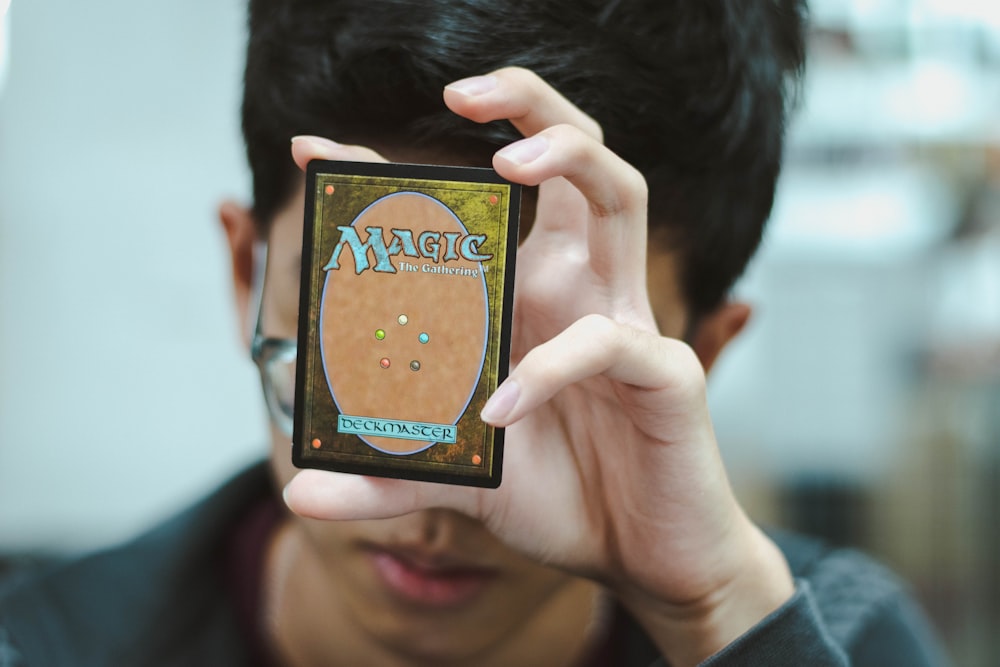
I miss getting together for card tournaments on weekends, whether it was at the game shop for a Magic: The Gathering release or at a friend’s house for a fun draft tournament. With a few packs of cards and a couple boxes of pizza, we’d whittle a whole day away laughing and cursing our poor card draw.
A colleague at work just announced that he’s accepted a job 5-hours away and will be resigning this week. He noted to us that his decision came about as a result of the pandemic – in reflecting on the last year, he realized he wanted to live closer to his family and home town. I will miss him terribly and I wish him all the success he can find in his new job. His reasoning for finding a new job resonated with me – as I reflect on the pandemic, what are the values that have been highlighted to me in my time disengaged from our larger society and culture?
Yes, family is important. But I’ve learned to appreciate the time spent with my friends. Whether it was games, music, or getting together to watch the Super Bowl (which I don’t care about, I just like hanging with my friends), I see the value in building community and creating shared history with people who matter to you. I’ve found little ways of connecting with friends while living at home, but until life allows us to mingle unfettered, I want to be more intentional with how I foster connection with friends.
This late post is a nice springboard into something I’ve been thinking about throughout the pandemic. Pre-pandemic, when I was still commuting to work, I had a fair number of systems to help me get stuff done. My commute to work helped me film daily vlogs, listen to books, and think about big ideas for blog posts and Stay Awesome vlogs. When we started working from home, those outputs began fading. Now, I feel behind on my blog posts, I *maybe* film a personal vlog once every two weeks, and Stay Awesome has been put on an indefinite hiatus until Jim and I get some extra headspace bandwidth to devote attention to it.
I was also known for my notebook. I carried a Field Notes notebook everywhere with me, and was constantly scribbling notes into it. Then, around 4 months into working from home, I found myself abandoning the monthly notebook and appropriating a disused larger notebook to jot down tasks, lists, and random thoughts. The Field Notes book was small, portable, convenient, and had many systems to track things I found important, such as exercise, health, habits, etc. Now, my notebook is largely devoted to task management, because when every day feels the same, you can quickly find yourself several weeks down the line having nothing to show for your time.
In a sense, I’ve fallen through my systems. The various “systems” I implemented succumbed to inertia when I both lost the cues that triggered them and lost the will to keep putting effort in the system to power the flywheel, and friction has ground them to a halt.
James Clear has a pithy phrase, that “you do not rise to the level of your goals. You fall to the level of your systems.” This is a riff on an older Greek observation from Archilochus: “We don’t rise to the level of our expectations, we fall to the level of our training.”
Regardless, the question I have is whether I truly had a system if it was a fair-weather operation that wasn’t robust enough to adapt to these kinds of radical changes. When I lost the external liminal cues that came from commuting to work, or from even leaving the house on a regular basis, the things I called systems disappeared as well. Is it charitable to call these things “systems”? In virtue ethics, you aren’t said to possess a virtue if you only exercise it some of the time – you aren’t considered courageous if you don’t act courageously in a moment that requires it. Does this apply to systems as well?
Part of me says yes, but that’s not very helpful. Perhaps I should reframe my thinking and consider the quality and attributes of the system. Borrowing from Taleb, some systems are fragile, some are robust, and I suppose some are antifragile. I understand antifragile systems in the context of biology (e.g. stressing muscles can allow them to get stronger over time), though as of writing I can’t think of any productivity system that get stronger under pressure.
Regardless, it’s clear that much of my productivity was built upon what can now be labelled as fragile systems. They worked under certain conditions, but outside of that narrower band they are less able to withstand fluctuations or variance. In my reflections over the last few months, I’ve been seeing the value in understanding the causes of system failures so that I can create new processes to help me in work and life. For now, the first step is to acknowledge that I’ve fallen through my systems, and having acknowledged this, I can stop spinning my wheels and start seeking traction.
Here we are at the dawning of a new year, which for me means it’s time to post an update on my reading over the last year. For my previous lists, you can see them here: 2019, 2018, 2017, and 2016. It’s hard to believe this is my fifth reading list!
Title
Author
Date Completed
Pages
1
Creative Calling
Chase Jarvis
22-Jan
304
2
The Age of Surveillance Capitalism
Shoshana Zuboff
25-Jan
704
3
Animal Farm
George Orwell
27-Jan
112
4
Alexander Hamilton
Ron Chernow
02-Feb
818
5
Range
David Epstein
12-Feb
352
6
The Bookshop on the Corner
Jenny Colgan
29-Feb
384
7
Call Sign Chaos
Jim Mattis
12-Mar
320
8
The Hitchhiker’s Guide to the Galaxy
Douglas Adams
19-Mar
208
9
The Alchemist
Paulo Coelho
22-Mar
208
10
Guns, Germs, and Steel
Jared Diamond
06-Apr
496
11
Upstream
Dan Heath
16-May
320
12
Symposium
Plato
18-May
144
13
Gulliver’s Travels
Jonathan Swift
25-May
432
14
Anything You Want
Derek Sivers
11-Jun
96
15
Extreme Ownership
Jocko Willink & Leif Babin
18-Jun
384
16
The Code. The Evaluation. The Protocols
Jocko Willink
23-Jun
93
17
How Will You Measure Your Life
Clayton M. Christensen
28-Jun
236
18
The Last Wish
Andrzej Sapkowski
05-Jul
384
19
The Expectant Father
Armin A. Brott & Jennifer Ash
06-Jul
336
20
The Coaching Habit
Michael Bungay Stanier
14-Jul
234
21
The Immortal Life of Henrietta Lacks
Rebecca Skloot
23-Jul
400
22
Working
Robert A. Caro
08-Sep
240
23
Crime and Punishment
Fyodor Dostoyevsky
15-Sep
544
24
Every Tool’s A Hammer
Adam Savage
18-Sep
320
25
Love Sense
Dr. Sue Johnson
20-Sep
352
26
Natural
Alan Levinovitz
22-Sep
264
27
The Kite Runner
Khaled Hosseini
06-Oct
363
28
My Own Words
Ruth Bader Ginsburg
10-Oct
400
29
Kitchen Confidential
Anthony Bourdain
20-Oct
384
30
Stillness is the Key
Ryan Holiday
06-Nov
288
31
The Oxford Inklings
Colin Duriez
07-Nov
276
32
The Infinite Game
Simon Sinek
14-Nov
272
33
The Ride of a Lifetime
Robert Iger
21-Nov
272
34
As a Man Thinketh & From Poverty to Power
James Allen
26-Nov
182
35
Medium Raw
Anthony Bourdain
06-Dec
320
36
A Christmas Carol
Charles Dickens
06-Dec
112
37
The Little Book of Hygge
Meik Wiking
12-Dec
288
38
Nicomachean Ethics
Aristotle
30-Dec
400
Total
12242
Overall, I’m happy with how the year went for reading. In reviewing the list, a few things stood out to me. First is that I surpassed my total books read for the year over 2019 by 13 entries. While we can certainly have a discussion about the merits issues of using the number of books read as an accurate key performance indicator of comprehension or progress, it was nice to see that I stepped things up a bit. I was fairly consistent in making my way through the books, with only a dip in April (likely because of the life-adjustment that came from working from home) and the silence seen from mid-July to the start of September thanks to the birth of our son in early-August.
I’m also happy to see that I read fewer self-help and business books last year and instead dove into more fiction, memoirs, and books about history. In my previous roundup, I had commented about wanting to be more intentional with my reading after feeling burnt out on certain genres of books.
One significant change in my reading habits this past year was that I joined a reading group/book club. A friend organized it just as things went into lockdown in March. We meet online every few weeks to discuss books selected in a rotation by the group. I commented earlier that I read 13 more books this year than last, and I’d attribute the book club to being the single biggest reason for the boost in completions (we cleared 12 by year’s end). Here are the books that we read:
Call Sign Chaos by Jim Mattis
Symposium by Plato
Gulliver’s Travels by Jonathan Swift
How Will You Measure Your Life by Clayton M. Christensen
The Immortal Life of Henrietta Lacks by Rebecca Skloot
Crime and Punishment by Fyodor Dostoyevsky
The Kite Runner by Khaled Hosseini
Kitchen Confidential by Anthony Bourdain
The Oxford Inklings by Colin Duriez
As a Man Thinketh & From Poverty to Power by James Allen
A Christmas Carol by Charles Dickens
Nicomachean Ethics by Aristotle (finished in the final days, though we haven’t met to discuss it yet.
I’d normally create a separate post about my top reads for the year, but I’ll include it here for simplicity. In chronological order of when I finished, my top 5 reads of the year are:
Alexander Hamilton by Ron Chernow (among my top reads ever; I was fortunate to see the stage play before the shutdown in March)
Call Sign Chaos by Jim Mattis (the first book I chose for the book club; I was struck by how Mattis talks about self-education and reflection)
The Expectant Father by Armin A. Brott & Jennifer Ash (since we were expecting this year, this book was a nice roadmap to know what to expect, and it provided some comfort along the way)
The Immortal Life of Henrietta Lacks by Rebecca Skloot (I recommend everyone read this book; it reminds me of the important work we do on the research ethics boards I sit on, and why we must be critical of research)
My Own Words by Ruth Bader Ginsberg (I started this collection of writings and speeches before RBG died, and was sadly reminded after finishing of what we lost in her death).
This was a pretty good year for reading. It felt good to get lost in more fiction, and I’ll have things to say in the future about the value I’m finding in reading as part of a group. In the meantime, Happy New Year, and it’s time to keep tackling my reading backlog.
I received some sad news last week – my time as a teacher has (for now) come to a close. The Chair has decided to take the course out of the general education elective rotation and will offer a different slate of courses to ensure students have a variety of electives to choose from.
This is not entirely unexpected. I taught my first section in September 2016, and am currently in my 13th straight delivery. In this time, I’ve had a little over 300 students, meaning I’ve graded some 3,000 assignments and 600 essays.
Back in 2016, I snapped this photo of my last day in the classroom for my very first semester of teaching (all the rest of my deliveries have been online).
It has been a great experience and has taught me a lot about empathizing with students and overcoming my biases and assumptions of how one ought to teach. It was also humbling to see some student work come in that, frankly, was better than anything I could have written.
I appreciate the patience my students have shown me these last four years as I have moved cities, gotten married, graded while on my honeymoon, and when welcoming our child into the world.
I’m looking forward to a bit of a break from teacher life, but I hope to get another opportunity in the future.
Our bookclub tackled A Christmas Carol as one of the last reads for the year. It was a wonderful chat about what the holidays means to us, how things have changed over time, and what the moral lessons are from the short story.
This was my second time reading the story, so in addition to my knowledge of it from cinema (thanks largely to the Muppets), I was able to pay closer attention to the themes threaded through the story.
I noticed, for instance, that while the story is largely about redeeming one’s soul and the spirit of giving during the holidays, knowledge kept popping in. For instance, when Scrooge is haunted by Jacob Marley, Marley notes that he walks the earth as a result of not letting his spirit roam while alive. This unfinished business suggests that experiencing the world (cultivating awareness of those beyond yourself) was an important element of living a fulfilling live (after all, why would a spirit need to roam if they had a fulfilling life?).
The chains worn by Marley were a symbolic reminder of the knowledge he now possessed of his life’s actions. Each link forged by his life’s misdeeds are discrete representations of his lack of personal knowledge of his actions while alive.
Scrooge is unable to be receptive to the ghosts’ messages of redemption until he gains personal knowledge of himself by traveling to the past and understanding the choices that lead him to this point.
The Ghost of Christmas Present beckons Scrooge with “Come in man, and know me better!” Becoming acquainted with the present requires one to be present in the moment.
Scrooge’s redemption is only realized because he confronts the Spirit of Christmas-Yet-To-Come, pleading to know whether the shadows he sees are set. Why would you show these images to me if my knowledge of them won’t change what’s to come! he cries to the ghost.
I couldn’t help but draw a connection to our own problems with empathy in our charged political moment. We often lament our failures to connect with folks “on the other side.” We lack the empathy to understand their position to see how our similarities vastly outweigh our differences.
Dickens’s solution to the problem of empathy is rooted in knowledge. Yes, Scrooge is motivated initially by the desire to redeem his immortal soul and to avoid the fate of Marley. But his change of heart comes by letting his soul out to walk around and to know others. He connects with them, which in turn creates empathy and a desire to help.
It’s a delightful story that I was more than happy to revisit at this time of year.
I took a new step today in the evolution of my personal giving. For Giving Tuesday 2020, I finally set up my first set of recurring monthly donations. Now, every month the The Food Bank of Waterloo Region and the Brantford Food Bank will each receive a deposit of $10 from me. It’s a small, almost embarrassing amount to type (when I think of charitable giving, I’m thinking of impressive amounts with more than two zero’s to the left of the decimal point), but the important thing to keep in mind is a.) it’s my initial amount that I expect to grow over time as my circumstances allow, and b.) the total for the year will actually be higher than what I would normally have given.
I’ve been growing more intentional over time with my charitable giving. Many moons ago, I was involved with a program created by the Kitchener Waterloo Community Foundation called Engage. The program has since ended, but the experiences have stuck with me. If I want to live in a vibrant and thriving community, it’s important that I take the benefits and privileges I’ve accumulated to help others in different living circumstances than my own.
In philosophy, there is a thought experiment called the veil of ignorance, where if I were to be placed randomly in a society, I would obviously want to choose a position that afforded me a degree of wealth, freedom, security, and privilege. To me, this translates into a moral imperative that we should actively work to raise the living situations for all persons in our community to promote flourishing and happiness. I don’t want to live in a world where people have to rely on charity, but it’s an inescapable reality and therefore it must be confronted.
If we are being technical, charitable giving breaks down into three kinds of support, known as the three “t’s” – time, talent, and treasure. Time and talent were my first introduction to giving back to my community. It started in my various youth groups, where I would exchange my time to support a cause: raising money for Beavers/Cubs/Scouts/Army Cadets/swim club, marching in Remembrance Day parades, highway cleanups, and building a library abroad. Later, when I was but a poor student, I volunteered my talents to support causes for school and to help fundraising efforts for the HopeSpring Cancer Support Centre (and eventually I became the minute-taker for their Board of Directors). I also supported my friends with their charitable causes, such as helping with my buddy’s Headshots from the Heart videogame marathon event. As I started to transition out of my student phase of life, I began exploring the third “t” – treasure.
My history of charitable monetary giving started in my mid-20’s. I created an elaborate birthday ritual for myself in an attempt to imbue the day with significance (after 21, there weren’t any milestones I cared to look forward to). One ritual I set for myself was to make a donation to a cause I was interested in. When I was a student of the Engage program, I reflected that I wanted my charitable giving to go to “feeding bellies and minds,” and so I would make a yearly donation to the local food bank. Despite having never used it myself, I recognize the value they bring.
My first donations were in physical goods. I would save up rewards points from the grocery store, then buy as much food as I could for a few hundred dollars, and bring all the canned goods in for donation. Then I found out that their purchasing power was much higher than mine, so I switched to monetary donations once a year on my birthday.
The next evolution in my charitable giving happened a few years back when I wanted to help support the preservation of our environment. The Bruce Trail is a massive network of linked trails that allows one to hike 900km from Niagara to Tobermory in Ontario. Despite having never hiked on the trail myself (though I have ambitions to take up the activity), this seemed like a good cause to support, so I started purchasing yearly memberships. This year, I switched from a buying a membership each year to an automatic renewal system.
Switching back to the Food Bank, my next evolution in giving started in January of this year. I emailed to follow up on the Christmas drive and to ask what kind of shortfall the KW Food Bank saw. They kindly shared their yearly report, but what stuck out was a throwaway comment that they were successful with the campaign, but that the regular commitments were more important to ensure meals throughout the year. So, I decided I would eventually switch to small monthly donations that would increase over time as my circumstances allowed.
It was accelerated this summer with the BLM protests. I wanted to do more than empty social media posts, so I started to think about how I could contribute financially to important causes. A close friend of mine has created a line in his budget for philanthropy, which I took some inspiration from.
But in the Canadian context, I thought I should find a way to support Indigenous causes. Truthfully, I haven’t yet made that commitment – I’m still on the lookout for an ongoing support cause that resonates with me. I value the input of my peers, so if you have any suggestions, I’d love to hear your input.
That brings us to today. I decided to finally set up my regular payments to support these organizations that do so much good in our community. While I don’t live in KW anymore, I still feel called to help them in their mission. And since I support KW, I thought it appropriate to also give money to support the same cause but for my neighbors. The $10 per month I’ve committed is indeed small, but over the year will amount to a higher giving than my one-off donations. Also, it’s important to note that these campaigns help to raise awareness (and it feels good to help feed people at Christmas), but the need is felt year-round. The reality is that these campaigns serve as a funnel to bring donors into the organization.
This isn’t to say that I will stop giving one-off donations. A lesson I took from Engage is that it’s ok to say no to charitable asks that come your way. You do it each time you decline to contribute a few dollars at the cash register when you check-out at the store. Rather than having to give to every cause, it’s important to determine how much you feel you can give, then to be selective with where you allocate your funds. During Charitable Tuesday today, I also made one off contributions to my alma mater’s Arts student fund because I value the time and experiences I collected when I was a student. I also made an additional donation to the Bruce Trail’s latest campaign to purchase and preserve additional land in the Niagara region for the trail. I doubt I’ll ever get out to see that portion of the trail, but it’s important to enable the organization to leverage its resources to improve access for everyone (include some of my friends who I saw posting to social media from the trail this summer!).
My birthday is coming up, and I plan to give another one-off donation to the Food Bank to keep with tradition. And in time, I’ll find new ways to offer support. There is no one right way to give, but regardless of the type and degree of your impact, there will always be needs that go unmet in our communities. In addition to my monetary donations, I still volunteer where time allows, such as on the two ethics boards I serve.
Both Stats Can and Imagine Canada are seeing that while average donation amounts are trending upwards, the average donation rate is holding-to-declining over time. I hope to do my part in reversing this trend.
Thank-you for reading my story, and perhaps it might inspire you to reflect on your giving history.

 A Paramedic's Notebook