The Value of Shoveling

*Note – I didn’t have a blog post prepared for today, so here is a post I had drafted a few weeks back that didn’t get published.*

***

Like many folks, we had a moderate dumping of snow last week [Editors note: as of April 19th, we did not receive snow last week where I live. We did, however, have several rounds of hail.]. Surprisingly, we’ve had a fairly mild winter so far with only one or two times where I’ve had to contend with heavy snow on the driveway. I’m normally able to clear our driveway in 20-30 minutes by pushing the snow off to the side (for reference, our wide driveway can easily fit six vehicles if needed).

When we get a heavier dumping of snow, my wife will ask if we’ve finally hit the point where it’s time to get a snow-blower. I’ve resisted getting a snow-blower for a few years now. I grant that it would make my life easier to have the machine do the work while I casually stroll behind its lumbering frame. I’ve used my father’s machine, so I’m comfortable with operating it, and I’m not opposed to owning one per se. But I have a few reasons to shy away from jumping in and joining my many neighbours who use a machine to clear their property.

We don’t really receive the kinds of snow dumps that would make it worth it, in my mind. The majority of our snowfalls are fairly light, so using a machine to clear the snow seems like overkill. Instead, spending a short amount of time to clear the snow and letting the sun take care of the rest of the work on the asphalt seems like a better use of my money.

Speaking of money, it’s a large investment to purchase and maintain a snow-blower. I have a very limited (read: none) knowledge of small engine maintenance, so I’d have to spend money each season to properly clean, prep, lubricate, tune, and run the machine. Owning a shovel and using sweat equity is such a small cost by comparison, and it’s way better for the environment.

Of course, there is the topic of my time – is it worth my time to manually clear snow. On this, there are two considerations. For light snowfalls, I don’t think the machine would take any less time for me to clear the snow when you factor in starting the machine, clearing snow, moving vehicles, and putting the machine away, whereas with a shovel I just work around the cars and push everything to the side. But there is something to the idea of cutting my time in half to clear a heavy snowfall.

To this, though, I’m in favour of manually clearing snow because I value the exercise and manual labour of the activity. While I’m able-bodied, I’m happy to sweat it out and get my heartrate up for an hour (especially during the pandemic where I’m spending far too much time sitting these days). I find it very satisfying to work on my property, and at the end of the task I can connect the exertion I feel with the snow piled up alongside my driveway.

I’m sure there will come a day in the future when I’ll concede and get a snow-blower (to my wife’s delight, as she refuses to shovel). I suppose in the interim, I can always tap the free labour my son will provide (when he gets a little older).

Stay Awesome,

Ryan
The Duke of Edinburgh’s Impact on My Life

With the passing of Prince Philip last week, I reflected on his impact on my life. Normally, the goings-on of the Royal family impacts me little directly, albeit I am a commonwealth subject as a Canadian. However, Prince Philip was also the creator of the Duke of Edinburgh Award Program, which I participated in as a youth. I was fortunate to be introduced to the program during my Army Cadet days, and I progressed through each of the three levels before I aged out of the program, completing my Gold Level in late 2011.

I recently participated in a survey of Gold Level holders asking about the program’s impact on my life. At the time, I answered that the program had little lasting impact on me. I said this in relation to each of the four core areas of the program – physical fitness, skill development, community service, and the adventure component. For each of these areas, I felt like little had directly carried over all these years later. I’m not a particularly fit person, I don’t remember any of the skills I had developed, and I haven’t gone camping in about a decade. The only domain that I am still highly active in concerns volunteering.

So, on the surface, I feel somewhat disconnected from my achievements in the DofE program. Yet, as I reflected over the weekend, I was struck by a realization: had it not been for my gold level trip to Kenya (I joined a group who travelled to Kenya in 2007 to perform a service project and climb Mt. Kenya), I would not be where I am today.

My trip overseas came at the midpoint of my undergraduate experience. As I returned home and went back to school in September 2007 for my third year, I had a profound change in outlook. Prior to my trip, I was a residence-body. I rarely ventured out beyond the dorms and was too shy to join on-campus clubs and groups. But after returning from the trip, when I was faced with an opportunity that I was nervous to attempt, I would remind myself that I had just climbed a mountain, and now anything seemed possible. It gave me the confidence to step outside of my shyness and embrace new challenges.

I joined the campus first aid team and the departmental undergraduate society. In time, I took over both groups and lead my peers through successful tenures as Operations Coordinator and Society President respectively. I committed more fully to my studies, and continued my education into graduate school. The friends I made on the first aid team lead me to a job in the gambling lab as a field researcher. It also lead me through the same connections to volunteering for a local non-profit board and working with the local Community Foundation. Those experiences then helped me get my first full time job at Conestoga College, where I currently am employed.

I’m not saying that I wouldn’t be where I am had I not been in the DofE program. However, I can draw a strong link through each of these personal developments that traces back to a decision I made one day to join in when a friend told me about this fun opportunity to travel abroad. And while I don’t often remind myself anymore that I climbed a mountain when I’m trying to convince myself to be brave, I feel a deep sense of gratitude for being a part of something that pushed me to grow beyond what I thought I was capable.

Kurt Hahn was a mentor of Prince Philip who provide inspiration for what would become the DofE program. He is known for saying that “there is more in us than we know if we could be made to see it; perhaps, for the rest of our lives we will be unwilling to settle for less.” Without realizing it, these words infused themselves into who I am as a person, and I didn’t understand what it meant or its impact until the passing of Prince Philip.

Rest in Peace, His Royal Highness, The Prince Philip, Duke of Edinburgh.

Stay Awesome,

Ryan

Falling Through My Systems

This late post is a nice springboard into something I’ve been thinking about throughout the pandemic. Pre-pandemic, when I was still commuting to work, I had a fair number of systems to help me get stuff done. My commute to work helped me film daily vlogs, listen to books, and think about big ideas for blog posts and Stay Awesome vlogs. When we started working from home, those outputs began fading. Now, I feel behind on my blog posts, I *maybe* film a personal vlog once every two weeks, and Stay Awesome has been put on an indefinite hiatus until Jim and I get some extra headspace bandwidth to devote attention to it.

I was also known for my notebook. I carried a Field Notes notebook everywhere with me, and was constantly scribbling notes into it. Then, around 4 months into working from home, I found myself abandoning the monthly notebook and appropriating a disused larger notebook to jot down tasks, lists, and random thoughts. The Field Notes book was small, portable, convenient, and had many systems to track things I found important, such as exercise, health, habits, etc. Now, my notebook is largely devoted to task management, because when every day feels the same, you can quickly find yourself several weeks down the line having nothing to show for your time.

In a sense, I’ve fallen through my systems. The various “systems” I implemented succumbed to inertia when I both lost the cues that triggered them and lost the will to keep putting effort in the system to power the flywheel, and friction has ground them to a halt.

James Clear has a pithy phrase, that “you do not rise to the level of your goals. You fall to the level of your systems.” This is a riff on an older Greek observation from Archilochus: “We don’t rise to the level of our expectations, we fall to the level of our training.”

Regardless, the question I have is whether I truly had a system if it was a fair-weather operation that wasn’t robust enough to adapt to these kinds of radical changes. When I lost the external liminal cues that came from commuting to work, or from even leaving the house on a regular basis, the things I called systems disappeared as well. Is it charitable to call these things “systems”? In virtue ethics, you aren’t said to possess a virtue if you only exercise it some of the time – you aren’t considered courageous if you don’t act courageously in a moment that requires it. Does this apply to systems as well?

Part of me says yes, but that’s not very helpful. Perhaps I should reframe my thinking and consider the quality and attributes of the system. Borrowing from Taleb, some systems are fragile, some are robust, and I suppose some are antifragile. I understand antifragile systems in the context of biology (e.g. stressing muscles can allow them to get stronger over time), though as of writing I can’t think of any productivity system that get stronger under pressure.

Regardless, it’s clear that much of my productivity was built upon what can now be labelled as fragile systems. They worked under certain conditions, but outside of that narrower band they are less able to withstand fluctuations or variance. In my reflections over the last few months, I’ve been seeing the value in understanding the causes of system failures so that I can create new processes to help me in work and life. For now, the first step is to acknowledge that I’ve fallen through my systems, and having acknowledged this, I can stop spinning my wheels and start seeking traction.

Stay Awesome,

Ryan

Tech Shabbat Experiment

Almost a decade ago, I co-started a semi-formal group with some friends. It was intended as a bit of a mutual-beneficial group – we were all just starting out in our careers and felt that getting together monthly to practice public speaking would help us in our jobs. The nature of the group has evolved somewhat now that we are having kids and have grown comfortable in our jobs. Instead, we treat the monthly meetup as both social time and a chance for us to share experiences with each other.

This month, we’ve been challenged to try out the Tech Shabbat as discussed in Tiffany Shlain’s book 24/6: The Power of Unplugging One Day a Week (note: I haven’t read the book). In essence, we pick one day a week to abstain from screens – no smartphones, no computers, no television. It’s not a complete removal from all technology (for instance, I use my smart speaker to stream podcast episodes and listen to live radio), but instead we seek to disconnect from an increasingly interconnected existence.

I have completed three of the Shabbats, with the final one this weekend. Overall, this has been a very positive experience for me. There are some challenges and moments where I have to play fast and loose with the rules (like this weekend when I got lost on a hike…).

It’s also not clear if I should abstain from using our smart speaker at home; I’ve been using it to listen to podcast episodes and radio over the internet. I’ll even admit that there are moments of boredom or tedium where I feel a strong pull to give up the challenge and open a social media app. But despite any of these missteps or moments of weakness, I can say without any qualification that I’ve enjoyed the experience. I may look forward to the close of the 24-hours, but I do so with a sense of mental calm. The break gives me a bit of a reset, a chance to journal and bring order to my life. Instead of mindlessly consuming content, I’ve chosen activities that create memories and allow me to be more present in the now.

I’m not sure if I’ll keep the Tech Shabbat once the group activity is over, but it has given me a lot to reflect on. Cal Newport has discussed taking a more hardline stance on cutting unnecessary tech out of our lives. I’m sympathetic to the idea, though in practice I have to balance my quirky experiments with my wife’s needs, and I doubt she would entertain any drastic measures like what Newport suggests. Regardless, just taking the opportunity to pause and reflect is a worthwhile activity, which the Tech Shabbat has afforded me over the month.

Stay Awesome,

Ryan

The Approachable Outdoors

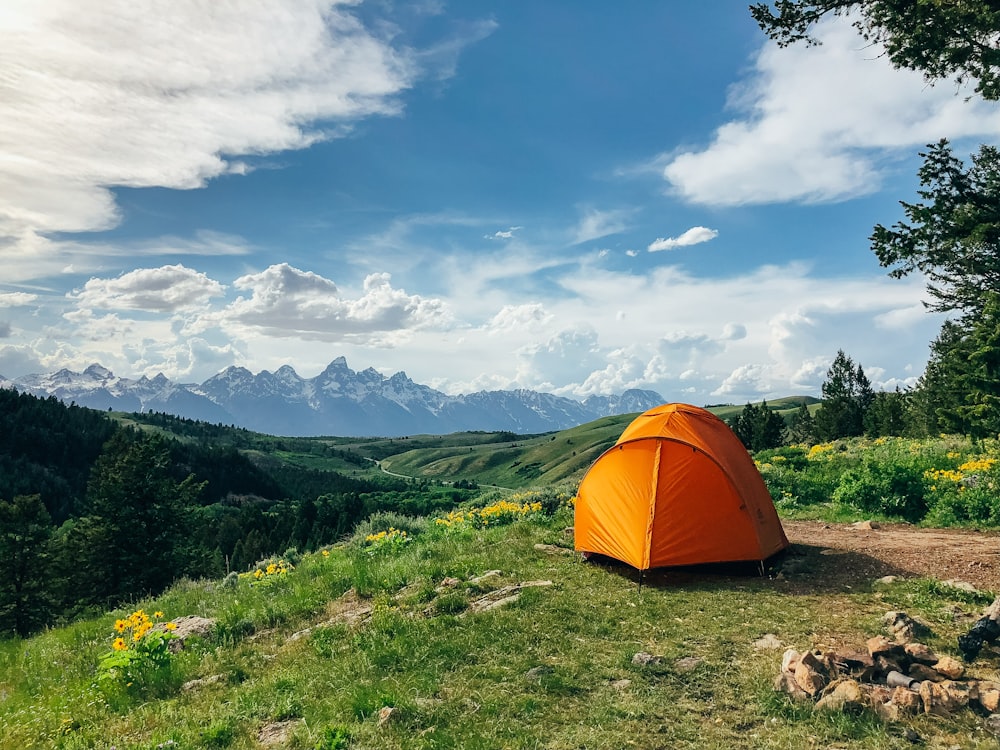
orange outdoor tent
Photo by Jesse Gardner on Unsplash

I had a realization recently: I don’t think I’ve gone camping in the last thirteen years. That might not seem like much, but when I reflect on my childhood, it was full of camping. I was in Beavers, Cubs, Scouts, Army Cadets, and the Duke of Edinburgh program. My mom also used to take my sister and I camping during the summers. If I entered Beavers at 5, and my last outdoor adventure was my trip to Kenya in 2007, then I had an almost uninterrupted period of camping that spanned 16 years. At 33 now, I have only recently crossed the threshold for more years of my life not camping than all the years I spent in youth programs.

Camping was easy when I was in youth programs – so long as you participated, it was almost a default activity. But once I left for post-secondary schooling, it fell by the wayside. Camping didn’t seem very accessible to me – I didn’t have money to spend on equipment or transportation, and I chose to spend my leisure time occupied with other things. Soon, a year became two, then five, and now more than a decade has passed.

It’s not that I haven’t thought about this. A few years back, I decided to become a paying member of the Bruce Trail with the aim to avail myself of the various sections of trail nearby (admittedly, I haven’t done it yet…) My hike along the Path of the Gods route in Italy back in October was my most recent attempt to embrace activity in nature. It was a hard route for me and finishing it left me with an amazing sense of accomplishment.

Since then, I’ve been mulling it over in the back of my mind. The pandemic has both prevented me from attempting camping this year and gave me additional time to think about being more intentional with reconnecting with the outdoors.

One of the problems, I realized, is that my idea of camping is a little skewed. Since camping in my childhood was bound up in intensive adventures, hiking and camping has been intertwined in my mind with multiple days away in the woods – several night-stays while travelling a few dozen kilometres a day, sometimes while hiking in mountainous terrain far from civilization. In this way, camping requires planning, specialized equipment, and lots of experience or paid guides. In other words, camping and hiking requires a lot of time and money.

But recently, I’ve been rethinking of camping in a new light. Thanks to the magic of YouTube’s algorithm, I stumbled across Steve Wallis’s channel through his video Highway Rest Area Stealth Camping. I’ve since gone down a deep rabbit hole of his content. In short, he’s a guy out of Alberta who likes to stealth camp (short term, low impact camping, sometimes in areas where you aren’t allowed to camp). He will go out for a night, set up a hammock somewhere, and vlog the experience. He buys cost-effective gear from Canadian Tire and insists that camping shouldn’t be complicated or about expensive gear. I realized in watching his vlogs that he’s right: camping and hiking isn’t about long, expensive trips, and it doesn’t have to be an onerous undertaking.

I’ve since started looking at what kinds of opportunities I can avail myself nearby. I’ve dug out my old camping gear to see what I’ve got in storage. I ordered an inexpensive hammock online (since I don’t own a tent) and plan to try camping in my backyard for the fun of it. I’ve also started looking at the trails nearby and got out this weekend with the dog. It was a quick jaunt near a river that took an hour and was a short drive from my house. It was a lot of fun, and I felt great afterwards.

All of this has taught me three things: first, if I want to find the time to have adventures, I have to make the time. Second, camping and hiking aren’t the purview of the elite outdoors people, but should be enjoyed by anyone who wants it. Third, I should have the courage to try things out solo. It was easy when I was young and under the guidance of adults. Now that I’m an adult myself, I can’t wait around for someone to take my hand. I have to learn to rely on myself, and trust that I can do it.

Stay Awesome,

Ryan

Post-script – I wanted to title this post The Accessible Outdoors, but I didn’t want to confuse the topic. I’m not talking about accessibility in the sense of barriers to people’s ability to physically enjoy the outdoors. Sadly, as I write this, I remember reading a piece online about efforts of people to make camping and hiking more accessible to persons with disabilities and persons of colour, but I can’t find the article at this time.

Friday Round-up – July 24, 2020

Let’s keep the momentum going from last week!

Here is my round-up list for the week ending on July 24th:

💭Reflection – Books as Monuments – Ryan Holiday (Instagram)

Last week Ryan shared the following post:

I have a vague recollection of when Madison Holleran died by suicide in 2014, though less about her as a person and more because of the conversation it sparked around mental health and how social media can portray a perfect life despite the hidden struggles of the person. I’ve yet to read this book, however as I was reflecting on this post I realized that this isn’t a book about a famous person, but it still stands as a monument to a life. That felt like a weird mental juxtaposition against the conversation going on about monuments in general and what we choose to remember. During a recent conversation with my grandmother, she was showing me photos of friends from her past that have since passed away. For nearly every person on the planet, your legacy extends only as far as your genes and the living memories of those who knew you. And yet, sometimes we pulp trees into paper and create a monument that will be read in the future. Monuments are not accidental – it’s a reflection of what we choose to remember. Madison’s life was tragically cut short, but at least she remains more than a fragile memory.

🎧Listen – What You Need To Know About Protective Face Masks – NPR Life Kit

There is a lot of misinformation around the effects of wearing a mask. Here is a good quick summary. tldr: it prevents the wearer from spreading germs and it does not prevent one from breathing adequately. I’ve demonstrated this for myself by donning a non-surgical mask for the last two weeks of running on the elliptical. To date, in the 30 masked-miles I’ve run (roughly 3.5-hours of exertion), I have yet to have any symptoms related to hypoxia.

📖Read – Graduating during a downturn | A Learning a Day blog

Two paragraphs stood out in this post that resonated with me:

By all accounts, COVID-19 is a ridiculously bad time to graduate. It isn’t just a bizarre year from the perspective of the job market. Graduates who have a job will face an unusual first year as part of the workforce. With organizations and the people generally unprepared and dealing with multiple stressors, they’re unlikely to get the training that they need on the job.

These are moments when you realize how big a role dumb luck plays in any professional success we enjoy. It is so easy to attribute things that are going well to our smarts and hard work. But, there’s so much more to any success than that.

Reading this made me reflect on my own career to this point. I finished my undergrad in 2009, the year after the 2008 economic downturn. I was fortunate to be accepted into grad school, where I stretched a 1-year program into a 3-year experience by the time I finished writing my thesis. That put me into the formal job market at the tail end of 2012, four full years after the markets took a dive. I was lucky to enter the working world while the economy was rebounding, and I didn’t have to face the same setbacks and struggles that many of my cohort felt (that is, had I not did my 5th year “victory lap” in high school, I would have finished undergrad a year earlier with my secondary school classmates). In this, I was very fortunate that my choices became opportunities of timing, and something worth keeping in mind as context.

Stay Awesome,

Ryan

“Just One More Mile” – My First (Elliptical) Half-Marathon

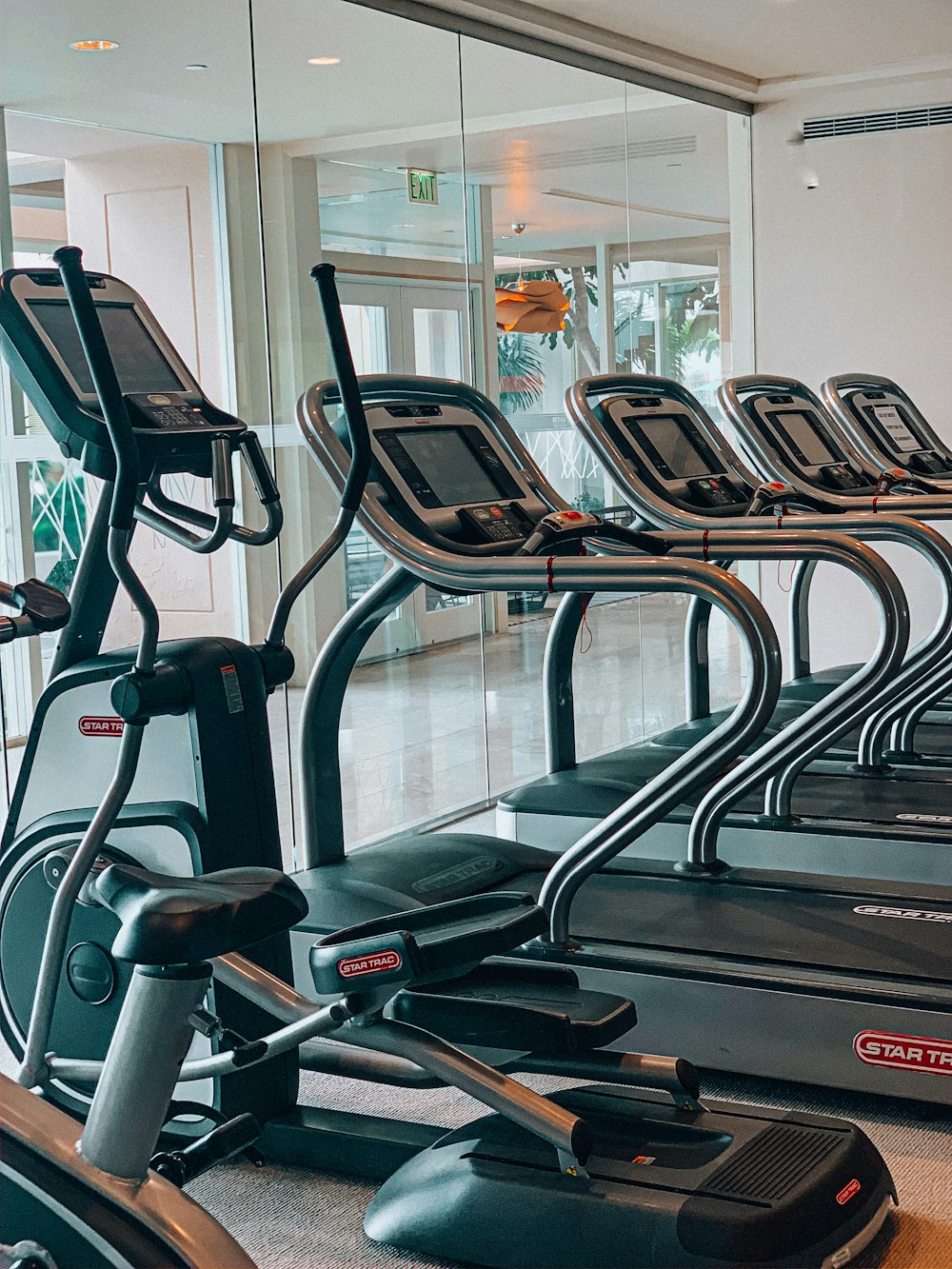
black and grey threadmills
Photo by Alina Chernysheva on Unsplash

Last week, I hit a new milestone in my ongoing fitness journey. Since the start of the year, I’ve been following an exercise regiment that is having me progressively adding distance to weekly targets that I run on our elliptical at home. I plan to post a more in-depth explanation of how and why I set the system up in the future, but the main gist is that for each week of the new year, I add one mile on the distance I have to cover for the week. As of writing, I’m in week 22 of the year, which means I will be running 22 miles this week.

On Friday, I still had just over 10 miles that I needed to cover to hit my target for the week. I had initially planned on running half on Friday and half on Saturday. As I started my run, I felt that I was in a good groove, and decided to run more than half the distance for the session. Five miles turned to six, then seven. Around the eighth mile, I figured I could easily go the full ten to close off the week.

Then I had another thought. When we first purchased the elliptical, I thought it might be a good goal to try and run a half-marathon. The furthest I ran on the machine was 10 miles, so it wouldn’t be much to go the extra three. With me being so close to the target, why not?

The hardest mile was probably going from mile ten to mile eleven. The display on the machine only shows three digits, so 9.99 miles became 10.0, meaning it took longer to see progress getting counted.

A mantra started to form at the top of each mile – “just one more mile; you can do it.” This was something I learned from my army cadet days. During a particularly hard summer, I felt extremely dispirited with having to last six-weeks on a challenging leadership course. I learned to focus less on the whole six-weeks and instead focus on just getting through to the next day. It’s a lesson I’ve carried with me and try to apply anytime I’m faced with a seemingly insurmountable task.

Instead of running 13.1 miles, I focused myself to just completing the next mile. And when I finished that mile, I focused on the next; then the next.

Ten miles gave way to eleven, then twelve, and finally thirteen.

Running a half-marathon on an elliptical isn’t the greatest of achievements. However, it was an excellent application of focus and drive that affirmed to me that a.) I’ve come a long way since January; and b.) progress is made by focusing on the next goal, not the end goal.

Stay Awesome,

Ryan

Quarantine Reflections – The Second Mile

person running on tracking field
Photo by Jakob Owens on Unsplash

Last week, I discussed how important exercise has become in helping to regulate my mood while I stay safe at home. I wanted to share a quick second observation I’ve noticed for exercising. When I first started my challenge for the year, I told myself that I just had to make small commitments to keep the progress going. I started the challenge very light – just 1 mile in the first week. It was easy to manage and commit to. Each week adds a mile, which is a doable amount: 2 miles in week 2, 3 miles in week 3, etc.

I am in week 17 now, and it’s forcing me to run consecutive days. While I’m not running distances that really necessitate me to need recovery days, there are inevitably days where I wake up and my body feels stiff and my joints feel like I’m full of sand. It’s a lot harder to tell myself that if I just commit to one mile, I can easily do the rest. That trick no longer works on me.

But I’ve realized something different that really helps me. I’ve noticed that no matter how I feel physically (assuming I’m not ill), if I can stick it out until the end of the second mile, I know I can do the run. There is something that happens between the first and second mile where the stiffness goes away. It’s likely the official warm-up period, but by mile-two I hit my stride, my breath falls into cadence, and I’m able to easily keep my target pace.

Understanding the magic of the second mile doesn’t make it psychologically easier to get on with the run (my mind still loves to procrastinate when I know I’m about to spend 45-minutes sweating), but it does let me know that physically I’m up to the task. The resolution sets in and I get to work.

Stay Awesome,

Ryan

Quarantine Reflections – Exercise

Photo by Risen Wang on Unsplash

Participating in physical distancing has given me some time to reflect. From the relative stillness of being home everyday, I have had a chance to think about my daily experiences without the distractions that comes from what used to be my normal routine. I’d like to share some of these reflections as they clarify in my mind under the banner of Quarentine Reflections.

First, I’ve had a personal realization recently concerning exercise. I have attempted to cultivate the habit of exercising for some time, going back several years on this blog alone. While I haven’t written about it yet for 2020, I started an exercise routine in January that I can happily report that I’ve maintained til the present. I’ll write about the routine in the future, but for now I’m sticking to the schedule and putting in my time.

Normally when I exercise, it’s something I try to fit into my busy days. Often it takes the form of a run in the morning before work: I try to squeeze in a run on our elliptical at home, then rush to shower and get to work without being too late. While at work, I remain somewhat distracted from paying attention to my body’s cues, so I don’t think too much about how I feel the rest of the day aside from the feeling of accomplishment that comes from knocking off a run early in your day.

But with physical distancing in effect, things are quieter. I am still working, but from at home. There is no context switching that happens in my mind that shifts gears from home to work. There are no coworkers to socialize with when I don’t feel like being productive. The lack of shift in my brain has create a scenario where I am able to sit with my thoughts for longer periods of time.

In these stretches of time, I’ve noticed that regular exercising noticably boosts my mood for the rest of the day. This isn’t a unique experience; it’s often touted as a benefit of exercising (once you get over the newbie hump of bodily pain). But while working in the office, I rarely noticed the affective change that exercise gave me. Usually, it was a cognitive change that came from mentally congratulating myself for exercising (or the social benefits that came from being that guy in the office who tells people that he got in a workout that morning – sadly, I am also that kind of person…).

I didn’t notice this benefit at first. When we first started working from home, I kept up my regular runs during the week as a way of imposing some sort of routine on my now drifting life. But last week I noticed a few days early in the week where I felt really crummy. I have a few forms of reflection that I engage with at the moment – I rate my mood in my notebook out of 10, I vlog a personal diary during the week, and I’ve taken up a form of morning pages to capture my internal monologue. In all three areas, I had noticed that I was feeling down and unmotivated. The day after I first logged the down mood, I exercised, and later that afternoon I did my check-in and noticed that my mood was a lot higher compared to the previous day. Nothing had materially changed about my day – I didn’t sleep more, my diet was consistent, and I hadn’t been any more productive in my tasks at work. The only big change over the previous day is that I had gotten a few miles in on the elliptical.

In looking back over the last month, I think I have spotted a trend. For days where I had the lowest mood, I did not exercise in the morning. On days where I exercised, I had higher mood levels. This isn’t to say that exercise is the only thing that correlates with an increase in my mood – there are plenty of days (e.g. weekends) where I feel fine but don’t exercise. However, it would seem reasonable to assert that there is a close connection with exercising and an overall improvement in my mood.

I plan to continue to follow my exercise routine, and I hope to set aside time in the near future to document it here or in a vlog format. But for now, it appears that I’ve found a more intrinsic reason to continue to exercise beyond vanity. Not only does exercise help me look better, but I feel better when I commit to the schedule.

Stay Awesome,

Ryan